

By Doug Finke
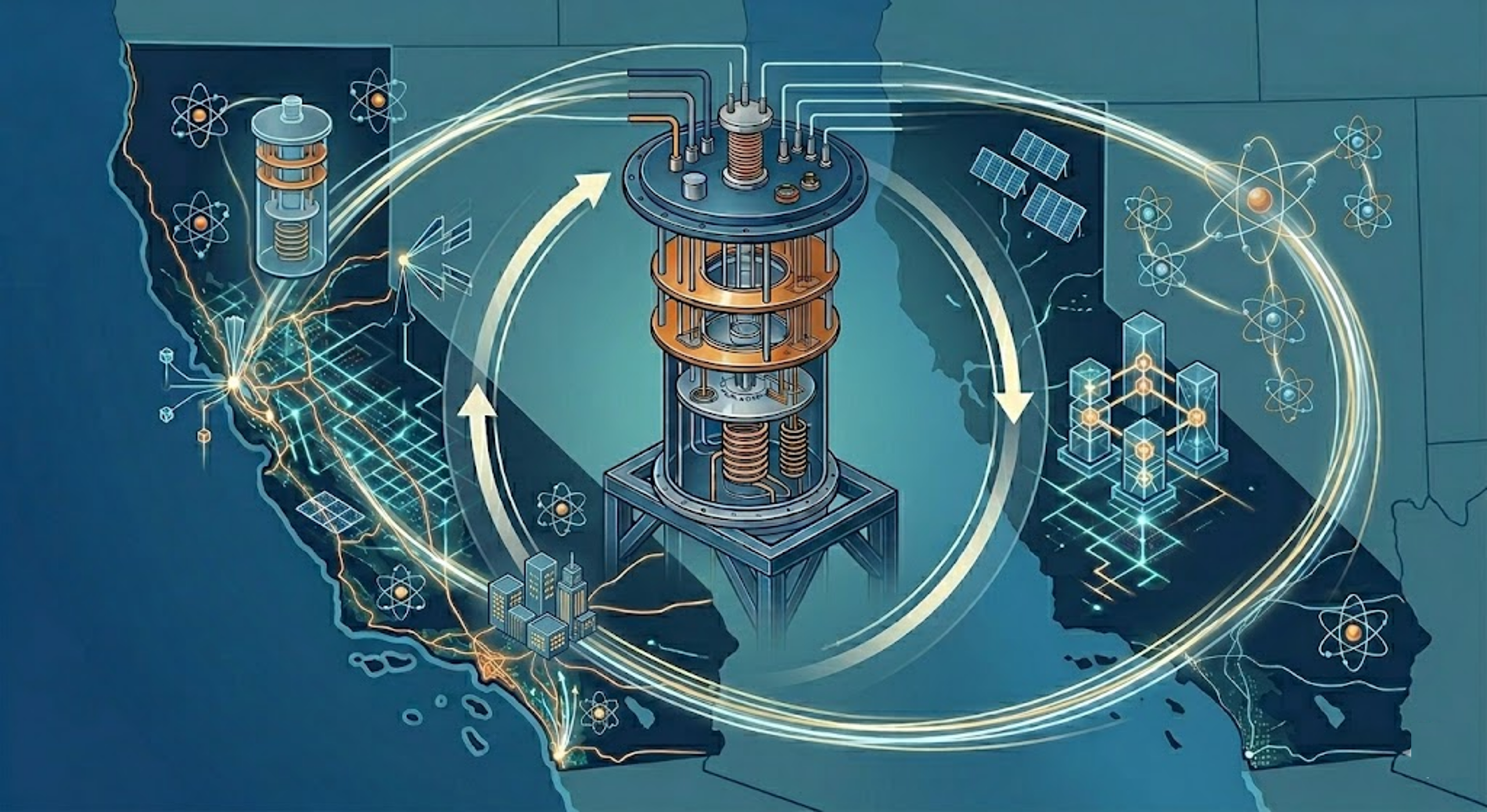
I attended the third convening of a Quantum California event last week at the University of California, San Diego. Two previous convenings were held: one at the University of California, Berkeley in November 2025 and the other at the University of California, Santa Barbara in March of this year. We have been following the quantum scene in California since May of 2016, starting with our article titled Northern versus Southern California – Who’s More Quantum? While some elements of that original article may be out of date, a lot still holds true.
It is important to understand that while the state of California has not been nearly as vocal about its internal quantum activity as regions like Maryland, Chicago, or Colorado, there is still substantial activity in the state—far more than many people realize. There are significant strengths and weaknesses when viewing the California quantum ecosystem, many of which are quite unique to the state. We will cover them in the remainder of this article.
Strengths of the California Ecosystem
1. University System and National Laboratories
California boasts one of the strongest university systems in the world, performing groundbreaking research on quantum technology while training the researchers, engineers, and technicians needed to fill roles at growing quantum companies.
- The UC System: Major public universities performing quantum research include UC Berkeley, UC Santa Barbara (UCSB), UC Los Angeles (UCLA), UC San Diego (UCSD), UC Riverside, and UC Irvine.
- Private Universities: Leading private institutions working in quantum include Caltech, Stanford, the University of Southern California (USC), and Chapman University.
- The CSU System: The California State University (CSU) system also contributes, including San Diego State, Cal State LA, San Jose State, Cal Poly San Luis Obispo, Cal Poly Pomona, and Cal State San Marcos.
Beyond universities, California is home to the Lawrence Berkeley National Laboratory (LBNL), which hosts the Quantum Systems Accelerator (QSA). LBNL was recently named one of five U.S. National Department of Energy labs to receive a $125 million award to continue its research over the next five years. Additionally, NASA has significant quantum research ongoing at its NASA Ames facility at Moffett Field in Silicon Valley and the Jet Propulsion Laboratory (JPL) in Pasadena.
Most of these universities and laboratories maintain various partnerships with commercial companies to help fund and commercialize their research. They also serve as fertile ground for spinning off new quantum startups.
Workforce Advantage: One of the major challenges in the quantum industry is developing a workforce capable of building, supporting, and maintaining new products. California’s massive university network provides a steady stream of talent. Furthermore, the state already boasts the largest technology workforce in the country. As this workforce undergoes rapid changes due to artificial intelligence, retraining mid-career individuals seeking a transition offers another rich source of talent.
An additional, lesser-known benefit is that some university facilities are available to commercial companies on a paid basis. Two notable examples include:
- The Quantum Foundry at UCSB, which provides semiconductor processing services.
- A dilution refrigerator lab at UC Riverside that is open to outside users.
2. Tech Majors and Potential AI Synergy
A unique strength of California is the substantial presence of some of the world’s largest technology firms. These companies are pouring significant internal funding into quantum research:
- Google: Santa Barbara/Goleta, Los Angeles/Venice Beach, and Mountain View
- Microsoft: Santa Barbara
- Amazon Web Services (AWS): Pasadena
- Cisco: Santa Monica
- NVIDIA: Santa Clara
No other region developing a quantum hub possesses this density of tech giants working on quantum technology (New York state is perhaps the closest competitor, hosting IBM and GlobalFoundries) .
This concentration provides an incredible secondary advantage: the potential synergy between AI and Quantum. AI can be used to optimize and advance quantum systems, while quantum computing can be leveraged to accelerate AI workloads. California is the undisputed global epicenter of artificial intelligence. All the tech majors listed above have substantial AI developments underway, alongside leading AI-native companies like OpenAI, Anthropic, and xAI. As AI and quantum grow closer together, physical proximity will become a major strategic advantage.
3. Startup Ecosystem
At GQI, we are currently tracking about 34 quantum-related startup or newly public companies operating in California. This includes 8 hardware companies, 12 software companies, 5 communications companies, 3 sensor companies, 2 photonics companies, one component company, and 3 companies providing consulting services. While a few of them are well-known, well-funded players (PsiQuantum, Atom Computing, SandboxAQ, and Rigetti), many of the others are not as well known, but are still doing important work.
4. Large Potential End-User Market
If California were an independent country, it would boast the fourth-largest economy in the world, with a GDP of roughly $4.3 trillion. Many of the state’s largest sectors—including manufacturing, finance, healthcare, IT, aerospace, and agriculture—have direct use cases for quantum computing, quantum sensing, quantum-safe cryptography, and quantum communication.
GQI has mapped out an extensive database of potential use cases across these industries, and the projected impact is substantial. Even industries not traditionally associated with deep tech, like tourism and the film & TV industry, stand to benefit. For commercial quantum firms looking to grow revenue, being physically near this massive end-customer base is highly advantageous.
Weaknesses of the California Ecosystem
1. Cost of Living and Cost of Doing Business
A primary concern that affects all industries in California is the high cost of living. It can be difficult for a startup to convince a junior engineer to relocate to California, especially if they have competing offers in lower-cost, lower-tax regions. Startups also report struggling to compete for talent against local tech majors who can afford to offer vastly higher starting salaries.
Additionally, setting up a physical lab or manufacturing facility in the state presents hurdles, including high utility costs, bureaucratic red tape, real estate zoning restrictions, and strict environmental and labor laws. This has driven a trend where some companies choose to keep their headquarters in California but build their labs and manufacturing facilities elsewhere—PsiQuantum and Atom Computing being prime examples.
2. Geographic Preferences
While cost challenges are well understood, quantum geography introduces a unique hurdle. Unlike other tech sectors, the quantum ecosystem features a massive collection of companies based in Europe. European players are highly focused on capturing a substantial share of global quantum revenue, rather than letting it concentrate entirely in the US as happened with AI and social media.
However, because they also want to capture the North American market and tap into its university talent pool, many European firms are establishing satellite offices in North America. Due to travel times and time zone alignment, they overwhelmingly prefer the East Coast and Midwest over California:
| Company | Satellite Location |
|---|---|
| Alice & Bob | Boston |
| Riverlane | Boston |
| Phasecraft | Boston |
| Multiverse Computing | New York |
| Arqit | New York |
| Pasqal | Chicago & Sherbrooke, Quebec |
| Bluefors | Chicago |
| IQM | Chicago |
| Quandela | Montreal, Quebec |
The only European quantum company currently maintaining a permanent office in California is Nu Quantum. On the flip side, companies based in Asia and Australia (such as Diraq, Q-CTRL, and NTT) naturally prefer California due to Pacific proximity. Nonetheless, the heavy preference of European companies for the East Coast places a limit on one of the potential drivers of California’s ecosystem growth.
3. The AI Distraction
California’s status as the global epicenter of AI has a distinct downside for the quantum sector. Many local investors and end-users are focusing their attention and capital on AI to the detriment of quantum for two main reasons:
- The benefits and ROI of AI are happening today, rather than a few years down the road.
- The long-term addressable market for AI applications will likely remain much larger than that of quantum.
Because of this intense local AI boom, a California-based investor may pay significantly less attention to the quantum market compared to an investor based in Colorado, Maryland, or Chicago, where there are fewer competing AI distractions.
Government Policy and State Initiatives
In 2025, California policymakers realized the state was falling behind other regions in actively fostering its quantum economy. In response, Governor Gavin Newsom signed Assembly Bill 940 in October 2025, allocating $4 million to fund a comprehensive study and publish a strategic framework for growing the quantum economy across the state. The results of this study are expected to be published this July.
In the meantime, the state leverages existing business incentives managed by the Governor’s Office of Business & Economic Development (GO-Biz). (See here and here). As an example, advanced manufacturing projects can receive exemptions from the California Environmental Quality Act (CEQA). Google successfully utilized this incentive, securing a CEQA exemption when building its new quantum site in Goleta, California.
Budget Realities
A major hurdle for state-level support is finding room in the budget. Significant deficits in the 2023–2024 and 2024–2025 fiscal years required the state to pull from rainy-day funds, claw back unspent allocations, and delay several programs. Earlier this month, the Governor submitted a balanced budget proposal update for 2025-2026, heavily aided by the massive boom in AI. Skyrocketing valuations for California tech giants (like Nvidia, Google, and Meta) and a roaring stock market yielded a massive surge in capital gains tax revenue.
However, because there are still significant competing demands on the state budget and we do not expect California to launch the kind of massive, quantum-specific funding seen in other states. Instead, funding will likely go toward broad programs that benefit multiple industries, such as:
- General STEM education and workforce incentive initiatives
- R&D tax credits
- Low-cost, high-impact quantum-specific support, such as international trade missions, quantum conference sponsorships, and coordination activities
Conclusion
We will know much more when GO-Biz releases its final report in July. But regardless of the level of direct state government funding, California’s powerhouse mix of commercial tech giants, elite universities, and private innovators guarantees the state will continue to make a massive impact on the global quantum landscape for years to come.
GQI has deeply studied the regional dynamics, tech trends, and economic hurdles discussed in this article. We have performed extensive research on these topics for governments, investors, technology providers, and enterprise end-users. To learn more or collaborate, contact us at info@global-qi.com.
May 23, 2026
In GQI Portal
The players behind the news
The team that writes QCR tracks every company, deal and technology in the GQI Factory, GQI's verified database of the quantum industry. Next up: every story linked to its players, coming to QCR's paid plans.
- Players Companies and institutions across the quantum industry, by segment.
- Scorecards How the players compare on hardware, software, funding and more.
Newsletter
QCR Alerts in your inbox
The latest reporting and analysis from Quantum Computing Report. Free, unsubscribe any time.