By Doug Finke
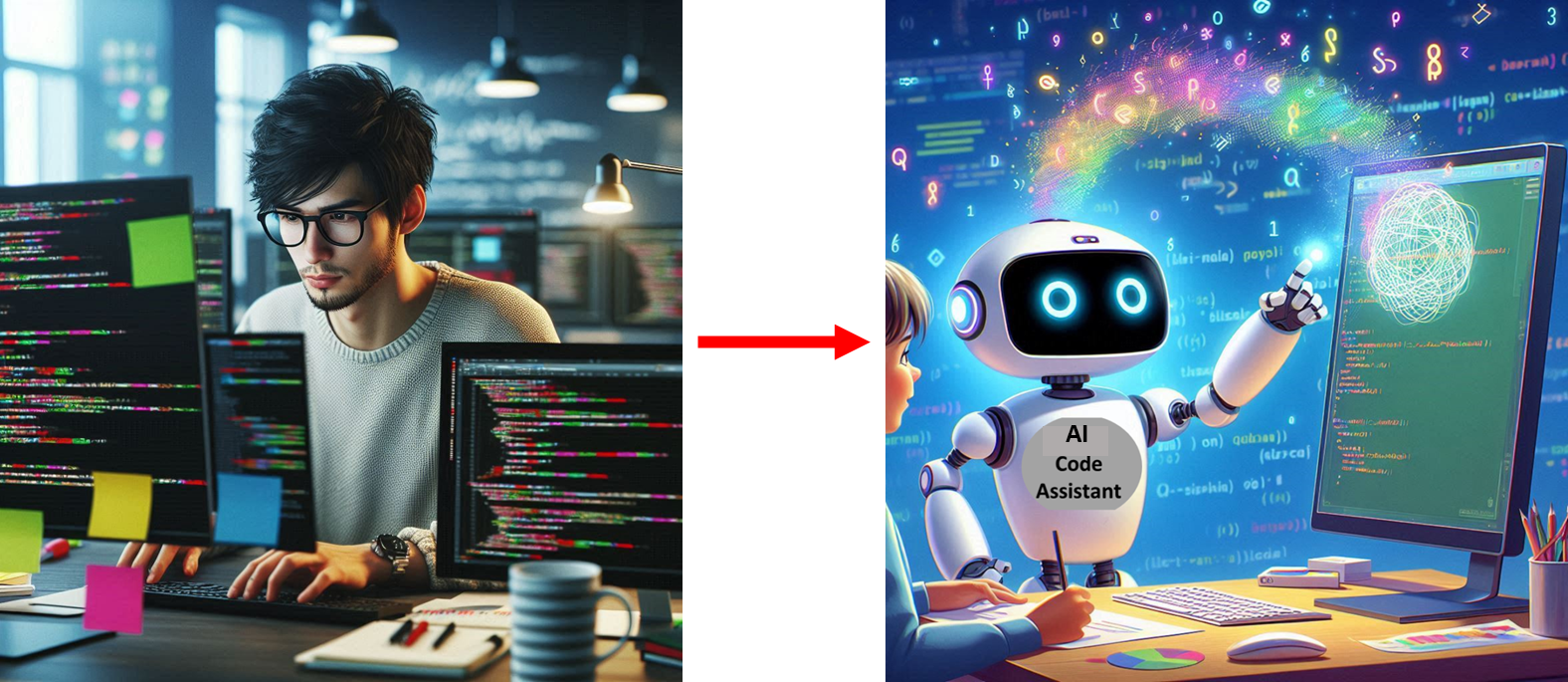
Last year, we published an article titled Quantum SDKs are Dying, Long Live Quantum AI SDK describing how the classical computing concept of “Vibe Coding” is entering the quantum programming space. (Perhaps we should call it Vibe Qoding!) We continue to see this trend accelerate and believe it will profoundly impact the future use of quantum computing technology.
Workforce development remains a major concern within the quantum community. The central question is simple: How can we train thousands of potential users to program large-scale quantum systems within a reasonable timeframe? At industry conferences, speakers often ask, “If we put a 1-million-qubit quantum computer online next week, would anyone know how to program it and take advantage of its capabilities?”
At GQI, we believe vibe coding will help solve this bottleneck. Placing these powerful AI tools directly into users’ hands will significantly shorten the time required to develop, test, and run quantum programs to solve real-world problems. Most industry experts we speak with agree: AI-assisted quantum coding will be the primary way people program quantum computers by 2030. The recent developments we describe below reinforce this outlook.
The AI Decryption Optimization Race
In April, we published The Decryption Threshold — Re-estimating the Quantum Threat to Blockchain Infrastructure covering a Google whitepaper on breaking the secp256k1 cryptographic algorithm. Google achieved this using a quantum computer an order of magnitude smaller than previously thought possible—requiring only 1,200–1,450 logical qubits and 70–90 million Toffoli gates. Because secp256k1 powers Bitcoin’s public-key cryptography and digital signatures, breaking it would have severe consequences. Today’s quantum hardware isn’t quite powerful enough yet, but GQI expects capable machines to arrive within the next few years. While we believe that Google manually developed its algorithm without AI, their announcement sparked an AI-driven, hackathon-style race to optimize it further. Researchers track progress using a spacetime score—calculated as the product of Toffoli gates (time) and Qubits (space), where a lower score is better. (Clifford gate execution times are small by comparison, so they are excluded to simplify calculations.)
Google’s initial algorithm registered a spacetime score of roughly 2.9x 10⁹. Over the past four months, various research groups tracked on ECDSA.fail have driven that score down by ~50% to 1.477x 10⁹. Notably, almost every top-ranking entry on the leaderboard was achieved using advanced models like Claude Opus 4.8 or GPT-5 Codex.
Another team, doubleAI, developed a circuit that breaks ECDSA using their own AI tool called WarpSpeed described in a blog posted on their website here . While omitted from the leaderboard because they chose to publish a Zero-Knowledge Proof (ZKP) rather than open-sourcing their code for security reasons, their solution uses 993,181 Toffoli gates and 1,205 qubits. This yields a spacetime score of 1.20x 10⁹—roughly 19% better than the current top score on ECDSA.fail.
Autonomous Quantum Agents
A recent arXiv paper from Pasqal and Quantonation detailed two AI agents built on Claude models. The first automates translating research papers or patents into code optimized for Pasqal’s neutral-atom quantum processors. The second scanned 633 arXiv papers on Rydberg arrays, automatically determining which were executable on current hardware and identifying the exact hardware upgrades needed for the rest.
Looking Ahead
We expect these efforts to multiply rapidly. The road to commercial quantum advantage relies on concurrent advances in both hardware and software—and AI will play an increasingly vital role in both.
August 20, 2026

Leave A Comment