Author: Mohamed Abdel-Kareem
-
-
BlueQubit Benchmarks Quantum Computational Advantage in Random-Circuit Sampling on IBM Nighthawk r2 Hardware
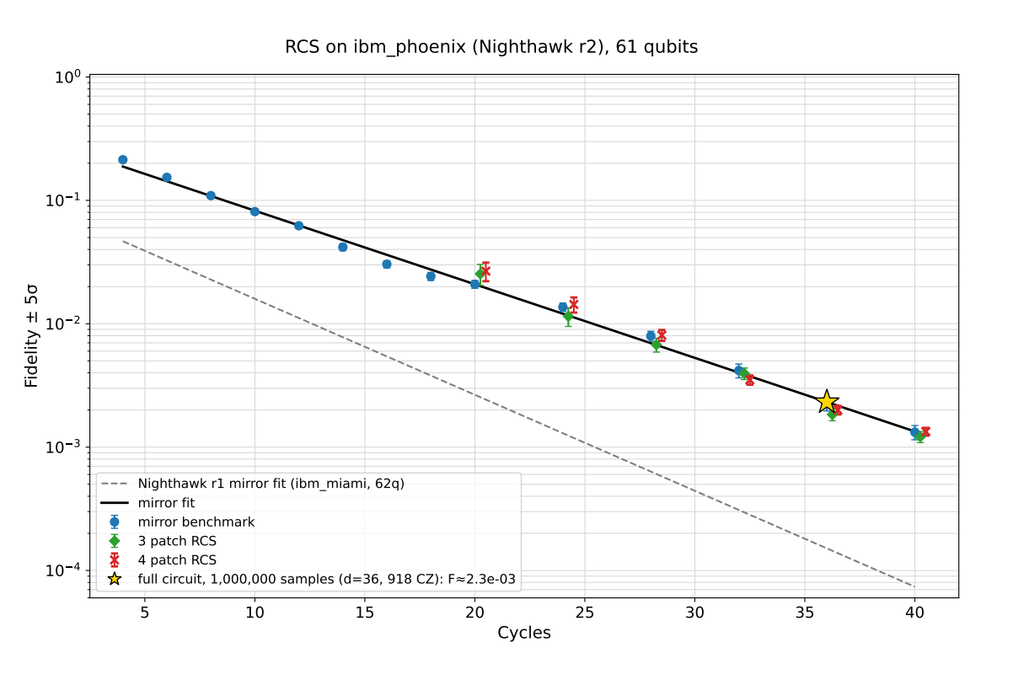
BlueQubit, in collaboration with EPFL and the XPRIZE Foundation, has demonstrated quantum computational advantage using IBM Quantum's 120-qubit ibm_phoenix processor. Their random-circuit sampling experiment, involving 61 active qubits, achieved a fidelity that would take over a century for classical supercomputers to replicate. This study highlights significant architectural improvements in IBM processors and validates the classical hardness of their quantum benchmarks.
-
Gothenburg and Chalmers Researchers Develop Modular Graph Neural Decoder for Surface Code Memory and Lattice Surgery
Researchers from the University of Gothenburg and Chalmers University of Technology have developed a modular neural decoder for surface code quantum error correction (QEC). This decoder demonstrates superior performance compared to traditional methods and is capable of adapting across different hardware architectures, noise profiles, and multi-patch logical operations. Its efficient design, inspired by the renormalization group, allows for training on a single commercial GPU and offers portability advantages for fault-tolerant computing.
-
Yonsei University Researchers Develop Mamba State-Space Neural Decoder to Enable Real-Time Quantum Error Correction
Researchers at Yonsei University have developed a Mamba-based neural decoder for quantum error correction, significantly reducing computational complexity from O(d4) to O(d2) compared to Transformer-based models. This new decoder matches the accuracy of Transformer models like AlphaQubit but eliminates the quadratic self-attention bottlenecks, making real-time feedback on quantum hardware possible. The Mamba decoder shows superior performance in real-time conditions and has implications for advancing fault-tolerant quantum computing, though practical implementation requires overcoming edge-compute limitations.
-
University of Sydney Demonstrates Multi-Qubit Logical Entanglement and 170-Round Stability on IBM Square-Lattice Nighthawk r2 Processor
University of Sydney researchers have demonstrated significant advancements in quantum error correction on IBM Quantum's ibm_phoenix processor. They achieved multi-qubit fault-tolerant logic and sustained error suppression for up to 170 rounds using a novel dynamic "walking" syndrome circuit. This breakthrough, utilizing the Nighthawk r2 architecture, includes successful logical Bell-state preparation and three-logical-qubit teleportation, marking a crucial step towards scalable fault-tolerant quantum computing.
-
Nord Quantique Secures $10 Million DARPA Quantum Benchmarking Initiative Stage B Agreement Extension
Nord Quantique secured a $10 million extension for Stage B of the DARPA Quantum Benchmarking Initiative (QBI) to advance its bosonic quantum error correction (QEC) architecture. This funding supports engineering milestones and prototyping to demonstrate the viability of their approach, which aims for a 1:1 physical-to-logical qubit footprint using superconducting bosonic codes. The company will focus on reducing error rates and developing hardware subsystems to meet DARPA's goal of achieving utility-scale quantum computing by 2033.
-
LANL and Cornell Researchers Demonstrate Extraction of Quantum Information Structures from Condensed-Matter Dynamical Simulations
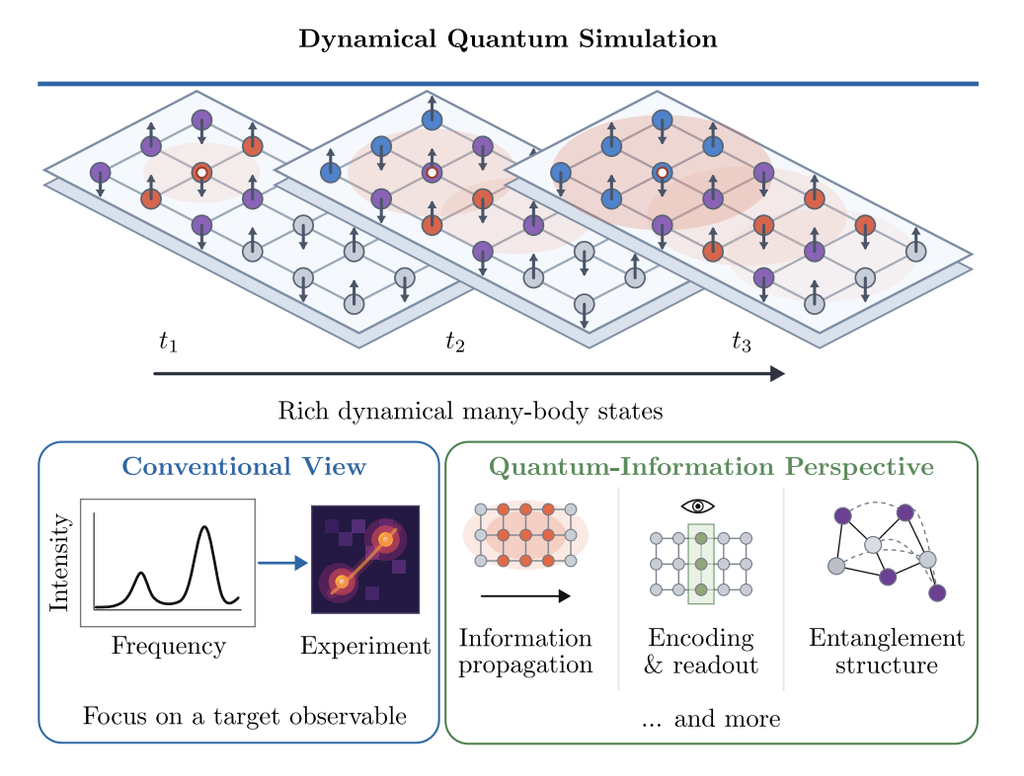
Researchers from LANL and Cornell have developed a framework to extract quantum information from dynamical quantum simulations, revealing how information propagates and reorganizes in many-body states. Their work demonstrates that traditional measurements capture only a limited view of quantum information, and that multipartite entanglement can be certified even as entanglement is redistributed. This framework can repurpose quantum simulators as multi-purpose quantum information laboratories, though full quantum information reconstruction on hardware faces significant scaling challenges.
-
EPB and IonQ Deploy Hybrid Trapped-Ion Algorithms on Forte Enterprise to Optimize Power Grid Topology
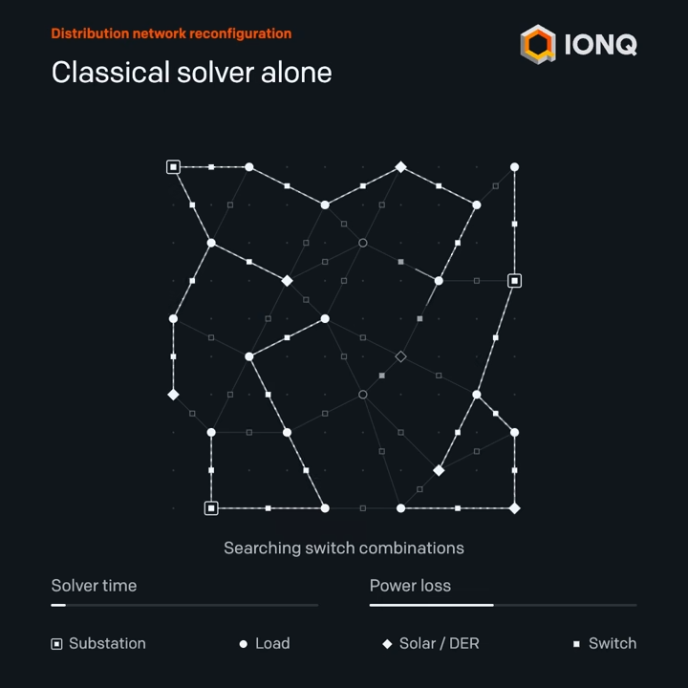
EPB and IonQ have successfully deployed hybrid quantum-classical algorithms on IonQ Forte Enterprise to optimize power grid topology, significantly reducing power loss and improving efficiency. Their research, funded by a $4 million NIST grant, utilized trapped-ion systems to benchmark three distinct computational frameworks for distribution network reconfiguration. These methods demonstrated substantial parameter reduction, decreased classical solver runtime, and recovered global minimal-loss configurations across various bus systems, establishing a practical boundary where quantum-assisted pipelines become more efficient.
-
NQCP Spins Out Pelagic Systems to Commercialize Real-Time Hardware Calibration Software
Pelagic Systems, a spin-out from the Novo Nordisk Foundation Quantum Computing Programme (NQCP), is commercializing software for real-time control, calibration, and characterization of quantum processors. Their platform addresses parameter instabilities in multi-qubit systems by running routines directly on FPGA controllers, significantly reducing latency compared to traditional methods. This technology aims to automate and streamline the tuning of complex quantum hardware, offering a solution to a growing bottleneck in the industry.
-
Quantum XChange Releases Phio TX-CMC 2.0 to Automate Distributed Post-Quantum Network Management
Quantum XChange has released Phio TX-CMC 2.0, a new version of their centralized management console for post-quantum network security. This update introduces automated provisioning and post-quantum cryptographic tunnels to help enterprises and federal agencies transition to PQC standards. The platform is designed to secure data in motion without requiring a complete network overhaul, addressing challenges like "harvest now, decrypt later" attacks and the complexities of migrating to new cryptographic standards.
-
SkyWater Technology Introduces OnRamp Foundry Program and Details SP90 200 mm Silicon Nitride Quantum Photonics Platform
SkyWater Technology has launched the OnRamp program, an open-access foundry initiative for quantum hardware startups, providing engineering support and manufacturing on 200 mm production lines. The program includes the SP90 silicon nitride platform, which offers a broad optical spectrum and integrates various materials for diverse quantum applications. This initiative aims to help startups commercialize their quantum technologies by overcoming manufacturing challenges and offering flexible access to prototyping.
-