Author: Mohamed Abdel-Kareem
-
-
UbiQD Receives $200,000 New Mexico State Grant to Prototype Room-Temperature Quantum Dot Single-Photon Sources
UbiQD received a $200,000 grant from the New Mexico Quantum Technologies Award to prototype room-temperature quantum dot single-photon sources. This funding will support the development of fiber-coupled light sources for quantum processors and communication, utilizing a novel, heavy-metal-free semiconductor nanocrystal technology. The initiative aims to overcome challenges in quantum emitter scalability and performance.
-
PsiQuantum Unveils 8×8 Optical Circuit Switch Demonstration Vehicle Derived from Silicon Photonics Quantum Architecture
PsiQuantum has developed an 8x8 optical circuit switch (OCS) using their silicon photonics platform, originally for quantum computing, but now repurposed for AI cluster interconnects. This OCS offers low insertion loss and high channel isolation. This dual-use strategy allows PsiQuantum to commercialize its photonic manufacturing while continuing to develop its quantum computing technology.
-
NVision Demonstrates Addressable Molecular Spin-Photon Interface and Partners with HyperLight for Integrated Photonic Hardware
NVision Quantum Technologies has demonstrated a new quantum computing platform using organic carbene molecules as qubits, achieving single-molecule coherent control and optical readout. They've partnered with HyperLight Corporation to integrate these molecular qubits onto photonic chips, aiming to overcome the limitations of traditional solid-state systems. This technology offers a promising path towards scalable quantum computers, with a prototype expected by late 2026 and fault-tolerant systems by 2030.
-
LG CNS and D-Wave Partner to Evaluate Quantum Annealing for Enterprise Combinatorial Optimization
D-Wave Quantum Inc. and LG CNS have signed a non-binding MOU to explore quantum annealing for enterprise optimization in South Korea and Asia. This collaboration will evaluate D-Wave's quantum annealing technology with LG CNS's system integration to address complex combinatorial problems like scheduling, routing, and logistics. The partnership aims to demonstrate the commercial viability of quantum solutions over classical methods.
-
-
-
NIST Releases Final IR 8547 Establishing Definitive Post-Quantum Cryptography Transition Timeline and Deprecation Schedules
NIST has released its final roadmap, NIST IR 8547, for transitioning to post-quantum cryptography (PQC) standards, with federal agencies facing binding deadlines to adopt PQC for key establishment by December 31, 2030, and digital signatures by December 31, 2031. Classical public-key algorithms will be deprecated after 2030 and disallowed after 2035. The report emphasizes the urgency of PQC adoption due to "Harvest Now, Decrypt Later" attacks and provides guidelines for hybrid schemes during the transition.
-
IonQ Deploys Intercontinental Hybrid QKD and PQC Architecture Securing Enterprise Links Between Geneva and Seoul
IonQ has deployed a hybrid quantum-safe security network connecting its facilities in Geneva, Switzerland, and Seoul, South Korea. This network integrates Quantum Key Distribution (QKD) with Post-Quantum Cryptography (PQC) to protect sensitive data against emerging quantum threats. This internal commercial operationalization serves as a blueprint for multinational enterprises and sovereign institutions facing accelerated post-quantum migration deadlines.
-
Quantinuum and GE Vernova Target High-Temperature Superconductivity Using Helios Trapped-Ion Hardware
Quantinuum and GE Vernova are collaborating to model high-temperature superconductivity (HTS) using Quantinuum's Helios quantum computer. This partnership aims to overcome limitations of classical simulations by directly executing Fermi–Hubbard simulations, leveraging Quantinuum's quantum hardware and GE Vernova's materials expertise. The research seeks to identify novel HTS materials with industrial applications in wind generators, marine propulsion, and grid infrastructure.
-
QuantrolOx Raises €12 Million ($13.36 Million USD) Series A2 to Scale Automated Quantum Control Software and U.S. Operations
QuantrolOx has secured €12 million ($13.36 million USD) in Series A2 funding, bringing its total funding to approximately €28 million. The company, which specializes in automated quantum control software, will use the investment to expand commercial deployments of its Quantum EDGE™ software, grow its educational offerings, and strengthen its North American presence. This funding will help QuantrolOx address the challenges of manual calibration in quantum systems by automating the process with machine-learning-driven solutions.
-
GQI Q3 2026 State of Play: Investment Consolidation, Accelerating Q-Day Horizons, and the Shift to Second-Generation Architectures
Global Quantum Intelligence's Q3 2026 report highlights a quantum technology market in transition, marked by significant capital consolidation and a shift towards second-generation, fault-tolerant hardware architectures. The report also emphasizes accelerated "Q-Day" timelines, forcing governments to mandate aggressive post-quantum migration schedules due to advancements in cryptanalytic capabilities. These developments are shaping strategic directives for hardware/software developers, investors, policy makers, and enterprise end-users, pushing for rapid innovation and geopolitical alignment in quantum technology.
-
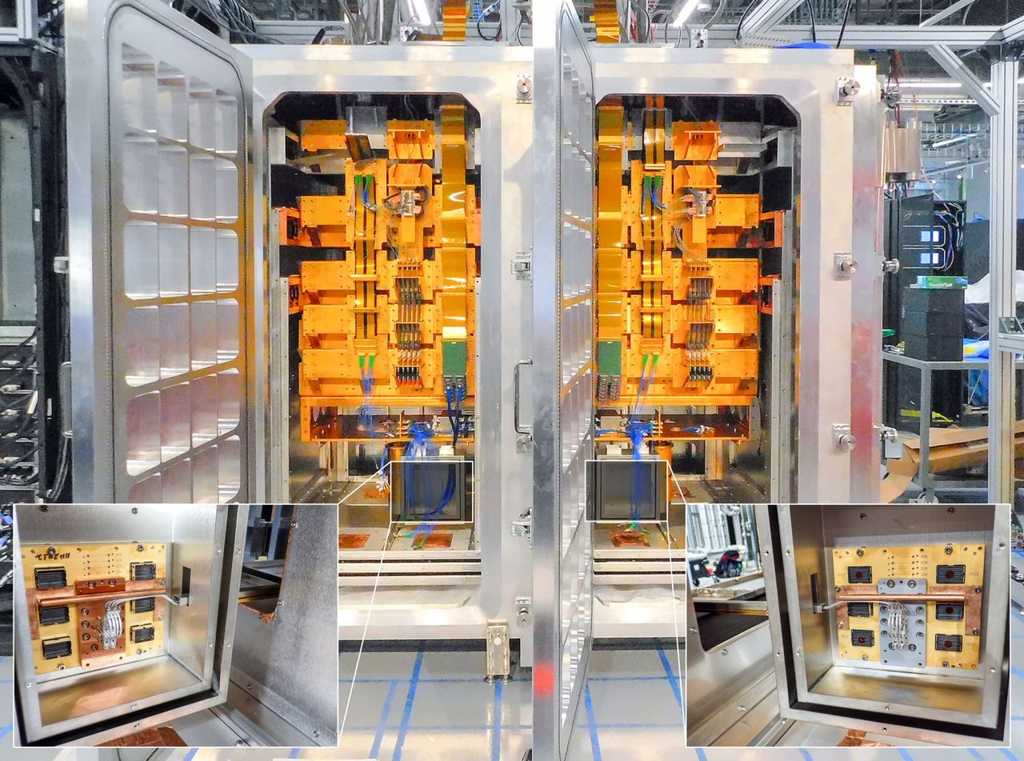
IBM Unveils Meter-Scale Superconducting L-Couplers: Connecting Dual 120-Qubit Processors with 99% State Transfer Fidelity
IBM Quantum has achieved a significant milestone in quantum computing with the development of meter-scale superconducting L-couplers. These couplers successfully connect two 120-qubit processors with 99% quantum state transfer fidelity. This innovation addresses crucial engineering challenges for building modular fault-tolerant quantum computers, paving the way for future advancements like the IBM Quantum Starling processor.
-