Author: Mohamed Abdel-Kareem
-
-
Canada Launches $20.3M Quantum Defence Innovation Secure Hub in Calgary
Canada has launched its first Quantum Defence Innovation Secure Hub (DISH) in Calgary, with a $20.3 million investment over two years. Led by the University of Calgary and its Quantum City initiative, this hub will accelerate the transition of domestic quantum research into operational capabilities for the Canadian Armed Forces and the Communications Security Establishment. The Quantum DISH, established under the BOREALIS framework, focuses on four technical work streams: Quantum Sensing & PNT, Quantum Communications & Cryptography, Quantum Algorithms & Decision Support, and Hardware Assurance, aiming to deliver validated prototypes within two years.
-
-
-
Xanadu Reports Q2 2026 Financial Results: $312.8M Cash Position, $67.2M Raised via ATM Facility, and Albany Expansion
Xanadu Quantum Technologies reported Q2 2026 financial results, showcasing a strong cash position of $312.8 million, bolstered by a $67.2 million raise through an ATM facility. Despite a sequential revenue decrease to $1.51 million, the company saw significant advancements in hardware and algorithms, expanded its U.S. operations in Albany, and continued strategic partnerships. The net loss widened to ($42.05) million, primarily due to increased R&D, public company costs, and a non-cash loss on earn-out share liabilities.
-
Horizon Quantum Reports Q2 2026 Financial Results: Warrant Cash Infusion, Beryllium Early Access, and European Testbed Expansion
Horizon Quantum Holdings Ltd. reported a significant increase in cash and cash equivalents to $113.25 million in Q2 2026, primarily due to a $27.5 million capital injection from public warrant exercises. The company also launched early access for its Beryllium programming language and expanded its quantum hardware testbed into Europe with a 256-qubit trapped-ion system in Dublin. Despite these operational advancements, Horizon Quantum reported a substantial net loss of $115.23 million, largely due to a non-cash accounting charge related to warrant remeasurement.
-
IQM Quantum Computers Reports First Earnings as Public Company: H1 2026 Results, Record Backlog, and FY 2026 Guidance
IQM Quantum Computers reported strong H1 2026 results with a 47% revenue increase to €8.87 million, driven by quantum computing system deliveries. Despite a widened operating loss of €60.54 million due to expansion and listing costs, the company secured a pro-forma cash balance of €309.4 million post-July 2026 business combination, eliminating debt and accelerating its order backlog to over €102.1 million. IQM expanded its global deployments, fab capacity, and made strides in error correction and HPC/AI integration, projecting full-year 2026 revenue of €42-47 million.
-
NIST, UMD, and Qunnect Demonstrate Quantum Entanglement Over 62 km Metropolitan Aerial Fiber
NIST, UMD, and Qunnect successfully demonstrated quantum entanglement over a 62 km metropolitan aerial fiber link, transmitting entangled photons with high fidelity despite environmental challenges. They achieved this by integrating automated polarization compensation devices, maintaining an entangled photon distribution rate of 1,500 pairs per second and violating the Bell inequality for over 20 hours. This breakthrough validates the feasibility of deploying quantum networks over existing commercial fiber infrastructure.
-
IonQ Awarded $28M DARPA Contract Extension for Atomic Clocks; Secures NRO Radar Satellite Award
IonQ has secured two significant defense contracts: a $28 million extension from DARPA to produce 125 compact Evergreen-05 optical atomic clocks for government use, and a contract for its subsidiary, Capella, with the National Reconnaissance Office (NRO) to provide synthetic aperture radar imagery and data services. These awards expand IonQ’s role in quantum PNT and commercial space intelligence, leveraging its acquisitions of Vector Atomic and Capella Space in 2025.
-
Quantum X Labs Advances Quantum Computing for Nuclear Particle Transport Simulations
Quantum X Labs’ subsidiary, Nuclear Quantum, has developed a quantum circuit-based method for modeling nuclear particle transport. This new technology translates particle propagation and random-walk dynamics into a quantum computational framework, aiming to overcome the computational limitations of traditional Monte Carlo simulations. By encoding gamma-photon trajectory histories into quantum states and utilizing Grover-inspired amplitude amplification, Nuclear Quantum seeks to accelerate simulations for various applications, including nuclear medicine and shielding design.
-
Thailand Launches “Quantum Club Thailand” at True Digital Park to Build ASEAN Quantum Hub
Thailand has launched “Quantum Club Thailand” at True Digital Park, aiming to become a leader in quantum technology in ASEAN. This national collaboration, involving MHESI, CP Group, True Corporation, and others, focuses on human capital development, applied research, industrial adoption, and commercial innovation. The initiative provides access to over 26 international quantum hardware systems via qBraid and integrates quantum software into existing industry clusters to foster quantum-hybrid applications.
-
enQase and Light Rider Partner to Deliver Integrated Quantum-Safe Communications Architecture
EnQase and Light Rider Inc. have partnered to create integrated quantum-safe communication architectures. This collaboration combines enQase’s cryptographic platform with Light Rider’s quantum hardware and optical networking technologies to offer end-to-end security solutions. The partnership aims to provide modular deployment paths for modernizing legacy networks, focusing on joint reference architectures, interoperability testing, and proofs-of-concept for various industries.
-
D-Wave Demonstrates Two-Qubit Gate Breakthrough for Dual-Rail Erasure Qubits in Nature
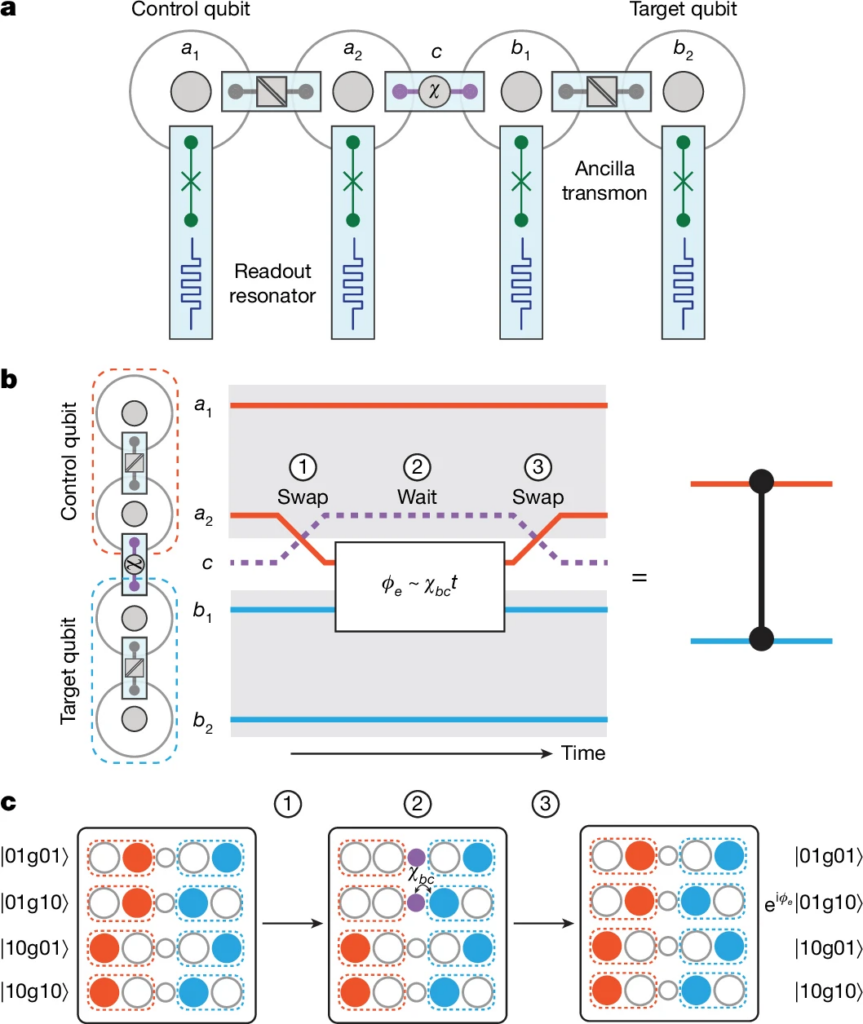
D-Wave has published research in Nature detailing a breakthrough in quantum computing: a fast, high-fidelity two-qubit entangling gate for superconducting dual-rail cavity qubits. This advancement is a foundational milestone in their gate-model development, aiming to reduce physical qubit overhead by converting photon loss into detectable erasure errors. Their roadmap projects significant error reduction and scalability, culminating in a 100-logical-qubit system by 2032 for various quantum applications.
-