
News
Company, funding, product and policy news from across the quantum industry, as it happens.
-
-
QAI Ventures and QCentroid Partner to Accelerate Industrial Quantum Adoption
QAI Ventures and portfolio company QCentroid have partnered to integrate the “Quantum Ops” platform into QAI Ventures’ Global Industry Clusters. The collaboration provides a three-tier framework—Sandbox Environments, Readiness Programmes, and PoC Delivery—to transition enterprises in finance, life sciences, and industrials toward hybrid quantum-classical workflows. By utilizing QCentroid’s AI Copilot and agentic tools, the partnership aims to bridge the gap between business strategy and technical execution across global hubs in Switzerland, Canada, Japan, and Singapore. The initiative focuses on shortening the quantum adoption curve by offering a direct path from use-case discovery to hardware implementation.
-
BMO Financial Group Expands Quantum and AI Strategy Through New Partnerships and Institute
BMO Financial Group has announced strategic partnerships with Quantum Industry Canada (QIC) and the Chicago Quantum Exchange (CQE) to accelerate the commercialization of quantum applications in finance. These collaborations, announced on April 13, 2026, build on the recent establishment of the BMO Institute for Applied Artificial Intelligence & Quantum and the appointment of Dr. Kristin Milchanowski as Chief AI & Quantum Officer. The partnerships will focus on research in fraud detection and secure communications, while leveraging the CQE’s Midwest hub and QIC’s Canadian consortium to develop a quantum-ready workforce.
-
Exponential Quantum Advantage in Processing Massive Classical Data
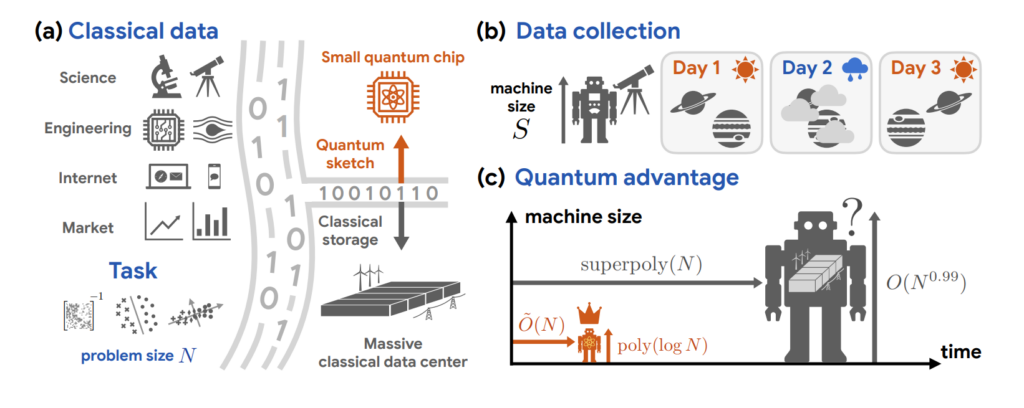
Researchers from Caltech, Google Quantum AI, MIT, and Oratomic have demonstrated an exponential space advantage for quantum computers in processing classical data. By introducing quantum oracle sketching, the team bypassed the “data loading problem” and the need for QRAM, instead processing streaming data “on the fly” through incremental rotations. The study proves that a processor with as few as 60 logical qubits can perform dimensionality reduction on datasets that would physically exceed the memory capacity of any classical machine. Validated on single-cell RNA sequencing data, the framework achieves a four to six order-of-magnitude reduction in memory consumption over classical sparse-matrix algorithms.
-
-
-
IQM Establishes First U.S. Quantum Technology Center in Maryland’s Discovery District
IQM Quantum Computers has opened its first U.S. Quantum Technology Center within the University of Maryland’s Discovery District. The facility joins the Capital of Quantum (CoQ) initiative, a $1 billion partnership designed to integrate superconducting hardware with local HPC infrastructure. Positioned near NIST, NASA, and the Army Research Laboratory, the hub facilitates direct collaboration with the federal research community and North American startups. The center aims to leverage Maryland’s talent pipeline to accelerate the commercialization of full-stack quantum systems for the U.S. market.
-
Pasqal and True Nexus Partner to Optimize Alternative Protein Design via Quantum Computing
Pasqal and Saudi-based computational intelligence firm True Nexus have entered a strategic partnership to apply neutral-atom quantum computing to the study of protein functionality. The collaboration aims to develop a vectorized, dynamic 3D model of protein gelation to improve the predictability of alternative protein behavior in complex food systems. By simulating molecular interactions and processing variables, the initiative seeks to move the food industry from empirical trial-and-error toward a design-driven methodology for sustainable proteins. This partnership follows Pasqal’s recent definitive agreement to go public via a $2 billion business combination with Bleichroeder Acquisition Corp. II (Nasdaq: BBCQ).
-
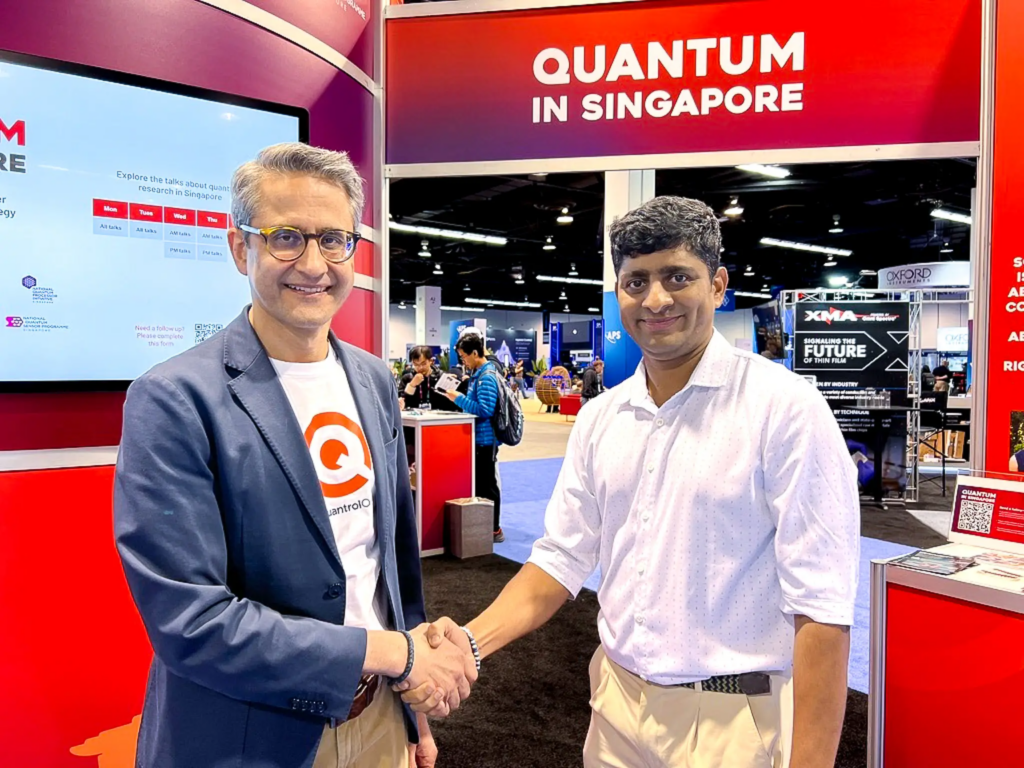
QuantrolOx and RAQS Quantum Partner to Scale Automation and Workforce Development in Asia Pacific
QuantrolOx and RAQS Quantum have formed a strategic partnership to deploy the Quantum EDGE measurement and automation platform across the Asia-Pacific region. Announced at GITEX Asia 2026, the collaboration aims to replace manual qubit calibration with automated, hardware-agnostic workflows for research institutions and enterprise R&D teams. In addition to hardware control, the partnership will launch the Quantum EDGE Academy to support regional workforce development and national upskilling initiatives. RAQS Quantum will lead the commercial integration, with deployment activities scheduled to commence in the second half of 2026.
-
Q-CTRL Proposes Heterogeneous Architecture to Optimize Fault-Tolerant Resource Requirements
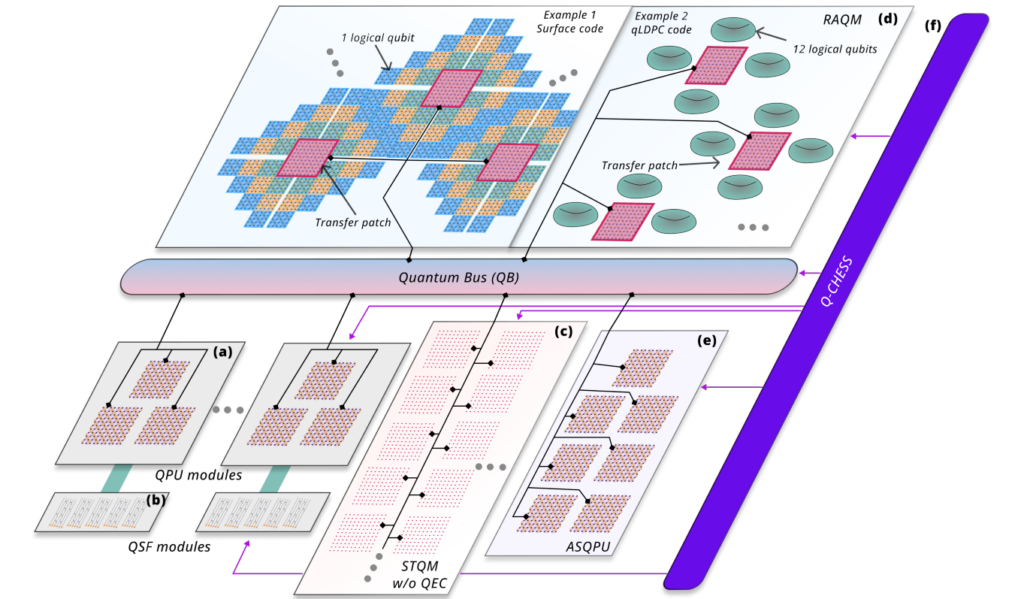
Q-CTRL has introduced Q-NEXUS, a heterogeneous architecture that decomposes quantum systems into specialized modules for logic (QPUs), storage (Quantum Memory), and resource generation (Quantum State Factories). By segregating inactive qubits—which account for 96–97% of cycles in algorithms like RSA-2048—into high-density memory tiers, the framework achieves up to a 551x reduction in logical errors and a 138x reduction in physical qubit requirements. For 2048-bit RSA factorization, Q-NEXUS requires between 190,000 and 381,000 physical qubits, down from the standard one-million-qubit estimate. The system is managed by Q-CHESS, an orchestration layer that synchronizes timing across different hardware modalities to ensure processing throughput remains unconstrained by memory latency.
-
-
-
Terra Quantum Signs Non-Binding LOI to Go Public via $3.25 Billion SPAC Merger with Mountain Lake Acquisition Corp. II
Terra Quantum AG has signed a non-binding letter of intent (LOI) to go public via a business combination with Mountain Lake Acquisition Corp. II (Nasdaq: MLAA). The deal values the St. Gallen-based quantum technology firm at $3.25 billion and aims to accelerate the commercialization of its hybrid quantum-classical algorithms and security solutions. The transaction will provide Terra Quantum with enhanced access to capital markets for global expansion across the defense, finance, and pharmaceutical sectors. Led by CEO Markus Pflitsch, the combined entity will remain focused on delivering implementation-ready quantum software while scaling its global operational footprint.
-
Qoro Quantum Secures $750,000 Pre-Seed to Orchestrate Hybrid Networks
Qoro Quantum has secured $750,000 in pre-seed funding led by Ada Ventures to develop a unified orchestration layer for hybrid quantum-classical networks. The platform reduces the integration overhead for heterogeneous hardware, reportedly cutting custom code requirements from 150,000 lines to just 20. Founded in 2024 by Dan Holme and Dr. Stephen DiAdamo, the London-based startup provides tools like Solo, a cloud platform for parallelized simulation, and Maestro, a framework that treats CPUs, GPUs, and QPUs as a single logical machine. The capital will support engineering expansion and the commercial rollout of its software stack to bridge the gap between experimental research and production-grade hybrid applications.
-
Horizon Quantum to Acquire IonQ 256-Qubit Trapped-Ion System for Multi-Modal Testbed
Horizon Quantum Holdings Ltd. (Nasdaq: HQ) and IonQ (NYSE: IONQ) have entered a strategic agreement for the purchase of a 6th-generation, 256-qubit trapped-ion system. This acquisition enables Horizon Quantum to operate a multi-modal hardware environment by adding a high-fidelity trapped-ion modality to its existing superconducting testbed. The system features all-to-all connectivity and microwave-gate operations capable of 99.99% gate fidelity—a benchmark established by IonQ in 2025. By integrating this hardware with the Triple Alpha software platform, the partnership aims to develop adaptive quantum programming with real-time control flow and dynamic memory allocation.
-
Infleqtion and NASA Deploy Upgraded Quantum Hardware to International Space Station
Infleqtion (NYSE: INFQ), in partnership with NASA’s Jet Propulsion Laboratory (JPL), has delivered an upgraded physics package to the International Space Station (ISS) via the Northrop Grumman-24 (NG-24) cargo mission. The hardware upgrade for the Cold Atom Laboratory (CAL) is designed to achieve record-breaking atom populations and ultracold temperatures, enabling the study of simultaneous dual-species quantum gases (rubidium and potassium). By leveraging the microgravity environment for longer atom observation times, the mission seeks to advance quantum sensing for Earth monitoring and inertial navigation. This deployment validates neutral-atom technology for future commercial low-Earth-orbit operations and follows Infleqtion’s ongoing support of NASA’s Quantum Gravity Gradiometer Pathfinder mission.
-
Riverlane Demonstrates Real-Time QEC Latency Performance Advancements
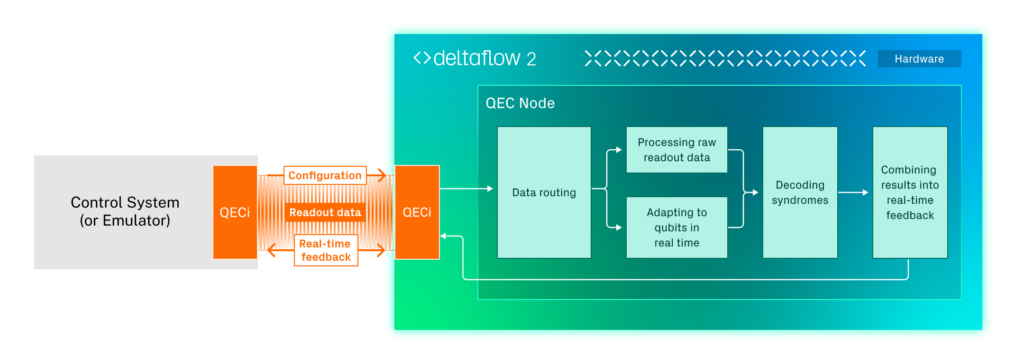
Riverlane has announced that its Deltaflow 2 system achieved a real-time quantum error correction (QEC) latency of 16.32µs, a fourfold improvement over the 63µs benchmark set by Google’s 2024 “Willow” experiment. Using data from a distance-5 rotated surface code test, the system demonstrated sub-shot processing speeds ten times faster than previous records. This advancement brings the platform closer to the critical 10µs threshold required for logical operations like magic state teleportation and universal fault tolerance. Riverlane utilizes an FPGA-based Local Clustering Decoder (LCD) and a streaming windowing scheme to manage massive QPU data throughput in real-time.
-
Who’s News: Strategic Leadership Appointments at QuiX Quantum, Qubitrium, Qunnect, Delft Circuits, Q.ANT, QuSecure, Moth, and IonQ
QuiX Quantum and Q.ANT have appointed Robin Wittland (CCO) and Michael Krueger (VP Commercials) to manage photonic hardware sales, while Delft Circuits named Karen Keenan as COO to oversee I/O hardware production. In the security and networking sectors, QuSecure added Tom Lounibos as a Strategic Advisor, Qunnect appointed Scott Faris to its board, and Qubitrium named Dr. Utku Tefek as CTO. Sebastian Hassinger and Stewart Smith, have joined Moth, while Jordan Shapiro and David Allcock have new roles at IonQ. Additionally, QodeX Quantum hired Josselin Milloz (VP) and Brian Fritton (Founding Engineer) to manage technical partnerships in quantum-native AI.
-
QuantumDiamonds Deploys First US Quantum Sensing System QD m.1 at Eurofins EAG Laboratories
QuantumDiamonds has successfully installed its QD m.1 system at Eurofins EAG Laboratories in Sunnyvale, California, marking the company’s first commercial deployment in the United States. Utilizing patented Quantum Diamond Microscopy (QDM), the system provides non-destructive failure analysis for advanced 2.5D/3D ICs and sub-5nm technology nodes. By imaging magnetic fields generated by current flow, the QD m.1 localizes electrical “opens” and “shorts” with micron-level accuracy in minutes, bypassing the need for destructive sample preparation. This Silicon Valley installation follows a successful Q1 2026 rollout across Asia and positions quantum sensing as a critical tool for chipmakers addressing global yield challenges.
-
Cloudflare Accelerates Post-Quantum Roadmap to 2029 Amid Major Algorithmic Breakthroughs
Cloudflare has accelerated its post-quantum (PQ) security roadmap, shifting the target for full system-wide resilience to 2029. This decision follows independent breakthroughs from Google Quantum AI and the startup Oratomic, which significantly reduce the estimated hardware required to break modern encryption. Google’s research demonstrated a 20-fold reduction in resources needed to crack ECDSA-256, while Oratomic showed that neutral atom architectures could potentially break RSA-2048 with as few as 10,000 reconfigurable qubits. Cloudflare’s updated strategy prioritizes post-quantum authentication—beginning with ML-DSA support in mid-2026—to prevent adversaries from forging credentials or launching downgrade attacks.
-
Quantum XChange Launches Centralized Management Console for Enterprise Crypto-Agility
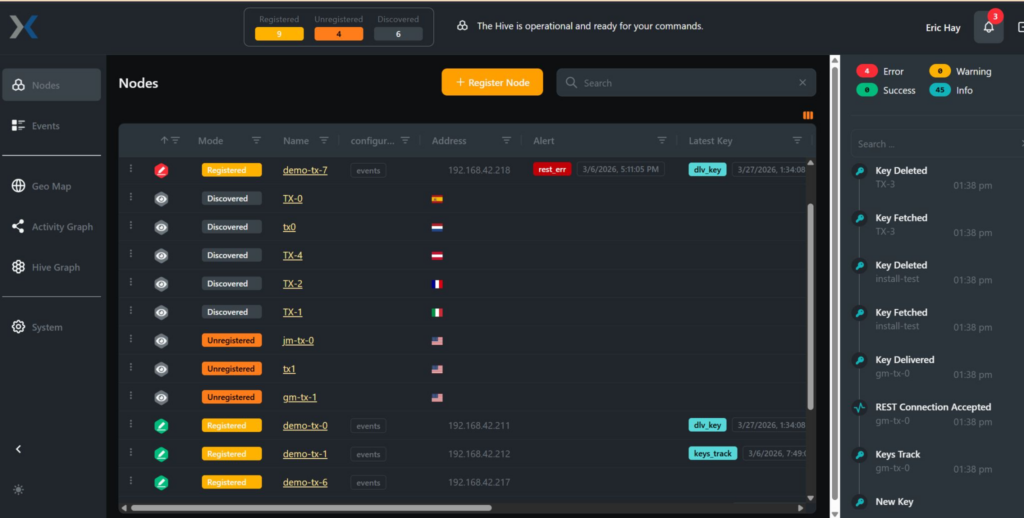
Quantum XChange has launched the Phio TX® Centralized Management Console (CMC), a platform designed to automate and unify quantum-safe key delivery across distributed enterprise networks. Released on April 7, 2026, the console supports the creation of a Cryptographic Center of Excellence (CCoE) by centralizing policy enforcement, configuration, and real-time monitoring. Featuring advanced visualizations like animated geomapping and “hive graphs” for managing thousands of nodes, the CMC allows CISOs to operationalize crypto-agility—enabling seamless algorithm updates without infrastructure disruption. This architectural approach secures data-in-motion against “harvest now, decrypt later” threats while maintaining compatibility with existing SIEM environments via Syslog support.
-
India’s National Quantum Mission Achieves 1,000-km Milestone via QNu Labs and VIAVI Validation
India’s National Quantum Mission (NQM) has achieved a major technical milestone with the successful demonstration of a 1,000-km quantum communication network, one of the longest in the world. Announced on April 8, 2026, by Union Minister Dr. Jitendra Singh, this achievement was reached in less than two years—significantly ahead of the original eight-year roadmap to hit 2,000 km. Developed using indigenous technology by QNu Labs, the network utilizes the ARMOS QKD platform, which was validated by VIAVI Solutions to maintain secure key generation over 200-km links on standard fiber. The milestone secures a sovereign backbone for India’s defense and financial infrastructure, while the mission has simultaneously expanded its startup support to 17 deep-tech ventures.
-
-
-
SuperQ Joins QSECDEF Alliance to Support Sovereign Post-Quantum Transition
SuperQ Quantum Computing Inc. (CSE: QBTQ) has joined the QSECDEF alliance to support the sovereign transition to post-quantum cryptographic standards. The collaboration features the deployment of the SuperPQC™ platform, an AI-orchestrated suite that provides automated vulnerability auditing and NIST-standardized remediation for both web2 and web3 environments. By integrating quantum-resistant chips and hardware-level security layers, SuperQ aims to mitigate “harvest now, decrypt later” risks and defend critical infrastructure against advanced side-channel attacks. This participation in the “Quantum Shield” framework provides implementation-ready tools like ChatQLM to secure digital borders during the global shift to next-generation security.
-
Equal1 and Q-CTRL Integrate Autonomous Calibration for Silicon Quantum Systems
Equal1 and Q-CTRL have integrated Boulder Opal Scale Up software into Equal1’s silicon-based quantum systems to automate hardware calibration and gate tune-up sequences. This partnership enables the Bell-series processors to perform autonomous “boot-up” and real-time performance management, removing the need for manual engineering intervention. By utilizing CMOS-compatible silicon spin qubit architecture and Q-CTRL’s “quantum containerization” approach, the rack-mounted Bell-1 system is designed as a plug-and-play accelerator for enterprise data centers and HPC environments. The integration ensures high system uptime and secure, local operation without external internet requirements.
-
Multipeak Global and RAQS Quantum Establish Collaboration for Industrial Quantum Deployment
Multipeak Global and RAQS Quantum have formed a strategic partnership in Singapore to deploy “quantum-ready” solutions for the maritime, energy, and logistics sectors. The collaboration focuses on hybrid and quantum-inspired algorithms to solve immediate optimization and material discovery challenges in Asia and Europe. Led by Henry Maillet and Raghunath Koduvayur, and supported by experts from CQT and SUTD, the initiative provides a technical roadmap for organizations transitioning toward “Quantum Utility.” By bridging the gap between deep-tech research and industrial execution, the partnership enables both MNCs and SMEs to integrate next-generation computing architectures into their existing IT stacks.
-
QBoson Secures CNY 1 Billion ($145 Million USD) Series B for Photonic Quantum Hardware Scaling
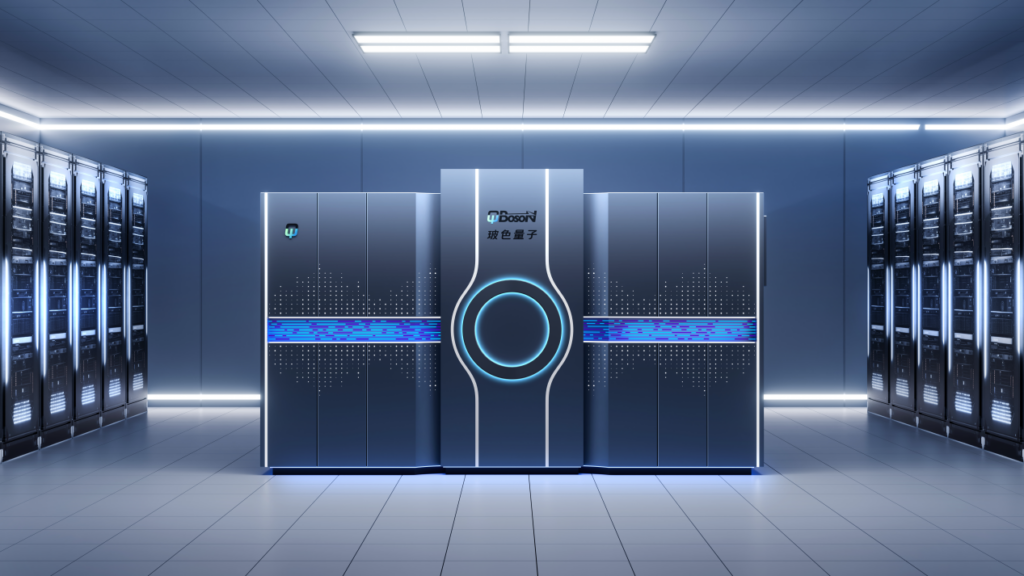
QBoson has secured CNY 1 billion ($145 million) in Series B funding to scale its photonic quantum hardware production. The round, led by a consortium including Beijing Financial Holdings and ICBC Capital, will support the expansion of the company’s Shenzhen-based factory, which launched in late 2025. QBoson specializes in room-temperature photonic systems—ranging from 100 to 1,000 qubits—optimized for industrial tasks in finance, drug discovery, and power grid management. This expansion aligns with China’s 15th Five-Year Plan, positioning photonic chips as a strategic resource for national AI and supercomputing infrastructure.
-
-
-
Rigetti Releases 108-Qubit Cepheus-1-108Q System via Cloud Platforms
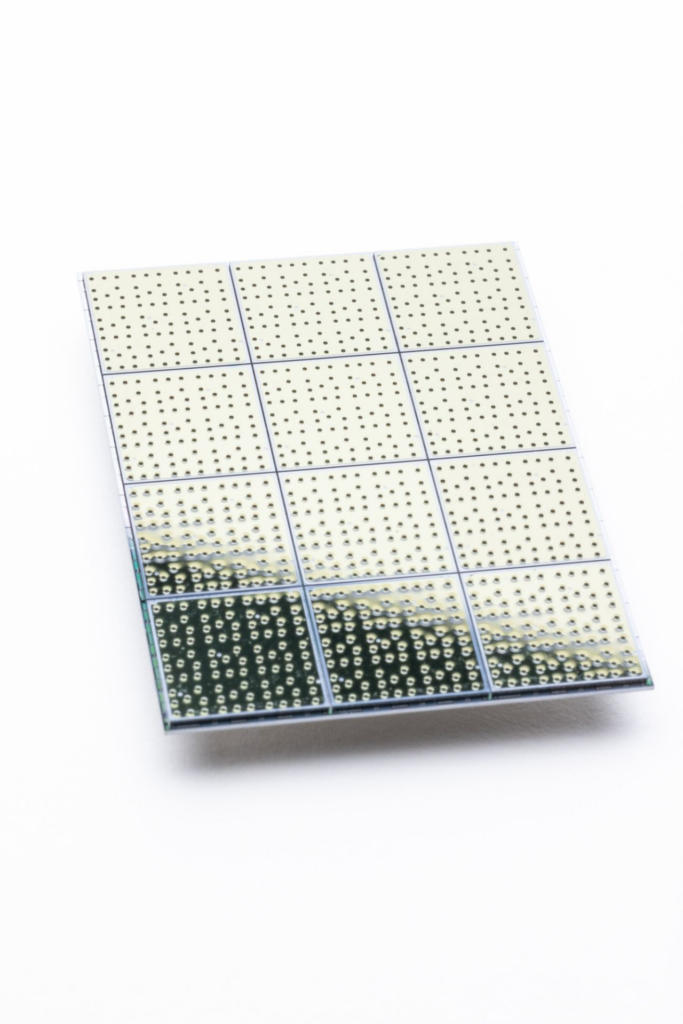
Rigetti Computing has launched its Cepheus-1-108Q system, a 108-qubit modular processor now available via Rigetti QCS and Amazon Braket. Featuring 99.1% median two-qubit gate fidelity and 60ns gate speeds, the system utilizes twelve interconnected 9-qubit chiplets and Alternating-Bias Assisted Annealing for improved frequency targeting. This release marks the first gate-based device with over 100 qubits on AWS, providing the scale necessary for advanced materials science and optimization research. Rigetti aims to push fidelities to 99.5% later this year as part of its three-year roadmap toward quantum advantage.
-
QSE Launches Enterprise Post-Quantum Migration Platform with QPA v2 Release
Quantum Secure Encryption Corp. (QSE) has launched QPA v2, an enterprise platform designed to automate and manage the transition to post-quantum cryptographic (PQC) standards. The release provides a data-driven workflow featuring an AI-enhanced PQC Planning Wizard, inventory analysis for cryptographic dependencies, and a centralized executive dashboard for risk management. This follows a successful municipal pilot in Canada, where the framework was used to secure critical infrastructure and citizen data. By integrating with QSE’s qREK and QAuth ecosystems, the platform offers a full-stack solution for organizations modernizing their security against future quantum threats.
-
IQM to Deliver 54-Qubit System to Poland’s Galaxy Systemy Informatyczne
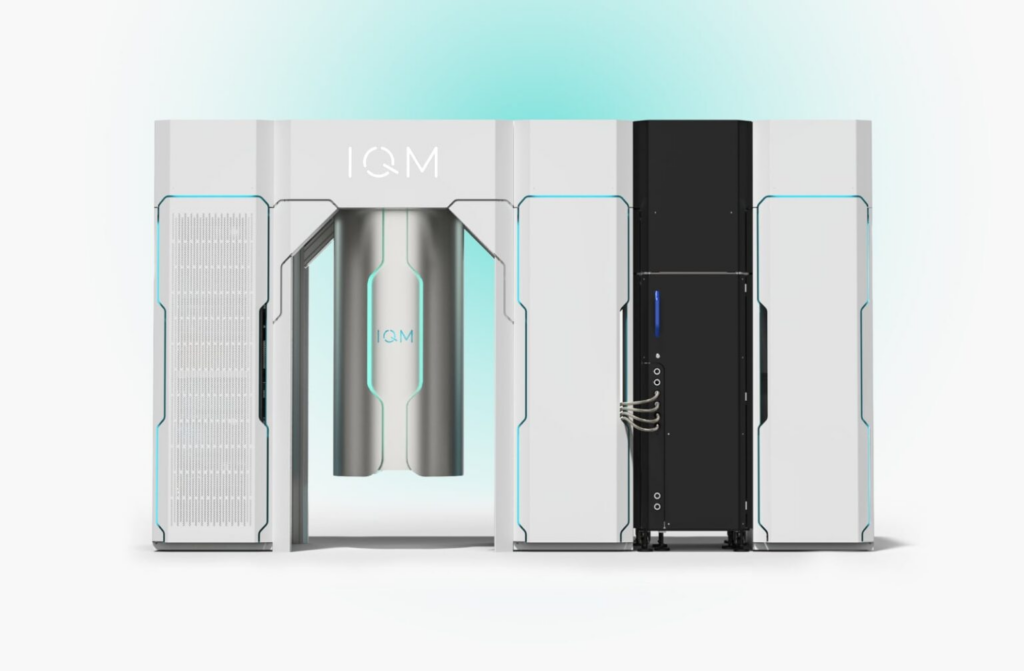
IQM Quantum Computers has signed a commercial agreement with Galaxy Systemy Informatyczne for the on-premises delivery of a 54-qubit IQM Radiance system. Scheduled for installation in Zielona Góra, Poland, in Q4 2026, the superconducting quantum computer will be integrated directly into Galaxy’s existing High-Performance Computing (HPC) infrastructure. This private-sector procurement aims to support secure, in-house R&D for applications in space technology, financial modeling, and energy optimization. The deployment marks IQM’s 21st system sale and represents a strategic shift toward dedicated hardware ownership for private IT service providers seeking to develop hybrid quantum-classical algorithms.
-
-
-
Q-Factor Emerges from Stealth with $24M Seed Round to Scale Neutral Atom Systems
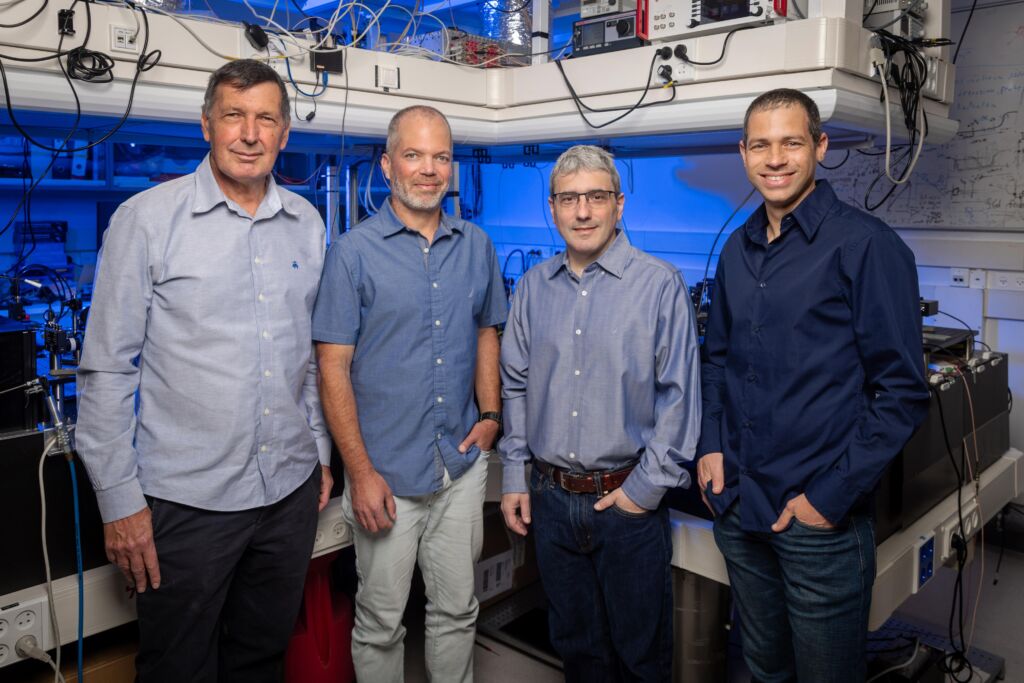
Q-Factor has exited stealth with a $24 million seed round to develop a million-qubit neutral atom quantum computer. Led by NFX and TPY Capital with participation from Intel Capital, the Tel Aviv-based startup aims to bypass current architectural bottlenecks using proprietary atom transport and Rydberg interaction techniques. The founding team, composed of elite physicists from the Weizmann Institute and the Technion, leverages decades of research in ultracold atoms to transition from modular improvements to a continuously scalable hardware trajectory. By focusing on high-fidelity light-matter interfaces, Q-Factor positions itself to address the connectivity constraints that currently limit large-scale qubit integration.
-