
News
Company, funding, product and policy news from across the quantum industry, as it happens.
-
-
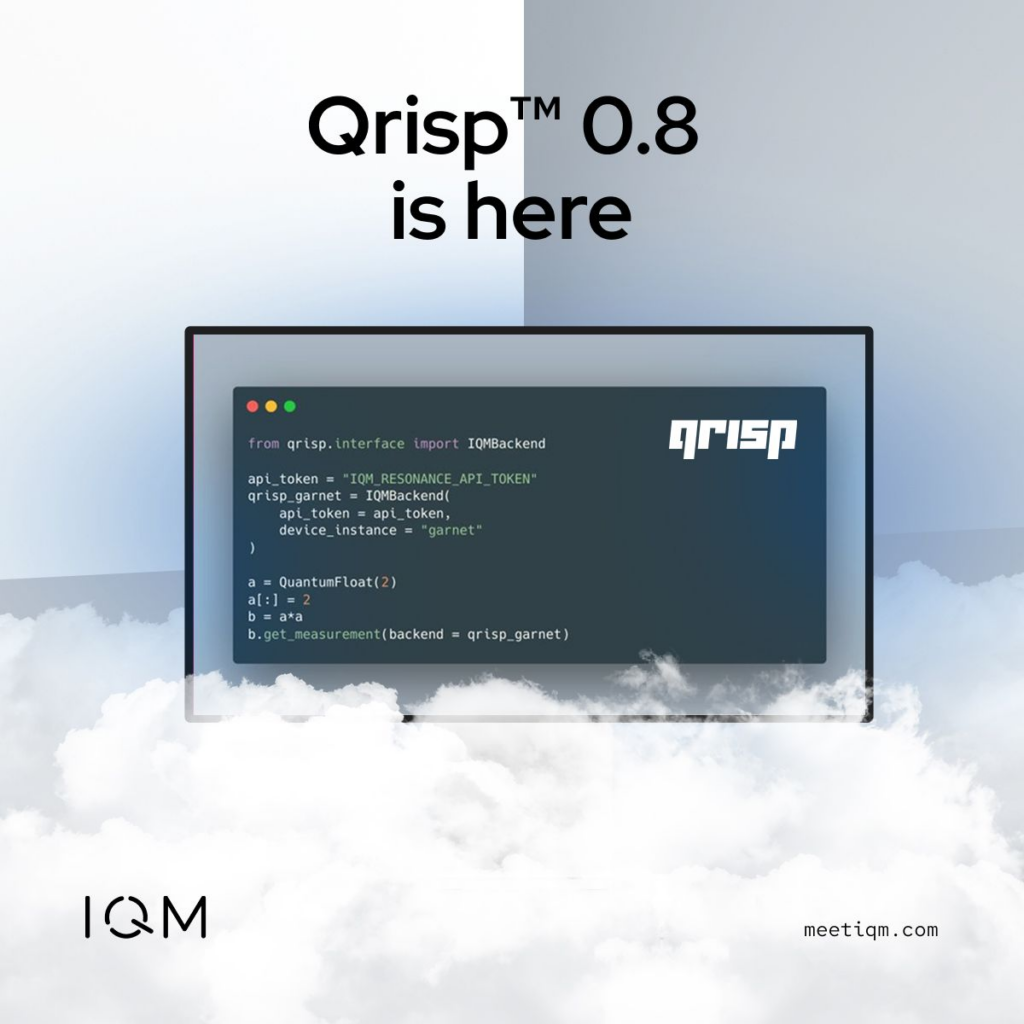
IQM and Fraunhofer FOKUS Milestone: Qrisp 0.8 Compiles 2048-bit Shor’s Algorithm
IQM Quantum Computers and Fraunhofer FOKUS have updated the Eclipse Qrisp framework to version 0.8, achieving the first gate-level compilation of Shor’s algorithm for 2048-bit keys. This milestone transitions theoretical RSA-breaking benchmarks into precise engineering targets by producing an exact qubit budget and gate-by-gate assembly at a processing rate of 109 gates per second. The update introduces a “NumPy-like” BlockEncoding interface for complex quantum linear algebra and a native MLIR dialect to integrate quantum compilation with classical high-performance computing optimization. By including Stim integration for error correction and advanced Hamiltonian simulation tools, the framework provides a full-stack environment for developing utility-scale, fault-tolerant applications.
-
-
-
Sydney and IBM Researchers Leverage Gauge Theory for Low-Overhead Fault Tolerance
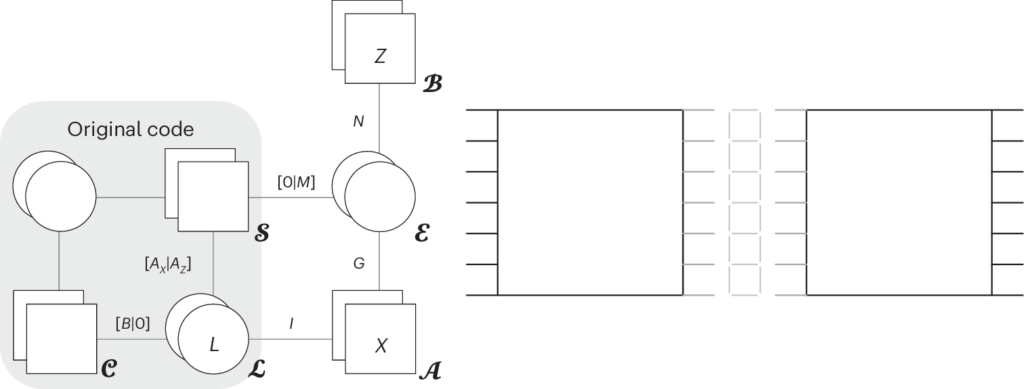
Dr. Dominic Williamson and IBM have introduced a “gauging” procedure for fault-tolerant logical measurement that significantly reduces the qubit overhead for qLDPC codes. By treating logical operators as global physical symmetries and enforcing them through local Gauss’s law operators, the method achieves a nearly linear scaling of W⋅polylog(W). This approach replaces bulky auxiliary systems with a flexible, graph-based architecture that preserves the code distance d while maintaining the sparse connectivity required for LDPC hardware. Elements of this framework are now integrated into IBM’s long-term roadmap, providing a resource-efficient blueprint for transitioning from quantum memory to universal fault-tolerant processing.
-
Postquant Labs Launches Quip.Network Testnet for Decentralized Quantum-Classical Optimization
Postquant Labs has officially launched its Quip.Network public testnet, creating a decentralized marketplace for quantum-classical optimization and post-quantum security. The platform integrates D-Wave’s Advantage2 quantum annealers to handle complex workloads, while a classical layer verifies solutions and secures the ledger. Beyond computation, the network provides a WOTS+ “security wrapper” to protect Ethereum and Solana assets from quantum threats without fund migration. With over 13,000 early sign-ups and an open-source codebase, Quip.Network aims to standardize verifiable, distributed quantum-classical hybrid tasks.
-
Osaka University and Fixstars Break 40-Qubit Barrier in Quantum Chemistry Simulation
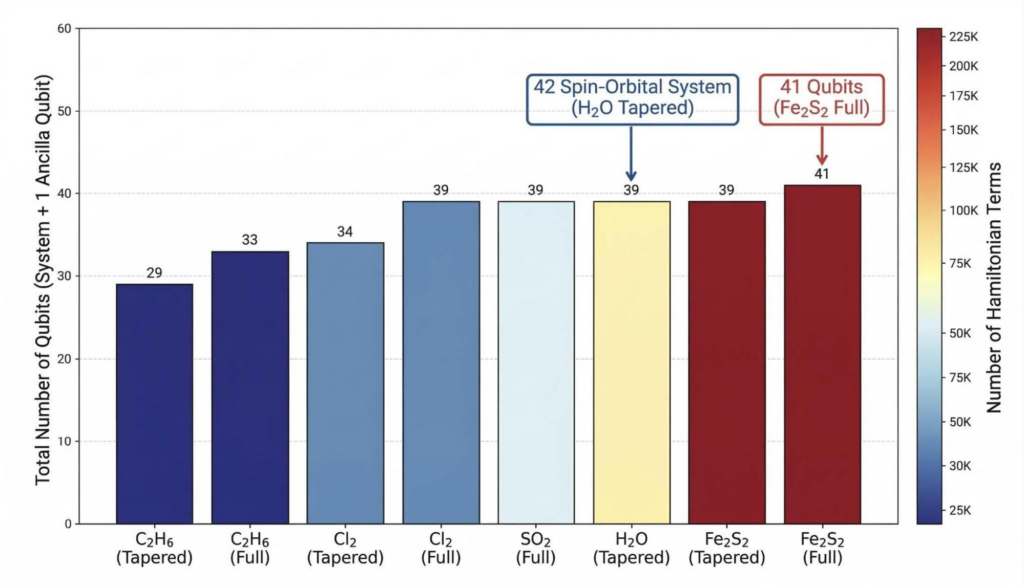
Osaka University and Fixstars have utilized 1,024 NVIDIA H100 GPUs on Japan’s ABCI-Q system to break the 40-qubit barrier in quantum chemistry simulation. The team successfully executed a 42-qubit state-vector simulation of an H2O molecule and a 41-qubit benchmark for an iron-sulfur cluster using an optimized “chemqulacs-gpu” library. By leveraging Iterative Quantum Phase Estimation (IQPE), this achievement provides a high-fidelity classical “gold standard” for validating algorithms intended for future fault-tolerant quantum computers. This research is a critical step in de-risking the software stacks required for industrial-scale drug discovery and materials development.
-
Rigetti Sells Novera QPU to University of Saskatchewan for Canada’s First Open-Architecture System
Rigetti Computing has sold a 9-qubit Novera QPU to the University of Saskatchewan, establishing Canada’s first university-owned, open-architecture quantum computer. Housed at the quanTA Centre, the system integrates Rigetti’s superconducting processor with Zero Point Cryogenics and Qblox hardware to provide an on-premises environment for hardware optimization. Supported by $2.33M CAD in provincial and federal funding, the initiative aims to accelerate research in vaccine discovery, agriculture, and national defense. This deployment marks a strategic shift for the university from cloud-based consumption to primary quantum technology development within the Prairie “Quantum Corridor.”
-
Infleqtion and Safran Launch Integrated Quantum Timing Solution for GNSS-Challenged Environments
Infleqtion and Safran Electronics & Defense have launched a commercial quantum-enabled precision timing solution designed for GPS-challenged environments. The system integrates Infleqtion’s Tiqker™ quantum optical clock with Safran’s White Rabbit and SecureSync® platforms to provide a resilient alternative to vulnerable GNSS signals. In recent demonstrations with Quantum Corridor, the hardware achieved picosecond-level accuracy, a thousand-fold improvement over the nanosecond precision of standard GPS. This collaboration enables the immediate deployment of ultra-stable timing across defense, telecommunications, and critical infrastructure networks.
-
SpinQ Technology Secures 1 Billion CNY ($145.3M USD) Series C Funding to Expand Superconducting and NMR Hardware Lines
SpinQ Technology has completed a 600 million yuan ($87.2M) Series C+ financing round, bringing its total Q1 2026 funding to nearly 1 billion yuan. The capital will accelerate the development of high-qubit superconducting chips and the expansion of large-scale production lines to meet global industrial demand. As the first Chinese firm to export a complete superconducting system, SpinQ’s “Ursa Major” series now accounts for 65% of its total revenue alongside its established NMR-based desktop business. The company aims to double its qubit counts annually to deliver tangible economic benefits in drug discovery and materials science within three years.
-
-
-
CavilinQ Secures $8.8M Seed Round to Develop Modular Quantum Interconnects
CavilinQ has closed an $8.8 million seed round to develop modular quantum interconnects designed to link multiple processors into a single distributed system. Led by QVT, the funding supports the creation of cavity-enhanced photonic links that address the physical scaling limits of monolithic quantum architectures. The technology, co-founded by researchers from Harvard and the University of Chicago, aims to provide high-speed networking for fault-tolerant computing, specifically targeting neutral-atom systems. This modular approach mirrors classical distributed computing to bypass individual chip constraints for utility-scale processing.
-
QuiX Quantum Demonstrates Below-Threshold Error Mitigation in Photonic Hardware
QuiX Quantum, in collaboration with NASA and the University of Twente, has demonstrated hardware-level “below-threshold” error mitigation on a photonic quantum computer. Using the QuiX Bia™ Cloud service, the team implemented a photon distillation technique that reduced photon indistinguishability errors by a factor of 2.2x, achieving a net-positive error reduction. This bosonic approach utilizes quantum interference to purify photon states, potentially reducing the hardware overhead for logical qubits by a factor of four. The results provide a technical path for scaling photonic processors with significantly lower component counts and capital expenditure.
-
QuEra Releases Open-Source GPU-Accelerated T-Gate Simulator for Error Correction Research
QuEra Computing has released Tsim, an open-source, GPU-accelerated quantum circuit simulator designed to model non-Clifford T-gate operations for error correction research. Optimized for NVIDIA GH200 hardware, the tool can process 85-qubit circuits at 600 nanoseconds per shot, enabling large-scale statistical analysis of universal quantum circuits. Tsim is compatible with the STIM format and integrated into the Bloqade ecosystem, allowing researchers to incorporate T-gates into existing fault-tolerant pipelines. This release follows QuEra’s 2025 hardware milestones and aims to accelerate the validation of quantum error correction strategies.
-
Quanscient and Haiqu Demonstrate Algorithm for Scalable Computational Nonlinear Fluid Simulations
Quanscient and Haiqu have demonstrated a novel quantum algorithm for accelerating Computational Fluid Dynamics (CFD) using the IBM Heron R3 processor. The researchers executed a 15-step nonlinear fluid benchmark, marking the most complex hardware demonstration of a Quantum Lattice Boltzmann Method to date. By utilizing a One-Step Simplified LBM and specialized middleware, the team reduced circuit depth and mitigated hardware noise to maintain simulation convergence. This hybrid quantum-classical framework provides a scalable path for modeling complex fluid behaviors in the aerospace, automotive, and energy sectors.
-
-
-
Quantum Computing Inc. Deploys Dirac-3 Quantum Machine on Quantum Corridor Network
Quantum Computing Inc. (QCi) has installed its Dirac-3 quantum optimization machine at the Digital Crossroad Data Center in Hammond, Indiana, marking its first commercial data center deployment. The system is integrated into the Quantum Corridor network, providing institutional and commercial clients with room-temperature quantum computing via thin-film lithium niobate (TFLN) photonics. Secured by Toshiba’s QKD technology, the deployment supports high-bandwidth, low-latency optimization tasks such as portfolio management and fraud detection. This “quantum superhighway” connects regional research hubs between Illinois and Indiana to facilitate industrial collaboration and data-driven decision-making.
-
EPB Joins Southeastern Quantum Collaborative to Support Regional Infrastructure Integration
EPB has joined the Southeastern Quantum Collaborative (SQC) to coordinate quantum research and workforce development across the region. This partnership utilizes the EPB Quantum Network to transition technologies from laboratories to industrial applications in energy, logistics, and defense. EPB is currently installing an IonQ Forte Enterprise quantum computer, which will provide the first integrated commercial access to both trapped-ion hardware and a photonics-based network. This infrastructure builds on collaborations with Oak Ridge and Los Alamos National Laboratories to develop quantum-resilient communications for power grid management.
-
Alice & Bob and Partners Awarded $3.9M ARPA-E Grant for Quantum Magnet Design
Alice & Bob, in collaboration with Los Alamos National Laboratory and GE Vernova, has been awarded a $3.9 million ARPA-E grant to develop rare-earth-free permanent magnets. This three-year project aims to utilize cat-qubit hardware and hybrid quantum-classical algorithms to achieve a 10,000-fold speed-up in material simulation compared to current methods. By accurately modeling correlated electronic systems, the consortium seeks to find high-performance alternatives to neodymium magnets, which are subject to supply chain constraints. This effort supports the goal of enabling complex magnetic material calculations within a 24-hour window for industrial applications.
-
Monarch Quantum Secures $55M Growth Round to Scale Integrated Photonics Production
Monarch Quantum has secured a $55 million growth round led by Serendipity Capital to scale production of its Quantum Light Engines. The San Diego-based company provides integrated photonic control systems designed to replace bulky laboratory optical assemblies for trapped-ion and neutral-atom architectures. With existing hardware contracts from Quantinuum, Infleqtion, and NASA, the firm has reached over $115 million in total capital and commitments within six months of its founding. This investment will expand manufacturing capacity and support the deployment of low-SWaP quantum hardware in non-laboratory environments.
-
QuSecure Joins NIST NCCoE Consortium for Post-Quantum Cryptography Migration
QuSecure has joined the NIST National Cybersecurity Center of Excellence (NCCoE) consortium for its Migration to Post-Quantum Cryptography Project. The collaboration aims to assist organizations in identifying and replacing legacy public-key algorithms that are vulnerable to future quantum-based cryptanalysis. Using its QuProtect R3 platform, QuSecure will demonstrate the automated discovery of vulnerable cryptography and evaluate the performance of NIST-standardized quantum-resistant alternatives in laboratory environments. The results will be used to develop standardized migration playbooks, providing a technical baseline for the secure modernization of digital assets across various industry sectors.
-
memQ Secures $10M Series A to Develop Distributed Quantum Networking Hardware
memQ has closed a $10 million Series A round to develop its Extensible Quantum Network Architecture (xQNA), aimed at connecting separate quantum processing units over standard optical links. This hardware suite includes Quantum Network Interface Controllers (QNICs) and memory modules designed to facilitate distributed quantum computing and secure networking. By utilizing commercial photonic integrated circuits, the modular architecture is intended to be qubit-agnostic and support “blind” cloud computing. The funding will accelerate the commercialization of this connectivity layer, which is currently being evaluated by hardware developers such as Atom Computing to scale neutral-atom systems.
-
-
-
QuantX Labs Launches Optical Frequency Comb for Orbital Clock Demonstration
QuantX Labs has launched an optical frequency comb into orbit to serve as the critical interface for its TEMPO.Space optical atomic clock. Deployed aboard an Exotrail orbital transfer vehicle on a SpaceX mission, the payload is part of Australia’s KAIROS program to validate quantum timing hardware in space. The mission aims to demonstrate the frequency comb’s stability and its ability to down-convert optical oscillations into electronic signals under orbital conditions. This deployment is a foundational step toward launching a full-scale optical atomic clock later in 2026.
-
UMass Amherst and UCSB Demonstrate Photonic Chip Technology for Miniaturized Quantum Systems
Researchers from UMass Amherst and UCSB have demonstrated an integrated system-on-a-chip technology that replaces room-sized laser and optical components with miniaturized photonic chips. By utilizing trapped-ion technology on a device roughly the size of a deck of cards, the team successfully performed qubit and clock operations with high-fidelity state preparation. The breakthrough, published in Nature Communications, uses active photonic compensation for laser drift to eliminate the need for bulky, vibration-isolated vacuum chambers. This miniaturization provides a scalable path for both millions-qubit fault-tolerant processors and portable optical clocks for high-precision navigation.
-
IQM Secures €50 Million ($57.4 Million USD) Financing to Scale Superconducting Quantum Operations
IQM has secured €50 million in financing from BlackRock to accelerate its quantum computing technology, R&D, and global expansion. This funding supports IQM’s focus on full-stack superconducting quantum computers and on-premises hardware for research institutions and HPC centers. The financing aims to lower capital costs and advance fault-tolerant quantum computing. IQM is also preparing to go public via a merger with Real Asset Acquisition Corp. The company currently has over 300 employees across multiple continents.
-
-
-
SBQuantum to Launch Diamond Quantum Magnetometer for MagQuest Challenge
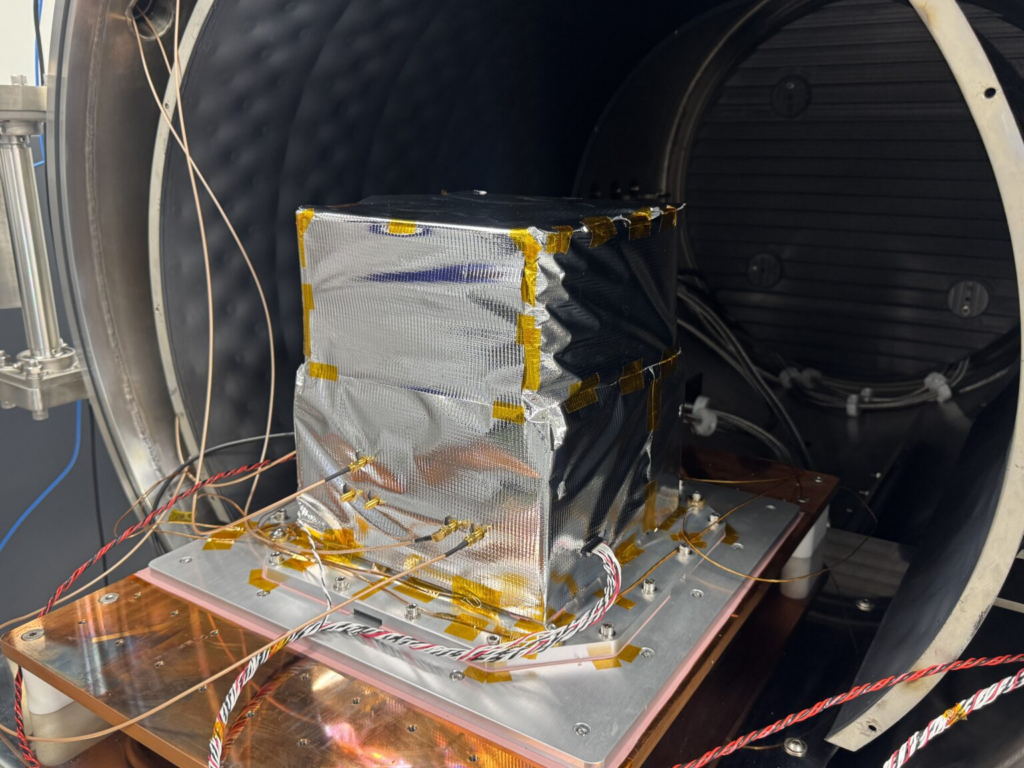
SBQuantum is scheduled to launch a diamond quantum magnetometer into space to monitor Earth’s magnetic field as part of the final phase of the NGA’s MagQuest Challenge. Partnered with Spire Global, the mission utilizes nitrogen-vacancy (NV) centers in synthetic diamonds to provide miniaturized, high-precision monitoring for the World Magnetic Model. This quantum sensing approach offers a resilient alternative to GPS, remaining functional in environments where satellite signals are contested or degraded. The results of this flight phase will inform the NGA’s 2030 acquisition strategy for global magnetic data collection.
-
Universal Logical Operations Implemented in Silicon Donor Quantum Processor
Researchers from the Shenzhen International Quantum Academy have demonstrated a silicon-based quantum processor capable of executing a universal set of logical gate operations. The system utilizes five phosphorus donor nuclear spins in an isotopically purified silicon-28 lattice to implement a [[4, 2, 2]] quantum error-detecting code. This architecture marks the first characterization of a universal logical gate set, including T-gates and CNOT operations, within a silicon spin platform. The processor’s utility was validated through a Variational Quantum Eigensolver algorithm to compute the ground-state energy of the water molecule (H2O).
-
Toshiba and LQUOM Collaborate on Long-Distance Quantum Repeater Research
Toshiba and LQUOM have entered a joint research agreement to extend the range of Quantum Key Distribution (QKD) using quantum repeater technology. The project aims to integrate Toshiba’s high-speed QKD systems with LQUOM’s entanglement-based repeater architectures to overcome fiber-optic transmission distance limits. By combining established commercial security protocols with next-generation repeater nodes, the collaboration seeks to build the technical foundation for a large-scale quantum internet. This research is expected to enable secure, long-distance data transmission for critical sectors such as finance, healthcare, and energy.
-
-
-
Open Quantum Design, Western Digital, and QuScript Form Open-Source Error Correction Working Group
Open Quantum Design, Western Digital, and QuScript have established an open-source working group to develop a full-stack quantum computer prototype focused on error correction. This collaboration integrates trapped-ion hardware with specialized algorithms and Western Digital’s expertise in decoder design to implement stable logical qubits. By making both hardware and software designs publicly available, the initiative aims to lower the barrier for fault-tolerant development. The group’s immediate goal is to demonstrate empirically reduced error rates through a transparent, hardware-agnostic framework.
-
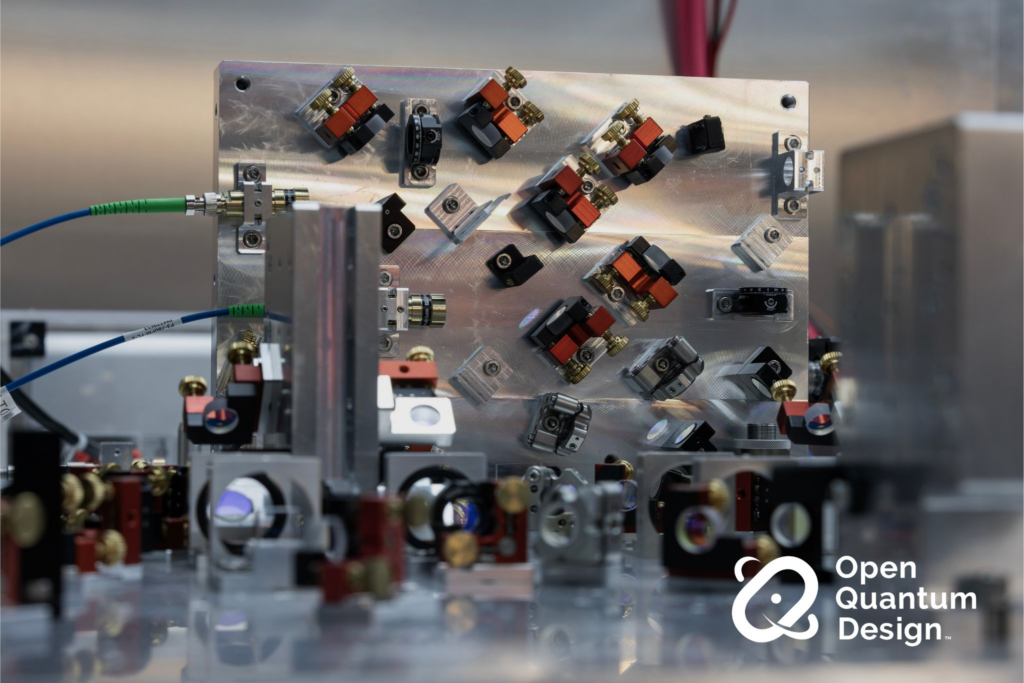
Open Quantum Design Launches Open-Source Hardware Repository for Trapped-Ion Quantum Computing
Open Quantum Design (OQD) has launched a public repository for its trapped-ion quantum hardware, providing detailed blueprints for its Blade Trap Assembly and Optical Circuit Boards. By hosting these designs on GitHub, the organization aims to standardize the physical components of quantum processors, such as laser delivery and signal control. The repository features LightFlow technology for modular optical routing, enabling researchers to bypass traditional “trial and error” in hardware fabrication. This release completes OQD’s mission to provide a fully open-source, full-stack ecosystem for rapid industry and academic iteration.
-