
News
Company, funding, product and policy news from across the quantum industry, as it happens.
-
-
IBM Quantum Processor Successfully Simulates Magnetic Material Dynamics
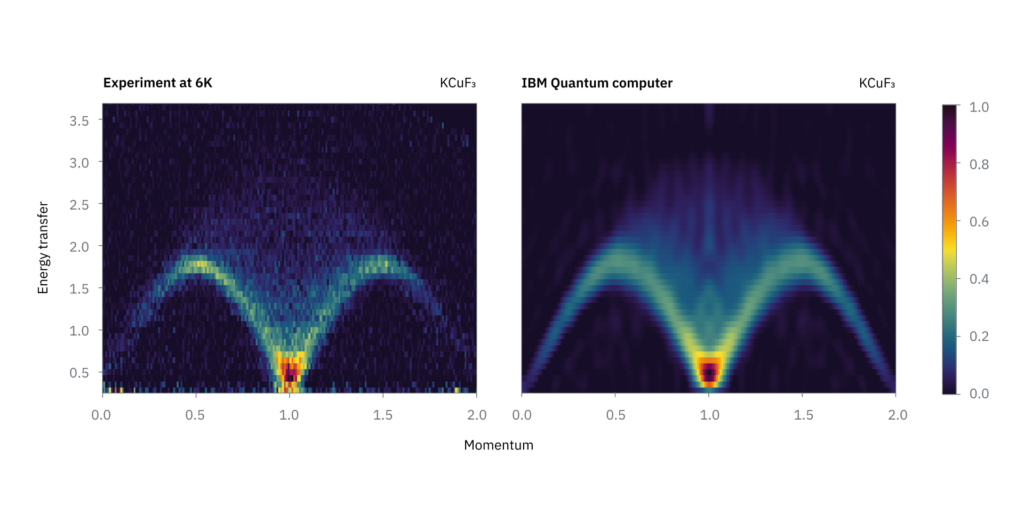
IBM and the U.S. Department of Energy (DOE) have successfully used a 50-qubit Heron processor to simulate the complex magnetic physics of a real-world crystal (KCuF3). The study is a watershed moment for the industry: for the first time, a quantum computer’s results weren’t just checked against a classical computer—they were checked against real physical data from the Spallation Neutron Source (SNS) at Oak Ridge. This proves that today’s “noisy” quantum computers are already accurate enough to help design the superconductors of tomorrow.
-
Cleveland Clinic and IBM Implement Quantum Workflow for Protein Simulation
Cleveland Clinic and IBM have successfully simulated the electronic structure of the 303-atom Trp-cage miniprotein using a quantum-centric supercomputing workflow. This implementation utilizes the IBM Quantum Heron r2 processor alongside classical high-performance computing to address computational bottlenecks in biomolecular modeling. By employing wave function-based embedding and the sample-based quantum diagonalization algorithm, the team achieved energy prediction accuracy competitive with high-level classical benchmarks. This hybrid framework demonstrates a scalable path toward modeling larger molecules for pharmaceutical and materials science applications.
-
Rigetti Computing Announces $100 Million UK Investment for 1,000-Qubit Milestone
Rigetti Computing is expanding its operations in the United Kingdom with a $100 million investment aimed at deploying a 1,000-qubit system within the next four years. This initiative aligns with the UK’s £2 billion National Quantum Strategy and targets a “TeraQuOp”—one trillion quantum operations—by 2035. By utilizing proprietary chiplet-based technology, the company intends to establish a high-performance, on-premises quantum research hub to support defense and enterprise applications.
-
-
-
Silent Waves Launches Zephyr, a Traveling Wave Parametric Amplifier for Scaling Quantum Architectures
Silent Waves has launched Zephyr, a Traveling Wave Parametric Amplifier that integrates a microwave pump coupler directly into its architecture to reduce the physical footprint in dilution refrigerators. This design minimizes thermal dissipation and insertion loss by eliminating bulky external components in the quantum readout chain. Supported by the EU-funded SUPREME consortium, the Zephyr represents a modular step toward fully integrated, on-chip isolation for scaling fault-tolerant architectures.
-
Atom Computing and Cisco Establish Collaboration for Distributed Quantum Architectures
Atom Computing and Cisco have signed a Memorandum of Understanding (MOU) to build the world’s first distributed neutral-atom quantum network. By linking multiple 1,000-qubit processors together using Cisco’s advanced networking protocols, the partners aim to bypass the physical limits of a single vacuum chamber. This “modular” approach effectively turns a collection of individual quantum computers into a single, massive super-machine capable of solving the world’s most complex problems.
-
QpiAI Implements High-Speed Hardware Decoder for 64-Qubit Kaveri Processor
QpiAI has achieved a world-class benchmark in quantum error correction (QEC), deploying a custom hardware decoder for its 64-qubit Kaveri processor. By moving from software to a dedicated “union-find” hardware architecture, the Bengaluru-based startup has slashed decoding latency from 60 microseconds to just 1.5 microseconds. This breakthrough, supported by India’s National Quantum Mission (NQM), allows for real-time error correction within the delicate 100-microsecond coherence window of superconducting qubits.
-
QpiAI to Deploy 25-Qubit Superconducting Quantum System at IIIT-Dharwad
QpiAI has been awarded a major contract to install its 25-qubit “Indus” quantum computing system at IIIT-Dharwad. This deployment, a key pillar of the Karnataka Quantum Roadmap, marks the second physical quantum computer in the state and moves India closer to its goal of a $20 billion quantum economy by 2035. By providing local, hardware-based access to students and enterprises, the center aims to break the reliance on foreign cloud providers and build a “Sovereign Quantum” workforce.
-
QpiAI and Alliance University Establish AU QUASAR Experience Center in Bengaluru
QpiAI and Alliance University have launched the AU QUASAR Experience Center at the university’s Electronic City campus in Bengaluru. Announced on March 25, 2026, the facility is the first in India to house a commercially available 8-qubit superconducting quantum system within a university setting. By providing “Quantum Computing as a Service” (QCaaS) alongside academic degree programs, the center serves as a critical bridge between India’s National Quantum Mission (NQM) and the commercial needs of the aerospace, defense, and logistics sectors.
-
Fujitsu and The University of Osaka Implement Early-FTQC Framework for Chemical Calculations
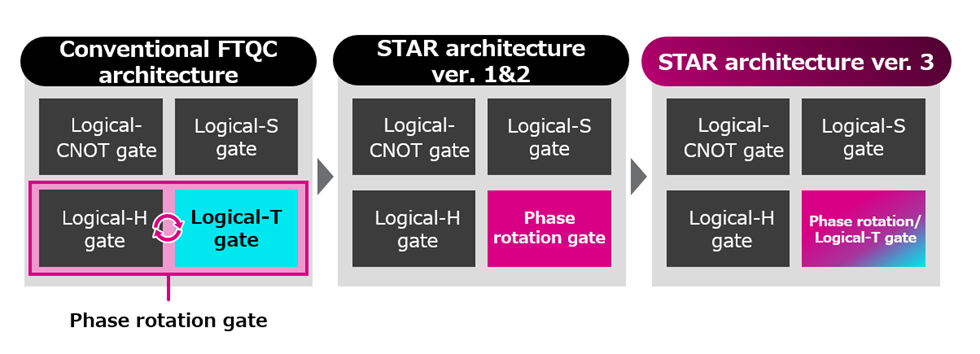
Fujitsu and The University of Osaka have reached a major milestone in quantum chemistry, unveiling a new framework that allows early fault-tolerant quantum computers (early-FTQC) to perform complex molecular energy calculations. Announced on March 25, 2026, the breakthrough combines the STAR architecture ver. 3 with a novel molecular model optimization technique. This synergy reduces the required qubit count by up to 80x and slashes computation times from several millennia to just 35 days, making the simulation of industrial catalysts like Cytochrome P450 a near-term reality.
-
-
-
ZeroTier Launches Quantum-Secure Networking Platform at RSAC 2026
ZeroTier has officially launched ZeroTier Quantum at RSAC 2026, claiming the title of the world’s first end-to-end, quantum-secure networking platform. Built from the ground up in memory-safe Rust, the platform is designed to meet the NSA’s highest CNSA 2.0 standards. By embedding post-quantum cryptography (PQC) directly into a new transport protocol, ZeroTier allows defense, healthcare, and enterprise teams to “future-proof” their networks against quantum attacks without having to rebuild their entire infrastructure.
-
National Reconstruction Fund Corporation Invests $20M AUD ($14M USD) in Silicon Quantum Computing
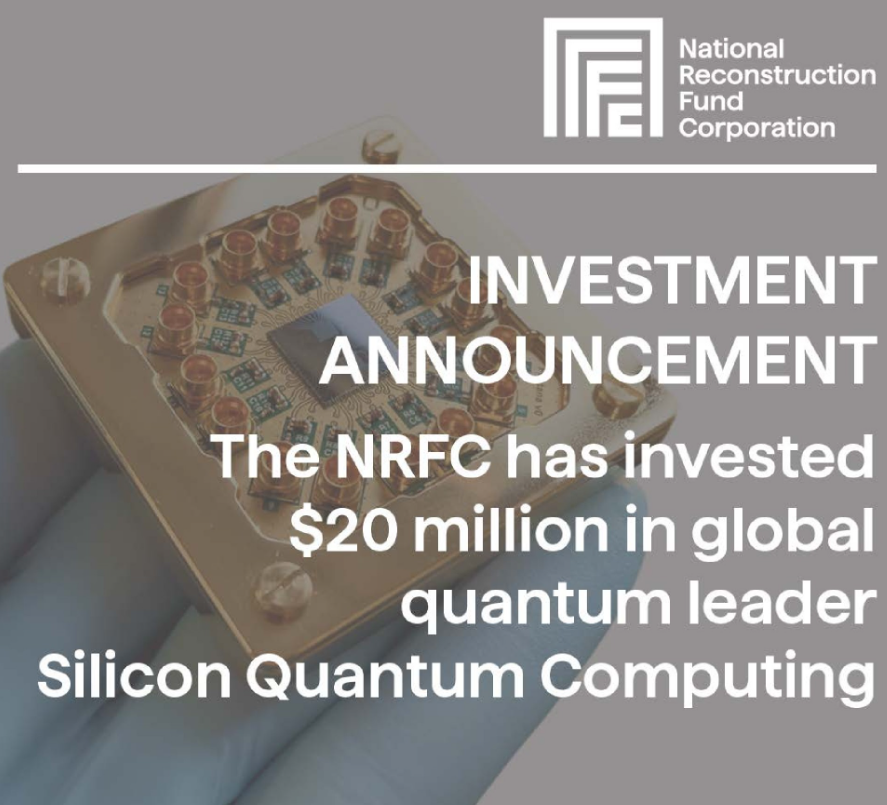
The National Reconstruction Fund Corporation (NRFC) has invested $20 million in Silicon Quantum Computing (SQC) to accelerate the production of the world’s most precise quantum chips. Announced on March 24, 2026, the deal highlights Australia’s intent to lead the “atomic-scale” semiconductor race. By manufacturing qubits with 0.13-nanometer precision—literally atom by atom—SQC is building a “Future Made in Australia” that bypasses the scalability limits of traditional hardware.
-
ANELLO Photonics and Q-CTRL Partner to Deliver Quantum-Resilient Navigation for UAVs
ANELLO Photonics and Q-CTRL have joined forces to launch a world-first Quantum Navigation Solution (QNS) designed to keep drones on course even when GPS is jammed or spoofed. By combining ANELLO’s silicon photonics gyroscopes with Q-CTRL’s quantum magnetic sensors, the partnership creates a “layered” defense against electronic warfare. This tech allows UAVs to navigate using the Earth’s own magnetic field and high-precision “on-chip” motion sensing, providing a high-stakes alternative to satellite-dependent flight.
-
Google Quantum AI Adopts Dual-Modality Strategy with Neutral Atom Expansion
Google Quantum AI has officially pivoted to a “dual-modality” strategy, adding neutral atom quantum computing to its legendary superconducting research program. The move aims to combine the lightning-fast speed of superconducting chips with the massive scalability of neutral atom arrays. By tapping JILA physicist Dr. Adam Kaufman to lead a new team in Boulder, Colorado, Google is betting that a two-pronged approach is the fastest way to reach a commercially useful quantum computer.
-
-
-
Dell Technologies Integrates Quantum-Ready Security and AI Resilience Across Portfolio
Dell Technologies has launched a massive security overhaul to protect its entire portfolio against the twin threats of AI-driven hacking and future quantum computers. By baking Post-Quantum Cryptography (PQC) directly into the firmware of its PCs and doubling the speed of its PowerProtect recovery systems, Dell is moving toward a “Quantum-Ready” hardware fleet. The move aims to neutralize “Harvest Now, Decrypt Later” attacks before quantum computers are even powerful enough to launch them.
-
QuSecure Deployment Cited as Real-World Precedent in SEC Post-Quantum Framework
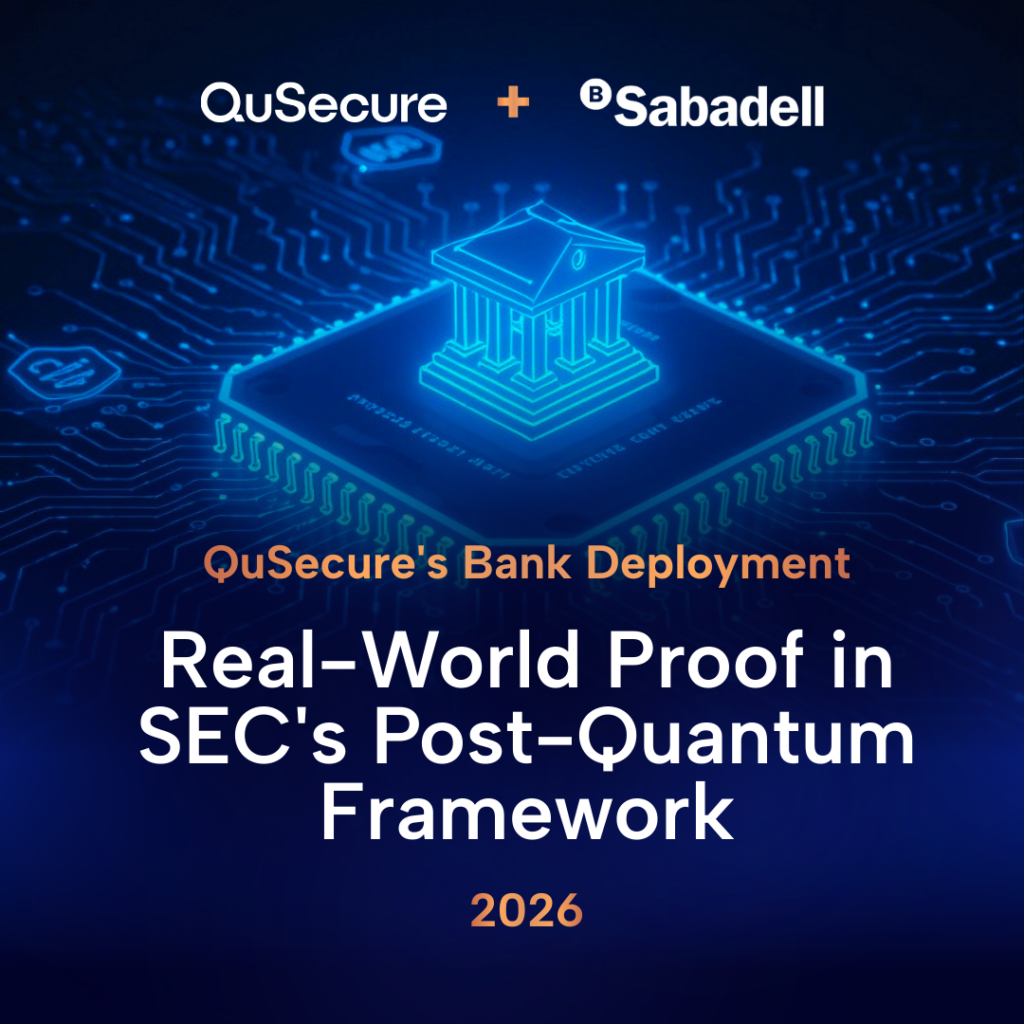
QuSecure has been officially cited as the gold standard for “Quantum-Safe” banking in a new framework submitted to the U.S. SEC. The Post-Quantum Financial Infrastructure Framework (PQFIF) identifies the successful four-month deployment between QuSecure, Banco Sabadell, and Accenture as the only real-world proof that big banks can move to post-quantum cryptography (PQC) without breaking their existing systems. This move by the SEC’s Crypto Assets Task Force signals a shift from “planning for the future” to “securing our money right now.”
-
Conductor Quantum Launches CODA MCP to Integrate Quantum Tools with AI Agents
Conductor Quantum has launched CODA MCP, a new server that turns AI agents into quantum researchers. By using the Model Context Protocol (MCP), popular AI tools like Claude, VS Code, and Cursor can now directly write, simulate, and run quantum circuits on over 1,000 qubits across IBM, IonQ, Rigetti, and more. This “bridge” allows a developer to simply tell an AI agent what they want to solve, and the agent takes care of the coding, hardware selection, and execution.
-
-
-
Italian Competition Authority Launches Market Investigation into Quantum Computing
The Italian Competition Authority (AGCM) has launched a strategic market investigation (IC59) into the quantum computing sector to prevent “technological pre-emption” by global tech giants. Citing risks similar to those seen in the rapid expansion of AI, the authority is examining whether “hyperscalers” are using their current cloud dominance to lock in the emerging quantum market before it reaches maturity. The inquiry is a proactive move to ensure the sector—critical for future cybersecurity and biotechnology—remains competitive and open to specialized startups.
-
-
-
SEEQC Reports Integrated Qubit Control Logic Operating at Millikelvin Temperatures
SEEQC has achieved a breakthrough in quantum scaling, successfully operating a full-stack quantum computer with integrated digital control logic at just 10 mK. Published in Nature Electronics, the study demonstrates that superconducting digital circuits can live right next to qubits without melting them or causing noise. By moving the “brain” of the computer into the freezer, SEEQC has found a way to cut the “wiring bottleneck” that has haunted quantum engineers for decades.
-
TUMCREATE to Develop Open-Source RISC-V Processor with Integrated Post-Quantum Security
TUMCREATE is leading a new international charge to build the world’s first open-source, quantum-resistant super-chip. As part of the QUASAR-CREATE program, the research arm of the Technical University of Munich (TUM) is developing a 64-bit RISC-V processor with post-quantum security (PQC) baked directly into the hardware. By using GlobalFoundries’ 180nm process in Singapore, the team is creating a “transparent” and “unhackable” foundation for the digital world of 2030.
-
BTQ Technologies Deploys BIP 360 on Bitcoin Quantum Testnet v0.3.0
BTQ Technologies has reached a major milestone in securing the future of Bitcoin, deploying BIP 360 on its Bitcoin Quantum testnet v0.3.0. This “Pay-to-Merkle-Root” (P2MR) upgrade is designed to fix a critical vulnerability in Bitcoin’s latest “Taproot” update that could leave it open to quantum hackers. By hiding public keys behind a Merkle tree, BTQ is building a “Quantum Shield” for the world’s most valuable blockchain.
-
Canada Allocates $900M to Defence Industrial Strategy with Focus on Quantum Technologies
The Canadian Government has committed $900 million to a new Defence Industrial Strategy aimed at turning the nation’s quantum research into battlefield-ready technology. Managed by the National Research Council (NRC), the investment focuses on “dual-use” innovations—tech that works for both civilians and soldiers—to help Canada hit its 2% GDP defence spending target by 2026. This move ensures that the “Silicon Valley of the North” stays protected by the very quantum tools it invented.
-
-
-
IBM Offers Special Promotion to Open Plan Users
IBM has supercharged its Quantum Open Plan with a massive new offer for “power beginners.” Users who have logged at least 20 minutes in the past year are now eligible for 180 minutes of free runtime over the next 12 months. In a significant shift, IBM is also letting these free-tier users access the ibm_kingston processor—a 156-qubit powerhouse from the Heron r2 family. This move is designed to let students and researchers replicate world-class “quantum utility” experiments without ever opening their wallets.
-
-
-
Xanadu to List on Nasdaq and TSX Following Shareholder Merger Approval
Xanadu Quantum Technologies is set to become the world’s first publicly listed photonic quantum company after shareholders of Crane Harbor Acquisition Corp. (Nasdaq: CHAC) greenlit their merger. Trading is expected to begin on March 27, 2026, on both the Nasdaq and the Toronto Stock Exchange (TSX) under the ticker symbol “XNDU”. With over US$302 million in gross proceeds and a massive CAD$390 million government investment in the works, Xanadu is now fully capitalized to turn its “room-temperature” photonic computers into a global industrial reality.
-
Who’s News: Strategic Appointments at Zapata Quantum, IonQ, Photonic Inc., Infleqtion, and QuiX Quantum
The quantum industry is seeing a massive wave of “C-suite” talent migration as companies move from R&D to full-scale commercialization. From Zapata’s new growth board to IonQ’s high-stakes government affairs push, these strategic appointments signal a shift toward global policy, defense contracts, and hardware-agnostic software stacks.
-
Horizon Quantum Computing Completes Merger with dMY Squared; Set to Trade on Nasdaq
Horizon Quantum Computing has finalized its business combination with dMY Squared Technology Group, Inc., marking a major milestone as the Singapore-based firm begins trading on the Nasdaq under the ticker symbol “HQ”. The merger, approved by shareholders on March 17, 2026, generated approximately $120 million in gross proceeds, providing the capital needed to scale the company’s mission of making quantum programming accessible to everyone.
-