
News
Company, funding, product and policy news from across the quantum industry, as it happens.
-
-
ORCA Computing Accelerates Photonic Simulation with NVIDIA cuTensorNet
ORCA Computing has officially plugged into the NVIDIA ecosystem, integrating the cuTensorNet library and cuQuantum SDK to supercharge photonic quantum simulation. This is a massive win for the photonic sector, which has often been overshadowed by qubit-based models. By using NVIDIA’s GPU-accelerated tensor network methods, ORCA can now simulate massive photonic circuits with a level of speed and detail that was previously impossible.
-
Kvantify, Atom Computing, and Aarhus University Launch EarlyBIRDD Project
Kvantify, Atom Computing, and Aarhus University have launched EarlyBIRDD, a DKK 37.7 million project aimed at revolutionizing drug discovery through early fault-tolerant quantum computing. Funded by a DKK 30 million investment from Innovation Fund Denmark, the consortium will develop hardware-optimized algorithms and user-friendly software to solve the “binding affinity” problem—a critical bottleneck in predicting how drug candidates interact with proteins. By co-developing these tools alongside Atom Computing’s neutral-atom hardware, the project seeks to slash pharmaceutical R&D costs by up to 50% and secure Denmark’s position as a global leader in the quantum life sciences.
-
Syngenta and QuantumBasel Partner to Advance Agricultural Molecular Modeling
Syngenta has joined forces with QuantumBasel to explore how quantum computing can transform agricultural R&D and crop protection. Announced on March 16, 2026, at the World Agri-Tech Innovation Summit, the partnership will embed Syngenta’s scientists within Switzerland’s first commercial quantum hub to model complex molecular interactions that are beyond the reach of classical computers. By leveraging QuantumBasel’s algorithmic expertise and advanced hardware, Syngenta aims to accelerate research cycles and design more resilient, sustainable solutions for farmers facing a rapidly changing climate.
-
Xanadu and TELUS Collaborate on Sovereign Quantum Data Centre Infrastructure
Xanadu Quantum Technologies and TELUS have signed an MOU to build Canada’s first sovereign hybrid quantum-classical infrastructure. By integrating Xanadu’s photonic quantum processors directly into TELUS’s nationwide PureFibre network and data centres, the partnership ensures that sensitive AI, cybersecurity, and drug discovery data remains domestically controlled and secure. Supported by the Project OPTIMISM initiative and Xanadu’s upcoming US$500 million public listing, the venture establishes a secure, national foundation for Canada’s most critical digital assets.
-
C12 Adopts QC Design’s Plaquette to Develop Fault-Tolerant Architectures
C12 has entered into a strategic partnership with QC Design to accelerate its path toward fault-tolerant quantum computing using the Plaquette design-automation platform. Announced on March 16, 2026, the collaboration allows C12 to simulate its unique carbon nanotube (CNT) spin-qubit architecture under realistic, “noisy” conditions. By plugging into Plaquette, C12 is moving from the laboratory physics phase into the rigorous engineering required to build large-scale, error-corrected quantum processors.
-
Infleqtion Deploys 100-Qubit Sqale Platform at UK National Quantum Computing Centre
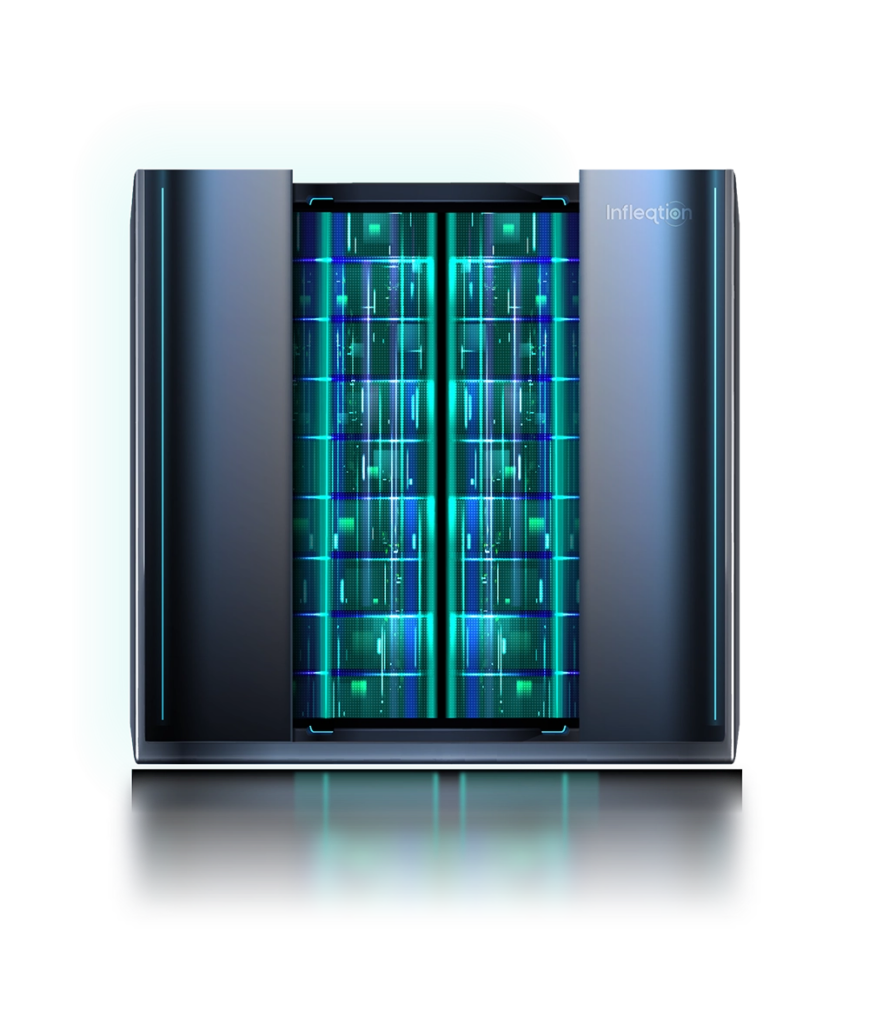
Infleqtion has officially delivered the UK’s only operational 100-physical-qubit quantum system to the National Quantum Computing Centre (NQCC) in Oxford. Built on the Sqale neutral-atom architecture, this system is now the centerpiece of the UK’s national quantum testbed. With a record-breaking 99.73% two-qubit gate fidelity, Infleqtion is not just aiming for more qubits, but for “better” qubits that can finally support large-scale, error-free calculations.
-
KEEQuant Launches Commercial-Grade Chip-Scale QKD Technology
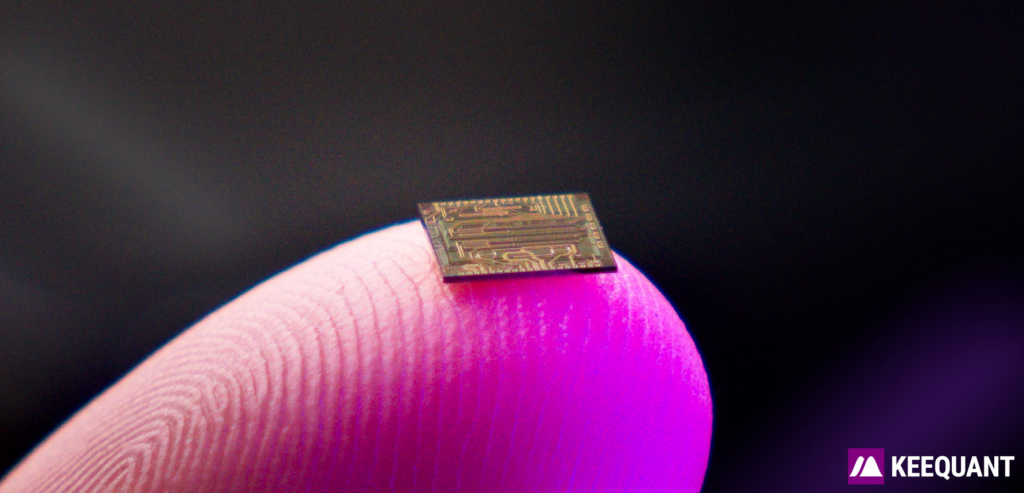
KEEQuant has officially launched its commercial-grade chip-scale Quantum Key Distribution (QKD) technology, signaling a massive shift in how we secure global telecommunications. By shrinking bulky optical assemblies onto a single Photonic Integrated Circuit (PIC), KEEQuant is making quantum-secure communication affordable and scalable for the first time. Backed by the EU’s SEQRET project, the company is set to begin hardware shipments in late 2026, helping to build Europe’s “unhackable” quantum internet (EuroQCI).
-
-
-
Quantinuum Implements High-Rate Iceberg Codes on Helios Processor
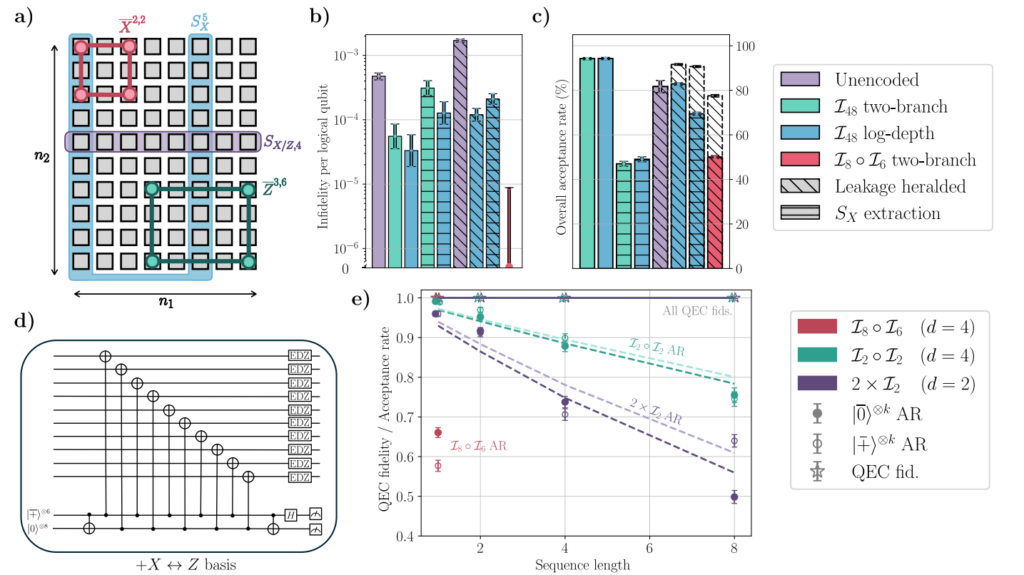
Quantinuum has reached a spectacular milestone in quantum error correction (QEC) by implementing “Iceberg Codes” on its new 98-qubit Helios processor. In a result that defies the “qubit overhead” curse, Quantinuum managed to squeeze 48 error-corrected logical qubits out of just 98 physical qubits—a near 2:1 ratio. This “beyond break-even” performance means the logical qubits are actually 10x to 100x more reliable than the physical qubits they are made of.
-
UCSB’s Eddleman Quantum Institute Awards Funding for Superconductivity and Spacetime Modeling
UC Santa Barbara (UCSB) has supercharged its quantum research ecosystem with a new round of funding from the Eddleman Quantum Institute (EQI). Announced on March 14, 2026, this investment supports high-risk, high-reward projects ranging from atomic-scale superconductors to simulating the physics of curved spacetime. Following the 2025 Nobel Prize win by UCSB’s own Michel Devoret and John Martinis, this funding cements the university’s role as the “quantum capital” of Southern California.
-
-
-
PsiQuantum and National Cancer Center Japan Partner to Scale Quantum Healthcare Applications
PsiQuantum and the National Cancer Center Japan (NCC Japan) have formed a heavyweight alliance to bring “utility-scale” quantum computing to the front lines of cancer research. By combining PsiQuantum’s advanced photonic hardware roadmap with NCC Japan’s clinical expertise, the partnership aims to use quantum simulations to discover new drugs and optimize patient treatments with a level of accuracy that classical computers simply cannot reach.
-
Quantum Computing Inc. and Ciena Partner for Quantum-Secured Optical Networking at OFC 2026
Quantum Computing Inc. (QCi) and Ciena have stolen the spotlight at OFC 2026 by unveiling a “quantum-safe out of the box” optical networking solution. By merging Ciena’s high-capacity Waveserver platform with QCi’s advanced quantum authentication, the duo has demonstrated a way to secure data moving at 1.6 Tb/s against both today’s hackers and tomorrow’s quantum computers. This partnership effectively creates a “physical and mathematical fortress” for global fiber networks.
-
Qrypt Releases Post-Quantum VPN for NVIDIA Jetson Robotics
Qrypt has released a specialized Post-Quantum VPN for the NVIDIA Jetson ecosystem, specifically targeting the high-stakes world of robotics and autonomous systems. Launched on March 13, 2026, the solution aims to prevent “Harvest Now, Decrypt Later” (HNDL) attacks on long-lived assets like drones and warehouse robots. By combining standard NIST algorithms with Qrypt’s proprietary BLAST protocol, the VPN offers a “fail-safe” security layer that doesn’t choke the real-time performance these machines need to move safely.
-
Qrypt Extends Quantum-Secure Encryption to NVIDIA Jetson Platforms
Qrypt has officially brought its “everlasting” security to the edge, integrating its BLAST Protocol into the NVIDIA Jetson platform. Supporting the Jetson Orin Nano and the high-end Jetson Thor, Qrypt is creating a quantum-secure shield that stretches from the massive AI data center (powered by BlueField-3 DPUs) all the way to the robots and drones in the field. By using quantum laws to generate keys that never actually travel over the internet, Qrypt is making edge AI practically unhackable.
-
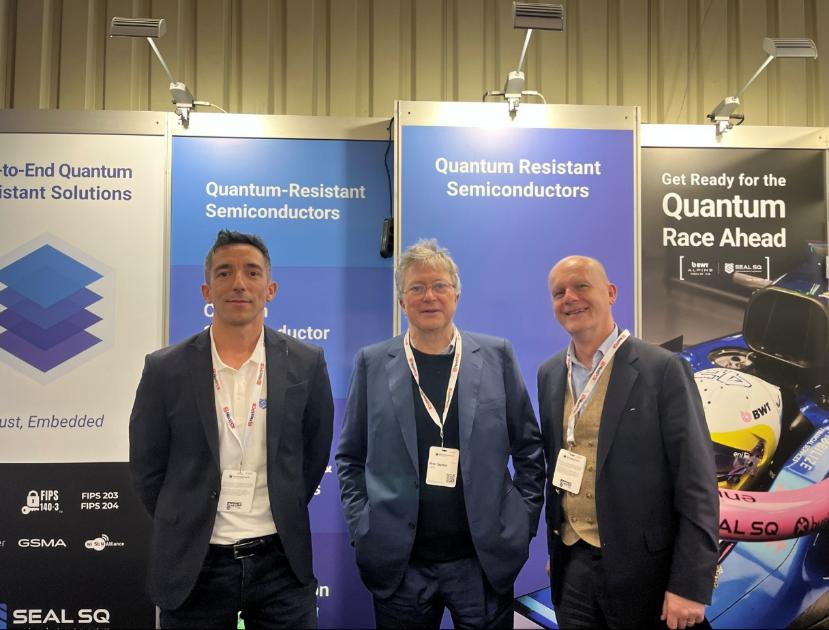
SEALSQ and Parrot Expand Partnership to Secure Drones with PQC
SEALSQ Corp and Parrot SA have officially expanded their partnership to build the world’s first “quantum-hardened” professional drones. By embedding Post-Quantum Cryptography (PQC) directly into the hardware of Parrot’s next-gen tactical UAVs, the duo is protecting sensitive flight data and video feeds from future “Q-Day” decryption. This move ensures that Parrot’s drones—already favorites for defense and public safety—meet the strictest new security standards from the NSA (CNSA 2.0) and NATO.
-
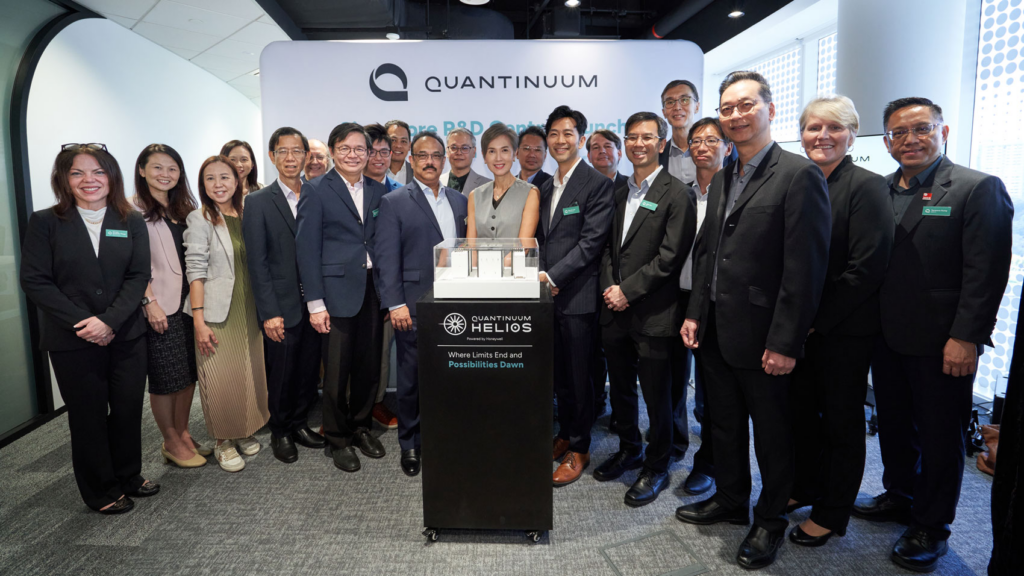
Quantinuum Expands to Singapore with New R&D Centre and Helios Deployment
Quantinuum has officially landed in Southeast Asia, establishing a major R&D and Operations Centre in Singapore. This isn’t just a satellite office; it is the new home of Helios, Quantinuum’s first hardware installation outside of the United States. By bringing its world-leading QCCD (Quantum Charge-Coupled Device) architecture to the Lion City, Quantinuum is positioning Singapore as a global “command center” for quantum-driven pharmaceuticals, finance, and materials science.
-
Institut quantique Joins Qblox Excellence Center Program to Advance Distributed Quantum Computing
Institut quantique (IQ) at the Université de Sherbrooke has officially joined the Qblox Excellence Center program, marking a major expansion of this elite research network into North America. Announced on March 13, 2026, the partnership focuses on the next frontier of the industry: Distributed Heterogeneous Quantum Computing. By plugging Qblox’s modular control stacks into IQ’s world-class Quantum FabLab (QFL), the duo is building a playground for the future of “hybrid” quantum-classical power.
-
-
-
Maybell Quantum Launches ColdCloud® Distributed Cryogenic Platform
Maybell Quantum has officially launched ColdCloud®, a revolutionary “distributed” cryogenic platform designed to solve the biggest bottleneck in quantum computing: the fridge. By centralizing cooling power and distributing it to modular nodes, Maybell has created a system that cools down in hours instead of days and uses 90% less electricity. This is the infrastructure the industry needs to move quantum computers out of the physics lab and into the 24/7 world of the industrial datacenter.
-
QphoX Launches Quantum Transducer for Distributed Long-Distance Networking
QphoX has officially launched the world’s first commercial Quantum Transducer, a device that acts as a “quantum translator” between superconducting processors and the outside world. This hardware solves one of the hardest problems in physics: converting delicate microwave quantum signals (from inside a fridge) into optical signals (that travel through standard fiber-optic cables). With IBM as its first major customer, QphoX is providing the missing link needed to build a “Quantum Internet” and connect modular computers over long distances.
-
Riverlane Publishes QEC Technology Roadmap to Accelerate Utility-Scale Quantum Computing
Riverlane has released a definitive Quantum Error Correction (QEC) Roadmap, claiming their tech can pull the arrival of useful quantum computers forward by up to five years. By tackling the “data avalanche”—the mountain of errors that currently kills quantum calculations—Riverlane is building the “shield” that will allow quantum computers to run for hours or days rather than milliseconds. Their goal? To move from millions to trillions of error-free operations over the next decade.
-
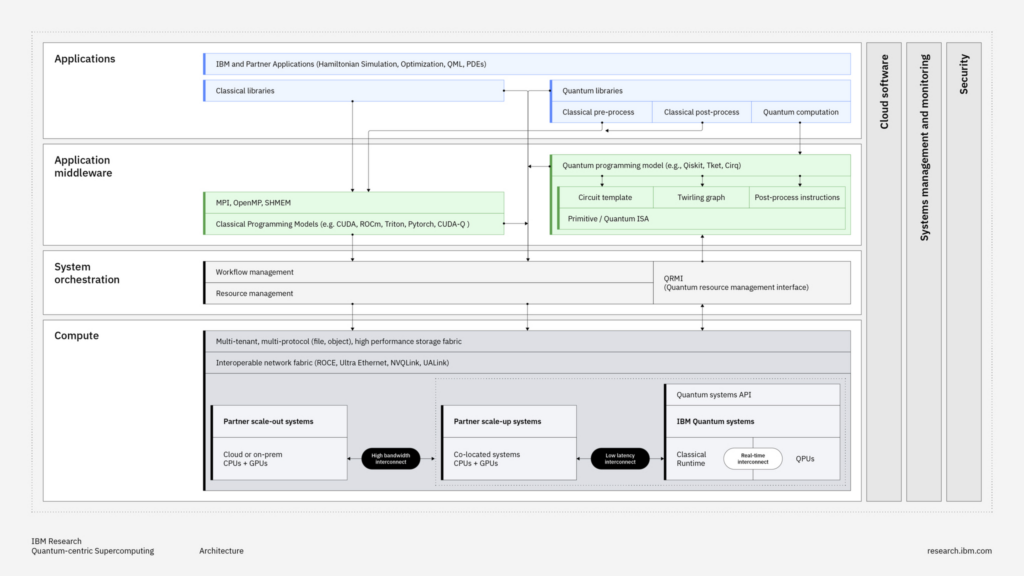
IBM Publishes Reference Architecture for Quantum-Centric Supercomputing
IBM has officially published its definitive Reference Architecture for Quantum-Centric Supercomputing (QCSC). This is the first comprehensive manual for building the “Hybrid Data Center,” moving beyond single quantum experiments toward a unified world where QPUs, GPUs, and CPUs work as a single machine. By standardizing how these different processors talk to each other, IBM is turning the “quantum computer” into a “quantum accelerator”—a specialized chip that plugs into a supercomputer just like a modern GPU.
-
-
-
IBM, Signal, and Threema Partner to Fortify Messaging Against Quantum Threats
IBM Research has formed a high-stakes alliance with Signal and Threema to “quantum-proof” the world’s most private conversations. Unveiled at the Real-World Crypto (RWC) 2026 conference, this collaboration moves beyond just protecting message text; it targets the “holy grail” of messaging privacy: securing group metadata. By using advanced math to hide who is in a group and who the admins are, the team is ensuring that even the service providers themselves can’t “see” the structure of your private chats.
-
RIKEN and IBM Demonstrate Quantum-Centric Supercomputing at Scale
RIKEN and IBM have shattered records in the world of high-performance computing, successfully linking the massive Fugaku supercomputer with an on-premises IBM Quantum Heron processor. In a feat of “Quantum-Centric Supercomputing” (QCSC), all 7.6 million cores of Fugaku worked in a continuous, high-speed loop with the quantum hardware to simulate the electronic structure of iron-sulfur molecules. This isn’t just a lab experiment; it’s the most accurate chemistry simulation ever performed on a quantum computer, proving that the “Hybrid Age” has truly arrived.
-
JIJ Europe Collaborates with ORCA Computing, bp, and NQCC on Energy Optimization
JIJ Europe has launched a high-impact collaboration with ORCA Computing, bp, and the National Quantum Computing Centre (NQCC) to tackle one of the energy industry’s most expensive headaches: the Unit Commitment problem. Under the SparQ programme, the consortium is using photonic quantum computers to figure out exactly when to turn power generators on and off to meet electricity demand at the lowest possible cost. By blending JIJ’s advanced optimization software with ORCA’s light-based hardware, they are building a “smarter” grid for the future.
-
Xanadu Partners with ARLIS for Quantum Zero Trust Architecture
Xanadu Quantum Technologies has officially joined forces with the Applied Research Laboratory for Intelligence and Security (ARLIS) at the University of Maryland to build a “quantum-proof” security blueprint for the U.S. government. Under the Air Force’s SEQCURE program, Xanadu is applying the NIST SP800-207 “Zero Trust” standard to its photonic quantum systems. This means moving away from traditional firewalls and toward a system where every single pulse of light and line of code is constantly verified.
-
Xanadu and ETRI Partner for Fault-Tolerant Quantum Algorithm Design
Xanadu Quantum Technologies has expanded its international footprint, partnering with South Korea’s Electronics and Telecommunications Research Institute (ETRI) on a two-year project to master Fault-Tolerant Quantum Computing (FTQC). Backed by a South Korean government grant, the duo is focusing on the “pre-game” of quantum computing: Resource Estimation. By upgrading Xanadu’s PennyLane and Catalyst software, they are building a “quantum architect’s toolkit” that can predict exactly how many qubits and gates a complex algorithm needs before it ever touches a piece of hardware.
-