
News
Company, funding, product and policy news from across the quantum industry, as it happens.
-
-
IonQ and University of Cambridge Establish Quantum Innovation Centre
IonQ and the University of Cambridge have announced a landmark research agreement to establish the IonQ Quantum Innovation Centre. Anchored at the prestigious Ray Dolby Centre within the Cavendish Laboratory, this partnership aims to turn world-class physics into world-class industry. By hosting IonQ’s massive 256-qubit system on-site, the center will serve as the UK’s primary hub for translating quantum research into hardware, networking, and security solutions.
-
IQM Deploys 20-Qubit Quantum Computer at Aalto University
IQM Quantum Computers has officially deployed Aalto Q20, a 20-qubit superconducting quantum computer, at Aalto University in Finland. This marks the fourth IQM system to land in the Finnish ecosystem, further solidifying the nation’s status as a global quantum heavyweight. By placing the hardware directly on campus and linking it to the LUMI supercomputer, IQM is giving European researchers a powerful “on-premise” tool to build the next generation of quantum-accelerated apps.
-
DARPA Expands Quantum Benchmarking Initiative (QBI) with New Stage A Solicitation
DARPA is officially casting a wider net for the future of quantum computing, issuing a new solicitation (DARPA-PA-26-02-02) to bring fresh blood into its Quantum Benchmarking Initiative (QBI). The goal is ambitious: DARPA wants to prove, with cold hard data, that a “utility-scale” quantum computer—one that actually produces more value than it costs to run—can exist by 2033. This new Stage A call is specifically looking for “outsider” architectures and novel qubit types that haven’t yet been put through the DARPA wringer.
-
-
-
IonQ and ARLIS Partner to Develop Zero Trust Framework for Quantum Systems
IonQ and the Applied Research Laboratory for Intelligence and Security (ARLIS) have launched a major new initiative to build a Zero Trust Architecture (ZTA) for quantum computers. Sponsored by the U.S. Air Force, the SEQCURE program (Securing Experimental Quantum Computing Usage in Research Environments) aims to replace “old-school” perimeter security with a model of continuous verification. This ensures that as quantum computers like the upcoming IonQ Tempo scale to handle top-secret government data, the hardware and software are “locked down” at every single step.
-
Xanadu and AMD Execute Hybrid Quantum CFD Simulations for Aerospace
Xanadu Quantum Technologies and AMD have achieved a major breakthrough in aerospace engineering by successfully executing a hybrid quantum-classical Computational Fluid Dynamics (CFD) simulation. By integrating Xanadu’s PennyLane software with the AMD DevCloud, the team managed to speed up complex quantum math by a staggering 25x using AMD GPUs. This collaboration is a direct attack on the massive “computational walls” that currently slow down the design of next-generation aircraft and spacecraft.
-
Xanadu Awarded $2.0M ARPA-E Grant for Quantum Battery Research
Xanadu Quantum Technologies has secured a $2,027,507 grant from the U.S. Department of Energy’s ARPA-E to supercharge the future of battery technology. As part of the Quantum Computing for Computational Chemistry (QC3) program, Xanadu is teaming up with the University of Chicago to develop a photonic simulation platform that could solve the “energy density” puzzle. By aiming for a 100x speedup over today’s best classical supercomputers, this project is designed to help scientists see exactly how batteries degrade at the atomic level.
-
-
-
Eros Innovation and enQase Launch Sovereign Quantum-Safe Trust Layer
Eros Innovation and enQase have officially launched a strategic joint venture to build the Eros Sovereign Trust Layer, a “quantum-safe fortress” for India’s cultural and AI assets. By combining enQase’s full-stack quantum hardware and software with Eros’s massive media ecosystem, the partners are creating a secure foundation for Large Cultural Models (LCMs). This initiative ensures that over 1.5 trillion rights-cleared cultural tokens—including voices and digital identities—remain safe from future “Q-Day” decryption threats.
-
ZeroRISC Releases Open-Source PQC Hardware-Software Stack
ZeroRISC, alongside the Max Planck Institute and Academia Sinica, has released a production-grade, open-source Post-Quantum Cryptographic (PQC) stack. This release is a major win for the “open silicon” movement, providing a hardware-accelerated blueprint for securing chips against future quantum attacks. By combining the Cryptolib library with a custom Asymmetric Cryptography Coprocessor (ACC), ZeroRISC has managed to make quantum-safe math fast enough for tiny, embedded devices.
-
PQShield Releases 5KB RAM Post-Quantum Cryptography Implementation
PQShield has set a new benchmark for embedded security at Embedded World 2026, unveiling a post-quantum cryptography (PQC) implementation with a tiny 5KB RAM footprint. This update to their PQMicroLib-Core library proves that you don’t need a supercomputer to stay safe from quantum threats; even the simplest medical wearables and payment terminals can now run “unhackable” math.
-
Zurich Instruments Launches ZQCS Quantum Control System to Address the Logical Qubit Scaling Challenge
Zurich Instruments has officially launched the ZQCS Quantum Control System, a high-density “command center” for the world’s most ambitious quantum computers. By packing over 1,000 control channels into a single rack and utilizing an industrial-grade AdvancedTCA (ATCA) architecture, the ZQCS is designed to solve the “wiring nightmare” that usually occurs when trying to scale from physical to logical qubits. This system isn’t just a signal generator; it’s a real-time brain capable of the sub-microsecond feedback needed for true quantum error correction.
-
-
-
China Open-Sources “Origin Pilot”: The First Domestically Developed Quantum OS
China has just released Origin Pilot, the world’s first domestically developed quantum operating system available for public local download. Developed by Origin Quantum in Hefei, this “soft heart” of the quantum stack is now open-source, moving away from the cloud-only models of Western giants like IBM and Google. By making the OS free to download and install locally, China is looking to set a global standard and build a sovereign quantum ecosystem that is completely independent of international export restrictions.
-
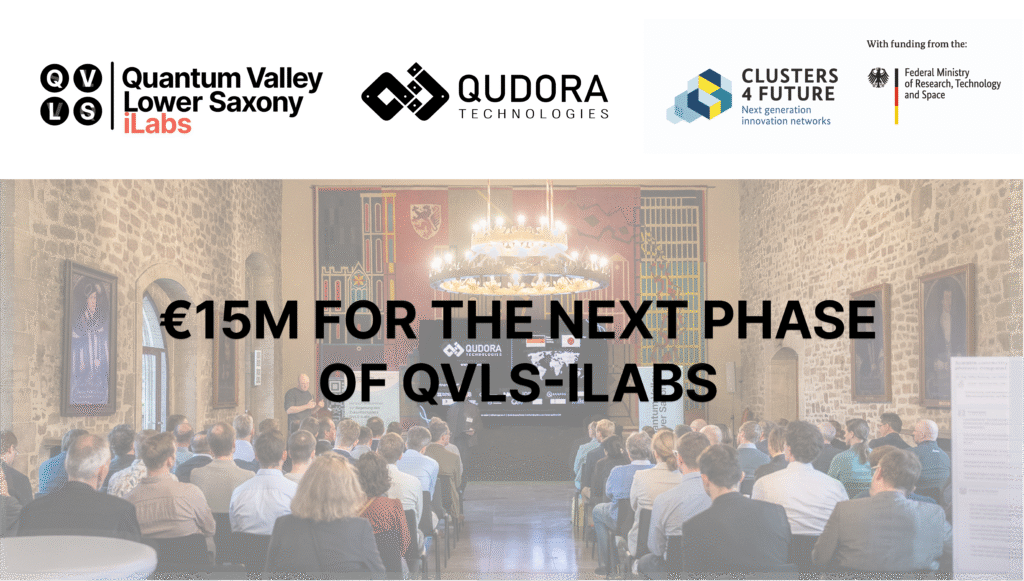
QVLS-iLabs Secures €23M ($26.5M USD) in Combined Funding for Second Phase of German Quantum Transfer
QVLS-iLabs, the “Future Cluster” of the Hannover–Braunschweig region, has officially unlocked €15 million ($17.4M USD) in second-phase funding from the German government. As a crown jewel of the Clusters4Future initiative, this investment is all about “The Great Transition”—moving trapped-ion quantum computers and hyper-precise sensors out of the university basement and onto the industrial factory floor. By focusing on “on-premise” systems, QVLS-iLabs is ensuring that German industry doesn’t just use quantum power, but owns it.
-
UKRI Launches £76 Million ($102 Million USD) National Compute Resource Initiative
UK Research and Innovation (UKRI) has officially launched a £76 million ($102 million USD) initiative to build four new National Compute Resources (NCRs) across the United Kingdom. This investment is the first major step in the UK Compute Roadmap, a 2025 plan to turn the UK into a “computing superpower.” By splitting the money between four university hubs, the government is ensuring that everyone from a first-year PhD student to a high-tech startup has the “digital horsepower” they need to solve global problems.
-
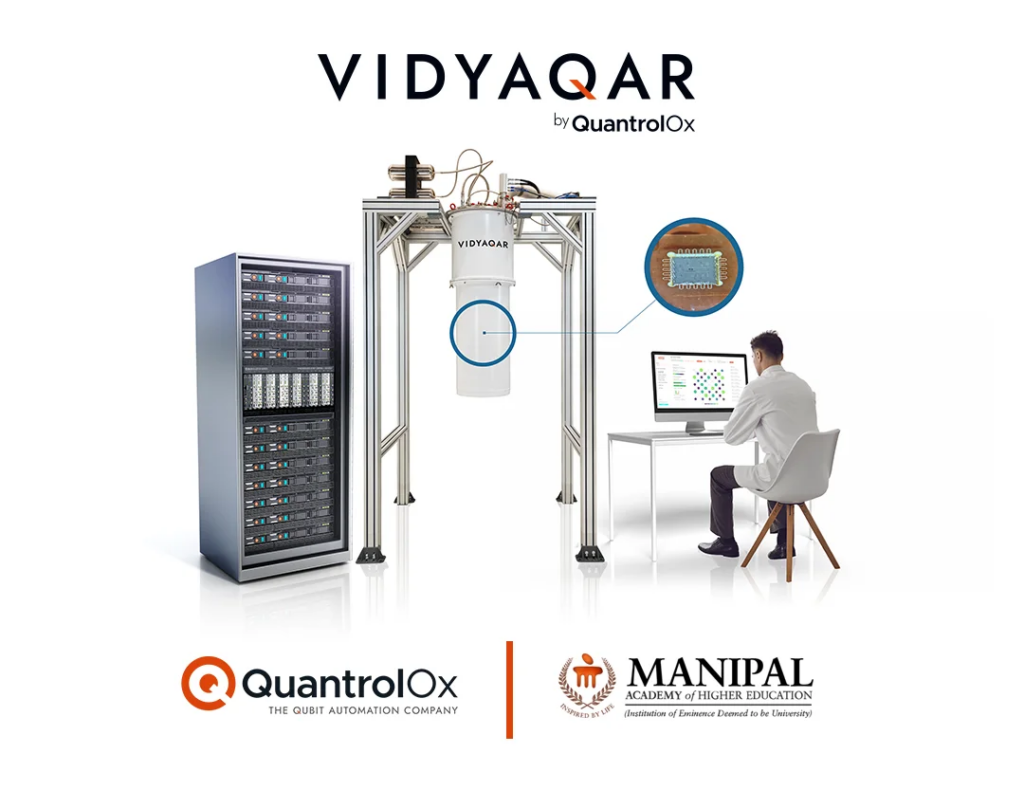
QuantrolOx and MAHE Establish “Q-HUB” to Bolster Indo-European Quantum Ecosystem
QuantrolOx and the Manipal Academy of Higher Education (MAHE) have joined forces to launch Quantum-Hub@MAHE (Q-HUB) in Bengaluru. This seven-figure, university-led initiative is designed to be the “Silicon Valley” of Indian quantum hardware. By using an open-architecture approach, Q-HUB isn’t just buying a quantum computer; it’s building a domestic ecosystem that can design, scale, and manufacture its own systems. Scheduled for a September 2026 inauguration, the hub aims to put India on the global map for quantum engineering.
-
-
-
Kvantify Secures €7M ($8.1M USD) Total Funding to Scale Quantum Drug Discovery Platform
Kvantify, the Copenhagen-based quantum software house, has successfully closed its latest funding round, bringing its total “war chest” to €7 million ($8.1M USD). With heavy-hitting support from the European Innovation Council (EIC) and the newly formed Delphinus Venture Capital, Kvantify is doubling down on Qrunch—its platform for “noisy” quantum drug discovery. The goal is simple: use today’s imperfect quantum computers to solve chemical equations that are too complex for even the world’s biggest classical supercomputers.
-
Kvantify and Danish Universities Launch DKK 17.4M ($2.7M USD) Quantum Software Project
Innovation Fund Denmark has greenlit a powerhouse collaboration between Kvantify, Aarhus University, and Aalborg University, injecting DKK 17.4 million ($2.7M USD) into the ODAQS project. Standing for “Optimal Design Automation towards a Performant Quantum Software Stack,” this initiative is essentially building a “universal translator” for quantum computers. By using AI to automate how quantum programs are written, the project aims to let pharmaceutical researchers run complex simulations without needing to be quantum physicists themselves.
-
SCSP Launches Bipartisan Commission on U.S. Quantum Primacy (CUSP)
The Special Competitive Studies Project (SCSP) has officially launched the Commission on U.S. Quantum Primacy (CUSP), a high-level, bipartisan coalition designed to ensure the United States wins the “Quantum Space Race.” Co-chaired by SCSP President Ylli Bajraktari alongside Senators Todd Young (R-IN) and Ben Ray Luján (D-NM), the commission represents a rare alignment of political, military, and industrial giants aimed at turning quantum science into national security muscle.
-
IBM and Researchers Synthesize First “Half-Möbius” Molecule Validated by Quantum Computing
In a feat of “atom-by-atom” engineering, an international team led by IBM Research and the University of Manchester has synthesized the first-ever molecule with a half-Möbius electronic topology. This exotic C13 Cl2 structure—a ring of 13 carbon and 2 chlorine atoms—features electrons that travel in a corkscrew pattern, requiring four complete loops to return to their starting phase. To prove this structure existed, researchers used an IBM Heron quantum processor to simulate the interactions of 32 electrons, a task that currently exceeds the limits of exact classical modeling.
-
QCi Finalizes $5 Million Acquisition of NuCrypt to Expand Quantum Communications Portfolio
Quantum Computing Inc. (Nasdaq: QUBT) has just added another piece to its “quantum empire” by finalizing the $5 million acquisition of NuCrypt, LLC. Coming just a month after its massive $110M purchase of Luminar Semiconductor, this deal secures QCi’s position in the Quantum Communications market. By combining NuCrypt’s 20 years of experience in secure signal processing with QCi’s high-tech TFLN chips, the company is creating a “sovereign” American pipeline for ultra-secure, unhackable communication systems.
-
Quantum Computing Inc. Reports Fourth Quarter and Full-Year 2025 Financial Results
Quantum Computing Inc. (Nasdaq: QUBT) has just closed its most transformative year to date, reporting its fourth-quarter and full-year 2025 financial results. With a massive $1.52 billion cash position and the strategic acquisition of Luminar Semiconductor, QCi is no longer just a “quantum startup”—it is now a vertically integrated industrial powerhouse. By controlling everything from the laser-on-a-chip to the final quantum processor, QCi is betting that its room-temperature photonic systems will outscale the massive, frozen “fridges” of its competitors.
-
QCi Completes $110M Acquisition of Luminar Semiconductor to Create Vertically Integrated Photonics Powerhouse
Quantum Computing Inc. (Nasdaq: QUBT) has officially completed its $110 million all-cash acquisition of Luminar Semiconductor, Inc. (LSI). This strategic move transforms QCi into a vertically integrated powerhouse, controlling the entire “photonics signal chain”—from the initial light generation to final detection. By combining its own thin-film lithium niobate (TFLN) technology with LSI’s expertise in lasers and advanced packaging, QCi is betting on a future of compact, room-temperature quantum hardware that can live in a standard data center rather than a massive cryogenic fridge.
-
Rigetti Computing Reports Fourth Quarter and Full Year 2025 Financial Results
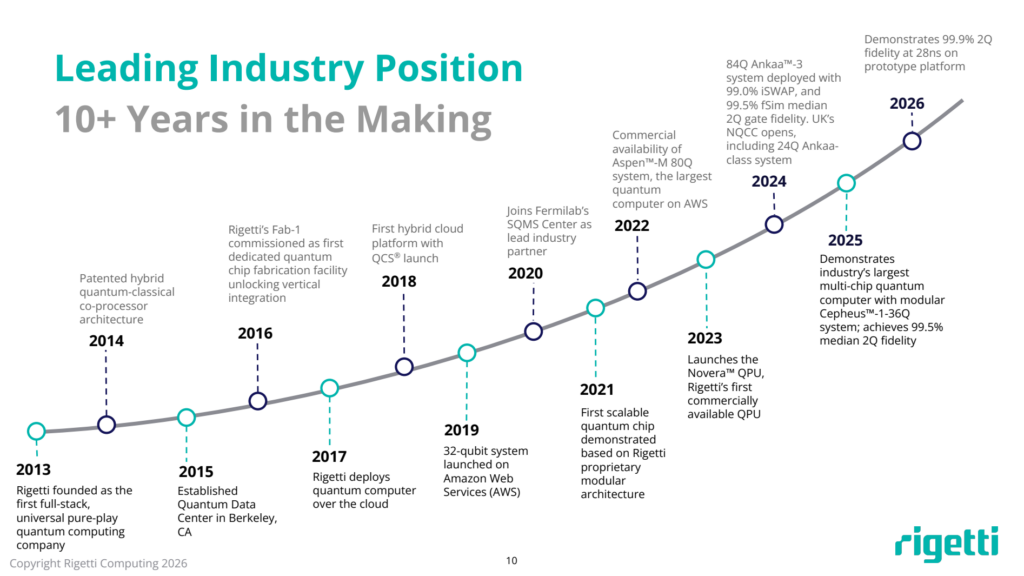
Rigetti Computing (Nasdaq: RGTI) has closed 2025 with a strategic pivot toward high-fidelity hardware and a thriving on-premises business. Despite a slight dip in annual revenue, the company smashed technical records by achieving 99.9% gate fidelity at speeds 1,000 times faster than trapped-ion rivals. With nearly $600 million in the bank and massive international orders from India and Japan, Rigetti is moving from “experimentation” to “deployment.”
-
-
-
Viewbix Completes Acquisition of Quantum X Labs, Pivots to Quantum Technology
Viewbix Inc. (Nasdaq: VBIX) officially completed its pivot from ad-tech to the quantum frontier by finalizing the acquisition of Quantum X Labs Ltd. This “reverse-merger” style move brings a massive portfolio of Israeli quantum hardware and AI software—including tech for “unjammable” navigation and “universal” error correction—directly onto the Nasdaq. To fuel this new era, Viewbix also closed a $1.4 million private placement, signaling that it is ready to move these laboratory breakthroughs into the global market.
-
Record Fidelity Achieved for Entangled Logical Qubits on IBM Hardware
A research powerhouse consisting of Quantum Elements, USC, IBM, and RWTH Aachen has just published a paper in Nature Communications that might have solved one of the most annoying problems in quantum computing: “ZZ crosstalk.” By using a clever new trick called Normalizer Dynamical Decoupling (NDD), they achieved a record 98% fidelity for entangled logical qubits on a 127-qubit IBM processor. This proves that we can actually make logical qubits that are “healthier” than the physical qubits they are made of—a major step toward building a real, error-proof quantum computer.
-
Pasqal to Go Public via $2 Billion Business Combination with Bleichroeder Acquisition Corp II
In a landmark move for the European quantum sector, Pasqal has officially announced its intent to go public on the Nasdaq via a merger with Bleichroeder Acquisition Corp. II (Nasdaq: BBCQ). The deal values the French neutral-atom pioneer at a $2.0 billion pre-money valuation, signaling that investors are betting big on the scalability of atom-based processors over superconducting alternatives. This transaction marks the second major European quantum “unicorn” to head toward a U.S. listing this year, following Xanadu’s recent move.
-