
News
Company, funding, product and policy news from across the quantum industry, as it happens.
-
-
Rigetti Researchers Demonstrate Qubit-Efficient Optimization Algorithm on Superconducting Hardware
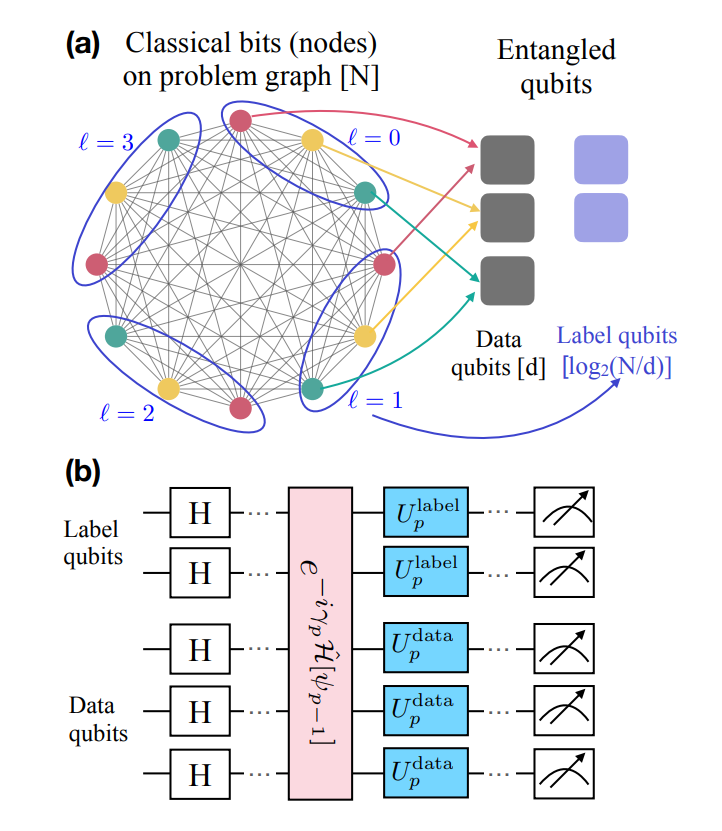
Rigetti researchers have developed a qubit-efficient quantum optimization algorithm, detailed in Physical Review Applied, that uses fewer physical qubits than classical variables by mapping them into an entangled quantum state. This method, validated on a 9-qubit Rigetti superconducting processor using Sherrington-Kirkpatrick spin-glass models, offers a tunable trade-off between qubit count and circuit depth. The algorithm demonstrates parameter concentration, allowing for reuse of optimal circuit parameters and providing a framework to scale continuous optimization on near-term and early fault-tolerant quantum hardware.
-
Rigetti Computing Finalizes Definitive $100 Million CHIPS Act Award with U.S. Department of Commerce
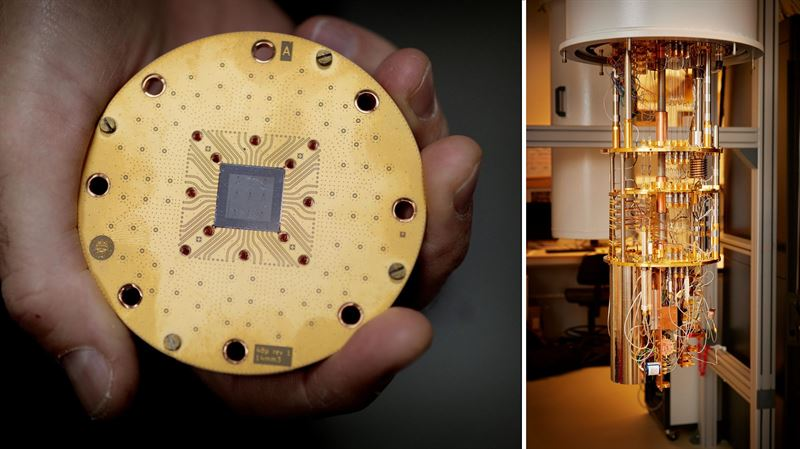
Rigetti Computing has finalized a $100 million CHIPS Act award from the U.S. Department of Commerce to address scaling limitations in superconducting quantum processors. The funding will support three engineering projects: developing compact readout electronics, designing a high-capacity cryostat, and enhancing fabrication capabilities at Rigetti's Fab-1 facility for multi-chiplet quantum processing units. In exchange for the award, the Department of Commerce will receive a minority equity stake in Rigetti.
-
-
-
GÉANT and Quantum Internet Alliance Partner to Advance European Quantum Networking Architecture
GÉANT and the Quantum Internet Alliance (QIA) have partnered to advance European quantum networking by signing an MoU on September 8, 2026. This collaboration leverages GÉANT's optical network and QIA's quantum networking expertise to develop infrastructure, standards, and interoperability protocols, aiming to transition quantum communication prototypes into operational cross-border trials and establish a sovereign European Quantum Internet.
-
-
-
Qoro Quantum Signs MoU with STFC Hartree Centre to Build UK Quantum-HPC Demonstrator
Qoro Quantum and STFC Hartree Centre have partnered to build a UK Quantum-HPC demonstrator, integrating Qoro's software stack into the Hartree Centre's HPC cluster. This collaboration aims to provide enterprise-grade hybrid quantum-HPC capabilities for UK industry and public sector research, utilizing Qoro's Divi SDK and Maestro simulation engine with the open-source QRMI for seamless integration and resource management. The initiative will focus on practical challenges in electronic structure theory, physical sciences modeling, and quantum chemistry, aligning with broader UK computing initiatives.
-
Who’s News: Strategic Appointments at Q.ANT, Qtonic Quantum, QuantrolOx, and Leiden Cryogenics
Q.ANT appointed Joerg Behrend as VP Hardware to lead NPU production, Qtonic Quantum brought in Gina Fratarcangeli as Senior Advisor for AI Transformation and Global Alliances, and QuantrolOx named Srishti Mahhajan as Global Head of Strategy & Corporate Development. Additionally, Eric Kievit is the new CEO of Leiden Cryogenics, with founder Giorgio Frossati moving to a senior scientist role.
-
QClairvoyance Quantum Labs Signs MoU with IITM–C-DOT Samgnya Foundation to Advance Indian Quantum Ecosystem
QClairvoyance Quantum Labs has partnered with IITM–C-DOT Samgnya Foundation, India's National Hub for Quantum Communication, to advance the Indian quantum ecosystem. This collaboration, under the National Quantum Mission, will focus on quantum computing, algorithms, AI, post-quantum cryptography, and next-generation compute architectures, aiming to translate theoretical research into deployable commercial products. Samgnya will provide QClairvoyance with access to hardware testbeds and support India's quantum technology commercialization efforts.
-
Qubic Secures CA$1.5 Million ($1.08 Million USD) Canadian Federal Contract for Cryogenic Amplifiers
Qubic has secured a CA$1.5 million (US$1.08 million) contract with the Canadian federal government through the Innovative Solutions Canada (ISC) Testing Stream. The contract involves delivering nine Kinetic Inductance Traveling Wave Parametric Amplifiers (KI-TWPAs) and companion software starting in late 2026. These amplifiers offer significant advantages in thermal dissipation and magnetic field resilience compared to conventional cryogenic amplifiers, supporting multiplexed qubit readout and high-sensitivity RF sensing. This federal procurement further builds on Qubic's commercial momentum, bringing their total raised capital and non-dilutive grant funding to nearly CA$10 million.
-
SEALSQ Reports H1 2026 Financial Results: Revenue Surges 131% to $11.2M, $486M Cash Balance, and Post-Quantum Hardware Progress
SEALSQ reported a significant surge in H1 2026 revenue to $11.15 million, a 131.1% increase year-over-year, driven by demand for secure-element products, PKI services, and ASIC design. The company also made substantial progress in post-quantum hardware development, achieving NIST certification for its QS7001 chip and advancing customer sampling of its QVault TPM, while reaffirming its FY 2026 revenue guidance.
-
Chicago State University Launches CQuEST Center to Anchor South Side Quantum Workforce Pipeline
Chicago State University (CSU) has launched the CQuEST Center, a research and workforce hub on Chicago's South Side, unifying its quantum and semiconductor credentials. The center offers academic pathways, including a QISE minor and certificates, providing students with access to research facilities, internships, and job opportunities while also engaging in regional STEM outreach.
-
-
-
LUMI AI Factory Selects IQM’s Halocene Roadmap for Europe’s First Superconducting Logical Qubit System
IQM Quantum Computers will deploy Europe's first logical-qubit-capable superconducting quantum computer, LUMI-IQ, at CSC's Kajaani, Finland data center. This system, co-funded by the EuroHPC Joint Undertaking, will be integrated into the LUMI AI Factory, creating a hybrid HPC-AI-quantum supercomputing platform. LUMI-IQ will be delivered in three phases through 2029, starting with 150 physical qubits and eventually supporting up to 9 fault-tolerant logical qubits for advanced quantum computations.
-
Infleqtion and Cisco Partner to Advance Distributed Neutral-Atom Quantum Networking Architectures
Infleqtion and Cisco are partnering to advance distributed neutral-atom quantum networking architectures. This collaboration combines Infleqtion's quantum hardware, such as cold-atom QPUs and quantum memory modules, with Cisco's software-defined networking stack and hardware switches. Their goal is to integrate heterogeneous quantum devices into scalable distributed computing clusters, addressing the need for optical interconnects to scale beyond current quantum processing unit limitations.
-
Altera and Riverlane Partner on QEC Interfaces for Agilex FPGAs Following Post-Quantum Security Rollout
Altera and Riverlane have partnered to optimize quantum error correction (QEC) interfaces for Altera's Agilex FPGAs, enabling real-time QEC data movement and low-latency control. This collaboration, which includes an open-source QEC Interface (QECi) protocol, aims to standardize data exchange between quantum control electronics and QEC decoders. This initiative complements Altera's recent rollout of Post-Quantum Cryptography (PQC) support in its Agilex 3 and 5 FPGAs, establishing a dual strategy to secure classical infrastructure against quantum threats and provide control fabric for quantum computing.
-
Chalmers Researchers Accelerate Bosonic Quantum Operations by 1,000x Using Quantum Lattice Gates
Researchers at Chalmers University of Technology have developed a new method using Quantum Lattice Gates (QLGs) that accelerates bosonic quantum operations by up to 1,000 times. This breakthrough allows for faster and more robust quantum error correction by completing complex quantum operations within a single Floquet driving period, rather than thousands of repeated cycles, making it compatible with existing superconducting quantum circuits. The technique has achieved high-fidelity state preparation and logical gate operations, scaling linearly with Hilbert-space dimension.
-
BWT Alpine Formula One Team and SEALSQ Expand Quantum Partnership into Multiphysics Simulation
BWT Alpine Formula One Team and SEALSQ are expanding their partnership to integrate hybrid quantum-classical simulation capabilities into Formula One engineering, leveraging ColibriTD's quantum solvers for complex physics equations in car development. This collaboration aims to enhance simulation accuracy and secure intellectual property using SEALSQ’s post-quantum technology, aligning with SEALSQ's strategy of linking investments from its $200 million Quantum Fund with commercial opportunities.
-
Xanadu and AMD Launch Open-Source Backline Extension for PennyLane
Xanadu and AMD have launched Backline, an open-source framework integrated into Xanadu's PennyLane platform, to connect quantum and classical hardware. It provides ultra-low-latency links across CPUs, GPUs, FPGAs, and SmartNICs, resolving the classical-quantum data bottleneck for applications like quantum error correction. Backline enables Python-native, microsecond-scale communication, allowing standard processors to handle real-time quantum feedback loops and offering a hardware-agnostic architecture for hybrid quantum applications.
-
IBM Ventures Leads $8 Million Investment in BQP to Scale Quantum-Accelerated Physics Simulation
IBM Ventures led an $8 million investment in BQP, an enterprise software developer, to advance its BQPhy platform for quantum-accelerated physics simulation. This funding supports the commercial deployment of BQPhy, which optimizes GPU utilization for up to 10x faster performance in engineering environments, and prepares classical workloads for seamless transition to hybrid quantum-classical QPUs.
-
Qilimanjaro Quantum Tech Releases QiliSDK v0.3.0 with GPU-Accelerated Analog Simulation and Python 3.14 Support
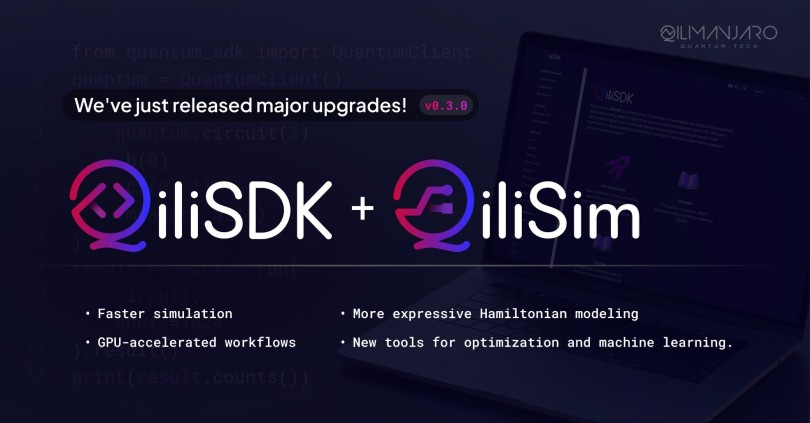
Qilimanjaro Quantum Tech has released QiliSDK v0.3.0, updating its open-source framework with GPU-accelerated analog simulation, Python 3.14 support, and enhanced classical optimization capabilities. This version introduces new features like a stabilizer state simulator and improved tensor network engine, making it a versatile tool for quantum computing research.
-
IBM and Lockheed Martin Partner with ETH Zurich to Deploy Switzerland’s First IBM Quantum System Two
IBM and Lockheed Martin, in an agreement with armasuisse, are establishing a national quantum innovation hub at ETH Zurich, featuring Switzerland's first on-premises IBM Quantum System Two by late 2026. This system, powered by the Nighthawk r2 processor, will be installed at the Swiss National Supercomputing Centre (CSCS) in Lugano, providing a quantum-centric supercomputing environment for hybrid classical-quantum workflows. The initiative, funded by Swiss defense procurement, aims to advance quantum research and includes dedicated defense R&D programs.
-
-
-
Fujitsu and Yaqumo Begin Hardware Validation of STAR Architecture on Neutral-Atom QPUs
Fujitsu and Yaqumo have partnered to experimentally validate Fujitsu's STAR architecture on Yaqumo's neutral-atom quantum processors. This collaboration aims to reduce physical qubit overhead and improve quantum error correction by leveraging the strengths of neutral-atom systems. They are also integrating Fujitsu's Open Quantum Toolchain to enable external users to access diverse hardware modalities through a unified cloud interface.
-
UC Berkeley Welcomes QuantrolOx to its Quantum Innovation Corridor
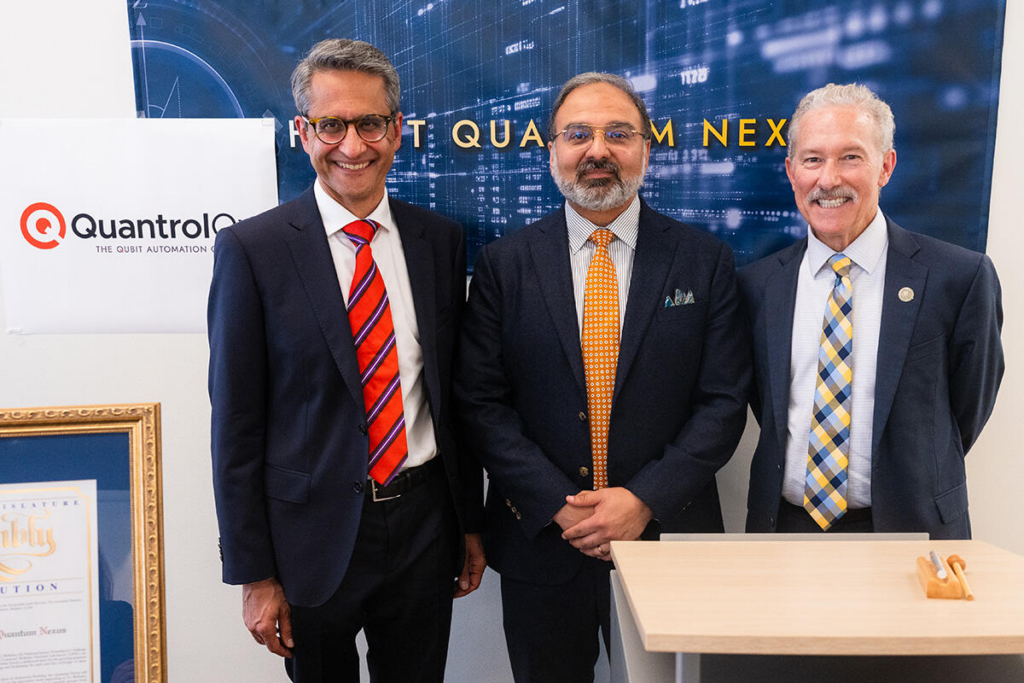
UC Berkeley's Roger Herst Quantum Nexus has welcomed QuantrolOx, a UK-headquartered qubit automation startup, establishing its first North American base. This partnership, solidified by a five-year MOU, integrates QuantrolOx's Quantum EDGE software with UC Berkeley's quantum processing units to automate qubit tuning and calibration, aiming to standardize hardware pipelines and accelerate quantum computing development. The collaboration supports California's Quantum California initiative, fostering innovation in the deep-tech ecosystem.
-
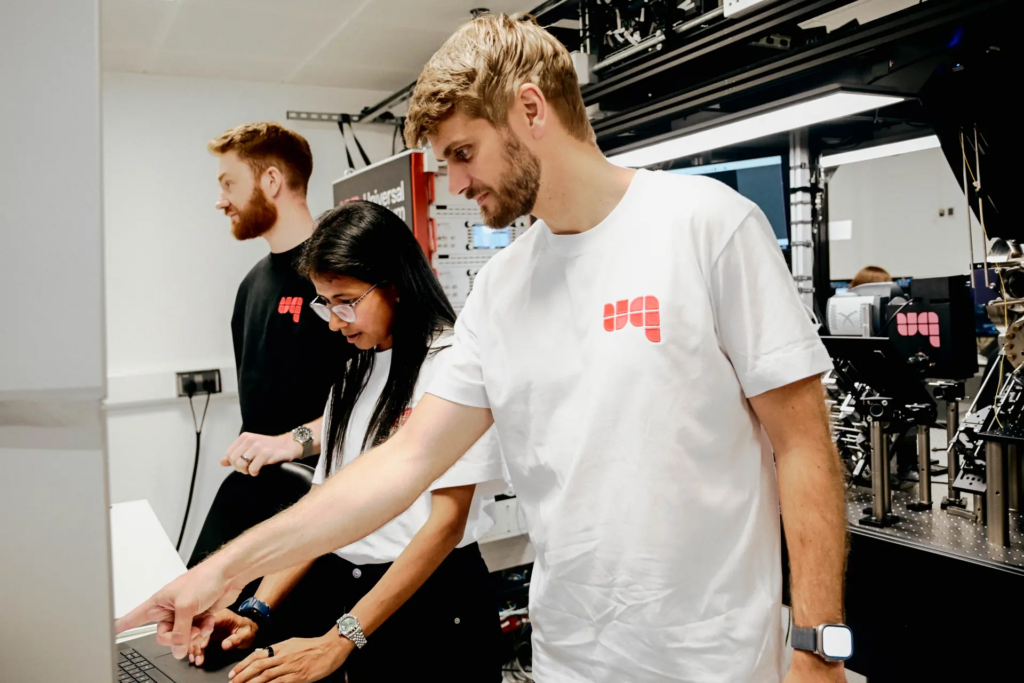
Universal Quantum Establishes First R&D Competency Centre Outside Europe in Singapore
Universal Quantum has established its first R&D Competency Centre outside Europe in Singapore, backed by an investment exceeding SGD 30 million. This facility will serve as the company's Asia-Pacific headquarters for advanced ion-trap microchip manufacturing, packaging, and algorithmic co-design, in collaboration with Singaporean government bodies and research institutions. The center aims to develop high-density microchip modules for a million-qubit quantum computer and design fault-tolerant quantum algorithms for key industrial sectors in Singapore.
-
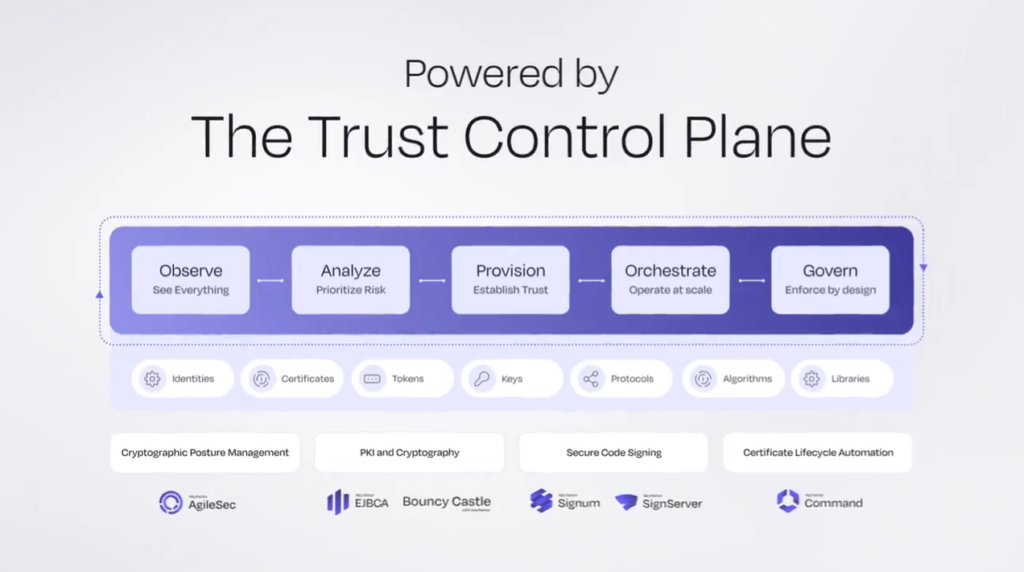
Keyfactor Surpasses $200 Million ARR Amid Enterprise Post-Quantum Migration Surge
Keyfactor has surpassed $200 million in annual recurring revenue in Q3 2026, driven by a 35% year-over-year growth and increasing demand for enterprise trust infrastructure due to post-quantum cryptography migration. This growth is further bolstered by a $1 billion+ investment from Summit Partners and the intent to acquire Cofide, enhancing Keyfactor's capabilities in machine identity security and cryptography management for various sectors, including government agencies and Fortune 100 enterprises.
-
SandboxAQ and Northrop Grumman Flight-Test AQNav Quantum Navigation on Attritable Drone
SandboxAQ and Northrop Grumman successfully flight-tested the AQNav magnetic navigation system on a Lumberjack® attritable drone, marking the first operational flight-test of MagNav on an expendable platform and the first pairing of magnetic anomaly navigation with visual navigation sensors on a one-way attack system. This demonstration validated AQNav's software-first architecture, which processes sensor telemetry using Large Quantitative Models and geomagnetic anomaly maps to enable real-time alternative positioning, navigation, and timing in GPS-denied environments, expanding its deployment options for low-cost defense systems.
-
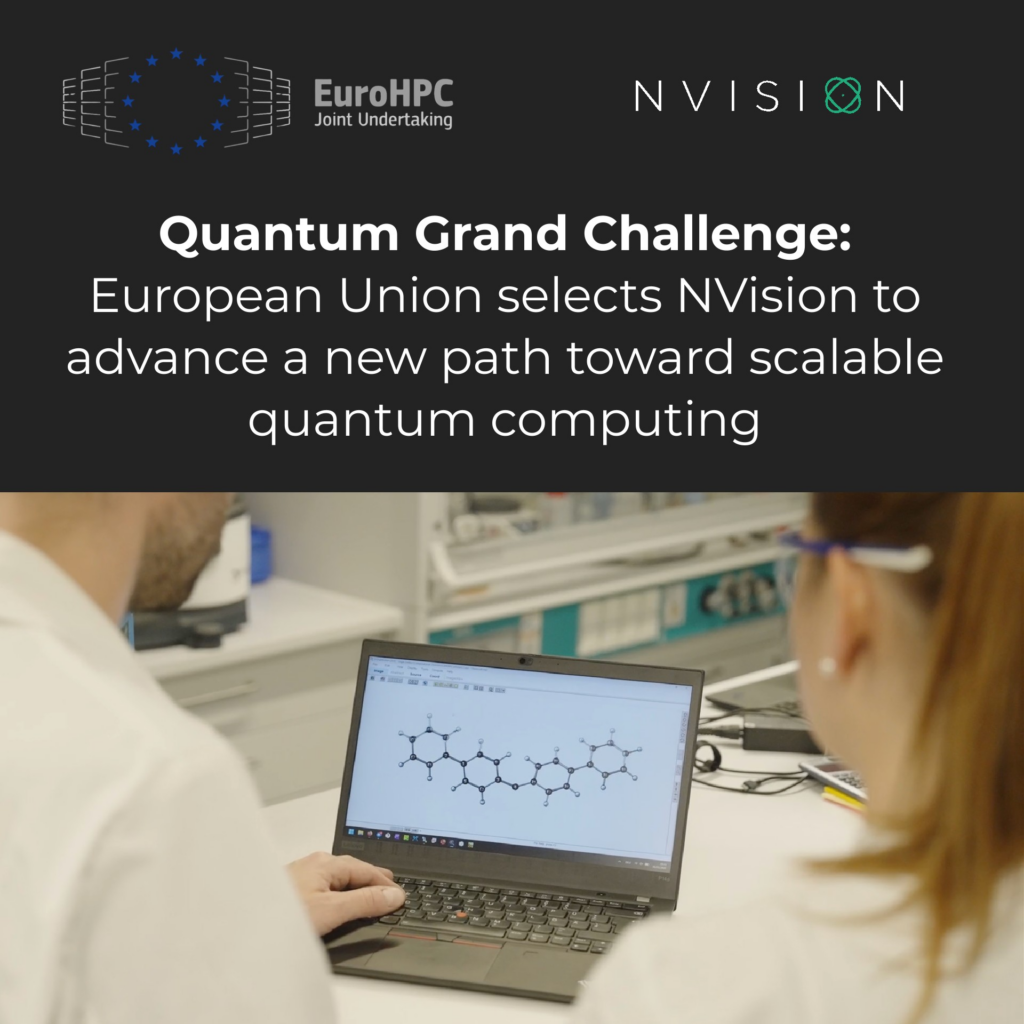
NVision Advances EuroHPC QOSMOS Project for Photonic-Interfaced Spin Qubits
NVision Quantum Technologies has received €293,455 in Phase 1 funding from the EuroHPC Joint Undertaking for its QOSMOS project, aimed at developing a Photonic-Interfaced Quantum Computer (PIQC) architecture. This funding will support the creation of a roadmap for scaling their spin-qubit technology, which uses photonic integrated circuits to overcome scaling limitations. Successful completion of Phase 1 could lead to up to €30 million in EIB venture debt financing for manufacturing facilities.
-
Xanadu and ASML Partner to Optimize Lithography Processes for Ultra-Low-Loss Quantum Photonics
Xanadu Quantum Technologies and ASML are collaborating to improve lithography processes for quantum photonics, aiming to reduce optical signal loss in silicon photonic circuits. Their research focuses on minimizing Line Edge Roughness (LER) caused by DUV and EUV photolithography, which scatters photons in optical waveguides, with the goal of achieving ultra-smooth waveguide sidewalls for fault-tolerant quantum error correction.
-