
News
Company, funding, product and policy news from across the quantum industry, as it happens.
-
-
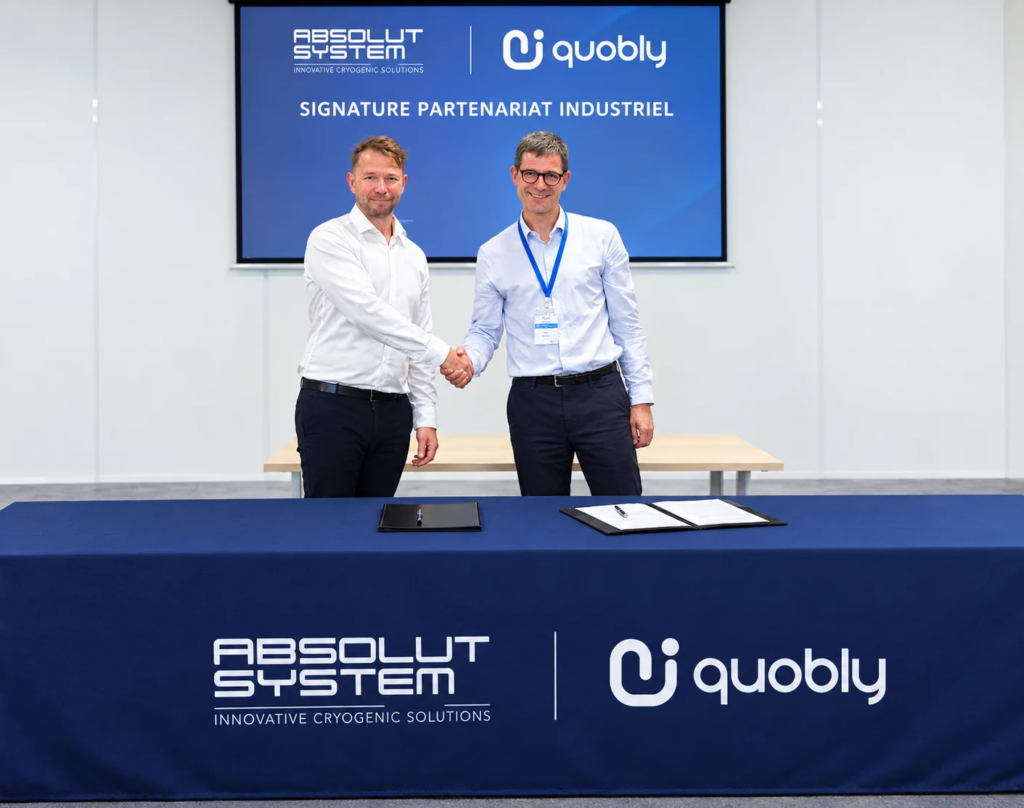
Quobly and Absolut System Execute Industrial Cryogenic Roadmap for Silicon Spin-Qubit Computers
Quobly and Absolut System have partnered to develop advanced cryogenic infrastructure for silicon spin-qubit computers, successfully qualifying the QCube® 100-Class 3 platform. This system provides 100 mW cooling at 500 mK, essential for Quobly's integrated control logic architecture, paving the way for scaling to one million qubits by 2032. This collaboration, supported by significant funding, aims to establish mass-manufacturable quantum hardware.
-
Qedma and HQC² Demonstrate 30–50× Error Mitigation Advantage in Quantum Chemistry Benchmark
Qedma Quantum Computing and the HQC² research consortium have demonstrated a significant 30–50x reduction in energy estimation error for quantum chemistry calculations on superconducting quantum hardware. Their QESEM software layer, tested on IBM’s Aachen processor, successfully lowered energy estimation errors for a water molecule's potential energy surface from approximately 500 mHa to within 1.5 mHa, achieving chemical accuracy. This advancement showcases the potential of characterization-driven quantum error mitigation for extracting quantitative molecular properties on current quantum hardware.
-
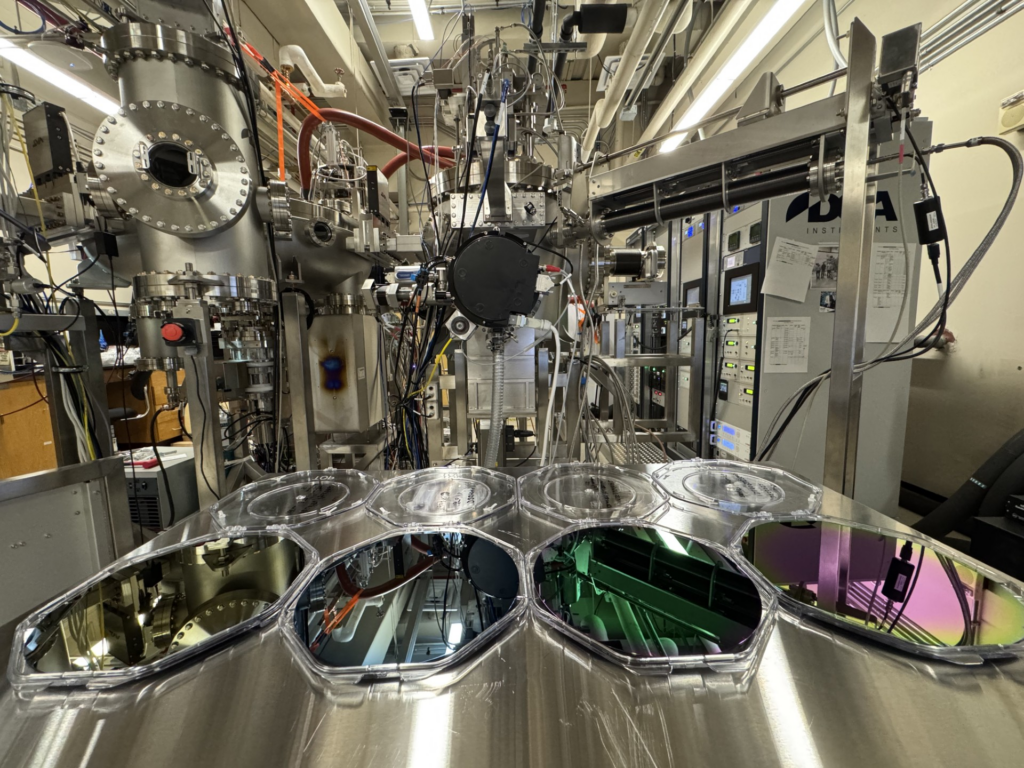
La Luce Cristallina Launches Quantum Paraelectric Strontium Titanate on Insulator Wafer Platform
La Luce Cristallina has launched its 0.5-micrometer silicon-based quantum paraelectric strontium titanate on insulator (QP-STOI) wafer platform. This platform is designed for quantum computing, cryogenic electronics, and non-linear electro-optic architectures, offering a foundry-compatible substrate that exploits strontium titanate's dielectric tunability at liquid-helium temperatures.
-
QNu Labs Closes ₹200 Crore ($21.02M USD) Series A1 Round to Scale Sovereign Quantum Security Hardware Stack
QNu Labs, an Indian quantum-safe cybersecurity provider, has successfully closed a ₹200 crore ($21.02 million USD) Series A1 funding round, co-led by the National Quantum Mission and Speciale Invest. This funding, along with ₹150 crore in convertible debt, brings their total capital to ₹375 crore, which will be used to build a 2,000-kilometer Quantum Key Distribution (QKD) network in India and expand internationally. The company, incubated at IIT Madras, specializes in QRNG, QKD, and PQC solutions, with plans to extend into quantum sensing and miniaturized QKD chips.
-
Quantinuum Demonstrates Helix Quantum Error Correction Architecture on Helios Hardware
Quantinuum has successfully validated its Helix quantum error correction architecture on its 98-qubit Helios processor, demonstrating a complete fault-tolerant stack that outperforms unencoded physical baselines. The Helix architecture, utilizing a C4-Helix code and reconfigurable 2D shuttling, achieved a world-record logical memory error rate and significant fidelity improvements in logical Clifford gates and inter-code entanglement. These advancements provide a blueprint for future fault-tolerant quantum computing hardware, with anticipated error rate reductions and architectural scaling pathways.
-
Quantinuum Finalizes $100 Million CHIPS Act R&D Award to Accelerate Trapped-Ion Manufacturing
Quantinuum has finalized a $100 million CHIPS Act R&D award to accelerate the manufacturing of trapped-ion quantum hardware. This funding will strengthen domestic semiconductor manufacturing, advance integrated optics, and scale fault-tolerant quantum computers by transitioning trapped-ion processing units to volume-manufacturable semiconductor platforms. Collaborating with GlobalFoundries and Monarch Quantum, Quantinuum aims to reduce complexity, improve gate reproducibility, and establish a resilient domestic supply chain for quantum hardware.
-
-
-
PsiQuantum Executes Definitive $100 Million CHIPS Act Award with U.S. Department of Commerce
PsiQuantum has finalized a $100 million CHIPS Act award with the U.S. Department of Commerce to accelerate domestic semiconductor process development and strengthen onshore supply chain security for fault-tolerant quantum computing infrastructure, building on previous investments and partnerships. The funding will support 300mm wafer production of barium titanate and optimize single-photon detectors and packaging lines at its California facilities, complementing its existing manufacturing footprint and partnerships with GlobalFoundries, AFRL, and DARPA.
-
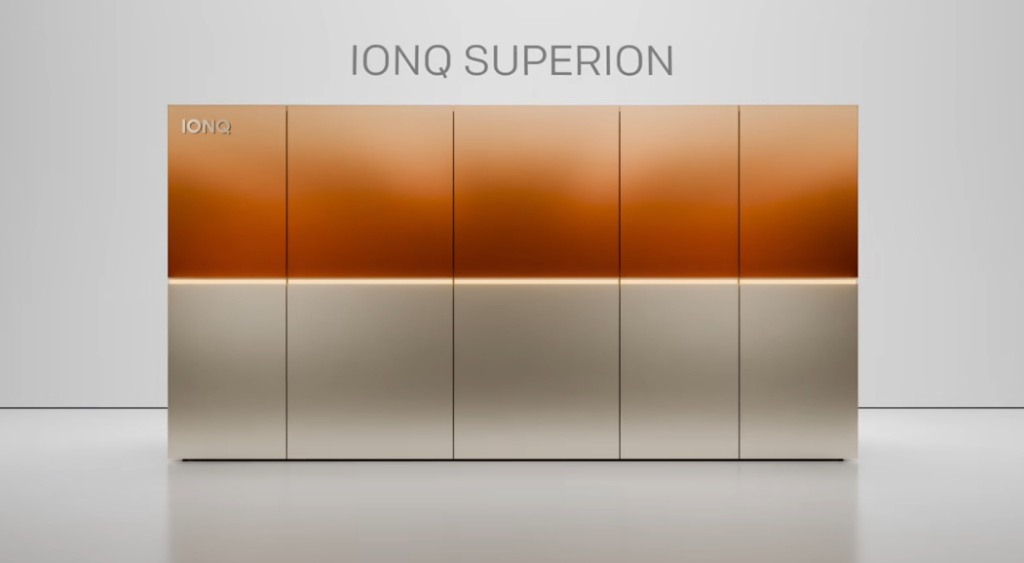
IonQ Debuts Sixth-Generation Superion QPU Architecture Featuring On-Chip Electronic Control and CMOS Integration
IonQ has unveiled its sixth-generation quantum computing platform, the IonQ Superion 256, featuring Electronic Qubit Control (EQC) and CMOS integration for high-volume semiconductor fabrication. This new architecture significantly reduces cost-per-qubit and allows for more compact systems. IonQ aims for commercial deliveries in 2027 and is simultaneously developing the Superion 10K platform for fault-tolerant quantum computing, with pre-orders for the Superion 256 already open.
-
IonQ Publishes End-to-End Fault-Tolerant Resource Estimate for Shor’s Algorithm on 256-Bit Elliptic Curves
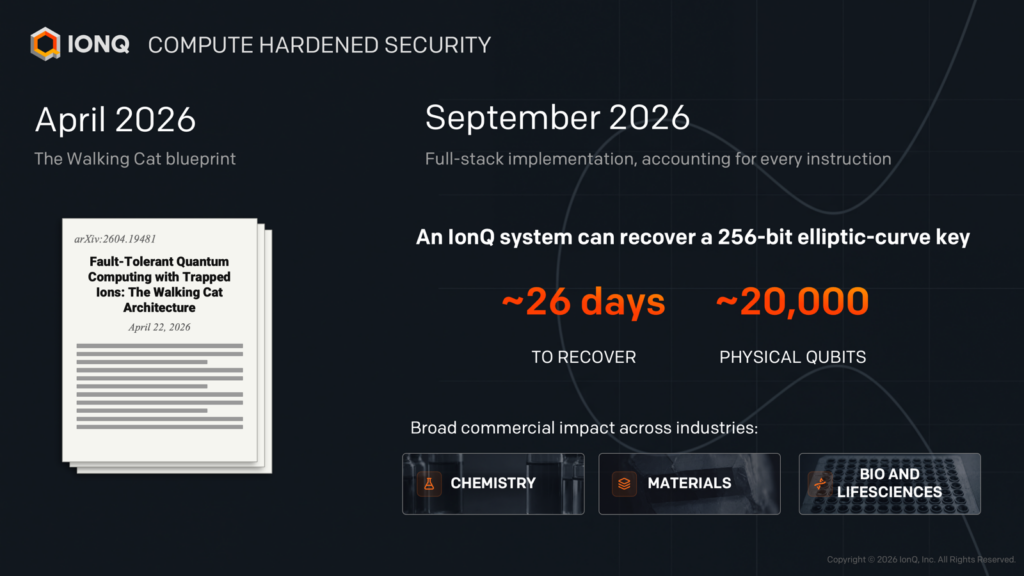
IonQ has published a study detailing a fault-tolerant quantum computing architecture capable of breaking 256-bit elliptic curve cryptography, such as that securing Bitcoin, in 25.7 days. Their optimized "Walking Cat" architecture utilizes qLDPC codes and 19,397 physical qubits to achieve this, highlighting the future vulnerability of current cryptographic standards and urging migration to post-quantum alternatives.
-
IonQ Raises Full-Year 2026 Revenue Outlook to $450 Million–$460 Million Post-SkyWater Consolidation
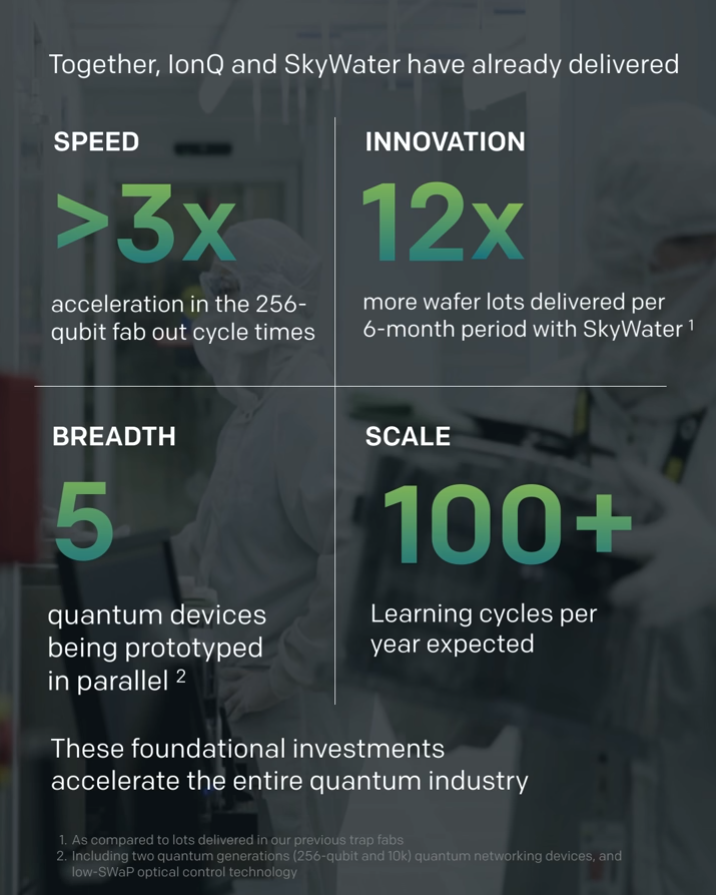
IonQ has raised its full-year 2026 revenue outlook to $450 million–$460 million, incorporating financial contributions from SkyWater Technology after its acquisition on July 31, 2026. This revised outlook is due to SkyWater's operations accelerating physical QPU manufacturing throughput, with 256-qubit processor wafers fabricating three times faster and delivering 12 times more wafer lots every six months.
-
IonQ and Congruity360 Execute $8.18 Million Commercial Quantum-Safe Network Agreement
IonQ and Congruity360 have entered an $8.18 million agreement to implement a quantum-safe network, integrating post-quantum cryptography and hardware-based quantum key distribution. This collaboration aims to secure Congruity360's data governance platform across various environments, protecting sensitive enterprise data from future decryption threats. The initiative aligns with federal mandates for post-quantum compliance and expands IonQ's commercial quantum networking presence in high-compliance sectors.
-
SkyWater Technology and Qolab Establish Midwest Commercial Foundry Agreement for Superconducting Devices
SkyWater Technology and Qolab have partnered in a multi-year agreement, with Qolab becoming the lead customer for SkyWater's new SC250 superconducting platform. This collaboration aims to scale Qolab's Quantum System-in-Package (QSiP) architecture, transitioning superconducting quantum processing unit (QPU) components from research to commercial manufacturing to reduce complexity and cost.
-
SkyWater Launches Dedicated Quantum Solutions Merchant Foundry Division
SkyWater Technology has launched SkyWater Quantum Solutions, a new merchant foundry division focused on process development, chip integration, and manufacturing for quantum computing, networking, and sensing applications. The division offers two standardized process platforms, SC250 for superconducting circuits and SP90 for quantum photonic routing, and has already secured a joint development agreement with Qolab to fabricate its Quantum System-in-Package (QSiP) hardware.
-
D-Wave Finalizes Definitive $100 Million CHIPS Act Agreement with U.S. Department of Commerce
D-Wave Quantum Inc. has finalized a $100 million CHIPS Act agreement with the U.S. Department of Commerce. This funding will accelerate hardware development for both superconducting quantum annealing and gate-model architectures, aiming for a 100,000-qubit system and a 10,000-physical-qubit QPU, respectively. In exchange for the funding, the U.S. Department of Commerce will receive a minority equity stake in D-Wave.
-
Fujitsu Fabricates Diamond-Spin QPU Prototype Integrating Tin-Vacancy Centers and Photonic ICs
Fujitsu has fabricated a prototype diamond-spin quantum processing unit (QPU) integrating tin-vacancy (SnV) color centers into photonic integrated circuits (PICs), operating at a warmer cryogenic temperature of -271.6°C. This architecture addresses scaling challenges through heterogeneous material bonding and nanometer-scale diamond thinning, utilizing SnV centers for their reduced sensitivity to electric field noise and higher photon emission brightness compared to traditional nitrogen-vacancy centers. Fujitsu plans to develop a multi-module prototype by 2027, aiming for a 1,000 logical qubit system by FY2035, and is also working on linking this with their superconducting hardware for a heterogeneous quantum computing architecture.
-
-
-
NEC Discontinues Superconducting Quantum Computer Development to Focus on Annealing and Classical Emulation
NEC Corporation has ceased its research and development into superconducting quantum computers, shifting focus to quantum-inspired annealing and classical emulation due to long commercialization timelines and high capital investment. This move, reported by Nikkei Asia, means NEC will now concentrate on software and optimization services, leaving Fujitsu as the main domestic corporate developer of superconducting hardware in Japan.
-
-
-
Who’s News: Strategic Appointments at QuIC, Atom Computing, and Qilimanjaro Quantum Tech
Cécile Perrault is the new Executive Director of QuIC, Kevin Messerle is the new CFO of Atom Computing, and Albert Solana is the new Chief of Staff at Qilimanjaro Quantum Tech, all bringing their expertise to advance quantum technologies.
-
RIKEN Integrates QunaSys QURI SDK Enterprise into Japan’s JHPC-quantum Platform
RIKEN Center for Computational Science has adopted QunaSys QURI SDK Enterprise for Japan’s JHPC-quantum project, integrating supercomputer Fugaku and the ROQUO GPU cluster with quantum processing units. This platform, funded by NEDO, will facilitate hybrid algorithm execution across diverse hardware, offering solutions for materials science, quantum chemistry, and CAE, and is part of Japan’s Society 5.0 Roadmap.
-
Forschungszentrum Jülich Operates eleQtron’s JION Trapped-Ion QPU via JUNIQ Infrastructure
Forschungszentrum Jülich and eleQtron have launched the JION quantum computer, a trapped-ion QPU utilizing eleQtron’s MAGIC technology for microwave control and room-temperature operation. Integrated into JUNIQ, it connects directly to Jülich’s HPC supercomputing cluster for hybrid quantum-classical workloads, supported by significant funding from North Rhine-Westphalia and EU programs for quantum technology development and regional economic transformation.
-
Quantum Foundry Copenhagen and Novo Nordisk Foundation Announce 5,300 m² Fabrication Facility for Quantum Chips
Quantum Foundry Copenhagen and the Novo Nordisk Foundation are establishing a 5,300 m² quantum chip fabrication facility in Copenhagen, Denmark, to be operational by 2027. This initiative, backed by a €390 million investment from the Novo Nordisk Foundation, aims to bridge academic research with industrial manufacturing by offering commercial wafer fabrication, characterization, assembly, and packaging services for quantum technology vendors globally. It aligns with European strategies to bolster regional manufacturing capabilities for critical semiconductor and quantum components.
-
-
-
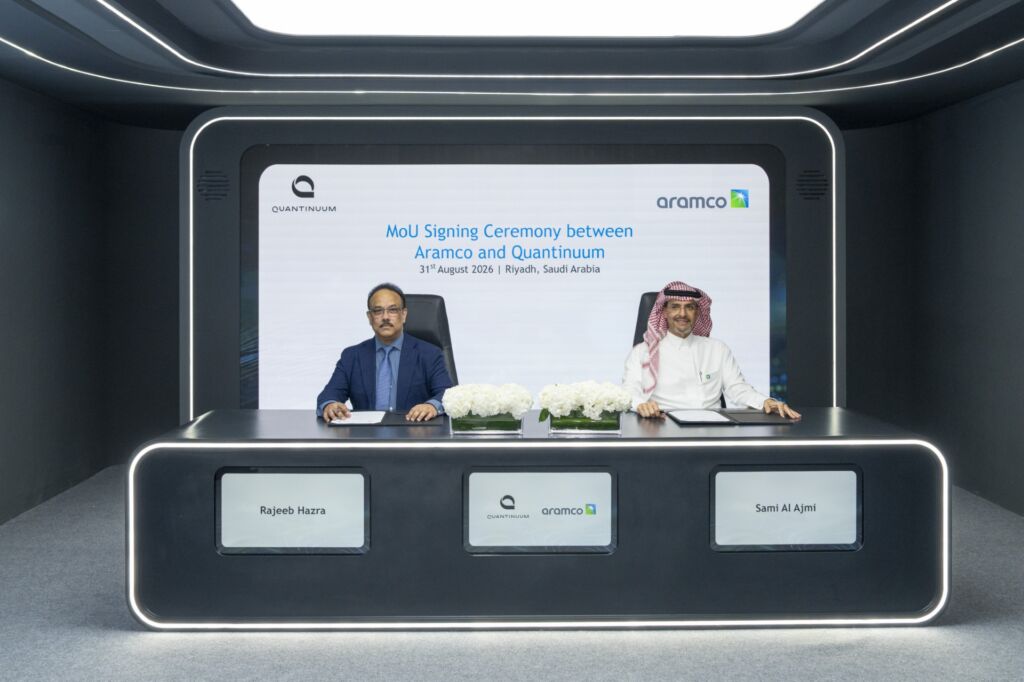
Quantinuum and Aramco Execute Non-Binding MoU for Energy Sector Quantum R&D
Quantinuum and Aramco have signed a non-binding MoU to explore quantum computing applications in the energy sector. This collaboration involves Aramco gaining access to Quantinuum’s trapped-ion hardware and software stack to research fault-tolerant quantum computing for complex simulations in energy production and to integrate quantum solutions into their digital transformation. This partnership also expands Quantinuum’s presence in the Middle East.
-
Giesecke+Devrient Joins European uPQComing Consortium to Develop Quantum-Safe eID Operating Systems
Giesecke+Devrient (G+D) has joined the European uPQComing consortium, co-funded by the EU’s Chips Joint Undertaking, to develop quantum-safe eID operating systems. The project focuses on migrating critical public digital infrastructure and resource-constrained embedded secure elements to Post-Quantum Cryptography (PQC). G+D’s role involves integrating PQC algorithms into Java Card chip operating systems, designing crypto-agile architectures, and implementing hybrid key exchange and authentication schemes, building upon their previous work with Germany’s Bundesdruckerei to establish quantum-resistant digital identity architectures across the EU.
-
SEEQC Signs MoU with Taiwan Quantum Industry Technology Promotion Office to Build Cryo-Chip Supply Chain
SEEQC has signed an MoU with Taiwan’s QITPO to create a cross-border quantum technology and supply-chain partnership. This agreement, signed at SEMICON Taiwan 2026, focuses on leveraging Taiwan’s semiconductor infrastructure for the development, testing, and commercialization of quantum computing components, including cryo-CMOS and SFQ manufacturing, and advanced packaging for superconducting QPUs. This collaboration aims to integrate SEEQC’s IP with Taiwan’s foundry capabilities to establish a robust supply chain for commercial multi-qubit systems.
-
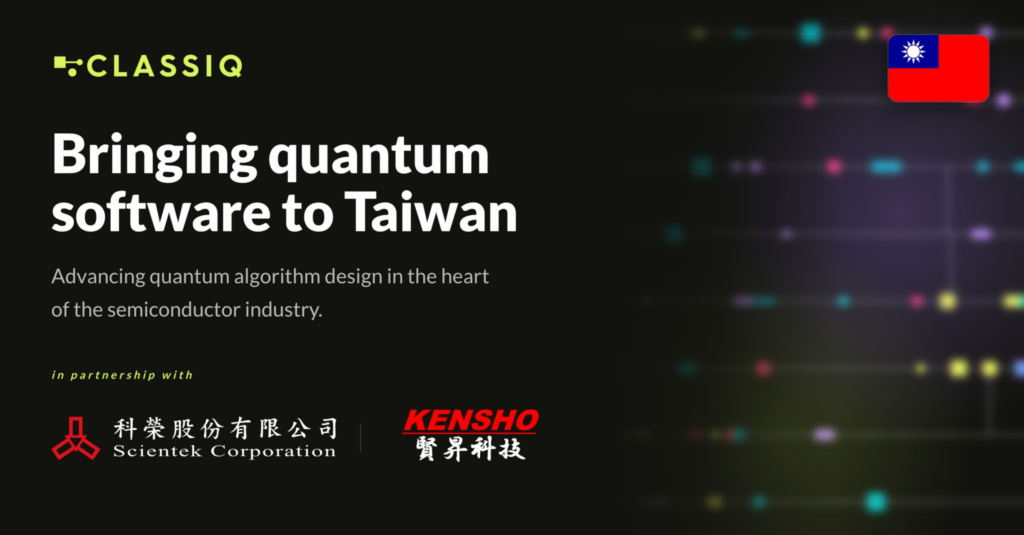
Classiq Expands in Taiwan via Go-to-Market Partnerships with Scientek and Kensho
Classiq Technologies has expanded into Taiwan through partnerships with Scientek Corporation and Kensho, strategically timed with SEMICON Taiwan 2026. These collaborations aim to integrate Classiq’s quantum software engineering platform into Taiwan’s semiconductor manufacturing, defense, material science, and academic research sectors. The partnerships will facilitate local distribution, customer enablement, and joint R&D, bridging quantum hardware infrastructure with Classiq’s AI synthesis engine and Qmod programming language.
-
SEALSQ Integrates wolfTPM Support into Post-Quantum Silicon Semiconductor Platform (QVault TPM)
SEALSQ and wolfSSL have integrated wolfTPM software support into SEALSQ’s QVault TPM, a post-quantum silicon semiconductor platform. This integration provides an open-source software layer for executing hardware-isolated post-quantum cryptography operations across embedded systems. The QVault TPM, featuring an 80 MHz 32-bit RISC-V secure core, ensures private keys for ML-DSA and ML-KEM are generated, stored, and executed within the hardware boundary, enhancing security. Sampling and general hardware availability for the QVault TPM are scheduled for November 2026.
-