
News
Company, funding, product and policy news from across the quantum industry, as it happens.
-
-
Diraq Launches Engineering Hub in Santa Monica to Accelerate Silicon Spin-Qubit Roadmap
Diraq, a silicon quantum computing developer, has opened a U.S. Technology Hub in Santa Monica, California, to accelerate its silicon spin-qubit roadmap, focusing on IC design, cryogenic CMOS architecture, device modeling, and machine learning. This new facility, along with its Palo Alto and Chicago locations, forms a three-node U.S. network that complements Diraq’s Sydney headquarters, aiming to leverage commercial CMOS foundries for high-density qubit fabrication and a commercial product launch by 2029.
-
-
-
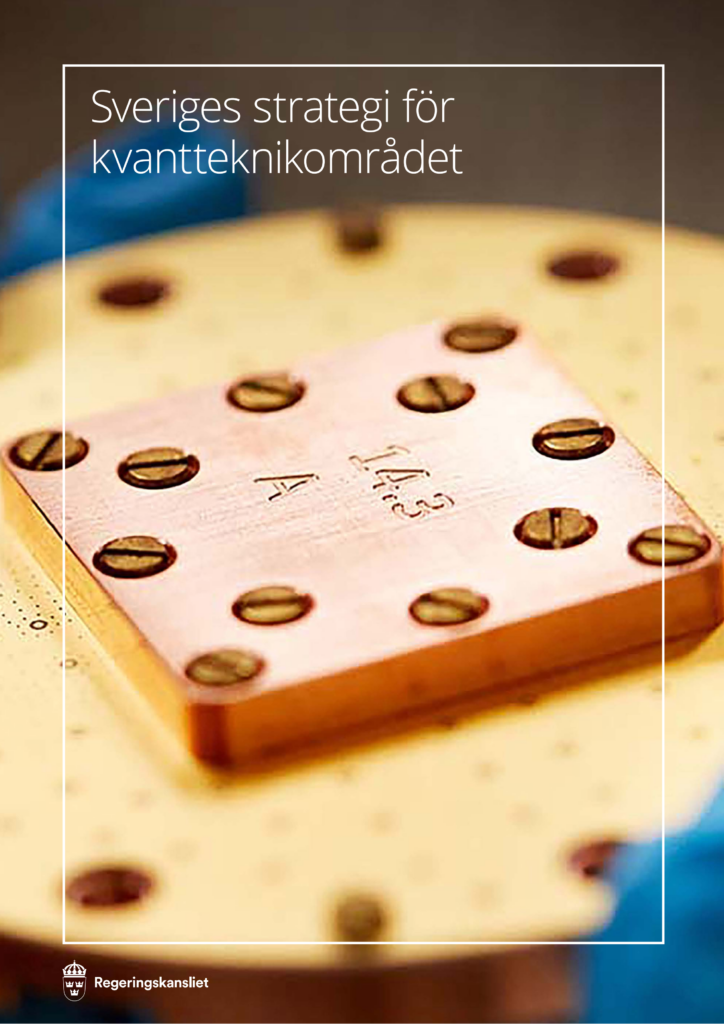
Sweden Unveils Official National Quantum Strategy to Drive Commercial Scaling and Defense Resiliency Through 2036
Sweden has launched a National Quantum Strategy spanning until 2036, aiming to commercialize quantum technologies, enhance national security, and foster international collaborations. The strategy focuses on bridging academic research with industrial application through expanded testbeds, venture capital mobilization, and talent development. It also mandates the adoption of Post-Quantum Cryptography and strengthens alliances within the Nordic region, Europe, and with the U.S. to ensure supply chain resilience and develop joint defense technologies.
-
NIST Demonstrates 100x SNSPD Width Scaling to Unblock Quantum Network and Photonic Manufacturing Bottlenecks
Physicists at NIST have developed a groundbreaking magnetic shielding architecture for superconducting nanowire single-photon detectors (SNSPDs), enabling a 100-fold increase in width to 0.1 mm. This innovation dramatically reduces dark-count noise rates by ten orders of magnitude and achieves near-unity detection efficiency in the mid-infrared spectrum by overcoming the pearl limit through active magnetic cancellation. This advancement promises to revolutionize quantum networking and photonic manufacturing by simplifying fabrication, improving optical coupling, and eliminating polarization sensitivity.
-
New Mexico Allocates $3M to UNM Quantum New Mexico Institute for Regional Ecosystem Expansion
New Mexico has allocated $3 million to the University of New Mexico’s Quantum New Mexico Institute (QNM-I) to boost the state’s quantum talent, research, and commercialization. This investment supports UNM-based quantum research, expands workforce development across educational levels, and establishes programs to transition lab discoveries into commercial startups. This initiative is part of New Mexico’s larger $450 million commitment to establish a global quantum hub.
-
U.S. Department of Energy Allocates $7.3M for High-Energy Physics Quantum Outposts
The U.S. Department of Energy (DOE) has granted $7.3 million to eight research projects under the “Quantum Outposts on the Energy and Intensity Frontiers” initiative. These projects, managed by the DOE Office of Science’s High Energy Physics program, aim to integrate quantum information science tools into particle accelerator experiments, collision analyses, and neutrino research, aligning with federal policy and funding up to three years. A collaboration between Brookhaven National Laboratory and the University of Pittsburgh will focus on analyzing particle entanglement in high-energy collisions to identify rare physical phenomena.
-
India’s C-DOT Unveils 14 Indigenous Quantum Products During 43rd Foundation Day
C-DOT launched 14 indigenous quantum-secure products, including Quantum Key Distribution (QKD) hardware and Post-Quantum Cryptography (PQC) protocols, to integrate quantum security into India’s national communications and future 6G networks. These production-grade solutions aim to help financial institutions and telecom operators transition from vulnerable classical public-key infrastructure, aligning with India’s Bharat 6G Vision and an export mandate for “Made in India” telecom and cybersecurity products.
-
NSF Awards $290M Across Eight Quantum Leap Challenge Institutes; Focuses on Sensing, Hardware Fabrication, and Fault Tolerance
The National Science Foundation has invested $290 million across eight Quantum Leap Challenge Institutes (QLCIs) to advance quantum research and technology. This funding renews support for existing centers like NSF QuBBE, HQAN, and Q-SEnSE, focusing on areas such as biosensing, modular computing, and optical frequency sensing. Additionally, new institutes like NSF MARQUIS and NSF PRACTIQAL will tackle challenges in qubit fabrication, hardware materials, and fault-tolerant quantum error correction, forming a nationwide network to drive quantum innovation and workforce development.
-
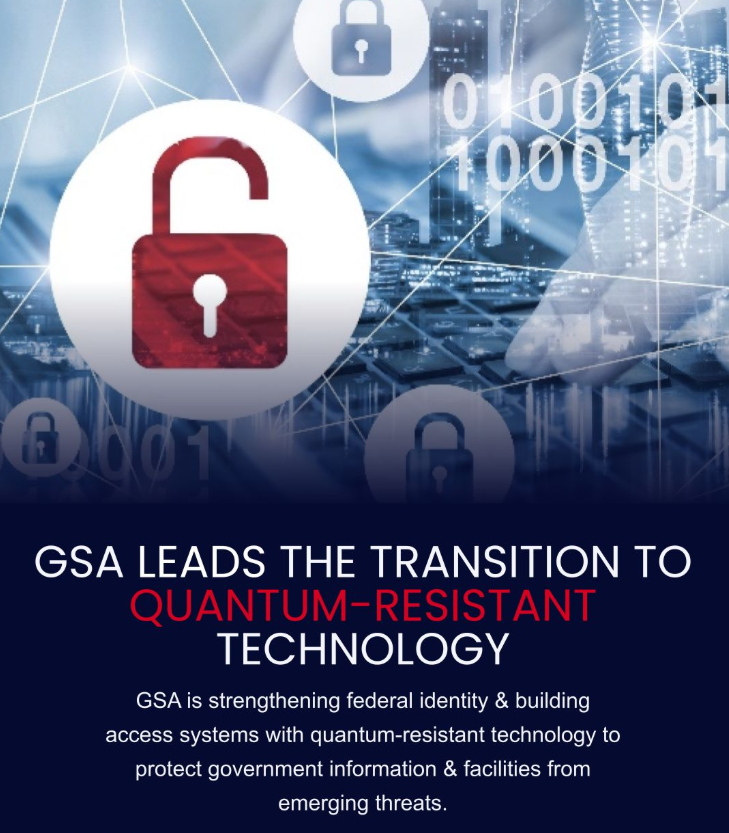
GSA and Treasury Launch Dual-Agency Post-Quantum Cryptography Initiatives for U.S. Federal & Financial Infrastructure
The GSA and Treasury have launched initiatives to deploy post-quantum cryptography (PQC) across U.S. federal and financial infrastructure, driven by OMB Memorandum M-26-15 and Executive Order 14412. The GSA is modernizing federal identity management and physical access systems, including updating the FICAM framework and expanding PQC testing for physical access controls. Concurrently, the Treasury Department has formed a Quantum-Readiness Task Force to guide the financial sector’s transition to PQC, addressing sector alignment, supply chain readiness, and risks to digital assets.
-
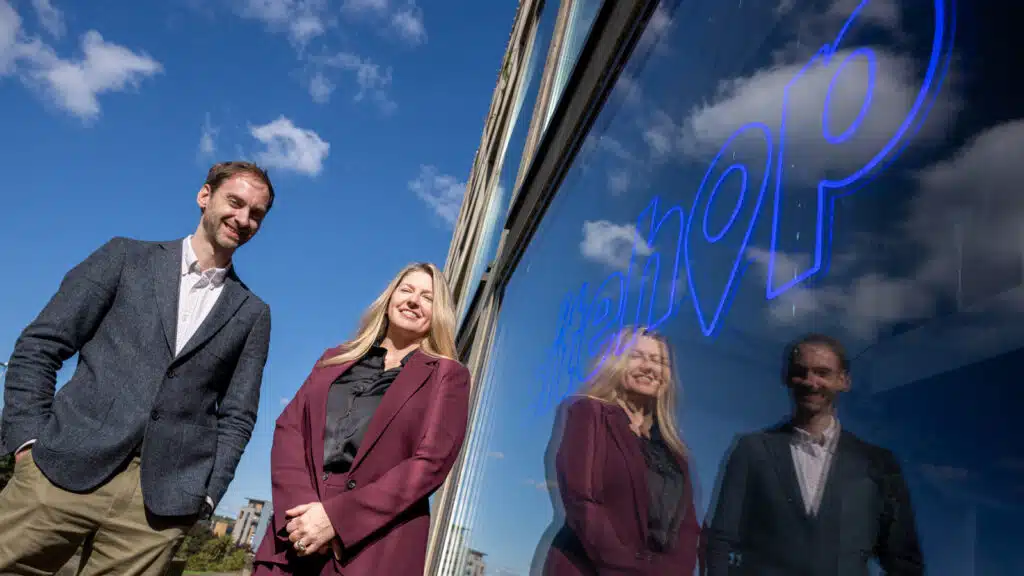
Sitehop Launches Dedicated National Security Unit to Secure Legacy Five Eyes Defense Networks
Sheffield-based Sitehop has launched a national security unit to protect legacy defense networks across the Five Eyes nations from “harvest now, decrypt later” and AI-driven cyber threats. Their SAFEcore Edge Encryption Unit provides hardware-rooted post-quantum cryptography, securing outdated operational technology without requiring costly overhauls. This UK-designed and manufactured solution offers a sovereign supply chain and has been validated in commercial and telecom deployments.
-
Canada-Japan Binational Funding Advances Xanadu and Mitsubishi Chemical Quantum Semiconductor Partnership
Xanadu and Mitsubishi Chemical are collaborating on a second phase of their R&D partnership, supported by Canadian and Japanese funding, to advance semiconductor fabrication through quantum simulation. This initiative aims to mitigate radiation-induced blur in EUV lithography, a critical bottleneck in manufacturing advanced computing chips, by integrating Xanadu’s quantum algorithms with Mitsubishi Chemical’s material models. The project seeks to develop blur-resistant materials and demonstrate the commercial utility of early fault-tolerant quantum computers.
-
-
-
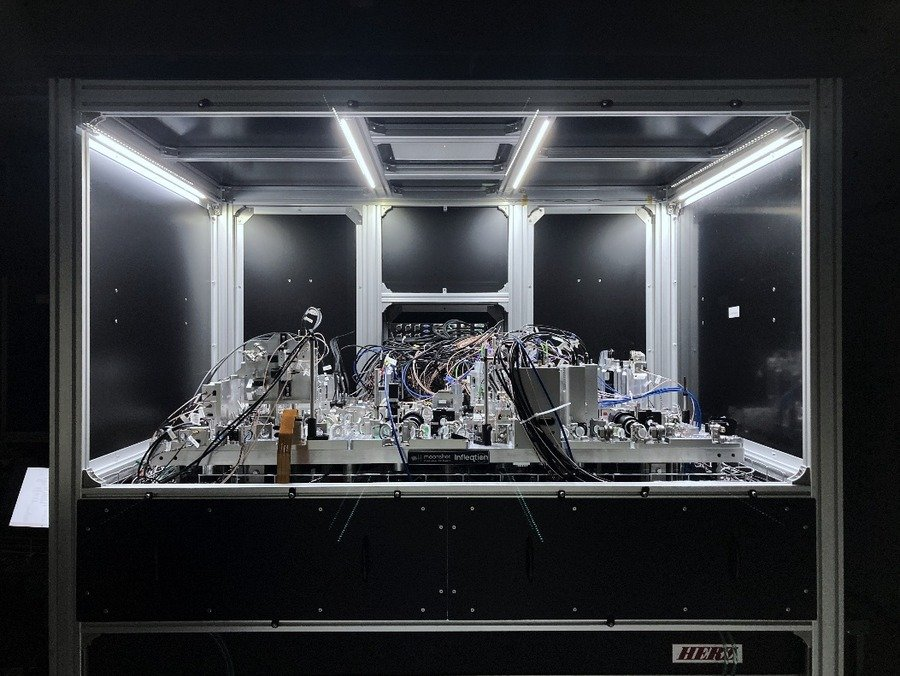
Japan Operationalizes First Full-Stack Neutral-Atom Quantum Computer “Shunkai”
Japan’s Institute for Molecular Science has launched “Shunkai”, the nation’s first full-stack neutral-atom quantum computer, developed with Hitachi and Infleqtion. This system, starting with 50 qubits and aiming for 10,000 by 2031, utilizes neutral rubidium atoms and optical tweezers, operating at room temperature with reconfigurable qubit connectivity. “Shunkai” will offer cloud access for research and aims to drive commercial applications through Yaqumo Inc., positioning Japan in quantum computing.
-
Responsible Fintech Institute and Safeheron Launch Cross-Regional Post-Quantum Digital Asset Pilot
The Responsible Fintech Institute (RFI) and Safeheron have partnered to pilot a cross-regional post-quantum digital asset initiative, evaluating quantum-resilient transaction infrastructure. This pilot integrates NIST FIPS 204 (ML-DSA-65) into a non-custodial 2-of-2 MPC protocol, involving international banks and financial regulators to test post-quantum wallet generation and transaction signing in a controlled environment. The project aims to establish cryptographic agility and migration frameworks, aligning with regulatory directives from authorities like MAS, HKMA, and MFSA.
-
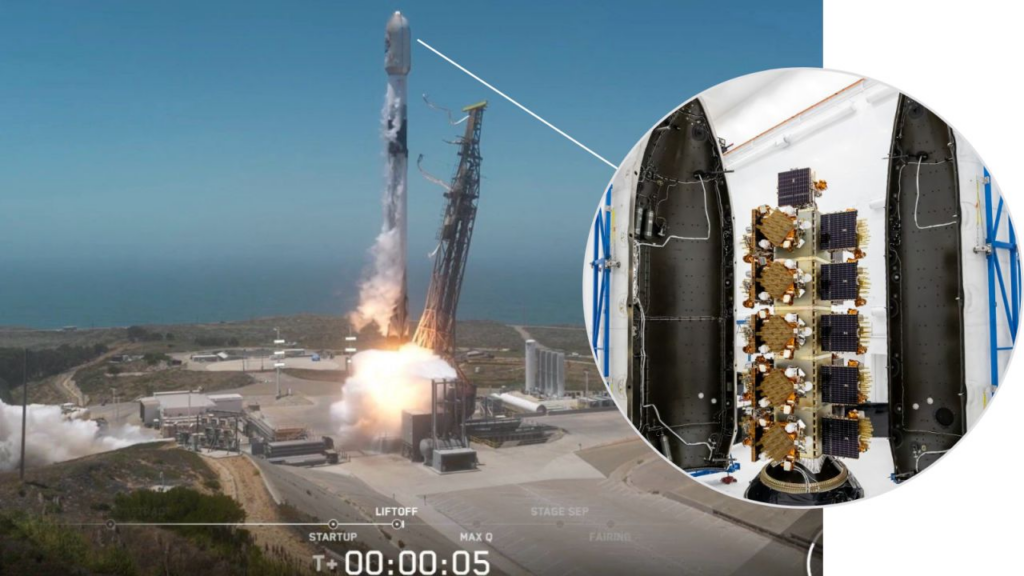
IonQ Subsidiary Skyloom Reaches 84 On-Orbit Optical Terminals Supporting SDA Constellation
IonQ subsidiary Skyloom has deployed 84 additional Optical Communication Terminals (OCTs) into low-Earth orbit on SpaceX Falcon 9 rockets, integrating them into York Space Systems satellites for the U.S. Space Development Agency’s (SDA) Proliferated Warfighter Space Architecture. This expands one of the largest operational laser communications footprints in LEO, advancing the SDA’s Tranche 1 Transport Layer constellation and providing hardware for future quantum networking.
-
Pasqal and Eleven Ventures Form Joint Venture to Scale Neutral-Atom Quantum Systems Across Saudi Arabia and MENA Region
Pasqal and Eleven Ventures have formed Pasqal Arabia, a joint venture focused on deploying and scaling neutral-atom quantum processors across Saudi Arabia and the MENA region. This initiative, aligned with Saudi Arabia’s Vision 2030, aims to establish sovereign high-performance computing and AI infrastructure, develop local talent, and will deploy on-premises quantum computing systems within the Kingdom. The agreement was finalized during a Saudi Arabian diplomatic visit to Pasqal’s French headquarters.
-
-
-
Who’s News: Strategic Appointments at D-Wave, BTQ Technologies, Symmatrics, and Rigetti Computing
In the latest quantum and tech leadership changes, D-Wave Quantum Inc. welcomed Kevan P. Krysler to its Board, while BTQ Technologies Corp. appointed Dr. Michael Grace to its U.S. technical team. Symmatrics expanded its executive team with Jim Garrity as SVP of Growth and Joe Reddix as VP of Federal Sector. Rigetti Computing, Inc. restructured its operations, appointing David Rivas as COO and Dr. Andrew Bestwick as CTO.
-
-
-
Brookhaven Lab and Stony Brook Demonstrate First US Free-Space Quantum Network Link Across 13 Miles
Brookhaven National Laboratory and Stony Brook University have established the first permanent free-space optical quantum link in the US, spanning 13 miles and transmitting single and entangled photons. This achievement integrates with the existing Long Island fiber-optic quantum network and paves the way for expanding to Yale University and developing satellite-based quantum communication for a global quantum internet.
-
Quantum X Labs Outperforms PyMatching Benchmarks on Google Quantum Hardware Surface-Code Dataset Using NVIDIA CUDA-Q
Quantum X Labs announced its AI-driven quantum error correction (QEC) decoder program surpassed Google’s PyMatching benchmarks on the Google Quantum Hardware Surface-Code Dataset. The QXL model, trained solely on synthetic data, demonstrated superior decoding accuracy and real-hardware generalization, leveraging NVIDIA CUDA-Q and GPU acceleration for low-latency, real-time QEC. This advancement marks a significant step towards scalable, fault-tolerant quantum computing.
-
-
-
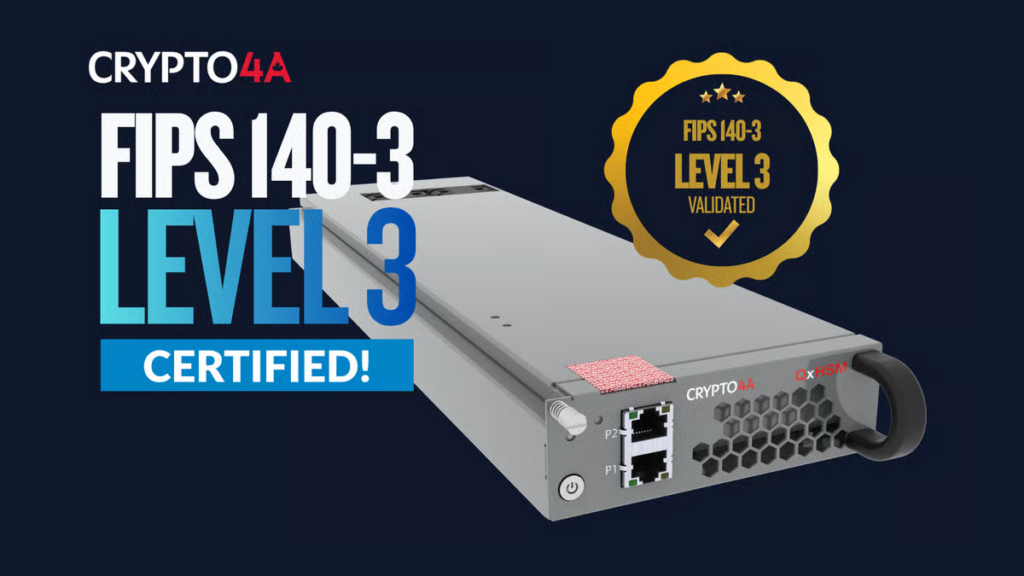
Crypto4A Achieves World-First FIPS 140-3 Level 3 Validation for Quantum-Safe HSM Module
Crypto4A Technologies Inc. has achieved the world’s first FIPS 140-3 Level 3 validation for a quantum-safe HSM module, QASM™, which supports all NIST-standardized Post-Quantum Cryptography (PQC) algorithms. This certification confirms the module’s robust security, including physical tamper response and identity-based authentication. The QxHSM™ and QxVault™ platforms offer crypto-agile architecture, allowing seamless migration to post-quantum keys for governments, defense, and critical infrastructure.
-
Caltech Researchers Measure Conformal Field Theory Spectra on a Neutral-Atom Quantum Simulator
Caltech researchers, in collaboration with other institutions, have for the first time directly measured finite-size energy excitation spectra predicted by 2D Conformal Field Theories (CFTs) using a neutral-atom quantum simulator. They used strontium atom chains and a novel many-body modulation spectroscopy technique to observe low-energy level ratios, confirming predictions of Ising and tricritical Ising CFTs at quantum phase transitions. This method offers a new way to diagnose quantum phase transitions and study strongly correlated quantum matter.
-
Rigetti Establishes Dedicated Systems Delivery Organization to Scale On-Premises Deployments
Rigetti Computing has restructured its operations, creating a dedicated Systems Delivery organization for manufacturing, sales, and customer support of its quantum computers, including the Novera QPU and Cepheus-class systems. This change allows the Technology organization to focus solely on quantum processor R&D, aiming for 99.5% two-qubit gate fidelity on the Cepheus-1-108Q, while Fab-1 manufacturing will align with Systems Delivery for streamlined production.
-
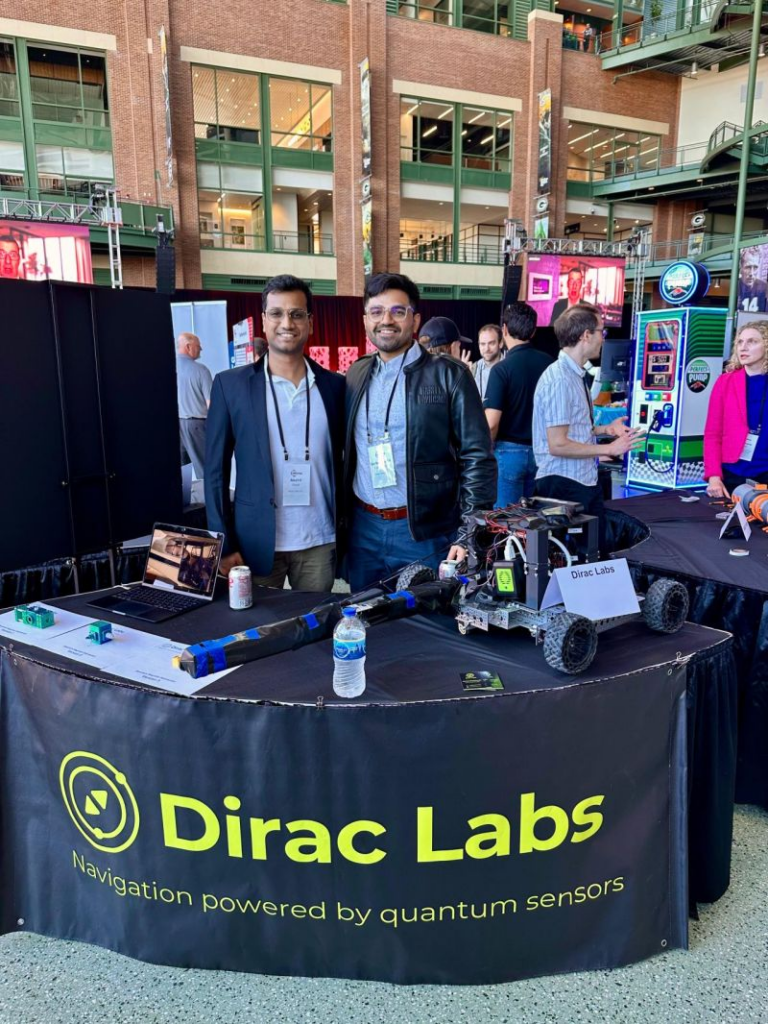
Dirac Labs Raises $1.8M Pre-Seed Round to Scale Diamond-Based Quantum Navigation Sensors
Dirac Labs, a University of Wisconsin-Madison spinout, has secured $1.8 million in pre-seed funding to develop and test its diamond-based quantum navigation sensors. These sensors utilize diamond NV-center magnetometry and AI-powered signal processing to provide accurate, unjammable, and unspoofable positioning data in GPS-denied environments. The technology is designed for plug-and-play integration into existing GPS devices and is compatible with standard semiconductor manufacturing processes.
-
Superpositions Partners with EBU Luxembourg to Integrate Quantum Workflows into Business Curricula
European quantum software company Superpositions has partnered with the European Business Institute of Luxembourg (EBU) to integrate quantum computing and hybrid quantum-classical algorithms into EBU’s business school curriculum. This collaboration, part of EBU’s Q-Ready academic initiative, provides students with hands-on access to the Superpositions Studio platform. The platform allows students to translate business use cases into quantum and hybrid algorithms using natural language, execute them on various quantum hardware backends, and evaluate performance and cost-benefit comparisons.
-
FormationQ and STFC Hartree Centre Partner to Drive Enterprise Quantum and AI Adoption in the UK
FormationQ and the STFC Hartree Centre have partnered to accelerate the adoption of quantum computing, AI, and high-performance computing within UK industries. This collaboration aims to overcome commercialization barriers and workforce shortages by developing structured adoption pathways, fostering hybrid quantum-AI-HPC workflows, and building a quantum-ready engineering talent pool through engagement with universities and industry partners. The partnership seeks to translate early proof-of-concept projects into scalable deployments across various sectors.
-
-
-
Cornell Researchers Lower Tantalum Qubit Deposition Temperature to 200°C Using Krypton Gas Sputtering
Cornell University researchers have developed a new method for fabricating tantalum-based superconducting qubits, lowering the required deposition temperature from over 400°C to 200°C. This breakthrough, achieved by using krypton gas during magnetron sputtering, stabilizes the desired α-phase tantalum and prevents harmful tantalum-silicon intermixing, making the process compatible with commercial semiconductor manufacturing and enabling scalable production of high-performance quantum devices.
-
EigenQ and Silicon Valley Acquisition Corp. Advance $3B SPAC Merger via Form S-4 Submission
EigenQ and Silicon Valley Acquisition Corp. are moving forward with their $3 billion SPAC merger, having confidentially submitted a draft Form S-4 to the SEC. This step signals progress towards the creation of EigenQ Holdings, Inc., which will trade on Nasdaq under the ticker “EIGQ” following an anticipated close in Q4 2026. The merger aims to advance EigenQ’s quantum technology in cybersecurity and communication infrastructure.
-