
News
Company, funding, product and policy news from across the quantum industry, as it happens.
-
-
QCentroid Unveils “Missions” on NVIDIA CUDA-Q to Benchmark Classical, Quantum-Inspired, and QPU Workloads
QCentroid launched "Missions," a new platform integrated with NVIDIA CUDA-Q, to evaluate the best solutions for enterprise computational challenges. It uses autonomous AI to determine if classical, quantum-inspired, or QPU algorithms are most effective, based on business objectives and operational constraints. The platform also includes a validation step to ensure performance claims are accurate and recommends retaining classical architectures if they are more cost-effective.
-
South Korea Launches Nationwide Open Quantum Testbed Expansion Led by KT and SK Broadband
South Korea is expanding its Open Quantum Testbed nationwide from 2026-2028, with a 7.4 billion won initial investment. KT Corporation and SK Broadband are leading the project, focusing on terrestrial, cross-border, and future quantum communication technologies. This initiative aims to establish a robust quantum communications infrastructure across the country and internationally.
-
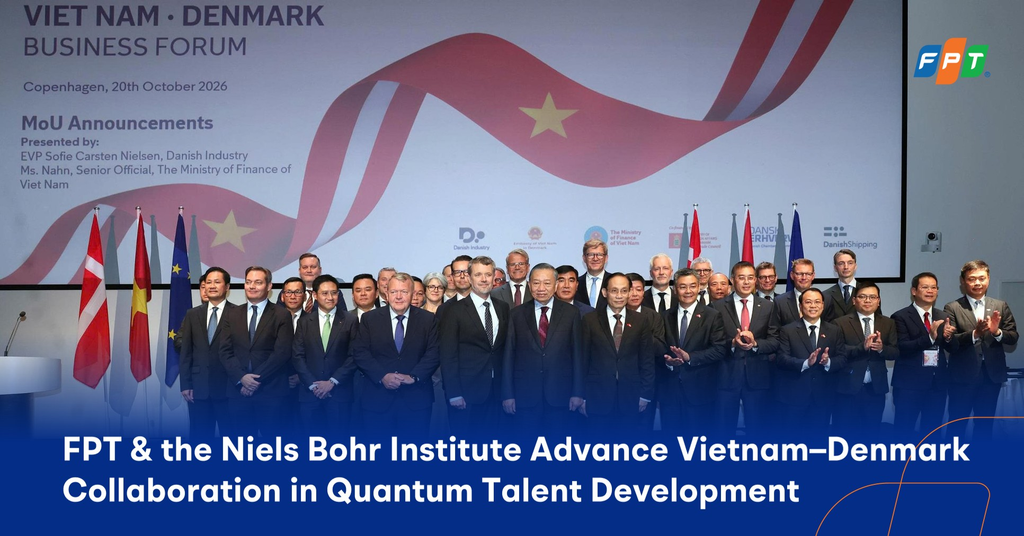
FPT Corporation and Niels Bohr Institute Partner to Advance Quantum Research and Talent Development in Vietnam and Denmark
FPT Corporation and the Niels Bohr Institute have partnered to advance quantum research and talent development in Vietnam and Denmark. The collaboration, formalized during the Vietnam–Denmark Business Forum, will focus on joint research programs, academic exchanges, and workshops. This initiative aims to accelerate Vietnam’s quantum computing roadmap and strengthen Denmark's research ties with Southeast Asia.
-
Cloudflare Launches Post-Quantum GeoKey Manager with Hybrid ML-KEM-768 Encryption for Regional Data Sovereignty
Cloudflare has launched its Post-Quantum GeoKey Manager in closed beta, integrating NIST-standardized post-quantum cryptography to enforce strict geographical boundaries on customer private key access. This new system protects sensitive enterprise data against "Harvest Now, Decrypt Later" attacks and helps satisfy regional data sovereignty mandates. General availability is expected in Q1 2027.
-
UK and Singapore Align on Post-Quantum Cryptography Migration and Quantum Security Standards in Financial Sector
During the 11th UK-Singapore Financial Dialogue in October 2026, both nations agreed to strengthen cooperation on quantum security in the financial sector. They plan to harmonize post-quantum cryptography (PQC) migration roadmaps and share insights from Singapore's Quantum Key Distribution (QKD) sandbox. The UK and Singapore will also use their 2027 G20 Presidency and ASEAN Chairmanship, respectively, to promote international quantum cyber resilience standards.
-
Palm Beach State College and FAU Activate First Operational Segment of Florida’s Statewide Quantum-Safe Network
Palm Beach State College (PBSC) and Florida Atlantic University (FAU) have activated Florida’s first operational quantum-safe network link, connecting their campuses using IonQ’s quantum key distribution (QKD) hardware. This initiative, supported by a $1 million defense infrastructure grant, is part of a larger plan to create a quantum-safe corridor across South Florida and develop a skilled workforce through PBSC's new Quantum Innovation Center and academic programs.
-
Ericsson Canada and ÉTS Partner to Develop Scalable Variational Quantum Algorithms for Telecom Network Optimization
Ericsson Canada and ÉTS are collaborating on a research project to develop scalable quantum algorithms for telecom network optimization. The project, supported by Mitacs, focuses on advancing variational quantum algorithms (VQAs) to optimize dynamic routing, traffic scheduling, and resource allocation. Led by Professor Jacob Biamonte at ÉTS, the research aims to mitigate noise and improve convergence in quantum circuits.
-
ZuriQ and Rhonexum Form Multi-Year Partnership to Integrate Cryogenic Control ICs into 2D Trapped-Ion Processors
ZuriQ and Rhonexum have partnered to integrate low-temperature control electronics into ZuriQ's 2D trapped-ion processors. This collaboration aims to overcome the I/O wiring bottleneck in quantum computing by using Rhonexum's cryogenic integrated circuits directly within the quantum hardware, with the first hardware shipment expected by late 2026. This will allow for the scaling of trapped-ion architectures to thousands of qubits.
-
RhymeQ Joins NVIDIA Inception Program and Announces Technical Collaboration on NOOA Agentic AI Framework
RhymeQ Technologies has joined the NVIDIA Inception program, aligning its RHYME abstraction layer with NVIDIA's CUDA-Q platform. They are also collaborating on research to integrate agentic AI with quantum computing using NVIDIA's NOOA framework. This initiative aims to enable AI agents to orchestrate workloads between classical GPUs and quantum processing units.
-
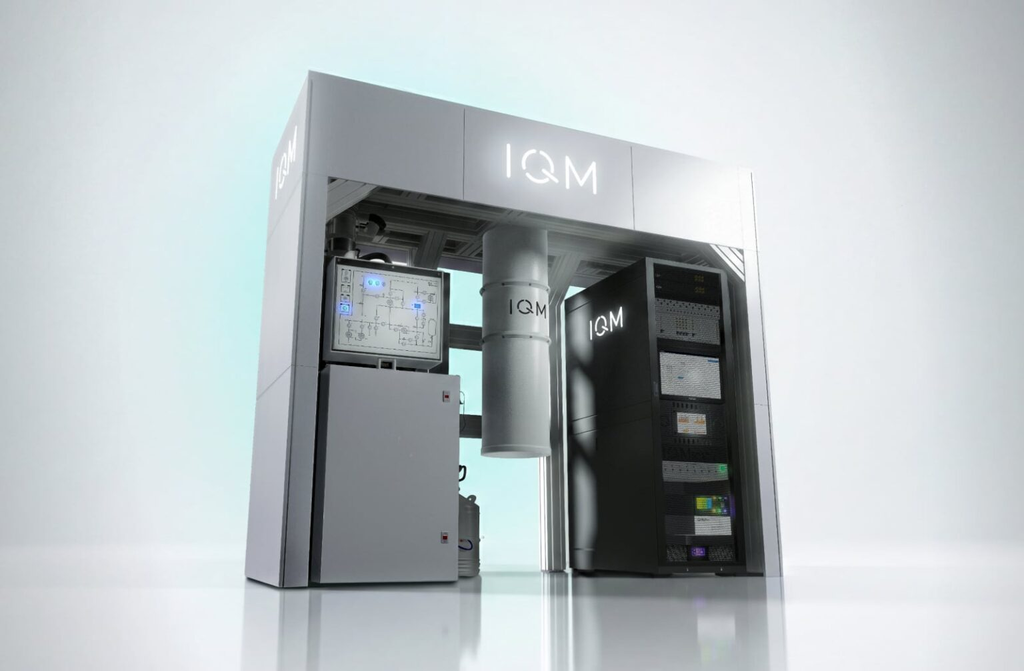
Telefónica and IQM to Deploy Community of Madrid’s First On-Premises Quantum Computer at Universidad Politécnica de Madrid
Telefónica and IQM Quantum Computers are deploying the first quantum computer in the Community of Madrid, an IQM Spark system at Universidad Politécnica de Madrid (UPM) by late 2026. This is their third quantum processor in Spain, aiming to provide local access to quantum hardware for research and education. Telefónica is also expanding its quantum technology portfolio, including QKD networks and post-quantum cryptography.
-
-
-
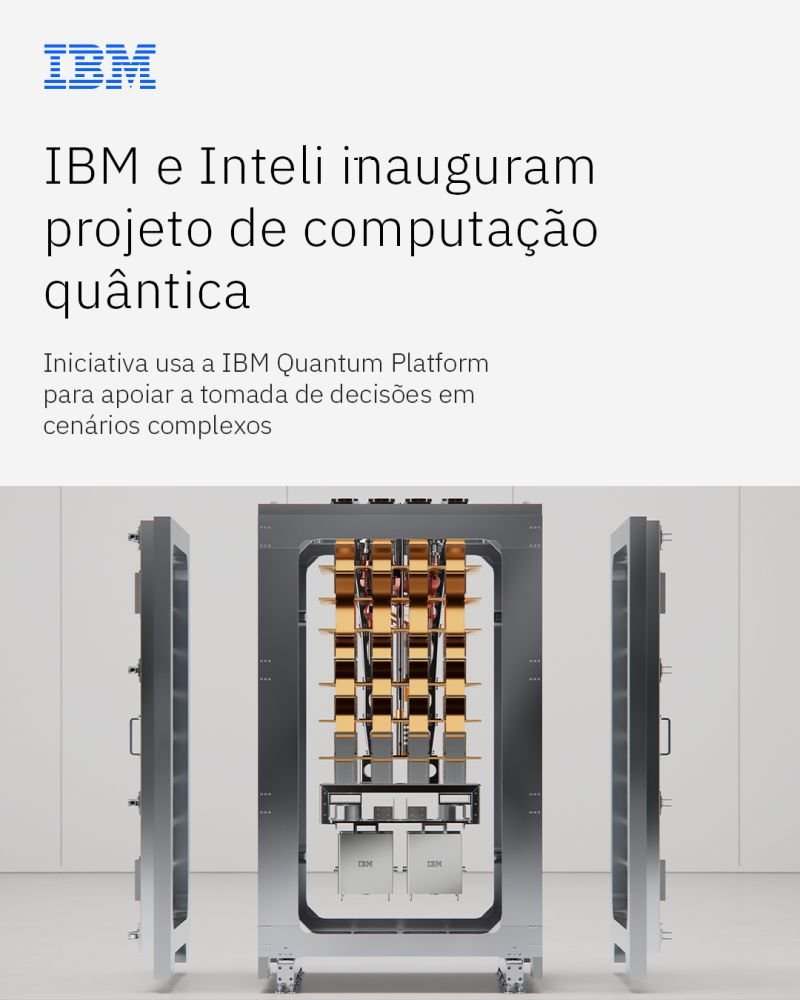
Brazil’s Inteli Becomes Accredited ICT and Partners with IBM Quantum to Research Decision-Making Under Uncertainty
Inteli, a Brazilian higher education institute, has become an accredited ICT and partnered with IBM Quantum. This collaboration grants Inteli researchers cloud access to IBM Quantum systems to explore quantum algorithms for decision-making under uncertainty, with a focus on practical industrial applications in Latin America. The partnership aims to advance quantum computing capabilities and workforce development in the region.
-
Google Quantum AI Launches $150K Kaggle Competition to Compress Fault-Tolerant Quantum Circuits Using AI Agents
Google Quantum AI has launched a $150,000 Kaggle competition running from October 22, 2026, to January 20, 2027. The competition challenges participants to use AI agents to compress fault-tolerant quantum circuits, focusing on "kickmix" circuits which are verifiable by classical computers. This initiative aims to optimize quantum algorithms for applications in fusion energy, optimization, and quantum chemistry.
-
Florida Atlantic University Awarded $400,000 NSF Grant to Expand Post-Quantum Cryptographic Protocols
Florida Atlantic University received a nearly $400,000 NSF grant to advance post-quantum cryptographic protocols. Led by Dr. Edoardo Persichetti and Dr. Veronika Kuchta, the project will develop advanced functionalities beyond basic primitives to secure decentralized systems against future quantum attacks. The initiative also supports student mentoring and cybersecurity outreach, building on FAU's leadership in quantum-safe security.
-
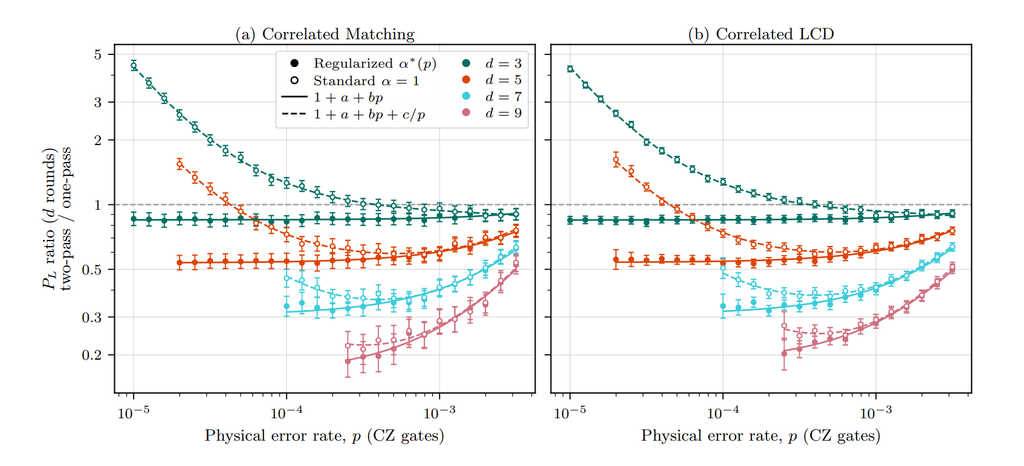
Leiden University and Riverlane Research Reveals Distance-Losing Flaw in Correlated Decoding Below Threshold
Leiden University and Riverlane research uncovered a flaw in correlated decoding, causing a loss of effective code distance and higher logical failure rates in quantum error correction. They introduced a new regularization parameter to fix this, restoring nominal distance scaling and improving accuracy without adding computational overhead. This discovery offers a crucial design principle for future quantum decoding architectures.
-
NVIDIA Takes Strategic Stake in Riverlane to Accelerate Real-Time Quantum Error Correction and GPU Decoder Calibration
NVIDIA has invested in Riverlane to advance real-time quantum error correction (QEC) and GPU decoder calibration. This collaboration utilizes NVIDIA H100 GPUs to accelerate Riverlane's Local Clustering Decoder (LCD), significantly reducing the time for surface code training cycles and enabling dynamic recalibration of QEC decoders. This advancement helps mitigate qubit drift and hardware defects, paving the way for more stable and reliable fault-tolerant quantum computing systems.
-
IQM and NVIDIA Automate 20-Qubit Chip Calibration via NVIDIA Ising Vision-Language Models and QCalEval Benchmark
IQM Quantum Computers and NVIDIA have successfully automated the calibration of a 20-qubit quantum processor using NVIDIA Ising Vision-Language Models (VLMs). This agentic AI system analyzes experimental data, autonomously adjusts parameters, and generates diagnostic logs for human review. They also released QCalEval, an open benchmark for AI-driven quantum processor bring-up, where NVIDIA Ising Calibration models outperformed general-purpose VLMs.
-
IBM Releases Qiskit SDK v2.6 with C API Pass-Manager Framework, Native QPY Serialization, and Custom Operations
IBM Quantum has released Qiskit SDK v2.6, significantly enhancing its C API layer with a new pass-manager framework and native QPY serialization. This update allows for custom compiler passes and hardware-native quantum operations in C, C++, and Julia without a Python runtime, moving towards Python-optional execution in high-performance computing. The release also updates the Qiskit GitHub Roadmap, outlining future versions that will focus on C ABI/API stability, fault-tolerant compilation, and a Rust-native execution interface.
-
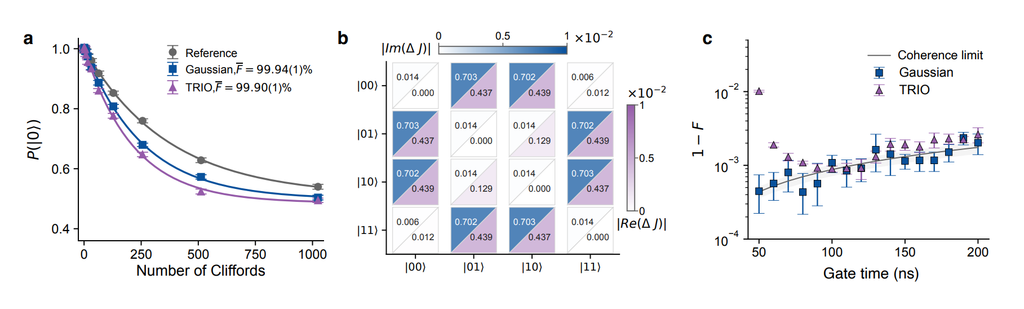
Chalmers University Demonstrates TRIO Pulses for Control-Error-Robust Single-Qubit Gates in Superconducting Processors
Chalmers University of Technology has developed TRIO pulses, a new quantum control framework for superconducting processors. These pulses enable single-qubit gates to maintain high fidelity even with significant control-amplitude miscalibrations and frequency detuning errors. This breakthrough offers a way to reduce recalibration overheads in large-scale quantum processors and has been demonstrated with an X-gate achieving 99.90% fidelity.
-
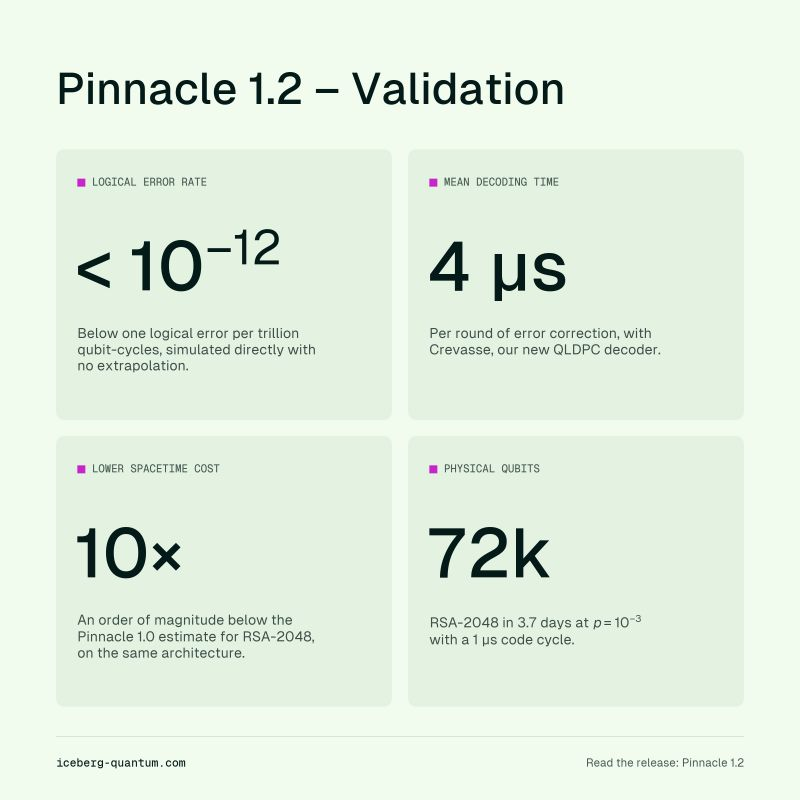
Iceberg Quantum Validates Pinnacle 1.2 Architecture with Crevasse QLDPC Decoder to Reduce RSA-2048 Factoring Resources
Iceberg Quantum's Pinnacle 1.2 architecture, featuring the Crevasse QLDPC decoder, significantly reduces the resources needed to factor RSA-2048. They achieved logical error rates below 10^-12 per logical qubit-cycle, a critical threshold for this task, through direct circuit-level simulations. This breakthrough could factor RSA-2048 in as little as 0.98 days with 48,000 physical qubits.
-
Quantinuum and Oracle Launch OCI Quantum AI Compute Beta Program for Early Access to Helios
Quantinuum and Oracle have launched the OCI Quantum AI Compute Beta Program, offering early cloud-based access to Quantinuum's Helios quantum processor for hybrid quantum-AI workflows. This program integrates Helios within Oracle Cloud Infrastructure (OCI) AI data centers, providing a browser-based Python development environment for various applications. The initiative will be further detailed at Oracle AI World 2026.
-
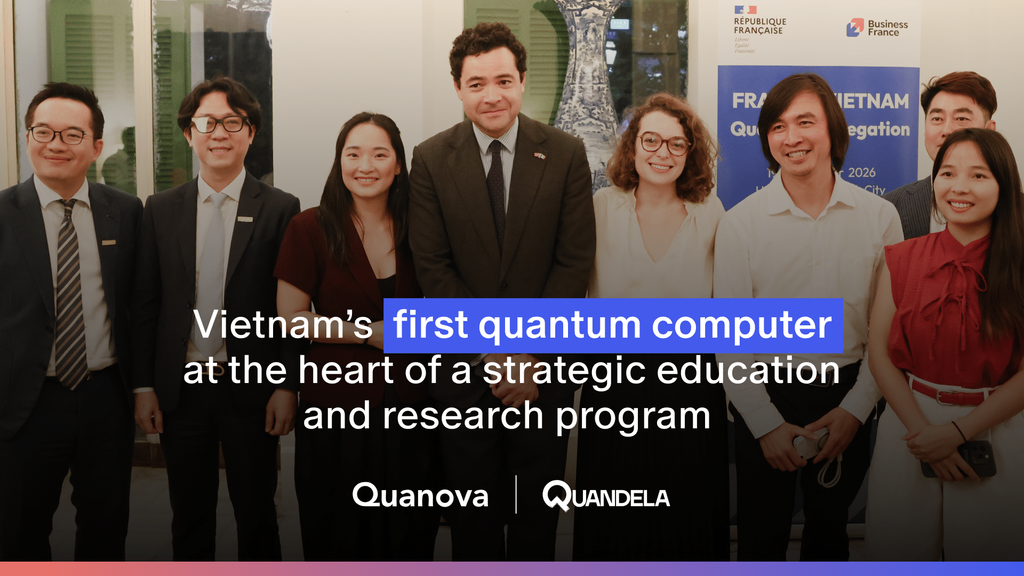
Quandela and Quanova Partner to Deploy Vietnam’s First Quantum Computer at Quang Trung University
Quandela and Quanova are partnering to install Vietnam's first quantum computer, a Quandela MosaiQ photonic system, at Quang Trung University. This collaboration, supported by Nam A Bank, will establish a Quantum Research, Innovation, Service, and Entrepreneurship (quantum-RISE) program and a Quantum Innovator Residency Program, marking the first France-Vietnam quantum computing collaboration. The initiative aims to provide Vietnamese researchers and students with direct access to quantum computing and foster local talent in the field.
-
Quandela Expands Global Partnerships with KRIBB for Quantum Biotech and FPT Corporation in Vietnam
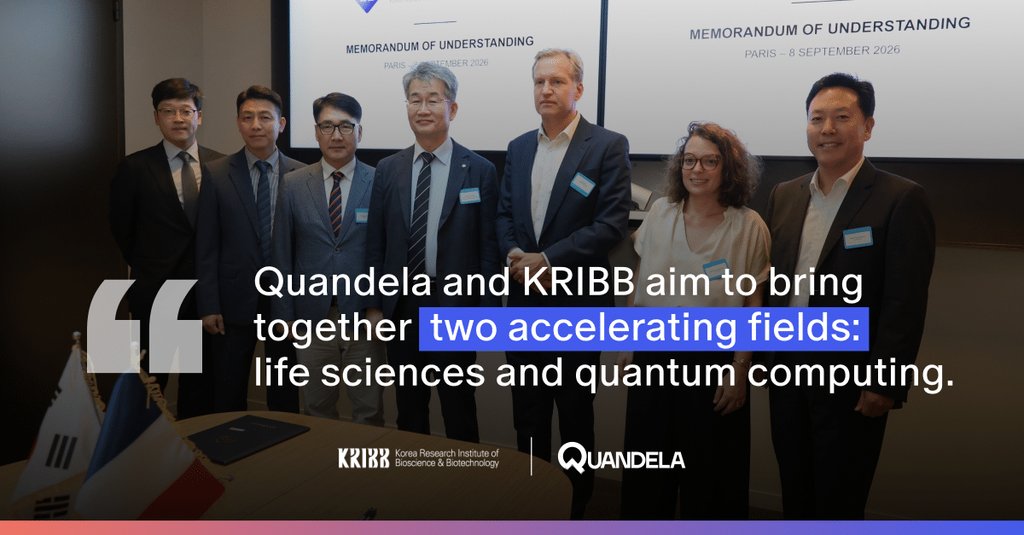
Quandela has announced two new international partnerships: with South Korea's KRIBB to advance drug discovery through hybrid AI/classical/photonic quantum computing, and with Vietnam's FPT Corporation to develop quantum algorithms, provide cloud access to Quandela's photonic systems, and integrate quantum education into FPT's university networks. These collaborations aim to deploy Quandela's hybrid photonic QPUs as specialized accelerators in high-performance computing centers and enterprise cloud networks.
-
Quandela Demonstrates Live Hybrid Photonic GPU-QPU Architecture via NVIDIA NVQLink at GTC Berlin
Quandela demonstrated a live hybrid AI-quantum computing system at NVIDIA GTC Berlin, showcasing photonic quantum processing units (QPUs) as integrated accelerators within HPC and AI infrastructure. The demonstration highlighted a low-latency interconnect between NVIDIA accelerated computing nodes and Quandela's photonic hardware using NVIDIA NVQLink, enabling a hybrid workflow for a quantum reservoir-computing algorithm. This development underscores Quandela's role in advancing European quantum computing infrastructure and its collaboration with partners in Germany and France.
-
Qblox Achieves Sub-4 Microsecond Latency Integrating NVIDIA DGX Spark and RTX PRO 6000 Blackwell via NVQLink
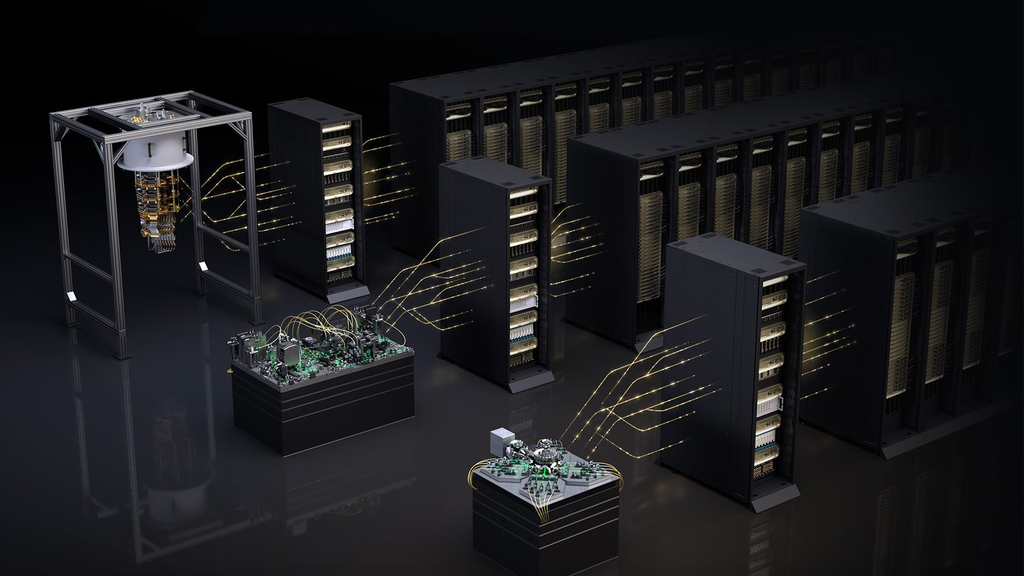
Qblox has integrated its quantum system controller with NVIDIA DGX Spark and RTX PRO 6000 Blackwell GPUs using NVIDIA NVQLink, achieving real-time roundtrip latencies below 4.0 microseconds. This integration enables hardware-executed, closed-loop communication for continuous qubit parameter calibration and provides ultra-low-latency transport for quantum error correction data to GPU-based decoders. This allows for a unified development environment for quantum, AI, and classical simulation workloads that can scale from desktop units to GPU supercomputer clusters.
-
SEEQC and NVIDIA Demonstrate 50% QEC Latency and Error Rate Reduction via Digital Pre-Decoder Architecture
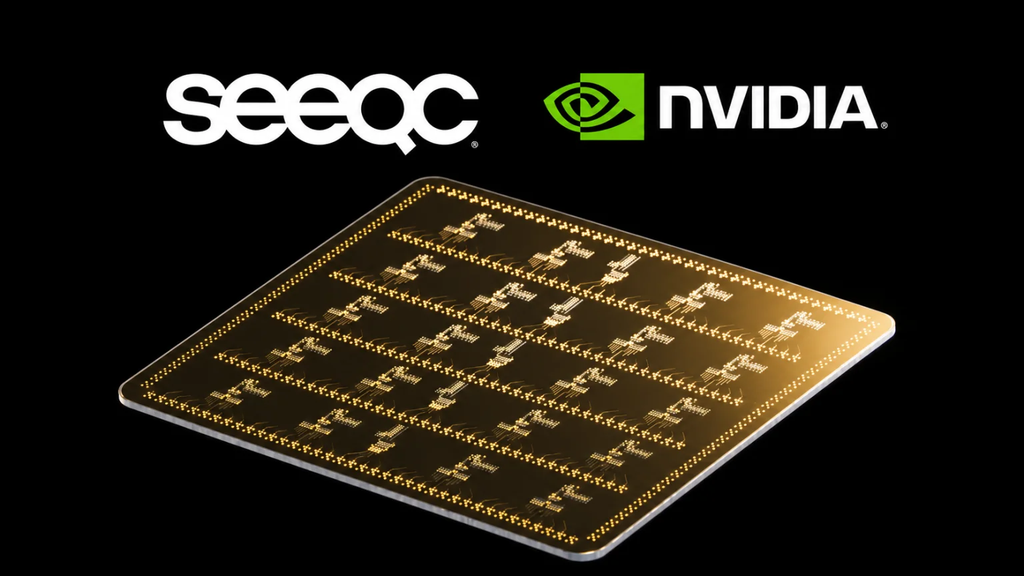
SEEQC and NVIDIA have demonstrated a 50% reduction in quantum error correction (QEC) latency and logical error rates. This was achieved by integrating SEEQC's chip-scale pre-decoder technology with NVIDIA's Ising AI model family. The new architecture filters and compresses data closer to the quantum processing unit, significantly improving communication and overall performance for quantum AI workloads.
-