
News
Company, funding, product and policy news from across the quantum industry, as it happens.
-
-
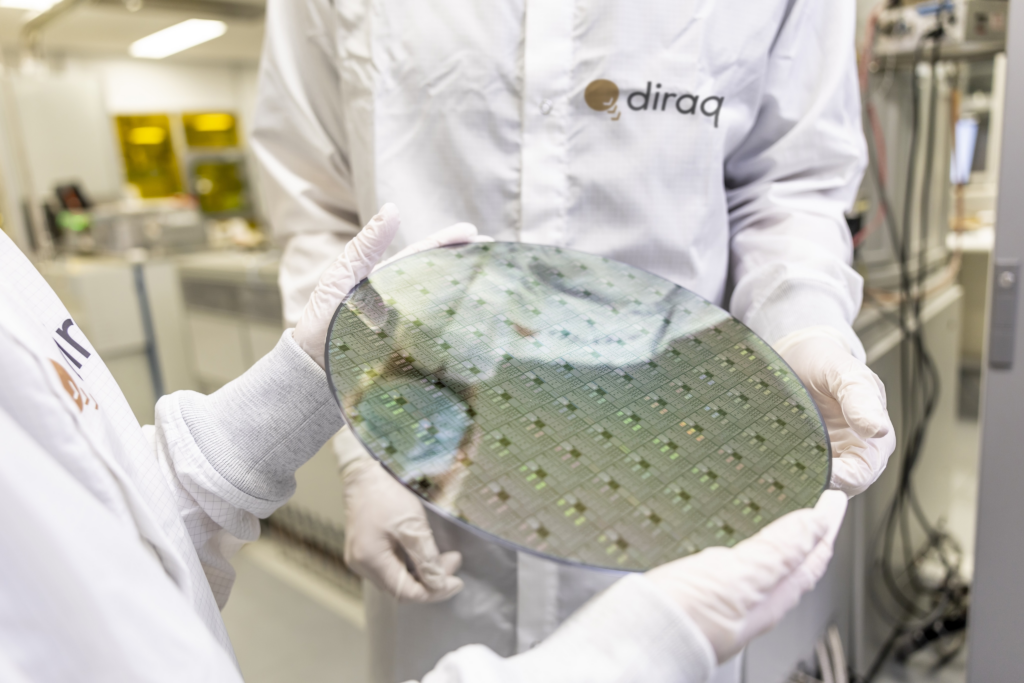
Diraq Establishes First US Quantum Laboratory at Chicago’s IQMP On-Ramp Hub
Diraq, a silicon spin-qubit hardware developer, has opened its first U.S. quantum laboratory in Chicago at the Illinois Quantum and Microelectronics Park (IQMP) On-Ramp Hub. This facility expands Diraq’s global R&D efforts beyond its Sydney headquarters, enabling 24-hour experimental measurement cycles and accelerating the development of utility-scale silicon quantum processors. The move integrates Diraq into Illinois’ growing quantum ecosystem, aiming for rack-scale quantum systems with millions of qubits per chip by 2029.
-
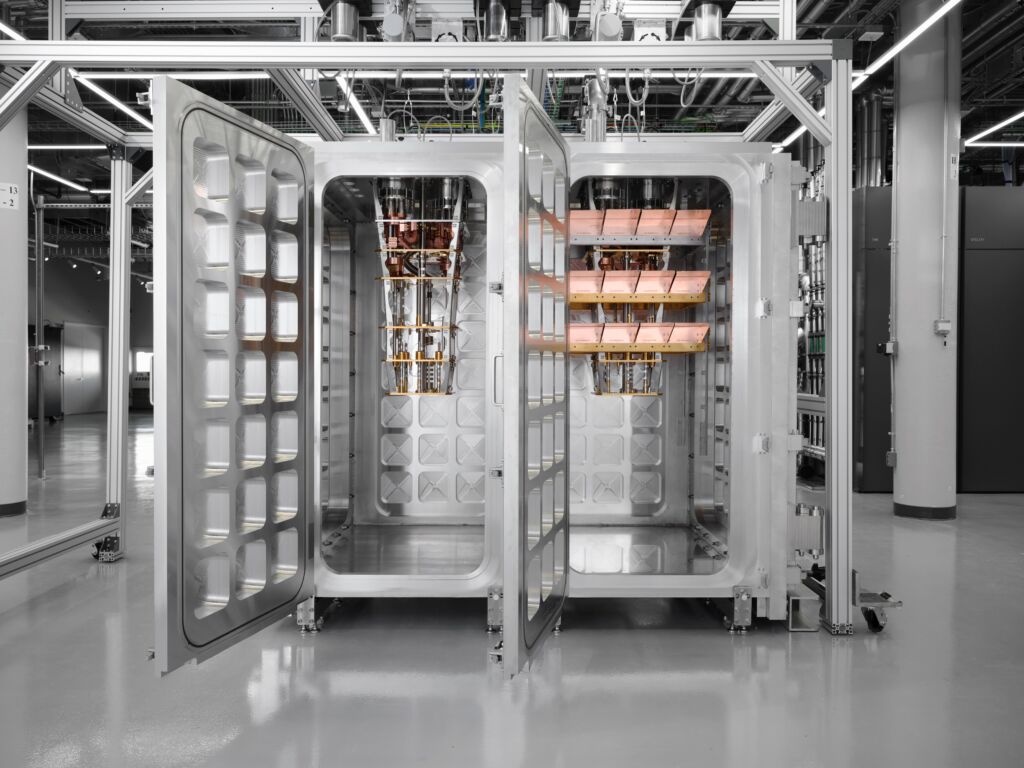
IBM Links Modular Cryogenic Cells to Scale Multi-Chip Architectures for 2029 Starling Quantum Computer
IBM has successfully linked and cooled its first modular cryogenic cells, a key step towards its 2029 Starling quantum computer. This new modular architecture uses rectangular units instead of traditional cylindrical cryostats, offering more wiring space and improved thermal management. This allows for direct chip-to-chip quantum links via “L-couplers,” enabling multi-chip processors with over 1,000 programmable qubits by 2027, and laying the groundwork for a fault-tolerant system.
-
-
-
Eclypses Partners with Sterling to Deploy Payload-Level Post-Quantum Cryptography across Federal Systems
Eclypses and Sterling have partnered to deliver post-quantum cryptography to U.S. federal agencies, using Eclypses’ MicroToken Exchange® (MTE) platform. MTE provides payload-level data protection, replacing sensitive data with single-use tokens and is FIPS 140-3 validated. This collaboration aims to help federal systems meet post-quantum migration deadlines and address “harvest now, decrypt later” cyber threats.
-
Infleqtion Opens Global Headquarters in Colorado and Announces 2027 Quantum Sensing Mineral Field Test
Infleqtion has opened its new global headquarters, the Colorado Quantum Innovation Center (CQIC), in Louisville, Colorado, a hub for quantum technology. Concurrently, Infleqtion announced a 2027 field test of its Quantum Gravity Gradiometry (QGG) technology to map critical mineral deposits in Colorado, supporting the Quantum-Enhanced Critical Minerals Mapping Act of 2026. This initiative aims to utilize quantum sensing for non-invasive mineral exploration and builds on Infleqtion’s public listing on the NYSE.
-
Quantinuum Secures $1.5M in City and State LEDA Funding to Expand R&D Center in Albuquerque
Quantinuum is expanding its R&D center in Albuquerque, New Mexico, with $1.5 million in state and city funding. This expansion will create a hub for integrated photonics, a key technology for their next-generation trapped-ion quantum computers, and will strengthen collaborations with national laboratories and universities in the region.
-
IonQ Collaborates with CMC Microsystems to Expand Cloud Quantum Access Across Canada
IonQ has partnered with CMC Microsystems to integrate its quantum computing hardware into Canada’s FABrIC Quantum Computing Sandbox. This collaboration provides Canadian researchers, institutions, and businesses with cloud-based access to IonQ’s trapped-ion processors, enabling them to execute quantum algorithms for various applications. The program, supported by the Canadian government’s $217 million CAD FABrIC initiative, offers project grants, technical support, and ensures that all intellectual property generated remains with the developers.
-
OTI Lumionics and Samsung Advanced Institute of Technology Achieve 200+ Logical Qubit Quantum Emulation on Single Server Hardware
OTI Lumionics and Samsung Advanced Institute of Technology (SAIT) have successfully emulated 200+ logical qubit quantum algorithms on a single server, detailed in their Journal of the American Chemical Society (JACS) paper. Their Iterative Qubit Coupled Cluster (iQCC) algorithm efficiently designs materials for OLED displays, outperforming classical methods in accuracy and scalability. This breakthrough sets a new benchmark for quantum emulation on accessible hardware, paving the way for future quantum processors.
-
Texas Quantum Partners and Samara Unveil Site Master Plan for Occam Foundry Tech Campus in Austin
Texas Quantum Partners and Samara have unveiled the master plan for Occam Foundry, a 16.5-acre quantum technology campus in Austin. This campus will integrate university spinouts, startups, and operational hardware with semiconductor cleanroom fabrication. The initial phase includes six buildings like The Quantum Hub and The Fab, designed to foster a deep-tech ecosystem across quantum computing, sensing, networking, and precision timing, aligning with the Texas Quantum Initiative.
-
NTT DOCOMO Deploys Second D-Wave Production Quantum Application to Optimize Telecom Network Signaling
NTT DOCOMO has launched its second quantum application with D-Wave, optimizing Tracking Area Lists (TA-Lists) in its mobile network. This new application significantly reduces peak location registration signaling by 65.3% and paging signaling load by 7.0%, building on their previous success in paging efficiency. The optimization, which balances conflicting signal demands, was performed on a network of 333 base stations and is now integrated into NTT DOCOMO’s live operations, serving over 93 million subscribers.
-
Quantum Motion Expands to Maryland’s Discovery District to Scale US Commercial and Defense Operations
Quantum Motion, a U.K.-based silicon quantum computing company, has opened a new U.S. operational hub in Maryland’s Discovery District. This expansion aims to bolster commercial and public-sector operations, fostering collaboration with U.S. federal research and defense entities like DARPA and ARLIS. The company will leverage its silicon CMOS manufacturing processes to develop spin-qubit QPUs and integrate into the region’s quantum ecosystem, aligning with Maryland’s Capital of Quantum initiative.
-
-
-
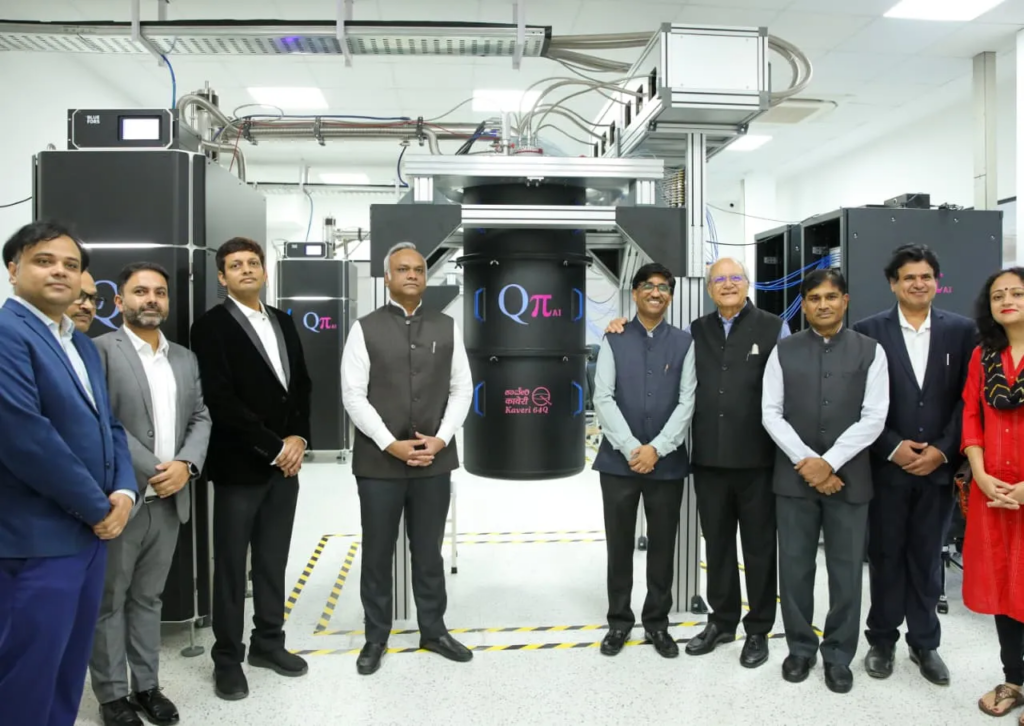
QpiAI Inaugurates 8-Inch Quantum Chip Foundry in Bengaluru Targeting 10,000-Qubit QPUs
QpiAI has opened an 8-inch quantum chip foundry in Bengaluru, India, aiming to produce 10,000-qubit QPUs by 2027. This facility, backed by $20M–$25M and additional $10M–$15M planned, will manufacture superconducting quantum processors like the 8-qubit QVidya, 25-qubit Indus, 64-qubit Kaveri, and 9-qubit Yukti, with a 128-qubit Ganges processor next in line. The foundry is a key component of QpiAI’s Quantum Supremacy Centres, which are hybrid data centers combining QPUs with AI clusters for applications in pharmaceuticals, logistics, and materials science.
-
-
-
The Company Lab Launches CO.LAB Q Commercialization Studio to Scale Quantum Startups
The Company Lab (CO.LAB) has launched CO.LAB Q, a 12-month commercialization studio in Chattanooga for quantum startups, beginning in November 2026. This program offers individualized support, pilot access, and technical infrastructure across various quantum fields. Startups will benefit from partnerships with organizations like Quantinuum for computing, Davidson Technologies for defense, UTC for academic integration, Middle Tennessee Electric for utility testing, and EPB Quantum for network infrastructure, aiming to translate early-stage quantum research into market-ready companies.
-
-
-
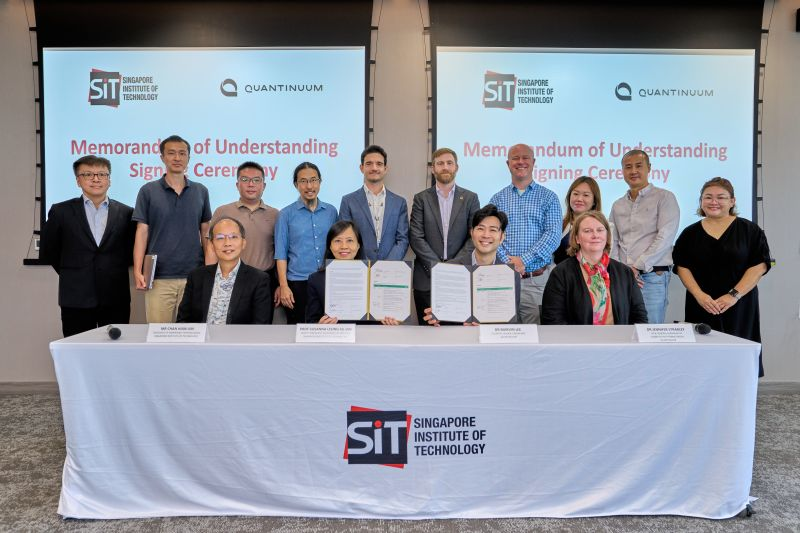
Quantinuum to Partner with the Singapore Institute of Technology to Help Develop Singapore’s Future Quantum Workforce
Quantinuum and the Singapore Institute of Technology (SIT) have partnered through a Memorandum of Understanding to cultivate Singapore’s quantum workforce. This collaboration will provide practical training, access to Quantinuum’s quantum software and tools, and engage the community through workshops and seminars. The initiative aims to equip students and professionals with industry-ready skills to meet the increasing demand for quantum talent.
-
Who’s News: Strategic Appointments at PsiQuantum, EigenQ, Qunova Computing, and Optica Quantum
In recent strategic appointments, Niklas Zennström joined PsiQuantum’s Board of Directors, while EigenQ appointed Mark Pecen as Vice Chairman and promoted Alexander Truskovsky to CISO. Qunova Computing expanded its leadership with Jake Hwang as CFO and Board Member, alongside Evan Kang and Woomin Kyoung as Business Development Executives. Additionally, Kartik Srinivasan was named Editor-in-Chief of Optica Quantum.
-
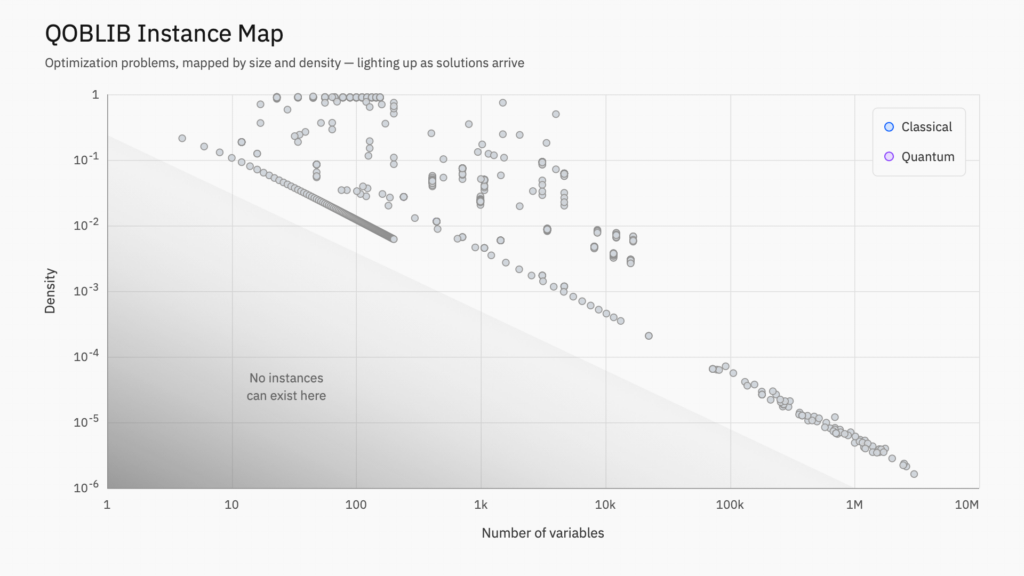
Global Consortium Launches Quantum Optimization Benchmarking Library (QOBLIB) to Track Path to Quantum Advantage
An international consortium has launched the Quantum Optimization Benchmarking Library (QOBLIB), an open-source framework to benchmark quantum, classical, and hybrid algorithms against ten NP-hard combinatorial optimization problems. This initiative provides a standardized, model-independent approach to track progress toward quantum advantage, offering a public web portal with live solution tracking and facilitating broad ecosystem adoption for rigorous comparisons against state-of-the-art classical solvers.
-
-
-
Rice University Researchers Engineer Tunable Finite-Temperature Reservoirs in Trapped-Ion Quantum Simulators
Rice University physicists have engineered a new method for creating tunable finite-temperature reservoirs in trapped-ion quantum simulators. This breakthrough allows for precise control over both temperature and dissipation rates, enabling realistic simulations of complex open-system quantum phenomena like chemical reactions and exciton dynamics. The technique balances laser cooling with controlled electric-field heating, overcoming previous limitations to provide continuous temperature control and opening new avenues for understanding thermally activated quantum processes.
-
Tamil Nadu Secures MoUs with Four Quantum Computing Ventures at Vetri Conclave
At the Vetri Tamil Nadu Investment Conclave 2026, the Government of Tamil Nadu signed MoUs with four quantum technology firms, establishing operational bases, R&D centers, and manufacturing facilities across the state. These agreements aim to boost India’s regional quantum hardware and software ecosystem, with key projects including superconducting quantum hardware development, control electronics manufacturing, and hybrid quantum system integration. This initiative is part of a larger investment drive, securing over ₹67,000 crore ($8.0B USD) across various advanced technology sectors.
-
Mountain West Regional Quantum Alliances Form Unified Innovation & Test Facilities Network
Innosphere, representing the NSF ASCEND Engine, along with the Montana Photonics and Quantum Alliance (MPQA) and the Headwaters Tech Hub (HTH), have formed a unified Mountain West technology and testing network. This collaboration aims to accelerate the commercialization of advanced sensing, quantum optics, and photonics technologies by coordinating testbed access, venture accelerator programs, and commercialization pipelines across Colorado, Wyoming, and Montana. The initiative solidifies the Rocky Mountain corridor as a national hub for quantum optics and sensing.
-
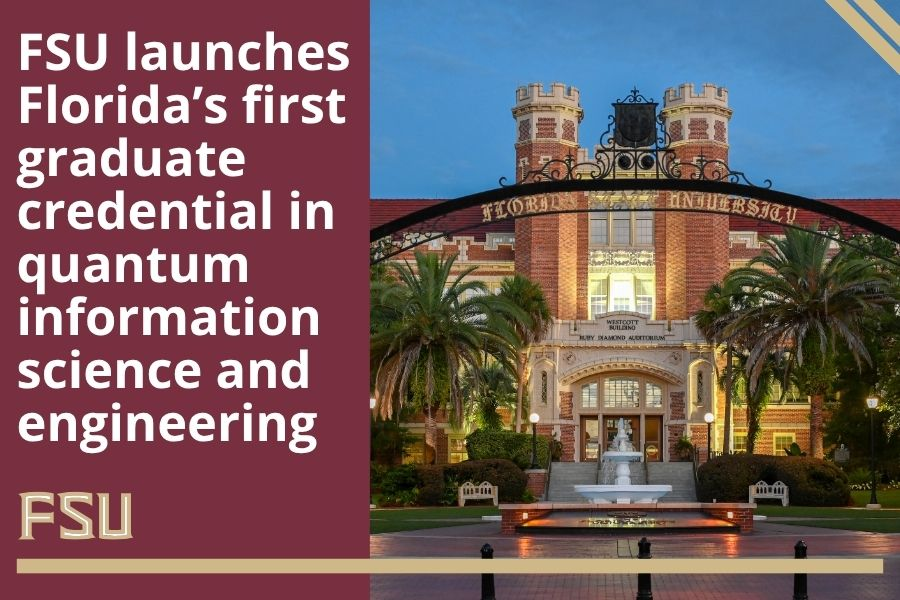
Florida State University Launches Florida’s First Graduate Certificate in Quantum Information Science & Technology
Florida State University has launched Florida’s first Graduate Certificate in Quantum Information Science & Technology (QIST), an interdisciplinary 14-credit-hour program accepting applications until October 1, 2026, for its Spring 2027 cohort. The program, administered by the FSU Quantum Initiative, will train graduate students and industry professionals in quantum materials, low-temperature device packaging, and quantum algorithm design, leveraging FSU’s research facilities and industry partnerships to build a skilled workforce for Florida’s tech sector.
-
Mitsui & Co. and Mitsubishi Electric Benchmark Approximate and Logical QFT on Quantinuum Helios
Mitsui & Co. and Mitsubishi Electric benchmarked Quantum Fourier Transform (QFT) on Quantinuum’s 98-qubit Helios quantum computer, executing both approximate QFT on up to 98 physical qubits and logical QFT with Steane code on up to 12 logical qubits. The study evaluated hardware scaling, algorithmic utility, and error correction trade-offs, finding that error detection achieved higher logical target-state probabilities despite reduced shot acceptance rates. They also compared direct analog rotations with fault-tolerant code-switching for logical T-gate implementation, highlighting the current overheads of full fault-tolerant gate construction.
-
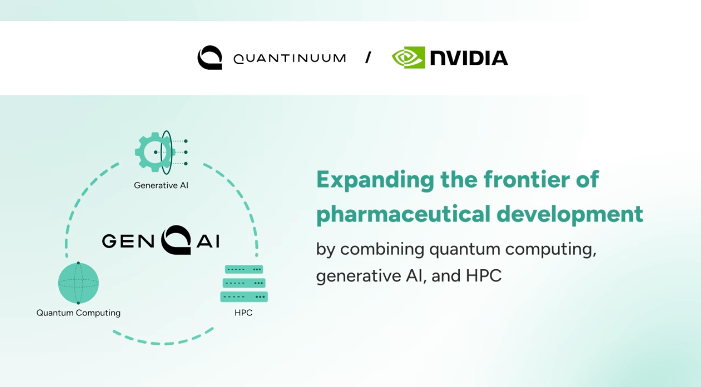
Quantinuum, NVIDIA, and Pfizer Validate Generative Quantum AI (GenQAI) Framework for Pharmaceutical R&D
Researchers from Quantinuum, NVIDIA, and Pfizer have developed a Generative Quantum AI (GenQAI) framework that significantly accelerates quantum circuit synthesis for pharmaceutical R&D. This framework, utilizing the ADAPT-GQE model, combines classical computing, generative transformer models, and quantum processing units to efficiently compute ground-state preparation circuits for complex molecules like imipramine. This approach bypasses iterative calculations and achieves a 3 to 4 orders of magnitude speedup in circuit generation, demonstrating the feasibility of AI-driven quantum algorithm generation on commercial QPUs.
-
EPFL Integrates Quantinuum Trapped-Ion Cloud Access into SCITAS HPC Platform
EPFL has partnered with Quantinuum to integrate cloud-based access to Quantinuum’s trapped-ion quantum computers directly into its SCITAS high-performance computing platform, making it the first Swiss academic institution to do so. This collaboration enables EPFL researchers and students to execute quantum algorithms and simulations without external workflows, fostering advancements in quantum computing research and education.
-
Quanta Computer and Quantinuum Partner to Industrialize Fault-Tolerant Trapped-Ion Hardware Manufacturing
Quantinuum and Quanta Computer have partnered to industrialize the manufacturing of Quantinuum’s trapped-ion quantum computers. This collaboration will leverage Quantinuum’s QCCD architecture and Quanta’s manufacturing expertise to create standardized, mass-producible quantum hardware, moving from custom-built systems to enterprise IT hardware. The focus is on scaling physical hardware assembly, stabilizing the supply chain, and developing scalable production systems to achieve fault-tolerant, megaquop-class quantum systems.
-
-
-
DARPA Awards Contract to Qunnect to Advance Real-Time Polarization Compensation for Quantum Networks
DARPA has awarded Qunnect a contract to advance their real-time polarization compensation module, a key component of their Carina™ entanglement distribution system. This initiative, part of DARPA’s QuANET program, aims to improve the stability and resilience of quantum networks by counteracting polarization drift in optical fibers caused by environmental factors. Qunnect’s technology, already deployed in several cities, is crucial for connecting distributed quantum processors, sensors, and secure communication systems.
-