
News
Company, funding, product and policy news from across the quantum industry, as it happens.
-
-
Wave Photonics Achieves Synopsys OptoCompiler Compatibility to Automate Open-Source Quantum Photonic Chips
Wave Photonics has made its Process Design Kits (PDKs) compatible with Synopsys OptoCompiler, integrating photonic simulation with schematic-driven layouts and circuit verification. This allows hardware engineers to synthesize, simulate, and verify Photonic Integrated Circuits (PICs) for quantum technologies, data centers, and optical sensing, streamlining the design process by automating S-parameters and eliminating manual overhead. The collaboration, including CORNERSTONE foundry, aims to enhance the accuracy and manufacturing of quantum-specific chip processes.
-
Wultra Secures €6.8 Million ($7.7 Million USD) Series A to Expand Post-Quantum Digital Identity Infrastructure Globally
Wultra, a Prague-based cybersecurity provider, has secured €6.8 million ($7.7 million USD) in Series A funding to expand its digital identity platform and accelerate the international growth of its post-quantum authentication technology. The investment, led by Seventure Partners, will enable Wultra to increase its workforce, acquire new financial clients, and extend its infrastructure into the US and Middle Eastern fintech markets. This expansion comes as financial entities globally seek to adopt quantum-resistant cryptography to combat AI-enabled identity fraud and comply with new regulatory standards.
-
Quantum Leap Acquisition Corp Closes $200 Million Initial Public Offering to Seed Frontier Quantum Mergers
Quantum Leap Acquisition Corp has successfully closed its $200 million IPO, issuing 20 million units at $10.00 each on the NYSE under ticker QLEPU. This blank-check company, led by Kervin Pillay, Haydar Haba, and David J. Chapman, aims to merge with or acquire high-growth deep-tech firms in AI, quantum computing, and blockchain, explicitly excluding businesses in China, Hong Kong, Taiwan, or Macau to protect Western technology interests. The firm plans to leverage its leadership’s extensive experience and networks to transition private hardware or middleware innovators into publicly traded assets.
-
Classiq and QAI Launch Sovereign Quantum-as-a-Service Offering for South Korean Enterprise Market
Classiq and QAI have partnered to launch South Korea’s first localized Quantum-as-a-Service (QaaS) platform, integrating Classiq’s quantum compilation engine with QAI’s AI data centers. This collaboration aims to provide South Korean institutions and enterprises with a sovereign quantum cloud architecture, enabling them to design and deploy quantum applications while maintaining data residency. The platform will support various optimization applications and leverages Classiq’s substantial venture backing and “design once, deploy anywhere” interoperability model.
-
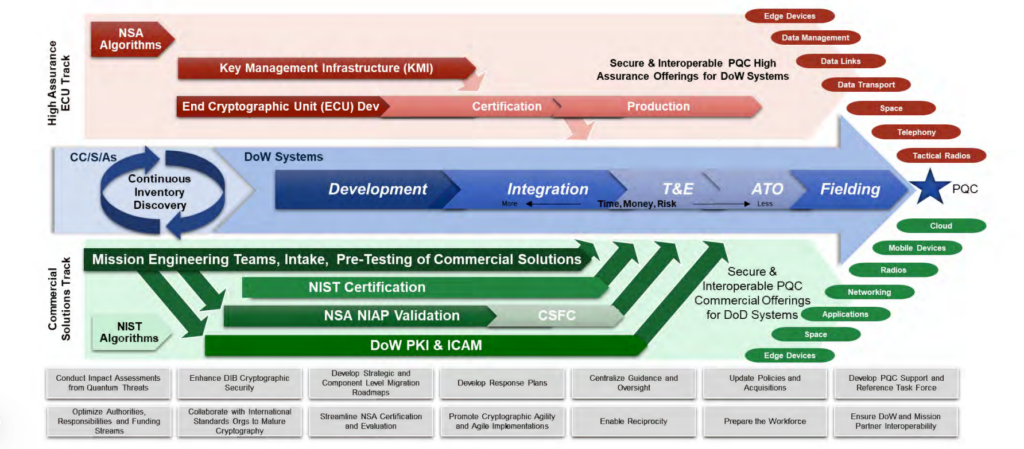
Department of War Unveils Enterprise Post-Quantum Cryptography Strategy to Insulate Defense Networks by 2031
The Department of War has released its Post-Quantum Cryptography (PQC) Strategy to eliminate cryptographic vulnerabilities across all military systems by December 31, 2031, in response to potential threats from quantum computers. This strategy mandates a transition to quantum-resistant primitives, explicitly banning certain workarounds like Quantum Key Distribution, and outlines a dual-track approach for high-assurance and commercial solutions across five lines of effort.
-
Department of War’s DIU Launches $200 Million ‘Farseer’ Initiative to Field Dual-Use Quantum Sensing and Timing Hardware
The U.S. Department of War’s Defense Innovation Unit (DIU) has launched “Project Farseer,” a $200 million initiative to rapidly integrate advanced quantum sensing and timing hardware into military operations. This program, authorized by Executive Order 14411, aims to overcome traditional sensor limitations and enhance Intelligence, Surveillance, and Reconnaissance (ISR) capabilities in challenging environments. Project Farseer is divided into four Lines of Effort (LoEs): magnetometers, gravimeters, portable tactical clocks, and component technologies, all requiring adherence to Sensor Open Systems Architecture (SOSA) principles for seamless integration.
-
Archer Materials Partners with IonQ to Study On-Shore Sovereign Deployment and Accelerate QML Capital Markets Scaling
Archer Materials has partnered with IonQ in a US$1.5 million agreement to advance its quantum computing capabilities, shifting towards becoming an end-to-end sovereign services operator. This collaboration focuses on a joint study for on-shore quantum computer deployment in Australia, aiming to capture market share in regulated sectors and enhance Archer’s Quantum Machine Learning (QML) fraud detection models using IonQ’s high-fidelity trapped-ion hardware. This dual-track strategy allows Archer to continue graphene-based chip development while immediately generating revenue through commercial quantum cloud services.
-
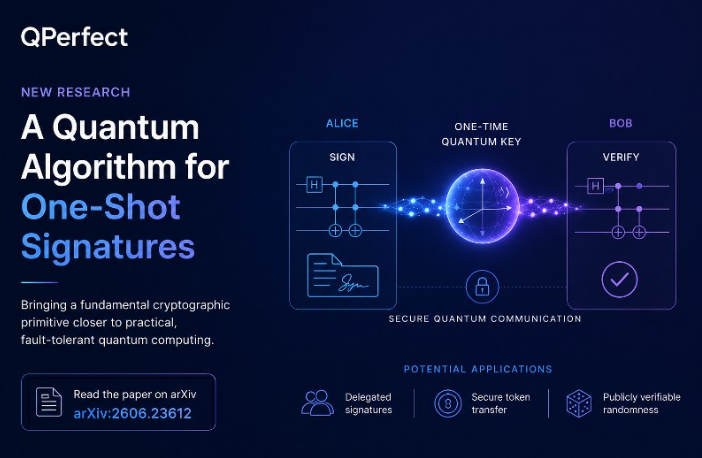
QPerfect and BTQ Technologies Engineer First Circuit-Level Quantum One-Shot Signature Scheme
QPerfect and BTQ Technologies have developed the first circuit-level One-Shot Signature (OSS) scheme, bridging the gap between cryptographic theory and executable quantum circuits. This breakthrough utilizes a “local quantum cryptography” framework, employing a novel quantum key generation and signing process that leverages quantum mechanics for single-use execution and incorporates dual-layered program obfuscation for security. This advancement paves the way for trustless random beacons, secured token transfers, and quantum money networks on future quantum coprocessors.
-
BTQ Technologies Secures French FDI Clearance for Full Acquisition of QPerfect to Build Fault-Tolerant Sovereign Infrastructure
BTQ Technologies has acquired QPerfect after receiving French FDI clearance, integrating QPerfect’s quantum software and hardware emulation capabilities to strengthen BTQ’s post-quantum cryptography validation pipeline. This acquisition, valued at over €18.59 million, enhances BTQ’s ability to develop and test quantum-resistant algorithms and fault-tolerant quantum infrastructure, leveraging QPerfect’s innovations like MIMIQ™ and Noise Tailoring. The Strasbourg-based QPerfect will maintain its headquarters and research operations, contributing to the accelerated commercialization of quantum-safe communication.
-
NSA and Army Research Office Launch Joint QuantumEAGLe Initiative to Secure Sovereign Hardware Supply Chains
The NSA and Army Research Office have launched the QuantumEAGLe initiative, a joint program to accelerate the domestic manufacturing base for quantum systems. This initiative, established in response to a Presidential Quantum Executive Order, aims to eliminate supply chain vulnerabilities and ensure U.S. sovereignty over quantum infrastructure. It will focus on advancing supply chains, developing algorithmic applications, and conducting foundational research, bridging academic breakthroughs with the defense industrial base.
-
IQM Quantum Computers Completes Nasdaq Merger via Real Asset Acquisition Corp. to Establish Liquid Public Capitalization
IQM Quantum Computers has successfully merged with Real Asset Acquisition Corp. to become the first publicly traded European quantum computing entity on Nasdaq, trading as IQMX from July 2, 2026. This transaction, authorized by shareholders on June 25, 2026, injected approximately $233.5 million USD in capital, including a $145.5 million PIPE investment, to accelerate the company’s hardware development and global expansion. The new capital will support the scaling of IQM’s silicon fabrication foundries in Germany and Finland.
-
-
-
Crédit Agricole CIB and Pasqal Execute Strategic Production Roadmap for Neutral Atom Quantum Finance Deploys
Crédit Agricole CIB and Pasqal have partnered to integrate quantum processing units into banking operations by 2028, moving from exploratory research to industrialization. This multi-year roadmap involves a three-tiered deployment strategy, beginning with quantum-inspired algorithms on existing infrastructure, progressing to real-world validation on Pasqal’s hardware, and culminating in a hybrid integration of HPC and quantum coprocessors. The initiative aims to optimize capital reserve consumption and risk-weighted assets, supported by Pasqal’s significant private funding and impending Nasdaq listing, facilitating large-scale manufacturing and deployment for enterprise clients.
-
Pasqal and Bleichroeder Acquisition Corp. II File Form F-4 SEC Registration for $2 Billion Public Nasdaq Merger
Pasqal, a neutral-atom quantum hardware manufacturer, has filed a joint Form F-4 SEC registration for a $2 billion public Nasdaq merger with Bleichroeder Acquisition Corp. II. This transaction values Pasqal at $2.0 billion USD and aims to secure approximately $500 million in gross proceeds to accelerate commercialization and integration with high-performance hybrid software. Upon regulatory approval, the company will be named Pasqal Holding SA and its shares will be listed on Nasdaq.
-
European Quantum Academy Launches with €19.8 Million ($22.6 Million USD) Total Budget to Standardize Transcontinental Workforce Pipelines
The European Quantum Academy (EQA) has launched with a €19.8 million budget to standardize quantum technology education and workforce development across Europe. Part of the Quantum Flagship initiative, the EQA unifies over 70 partner institutions and aims to train 600 quantum professionals and over 5,000 learners through regional academies and specialized upskilling modules by 2030, fostering a robust quantum talent pipeline.
-
StarkWare Outlines Post-Quantum Cryptographic Roadmap for Starknet Architecture
StarkWare has released a multi-phase roadmap to transition Starknet’s cryptographic primitives to post-quantum standards, leveraging its STARK proof system’s native quantum resistance. Phase 1 focuses on securing new on-chain activity by replacing Pedersen hashing with BLAKE2 and integrating Falcon-512 signatures by July 2026. Phase 2 will enable quantum resistance for existing deployments through automated migration tools, while Phase 3 addresses external infrastructure dependencies, aligning with Ethereum’s independent post-quantum migration timeline.
-
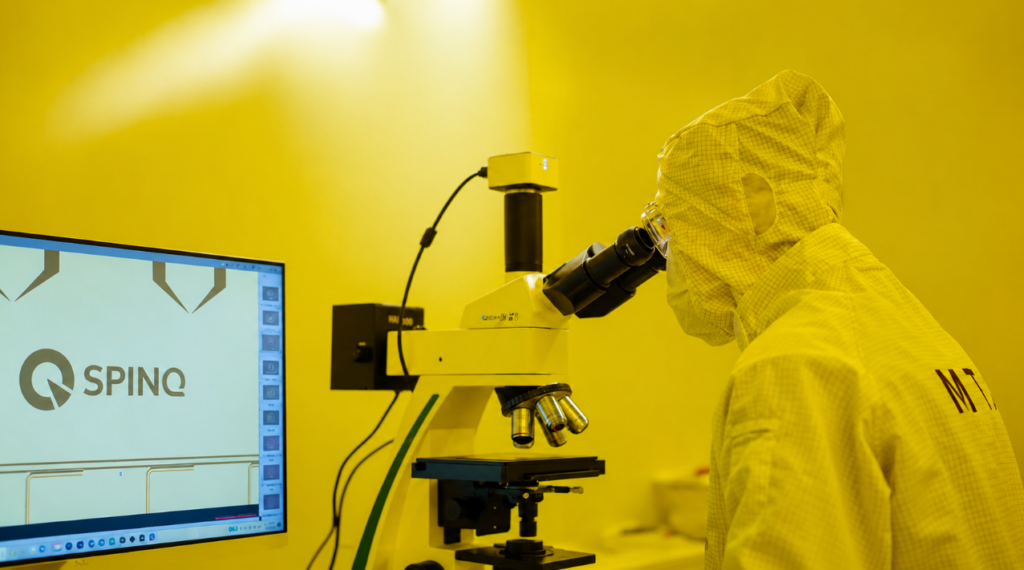
SpinQ Closes RMB 1 Billion (~$147 million USD) Series D Capitalization to Scale Fault-Tolerant Superconducting Quantum Computing Platforms
SpinQ, a Chinese quantum computing developer, has secured RMB 1 billion (~$147 million USD) in Series D funding, bringing its total capital raised to RMB 2 billion in six months. The funding will be used to develop fault-tolerant general-purpose quantum computers, upgrade fabrication processes, and expand its global export ecosystem. SpinQ is pursuing both theoretical algorithmic optimizations, including cascaded quantum Hamming code decoding, and experimental physical safeguards like distance-three (d=3) surface-code quantum error correction. The company has also integrated a full-stack development and pilot-line foundry infrastructure in Shenzhen, producing 25-qubit and 103-qubit superconducting QPUs for its “Ursa Major” computers, which are distributed to over 40 countries and regions.
-
QuiX Quantum Launches ‘Dedalo’ Photonic Architecture to Address Photon Loss via Single-Basis Logical Qubits
QuiX Quantum introduces ‘Dedalo,’ a novel photonic architecture for fault-tolerant quantum computing that tackles photon loss by utilizing single-basis logical qubits. This system employs CMOS-compatible silicon nitride PICs and operates on a Measurement-Based Quantum Computing framework, correcting errors by redundantly grouping physical photons into logical qubits. Dedalo’s three-tiered system, comprising a pseudo-deterministic photon generator, primitive state generator, and universal quantum processor, aims for scalable, modular integration into data centers.
-
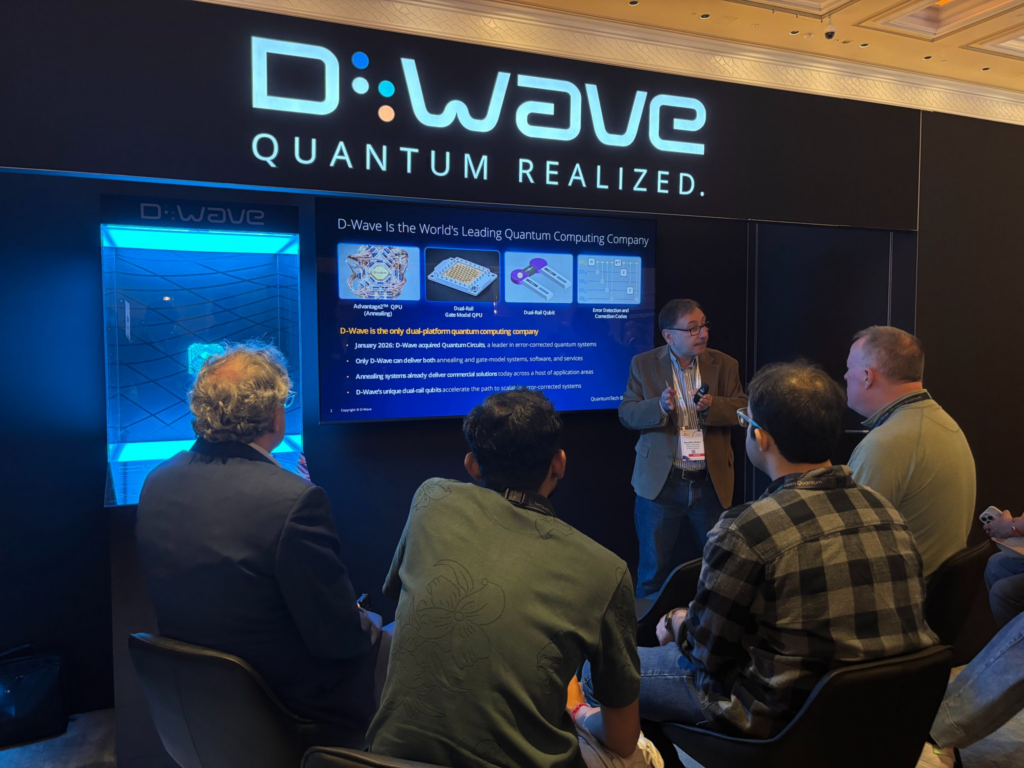
D-Wave Selected for $1.5 Million NSF Grant to Provide Dual-Rail Hardware for Yale-Led Fault-Tolerant ‘ERASE’ Project
D-Wave Quantum Inc. has been awarded a $1.5 million NSF grant for the Yale-led ERASE project, focusing on fault-tolerant quantum computing. D-Wave will provide dual-rail hardware and cloud-based development interfaces through its subsidiary, Quantum Circuits, LLC, to build software, compilers, and error-correction layers. This grant, part of a larger $4 million allocation, aims to advance quantum technology and workforce development.
-
-
-
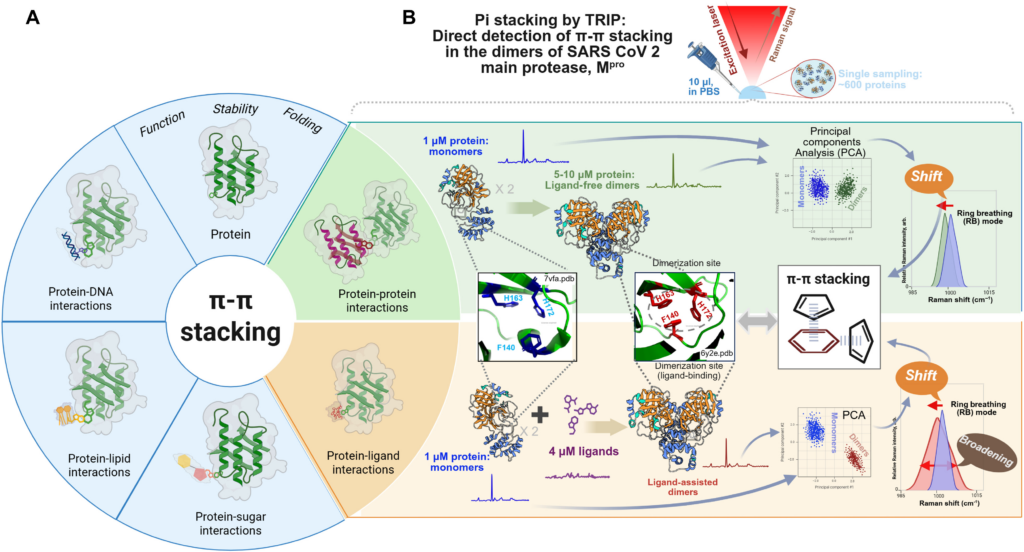
Texas A&M Researchers Invent Laser-Based ‘TRIP’ Spectroscopy to Quantify Noncovalent Quantum Forces in Drug Discovery
Texas A&M researchers have developed a new laser-based technology called TRIP (Thermostable Raman Interaction Profiling) that can directly quantify noncovalent quantum forces, specifically aromatic π–π stacking interactions, in proteins. This breakthrough allows for real-time, label-free measurement of these crucial interactions, which govern protein folding and drug binding, thereby accelerating drug discovery and development. The technology’s ability to provide a quantitative readout of molecular binding forces offers a significant advantage over traditional methods, transitioning structural biology from indirect inference to direct measurement of quantum mechanical forces.
-
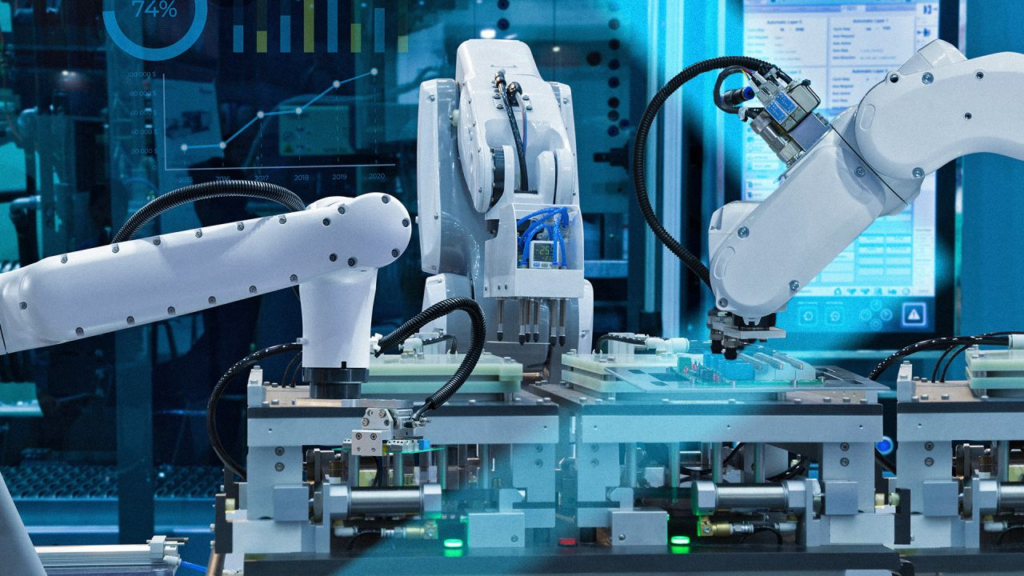
NIST and SRI International Partner to Launch $20 Million Quantum Manufacturing Engineering Center
NIST and SRI International have partnered to create the Quantum Manufacturing Engineering Center (QMEC) with an initial investment of $20 million from NIST. This center aims to bridge the gap between quantum physics research and commercial production by focusing on scaling quantum components and eliminating industrial barriers. QMEC will accelerate the production of specialized cryogenics and precision laser assemblies, directly addressing federal directives to advance the commercial readiness of quantum technology and solidify the U.S. as a leader in quantum manufacturing.
-
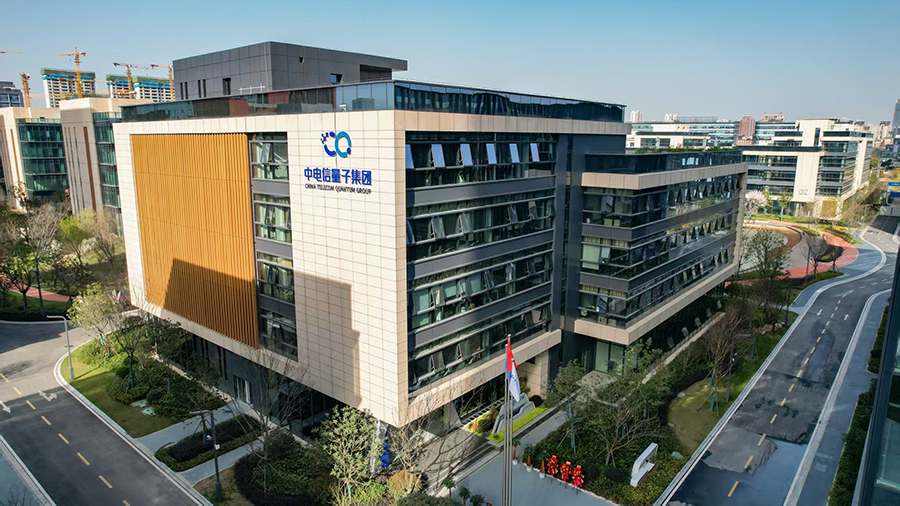
China Telecom Deploys 2,682-Photon ‘Tianyan-P2000’ Web Platform to Achieve Dual-Modality Quantum Advantage Services
China Telecom Quantum Group has launched the Tianyan-P2000, a 2,682-photon photonic quantum computer, integrating it into their Tianyan quantum cloud infrastructure. This new system, based on the Jiuzhang 4.0 architecture, offers significant computational advantages for specific problems, operating at room temperature and complementing their existing superconducting quantum computers. It provides services globally for graph analysis, drug discovery, spectral computation, and machine vision models.
-
IBM Releases Qiskit Paulice to Embed Low-Overhead Spacetime Error-Detection Codes Directly into Near-Term Clifford Circuits
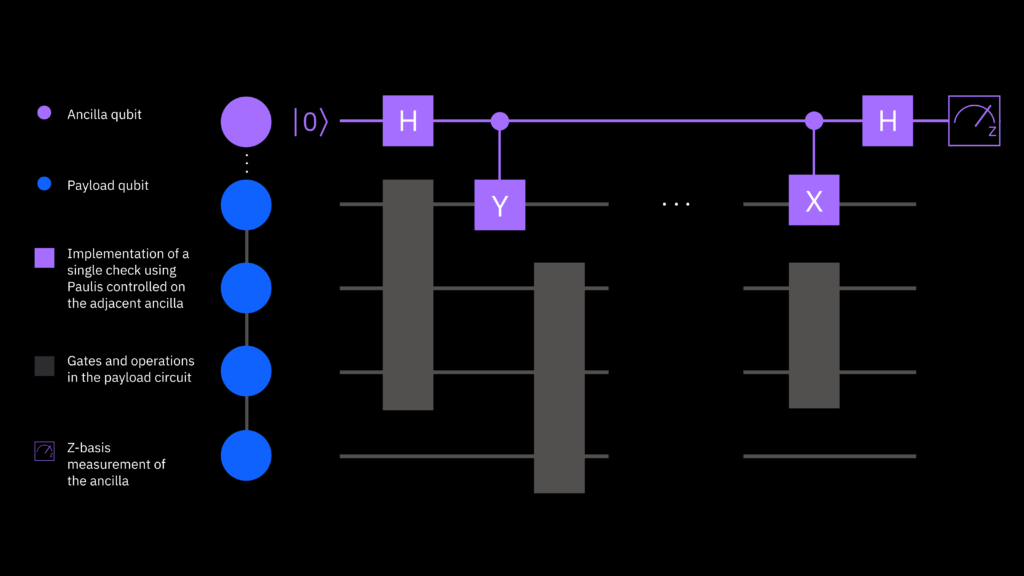
IBM has launched Qiskit Paulice, an open-source add-on that identifies and injects hardware-efficient error-detection loops into quantum circuits. This tool uses spacetime Pauli checks to mitigate hardware noise on NISQ chips, providing a postselected error correction method that filters out corrupt execution trajectories with minimal overhead. It is optimized for Clifford and Clifford-dominated quantum architectures and has been deployed on circuits with up to 50 qubits, demonstrating a scalable approach to improving quantum computation fidelity.
-
Türkiye Mobilizes Over 300 Experts to Launch National Quantum Technology Strategy and Superconducting Processor Programs
Türkiye has launched a comprehensive National Quantum Technology Strategy, spearheaded by the SSB Quantum Program, involving over 300 experts from 123 organizations. This initiative aims to establish technological independence in quantum computing, sensing, and communications, with a focus on developing a Superconducting Quantum Processor Unit (QPU) and advanced quantum magnetometers for defense applications. The strategy emphasizes domestic manufacturing, workforce development, and securing national data against future cryptographic threats.
-
QuTech Achieves Above-Unity Coherent Nanophotonic Coupling for Diamond SnV Color Centers
Researchers at QuTech have developed a highly efficient nanophotonic interface using diamond tin-vacancy (SnV) color centers to create a strong, coherent link between stationary solid-state qubits and flying photonic qubits. This breakthrough, published in Physical Review X, resolves a critical bottleneck in quantum information infrastructure by enabling reliable, low-noise communication for quantum networks and accelerating modular quantum computing. The scalable architecture utilizes engineered diamond photonic crystal cavities to enhance light-matter interaction, demonstrating coherent cooperativity above unity, which signifies robust quantum interactions overcoming environmental noise.
-
-
-
Who’s News: Strategic Advisory Appointments at LFI and BTQ Technologies
LFI appointed Michael Datta to its Board of Advisors to drive commercial success for its Quantum Value Stages™ strategy, leveraging his defense and manufacturing experience. Concurrently, BTQ Technologies appointed Brandt Pasco as U.S. Strategic Advisor for Post-Quantum Cryptography (PQC) and Security, focusing on aligning BTQ’s portfolio with federal deployment priorities.
-