
News
Company, funding, product and policy news from across the quantum industry, as it happens.
-
-
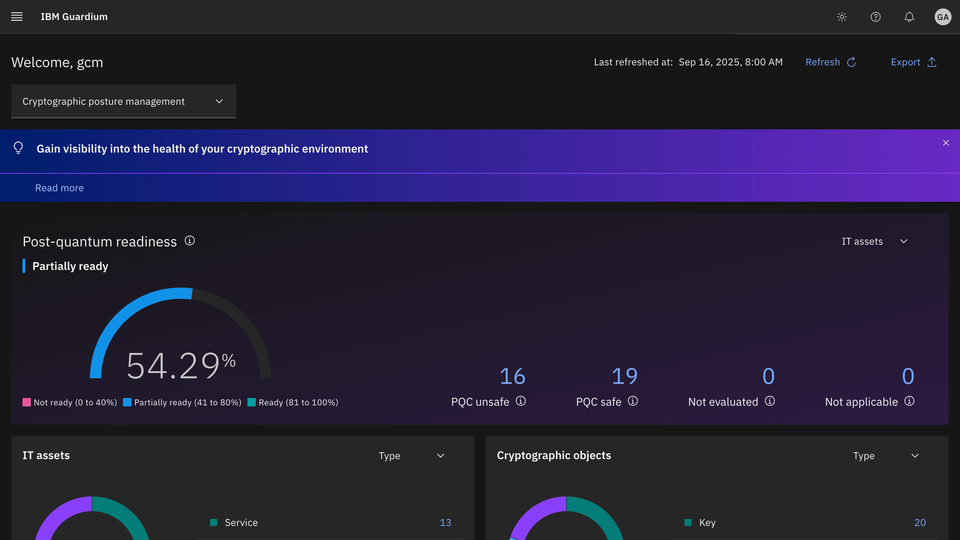
IBM Introduces Guardium Cryptography Manager to Address PQC Migration
IBM has introduced Guardium Cryptography Manager, a new AI-powered solution to help enterprises protect data and manage encryption as quantum computing threats draw closer. The platform, which leverages generative AI to deliver insights and accelerate remediation, provides visibility, centralized lifecycle management, and remediation for Post-Quantum Cryptography (PQC).
-
-
-
IonQ Completes Acquisition of Vector Atomic, Expanding Into Quantum Sensing
IonQ has announced the successful completion of its acquisition of Vector Atomic, a quantum sensing company. The all-stock transaction integrates Vector Atomic's advanced precision atomic clocks, gravimeters, and inertial sensors into IonQ’s quantum platform, which already includes computing and networking. The acquisition, which follows a series of strategic moves by IonQ, is intended to expand the company's entry into the quantum sensing market and accelerate its technology roadmap.
-
Clarke, Devoret, and Martinis Awarded Nobel Prize in Physics for Macroscopic Quantum Discoveries
The Nobel Prize in Physics 2025 has been awarded to John Clarke, Michel H. Devoret, and John M. Martinis for their “discovery of macroscopic quantum mechanical tunnelling and energy quantisation in an electric circuit.” Their research demonstrated that quantum properties can be observed in a macroscopic system, providing a foundation for superconducting circuits as a platform for qubits in quantum computers.
-
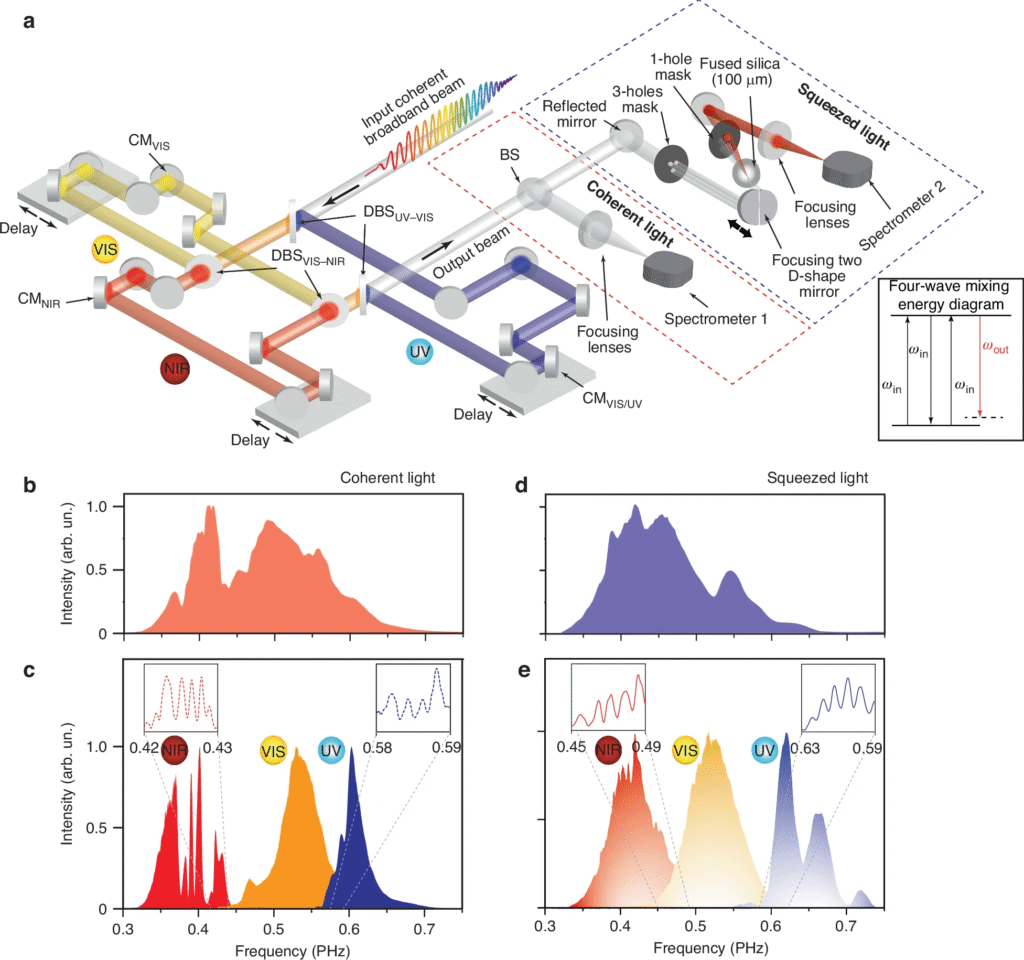
University of Arizona Researchers Demonstrate Real-Time Control of Quantum Uncertainty with Ultrafast Squeezed Light
Researchers from the University of Arizona have demonstrated the first real-time measurement and control of quantum uncertainty using ultrafast squeezed light. The team's discovery, published in Light: Science & Applications, establishes a foundation for a new field of ultrafast quantum optics and a petahertz-scale secure quantum communication protocol.
-
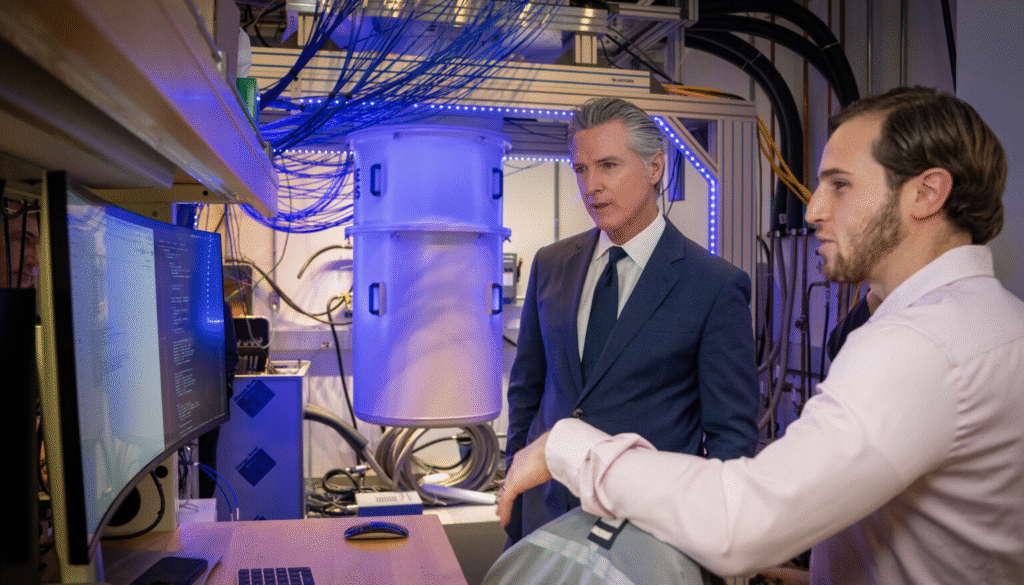
California Governor Newsom Signs Bill and Announces $4 Million in New Quantum Funding
California Governor Gavin Newsom has signed Assembly Bill 940 into law and announced $4 million in new funding for the state’s quantum sector. The legislation directs a strategic framework to be published for growing the quantum economy and creating “quantum innovation zones” to attract businesses and transform quantum research into industry output.
-
Delft University of Technology Researchers Demonstrate First Single-Phonon Directional Coupler
Researchers from Delft University of Technology have demonstrated the first single-phonon directional coupler, a phononic beam splitter for single phonons. Published in Optica Quantum, the device is a key building block for phononic circuits that could enable hybrid quantum networks, on-chip quantum routers, and ultra-sensitive mechanical sensors.
-
-
-
Northwestern Researchers Use Molecular Coating to Boost Quantum Light Purity
Engineers at Northwestern University have developed a new strategy that makes quantum light sources more consistent and reliable, boosting the spectral purity of emitted photons by 87%. The research, published in Science Advances, involved coating a thin semiconductor (tungsten diselenide) with an organic molecule (PTCDA) to protect single-photon emitters from atmospheric contaminants.
-
QCi Announces $750 Million Private Placement and Debuts Quantum Secure Solution at ECOC 2025
Quantum Computing Inc. (QCi) has announced a $750 million private placement, bringing its total capital raised to $1.64 billion. Concurrently, the company debuted its Quantum Secure Solution at ECOC 2025, a high-dimensional, time-energy-based quantum secure network intended to be a robust alternative to polarization-based approaches.
-
-
-
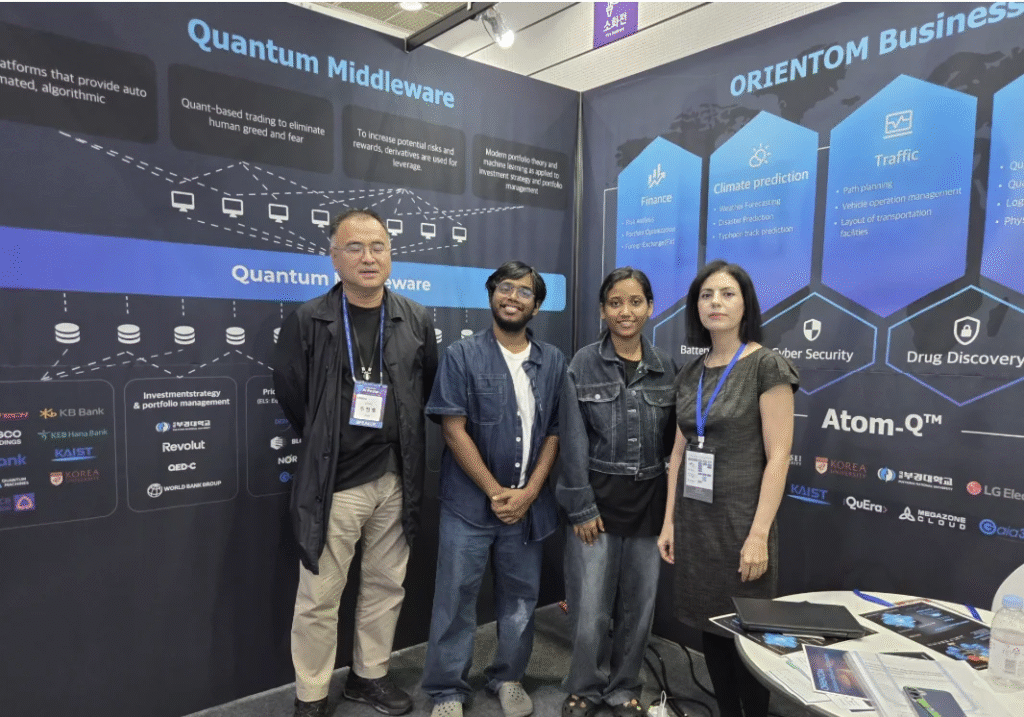
Orientom Aims to Build Quantum Finance Middleware Platform by 2030
Orientom, a developer of quantum financial algorithms, has announced plans to develop a middleware platform containing all quantum financial algorithms by 2030. The company’s hybrid quantum-classical approach is intended to tackle complex financial problems by addressing the computational limitations of traditional models for derivatives pricing and risk management. Orientom is currently working with Kookmin Bank and Yonsei University on a national project to develop an algorithm for derivatives evaluation that can be utilized in a commercial financial environment.
-
-
-
EeroQ Demonstrates Single Electron Control Above 1 Kelvin
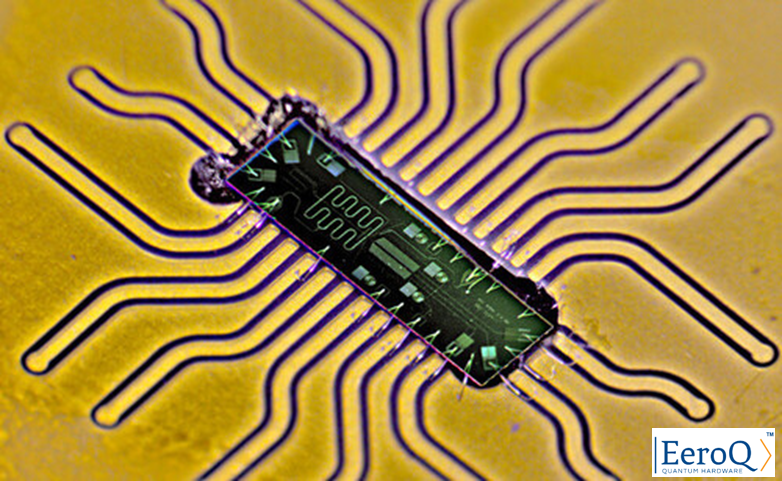
EeroQ has demonstrated single electron control above 1 Kelvin for its electron-on-helium platform, a breakthrough detailed in Physical Review X. This achievement, a two-order-of-magnitude increase over previous experiments, could significantly relax the extreme cooling requirements and associated scaling challenges for quantum computing, bringing the field closer to more practical processors.
-
-
-
Atlantic Quantum and Google Quantum AI are “Joining Up”
Atlantic Quantum has announced it will be joining up with Google Quantum AI to accelerate the team’s progress in creating fault tolerant quantum computers. It is not yet known right now what is exactly meant by “Joining Up” as it could indicate an acquisition, a development partnership, employee hire and asset purchase, or some other arrangement between the two companies, but we expect this to be clarified in the future.
-
kiutra Secures €13 Million ($15.2 Million USD) in Funding to Advance Helium-3-Free Quantum Cooling
Kiutra has secured €13 million in new financing, led by NovaCapital and 55 North, to accelerate its global scale-up. The funding will support the delivery of kiutra's proprietary magnetic cooling technology, which avoids the use of helium-3 and is intended to strengthen the resilience of quantum supply chains for both quantum chips and full-stack quantum computers.
-
ESA Awards €50 Million ($58.6 Million USD) Contract to Thales Alenia Space for SAGA Quantum Mission
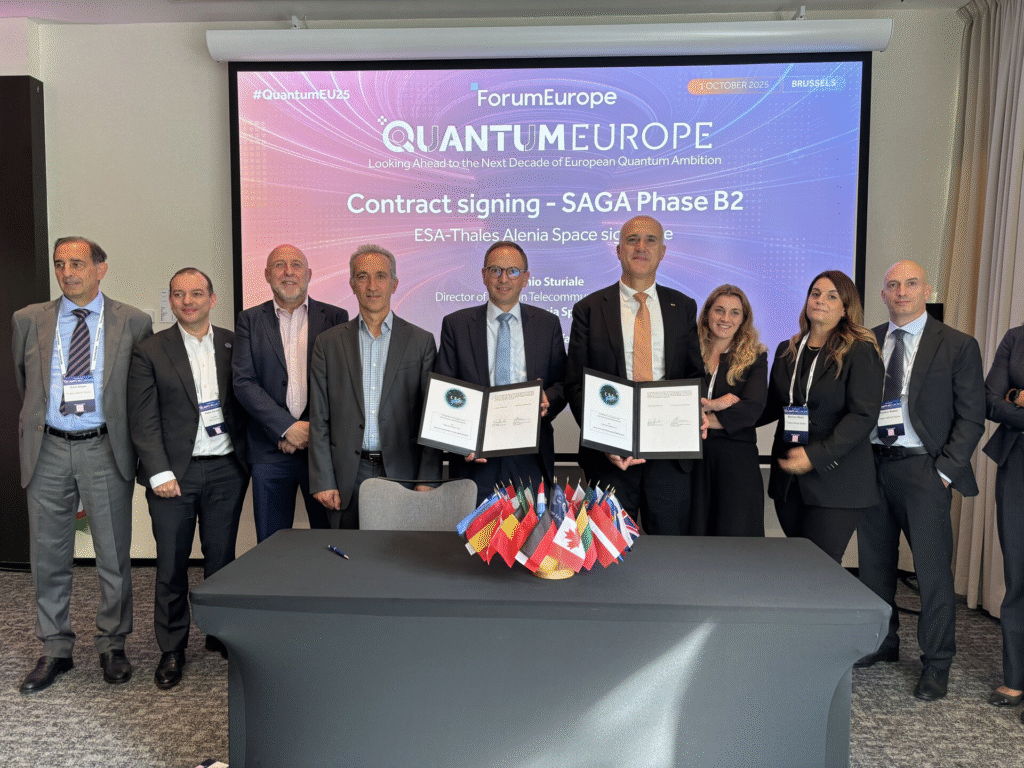
The European Space Agency (ESA) has awarded a €50 million ($58.6 million USD) contract to Thales Alenia Space for the preliminary design of the SAGA mission. The mission will demonstrate satellite-based QKD to complement ground networks, and is part of the EuroQCI initiative to strengthen Europe’s digital infrastructure and technological sovereignty.
-
Connecticut to Invest $10 Million in QuantumCT for Quantum Infrastructure and Testbed Deployment
The state of Connecticut has announced a $10 million investment in QuantumCT, a statewide initiative co-led by UConn and Yale to deploy quantum computing infrastructure and a testbed. The initiative, which is a finalist in the NSF Regional Innovations Engines Program for up to $160 million in federal funding, aims to build a national hub for quantum-related jobs, research, and products.
-
PINC Technologies Secures $6.8M Seed Round to Develop Integrated Nonlinear Photonic Devices for Quantum Processing
PINC Technologies, a Caltech spinout, has closed a Seed+ funding round, bringing its total to $6.8 million. The funding, led by Quantonation, will accelerate the commercialization of the company’s integrated nonlinear photonic devices for applications in quantum information processing, addressing a core challenge in the field of photonics.
-
55 North, a New €300 Million ($352.5 MillionUSD) Fund, Launched to Scale European Quantum Technologies
A new venture capital fund, 55 North, has launched in Denmark with a target size of €300 million ($352.5 million USD) and an initial close of €134 million ($157.4 million USD). The fund, co-anchored by Novo Holdings, will invest in the European quantum value chain across computing, sensing, and communication, with a specific focus on Nordic firms.
-
-
-
ETSI Creates New Technical Committee on Quantum Technologies to Develop Standards
The European Telecommunications Standards Institute (ETSI) has created a new Technical Committee on Quantum Technologies (TC QT) to develop standards for quantum communications and networks. The committee will focus on areas such as QRNGs and methodologies for assessing hardware vulnerabilities, with a goal of supporting the European Quantum Act and the European Chips Act.
-
TII Unveils Manarat, a Control Electronics Platform for Scalable Quantum Computers
The Technology Innovation Institute (TII) has launched Manarat, a new custom-developed control electronics platform for quantum computing. The platform, which is designed to provide precise control over qubits with an accuracy better than 100 picoseconds, is intended to be at least five times more cost-efficient than commercially available alternatives.
-
Qilimanjaro Joins IMPAQT Consortium to Advance Interoperable Quantum Technology
Qilimanjaro Quantum Tech, a Barcelona-based quantum company, has joined IMPAQT UA, a cooperative consortium focused on building interoperable, scalable quantum systems. As the first analog quantum computing company to join the group, Qilimanjaro will contribute its expertise in integrating the full stack across its fluxonium analog qubits, digital quantum, and classical platforms.
-
Quantum Brilliance, CyberSeQ, and LuxProvide Partner on PQC with Certified Randomness
Quantum Brilliance, CyberSeQ, and LuxProvide have announced a letter of intent to collaborate on quantum-secure encryption methods aligned with Post-Quantum Cryptography (PQC). The partnership will use Quantum Brilliance's virtual quantum processing unit to generate certified true random numbers, which will be integrated by CyberSeQ into PQC algorithms and validated on LuxProvide's MeluXina supercomputer.
-
-
-
QuantWare Delivers 64-Qubit Tenor QPU to University of Naples Federico II
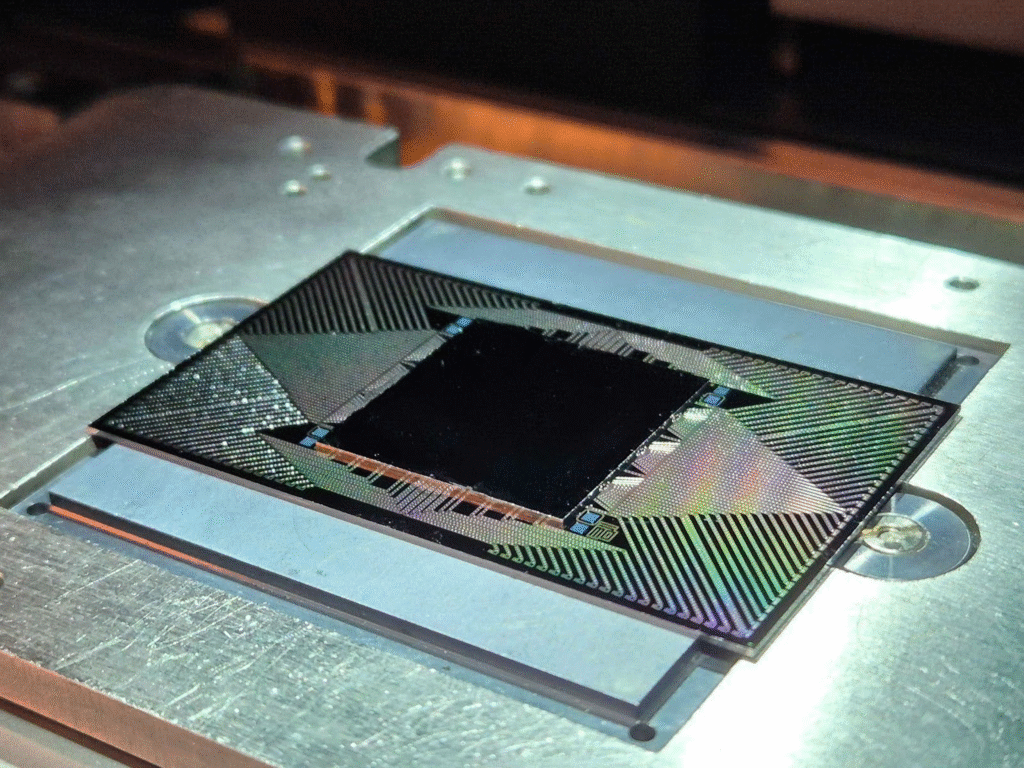
QuantWare has delivered a 64-qubit Tenor QPU to the University of Naples Federico II, which will power Italy’s largest quantum computer. The delivery is a key product of the company’s Quantum Open Architecture (QOA) model, which aims to lower the time and capital required for organizations to build quantum computers with components from various suppliers.
-
QUDORA and Norma Inc. Collaborate to Expand Trapped-Ion Quantum Computing in South Korea
QUDORA and Norma Inc. have announced a strategic partnership to accelerate trapped-ion quantum computing adoption in South Korea. The collaboration will deliver quantum education programs and identify strategic opportunities within Korea’s national R&D initiatives, building on Norma's recently launched quantum cloud service.
-
IBM and Vanguard Explore Quantum Optimization for Portfolio Construction
IBM and Vanguard have published research on how quantum computing can be used for portfolio construction, a computationally demanding financial problem. The study, detailed on arXiv, shows that a quantum-classical hybrid workflow on an IBM Quantum Heron r1 processor outperformed a purely classical approach, achieving a relative solution error of 0.49% for a bond ETF portfolio.
-
Phasecraft Launches Mondrian, a Quantum-Enhanced Software Platform for Network Optimization
Phasecraft has launched Mondrian, a new quantum-enhanced software platform for network optimization, with development initially funded by a £1.2 million Quantum Catalyst Fund award. The platform uses a hybrid approach to speed up classical optimization algorithms, with early tests reportedly showing speedups of up to 1,000x for problems with the UK’s National Energy System Operator (NESO).
-
Rigetti Announces $5.7 Million in Purchase Orders for Two Novera Quantum Systems
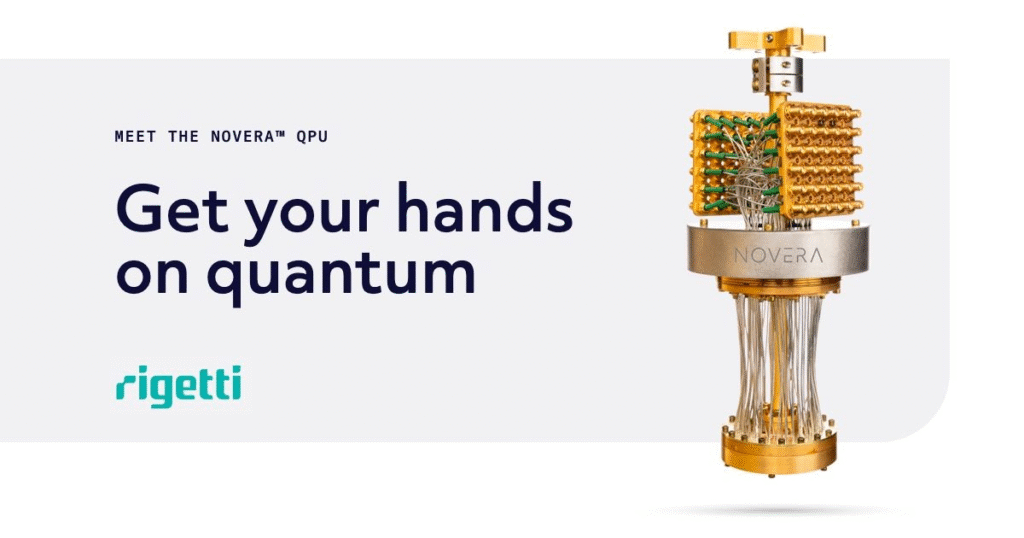
Rigetti Computing has secured purchase orders totaling $5.7 million for two 9-qubit Novera™ quantum computing systems, with delivery expected in the first half of 2026. The systems, based on Rigetti’s Ankaa™-class architecture, will be deployed at an Asian technology company and a California-based startup for research and error correction.
-