
News
Company, funding, product and policy news from across the quantum industry, as it happens.
-
-
D-Wave Reports on Its Q2 2025 Financial Results
D-Wave has reported its Q2 2025 financial results, with revenue of $3.1 million, up 40.9% year-over-year. The company’s cash and cash equivalents reached a record $819.3 million following a $400 million equity offering. Key commercial developments included the general availability of the Advantage2 system and new customer engagements with companies like E.ON and GE Vernova.
-
IonQ Reports on Its Q2 2025 Financial Results
IonQ has reported Q2 2025 revenue of $20.7 million, exceeding guidance by 15%. The company's pro-forma cash balance is now $1.68 billion following a $1.0 billion equity offering. This capital will support strategic acquisitions, including the completed purchases of Lightsynq and Capella Space, as the company advances its quantum computing and networking roadmaps.
-
-
-
Technology Innovation Institute Partners with Quantinuum for Quantum Computing Research in UAE
The Technology Innovation Institute (TII) in Abu Dhabi has partnered with Quantinuum, granting its researchers access to Quantinuum’s quantum computing systems, including the upcoming Helios system. This collaboration aims to support the development and benchmarking of quantum algorithms for chemistry, materials science, and optimization, strengthening the UAE’s position in science and technology.
-
Riverlane Survey Finds 95% of Quantum Professionals Consider QEC Critical for Scaling, but Report Barriers to Adoption
Riverlane’s 2025 QEC Survey, conducted across over 300 quantum professionals, found that while 95% consider Quantum Error Correction (QEC) critical for scaling, a significant gap exists in preparedness. The survey identifies insufficient training and knowledge (41%), a lack of guidelines (28%), and difficulty accessing resources (28%) as the primary barriers to adoption, despite two-thirds of organizations allocating resources to QEC.
-
-
-
U.S. Senators Introduce Amendment for Federal Agency PQC Migration Strategy and Pilot Program
U.S. Senators Gary Peters and Marsha Blackburn have submitted a bipartisan amendment to the National Defense Authorization Act for Fiscal Year 2026 to create a national strategy for federal agency migration to Post-Quantum Cryptography (PQC). The amendment directs a pilot program to upgrade at least one high-impact system to PQC by January 1, 2027, and mandates a cost survey for the transition.
-
TAU Systems and Berkeley Lab Demonstrate Compact X-ray Laser Technology for Quantum Manufacturing
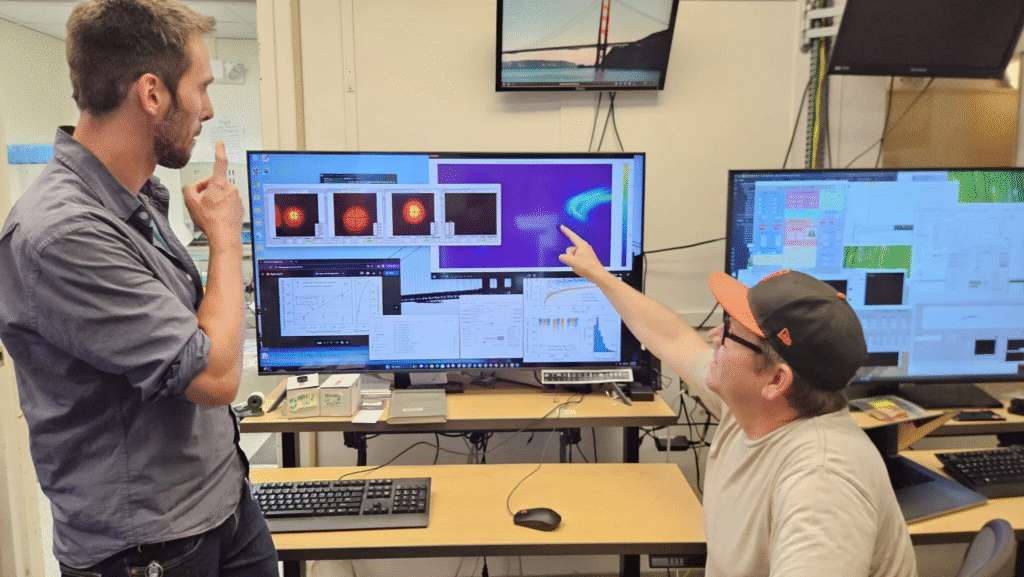
TAU Systems and Berkeley Lab have successfully demonstrated intense, coherent light pulses from a free-electron laser (FEL) driven by a compact laser-plasma accelerator (LPA). The LPA achieves acceleration gradients up to 2,000 times stronger than conventional accelerators, enabling a more compact system for potential applications in quantum manufacturing, including next-generation lithography and the characterization of quantum materials.
-
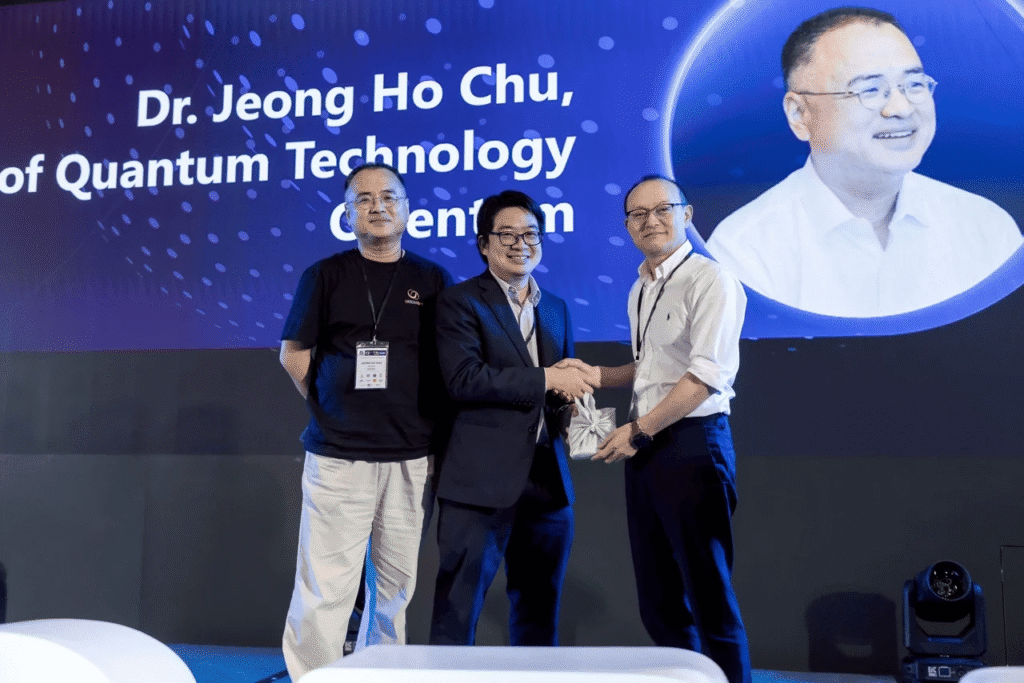
Orientom Expands into Southeast Asia, Presents Financial Quantum Technology at Thailand Quantum Summit 2025
Orientom, a quantum financial technology company, has begun expanding into Southeast Asia following its attendance at the Thailand Quantum Summit 2025. The company presented its financial quantum technology, which uses quantum algorithms for real-time pricing and risk analysis for complex structured notes by improving computational speed for calculations like the Black-Scholes model.
-
SignQuantum Launches Quantum-Resistant Add-On to Protect Digitally Signed Documents
SignQuantum, a post-quantum security provider, has launched a software add-on that integrates with existing e-signature platforms to protect digitally signed documents from future quantum threats. The solution utilizes the U.S. National Institute of Standards and Technology’s (NIST) primary-recommended post-quantum algorithm and leverages quantum-resistant blockchain technology from QANplatform to provide dual-layer security.
-
Alice & Bob and Inria Detail “Unfolded Code” for Hardware-Efficient Magic State Preparation
Alice & Bob and Inria have detailed a new quantum error correction scheme called the “unfolded code,” designed for magic state preparation on superconducting quantum computers. The method leverages the noise bias of cat qubits to “unfold” a 3D distillation code into a hardware-efficient 2D layout, reducing qubit requirements by 8.7x and offering an estimated 5x speedup.
-
IQM and TOYO Corporation Sign Distribution Agreement to Drive Quantum Adoption in Japan
IQM Quantum Computers and TOYO Corporation have signed a distribution agreement to accelerate quantum computing adoption in Japan. Under the agreement, TOYO will market and sell IQM's on-premises superconducting quantum computers, including the IQM Spark and IQM Radiance systems, to universities, research institutions, and enterprises. This partnership supports Japan’s quantum strategy.
-
ParityQC Introduces New Class of Quantum Gates for Low-Overhead Error Correction
ParityQC has introduced a new class of quantum gates, called “replacement-type gates,” in a new arXiv paper. This rotation-free method uses candidate qubits to replace original ones, preserving the intrinsic noise bias of hardware. This approach is intended to enable more efficient quantum error correction (QEC) schemes by reducing resource overhead.
-
-
-
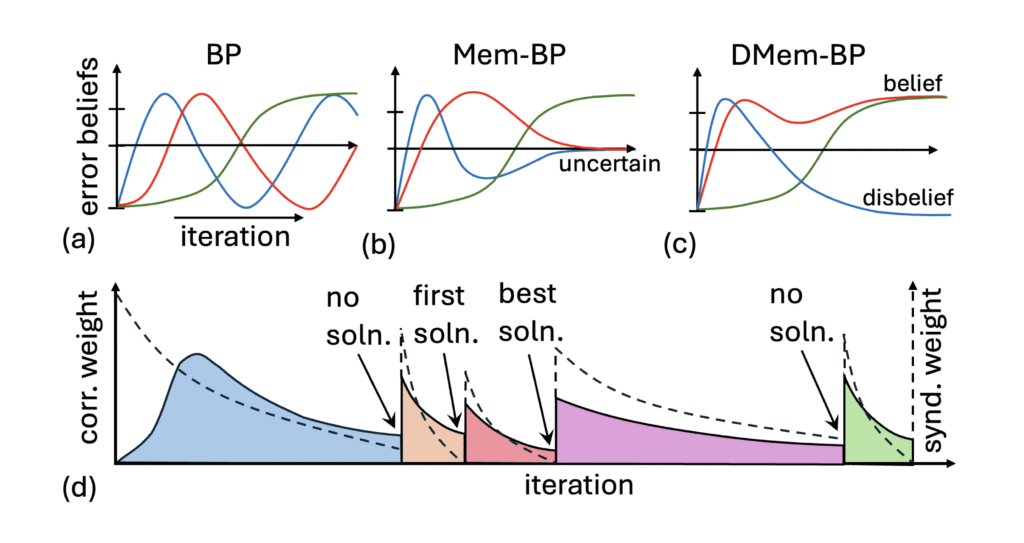
IBM Researchers Devise Relay-BP Algorithm for Real-Time Decoding of qLDPC Codes
IBM researchers have devised Relay-BP, a new algorithm for decoding quantum Low-Density Parity-Check (qLDPC) codes, which is crucial for real-time error correction. The algorithm provides a roughly 10x improvement in accuracy compared to previous methods while maintaining or improving speed. This development is a significant step toward implementing fault-tolerant quantum computers with real-time decoding on classical hardware like FPGAs.
-
VDURA and NMSU Partner to Integrate Post-Quantum Cryptography for AI and HPC Data Infrastructure
VDURA has partnered with New Mexico State University (NMSU) to integrate Post-Quantum Cryptography (PQC) into its data infrastructure. The collaboration will embed NIST-selected PQC algorithms into VDURA’s parallel file-system to safeguard data pipelines for AI and HPC workloads without sacrificing performance.
-
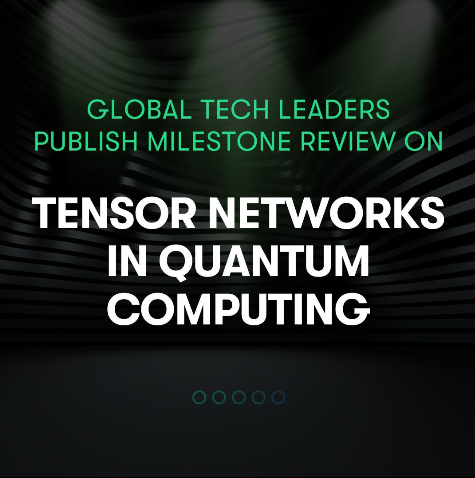
Terra Quantum and Global Collaboration Publish Review on Tensor Networks in Nature Reviews Physics
A global collaboration of over 30 researchers, led by Terra Quantum, has published a review on tensor networks in Nature Reviews Physics. The paper, titled “Tensor networks for quantum computing,” presents a strategic roadmap for using this mathematical framework to simulate quantum systems, design circuits, and reduce noise for improved error correction.
-
-
-
QuamCore Secures $26 Million Series A Funding for 1-Million-Qubit Superconducting Computer Architecture
QuamCore, a deep-tech startup, has announced a $26 million Series A funding round, bringing its total to $35 million. The company has developed a fully designed and simulated architecture intended to scale a superconducting quantum computer to 1 million qubits within a single cryostat, aiming to address the scaling limitations of current systems.
-
D-Wave Introduces New Developer Tools for Quantum AI and Machine Learning Exploration
D-Wave Quantum Inc. has released new open-source developer tools for quantum AI and machine learning, including a toolkit with direct PyTorch integration. The toolkit features a neural network module for building and training Restricted Boltzmann Machines (RBMs) on D-Wave quantum computers, aiming to help with generative AI tasks.
-
-
-
SEEQC Moves to Expanded U.S. Headquarters for Superconductor Design and Manufacturing
SEEQC, Inc., a quantum computing startup, has moved into an expanded U.S. headquarters in Hawthorne, New York, a 13,635-square-foot facility. The new space, which includes office and lab facilities, is designed to support the design, testing, and manufacturing of quantum-ready superconductors and help scale the company’s technology.
-
-
-
Patero and Eridan Integrate Post-Quantum Cryptography with Open RAN for 5G Security
Patero and Eridan have successfully integrated Patero’s CryptoQoR™ suite with Eridan’s 5G radio units, creating a quantum-safe Open RAN solution. This collaboration aims to secure private 5G networks against quantum threats and aligns with U.S. federal cybersecurity mandates.
-
-
-
memQ Achieves Integration of Matter Qubits with Commercial Foundry Processes for Quantum Networking, Supplemented by U.S. Government Awards for Photonics Control and Cryogenic Modulators
memQ, a quantum networking startup, has successfully integrated matter qubits onto a commercial foundry platform, utilizing large-scale 300 mm silicon wafer processing. The company also secured two U.S. government awards, one from NASA for photonics control and another from the Navy for cryogenic modulators. This work aims to accelerate the production of quantum networking components.
-
Fujitsu to Develop 10,000-Plus Qubit Superconducting Quantum Computer for 2030
Fujitsu has announced research and development toward a superconducting quantum computer exceeding 10,000 qubits, with completion targeted for fiscal 2030. This project, solicited by NEDO, will utilize Fujitsu’s “STAR architecture” and is a joint effort with AIST and RIKEN to advance the industrialization of quantum computing. The company aims for 250 logical qubits by 2030 and 1,000 logical qubits by 2035.
-
-
-
Karnataka Launches Quantum Mission with ₹1,000 Crore ($114 Million USD) Fund to Build $20 Billion Quantum Economy by 2035
The Karnataka State Government has launched the Karnataka Quantum Mission (KQM) with a ₹1,000 crore ($114 million USD) fund. This mission is aligned with the state’s Quantum Vision 2035, which aims to build a $20 billion quantum economy and create 10,000 high-skilled jobs by 2035. Key initiatives include establishing India’s first Quantum Hardware Park and an integrated innovation hub called Q-City.
-
IonQ and Oak Ridge National Laboratory Demonstrate Quantum-Classical Power Grid Optimization
IonQ, in collaboration with Oak Ridge National Laboratory and the U.S. Department of Energy, has demonstrated a hybrid quantum-classical computing approach for power grid optimization. Using IonQ’s 36-qubit Forte Enterprise, the team successfully applied the method to the Unit Commitment problem, a key task for power grid operators.
-
-
-
PacketLight and NEC Demonstrate Quantum Key Distribution Over 400G DWDM Link
PacketLight Networks and NEC Corporation have successfully demonstrated Quantum Key Distribution (QKD) over a 400G DWDM network at NEC's labs in Japan. The demonstration integrated NEC’s QKD system with PacketLight’s PL-4000M 600G Muxponder, maintaining 100% throughput and low latency. This highlights a scalable method for layering quantum security onto existing optical networks without extensive overhauls.
-
Keysight Installs Quantum Control System Supporting Over 1,000 Qubits at AIST’s G-QuAT Center in Japan
Keysight Technologies, Inc. has delivered a quantum control system (QCS) to Japan’s National Institute of Advanced Industrial Science and Technology (AIST). Integrated into AIST’s G-QuAT Center, this QCS is designed to support over 1,000 superconducting qubits, making it a key part of a new evaluation testbed for advancing large-scale quantum computing.
-
Xanadu and HyperLight Advance Photonic Chips for Quantum Computing with New Performance Metrics
Xanadu and HyperLight have achieved advancements in thin-film lithium niobate (TFLN) photonic chips for quantum computing, demonstrating waveguide losses below 2 dB/m and switch loss of approximately 20 mdB. These results, achieved in a high-volume semiconductor facility, address limitations in scaling photonic quantum hardware.
-