
News
Company, funding, product and policy news from across the quantum industry, as it happens.
-
Yesterday
-
University of Stuttgart Deploys Quantum Dot QKD Link Using Frequency Conversion Over Campus Fiber
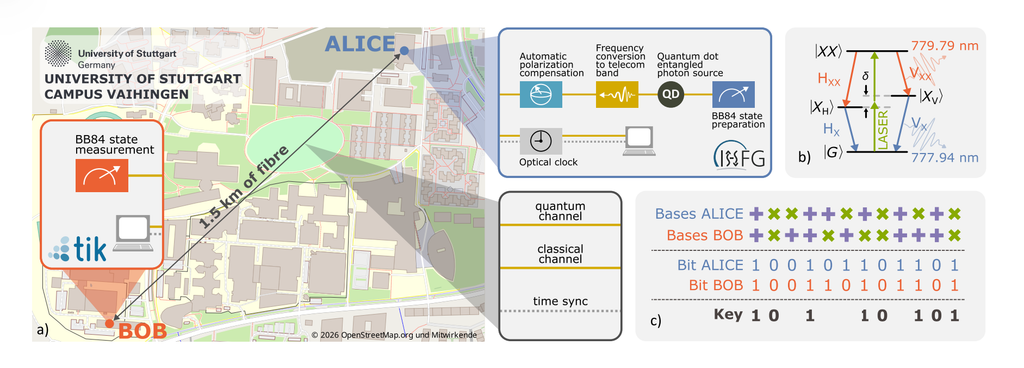
The University of Stuttgart, in collaboration with Saarland University and Leibniz IFW Dresden, successfully deployed an entanglement-based quantum key distribution (QKD) link using a quantum dot photon source. The system generated 14.2 Mbit of secure key material over a 1.59 km fiber link, achieving one-time pad image encryption. This demonstrates the viability of quantum dots with frequency conversion for metropolitan quantum key networks.
-
Chalmers University Demonstrates Hardware-Level Microwave Crosstalk Suppression via Parasitic Capacitance Engineering
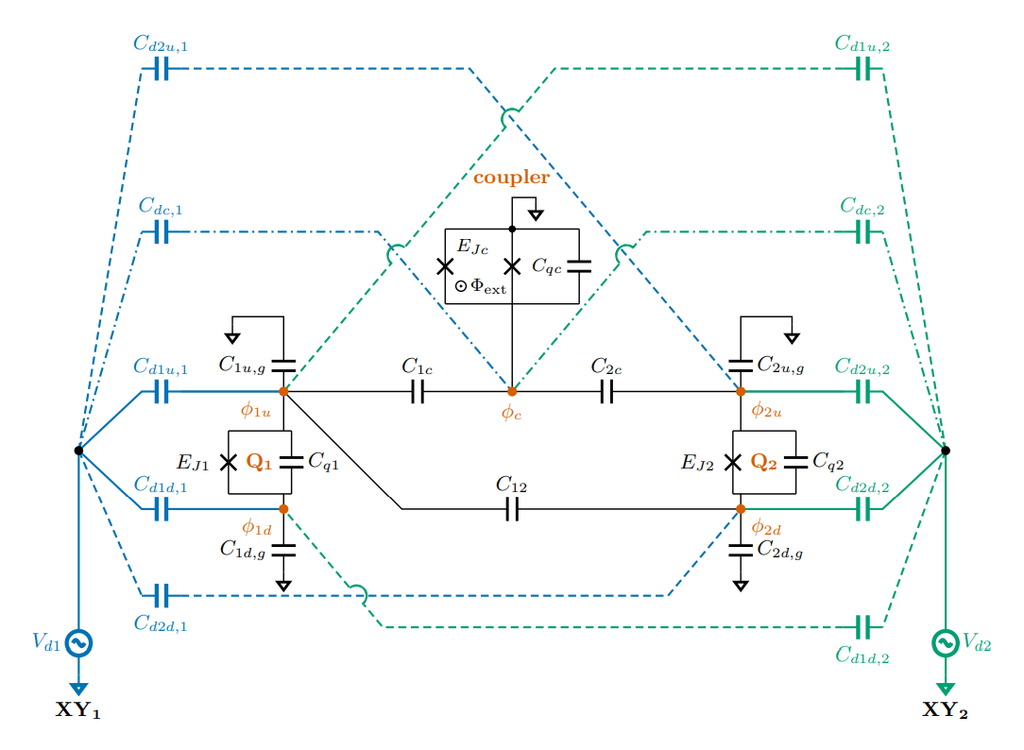
Physicists at Chalmers University of Technology have developed a new method to eliminate microwave crosstalk in superconducting processors. Their research shows that by engineering on-chip parasitic capacitances, they can achieve destructive interference among parasitic capacitive channels, suppressing unwanted qubit excitations. This method offers a practical advantage for floating transmons and allows for alignment of classical microwave crosstalk nulls with quantum ZZ nulls.
-
Los Alamos and QC Ware Model Correlated Iron Oxides Using Sample-Based Quantum Diagonalization on IBM Hardware
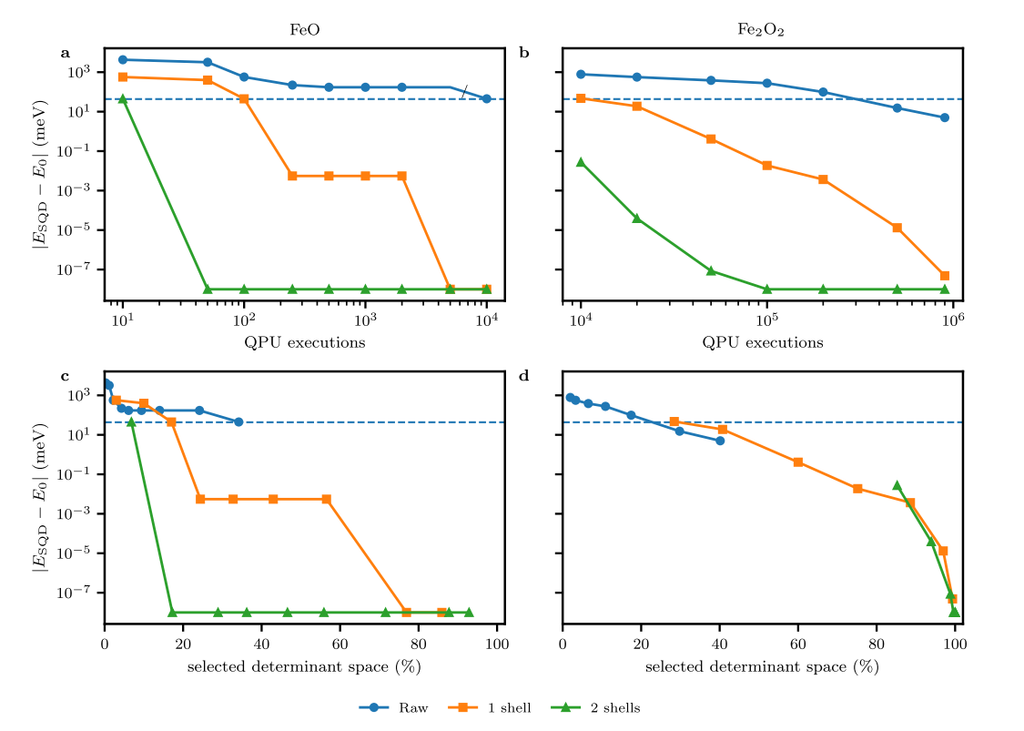
Researchers from Los Alamos National Laboratory and QC Ware developed a hybrid quantum-classical workflow to simulate strongly correlated transition metal oxides. They used Sample-based Quantum Diagonalization (SQD) on IBM Quantum hardware, coupled with ab initio-informed d–p tight-binding models, to achieve chemical accuracy in modeling diatomic iron monoxide (FeO) and rhombic iron oxide dimers (Fe2O2). This method successfully recovered experimental ground states and outperformed traditional computational methods, establishing a new approach for modeling bulk periodic FeO.
-
IBM Launches Unified Quantum Safe Software Suite to Automate Enterprise PQC Migration
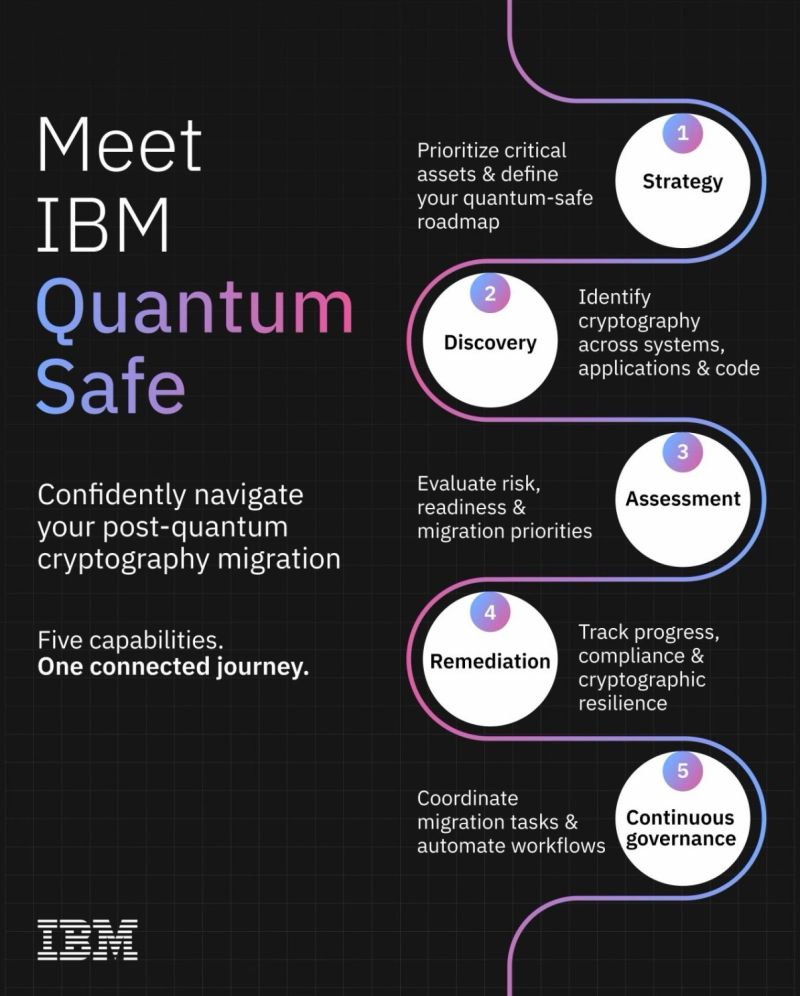
IBM has launched IBM Quantum Safe, a software suite designed to help enterprises migrate to post-quantum cryptography (PQC). This platform offers tools for strategic assessment, automated source-code discovery, and dynamic network mediation. It aims to address the challenge of identifying and remediating cryptographic vulnerabilities in existing IT infrastructure, enabling organizations to transition to PQC in anticipation of federal migration deadlines.
-
-
-
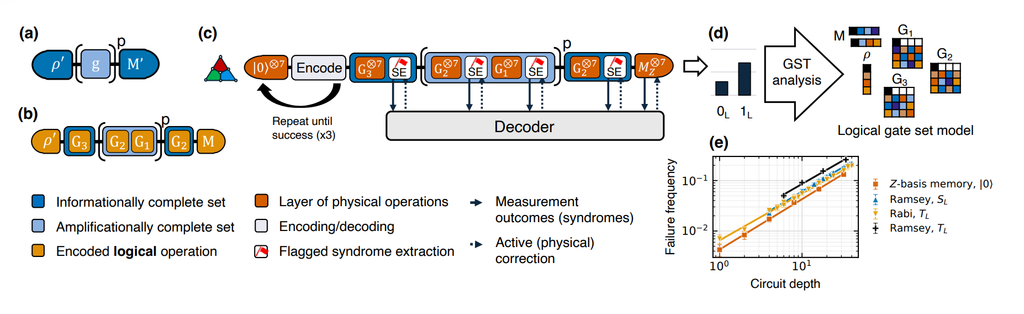
Sandia and Quantinuum Introduce Logical Gate Set Tomography to Map Fault-Tolerant Qubit Noise
Researchers from Sandia National Laboratories and Quantinuum have introduced "Logical GST," a protocol that provides the first self-consistent, full tomographic reconstruction of a universal single-qubit logical gate set. This was implemented on a single logical qubit encoded in the [[7, 1, 3]] Steane code on the Quantinuum System Model H1-1. The study confirmed the assumption that quantum error correction converts complex physical noise into simple, uncorrelated Pauli-stochastic channels, but high-shot emulation revealed small but statistically significant logical non-Markovianity and coherent logical over-rotations.
-
Quantinuum Chief Scientist Argues Physical Fidelity Trumps Gate Speed in Fault-Tolerant Scaling Race
Quantinuum's Chief Scientist, Harry Buhrman, argues that high physical fidelity in quantum gates is more critical than raw gate speed for achieving fault-tolerant quantum computing. He highlights Quantinuum's trapped-ion architecture as superior to superconducting platforms due to its low error rates, which significantly reduce the resources needed for quantum error correction. While trapped-ion systems currently have slower gate speeds, Quantinuum aims to overcome this limitation by 2029 to make its Apollo system commercially competitive.
-
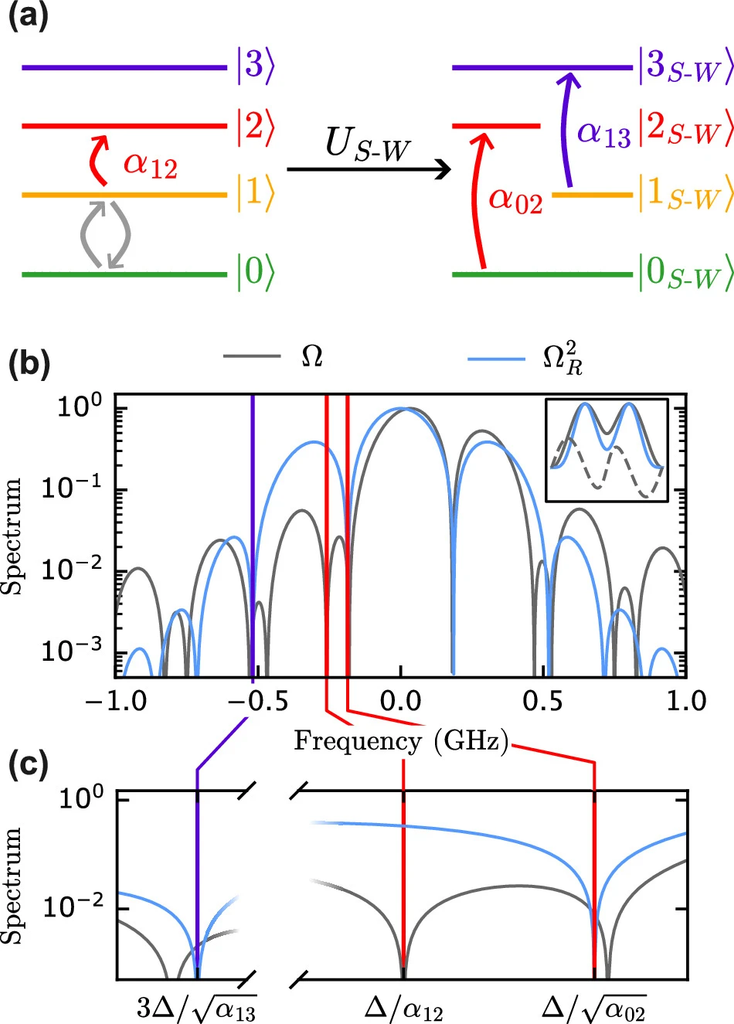
Forschungszentrum Jülich Demonstrates 6.8-Nanosecond Single-Qubit Gates with > 99.98% Fidelity via Multi-Photon Leakage Suppression
Physicists at Forschungszentrum Jülich, RWTH Aachen University, and the University of Cologne have achieved record-breaking 6.8-nanosecond single-qubit gate operations with over 99.98% fidelity on a superconducting transmon processor. Their "R2D" pulse-shaping method effectively suppresses multi-photon leakage, allowing for ultrafast gates while maintaining high fidelity. This advancement, detailed in Nature Communications, marks a significant step in quantum computing, though scaling to multi-qubit systems presents future challenges.
-
Lumen Expands Quantum Footprint with Ohio State Fiber Research and Fortinet PQC SASE Rollout
Lumen Technologies is advancing quantum technology with two new initiatives. They are partnering with The Ohio State University to research quantum network transport over commercial optical fiber, and integrating Fortinet's post-quantum cryptography into their SASE solution to enhance enterprise security. These efforts aim to overcome challenges in quantum signal transmission and protect against future decryption threats.
-
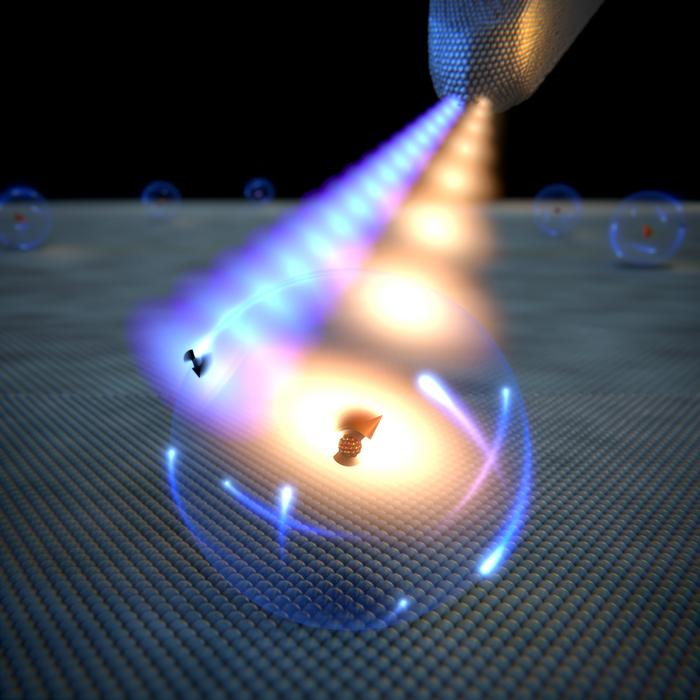
TU Delft Achieves Direct Single-Atom Nuclear Magnetic Resonance via Scanning Tunneling Microscope Probe
TU Delft physicists have achieved direct nuclear magnetic resonance (NMR) control over a single surface-adsorbed atom, specifically a 47Ti atom. This was accomplished using an Electron-Nuclear Double Resonance (ENDOR) measurement scheme within an ultra-low-temperature scanning tunneling microscope. This breakthrough allows for coherent nuclear addressing without relying on electron-nuclear spin hybridization, opening doors for atomic-scale quantum memory registers and high-dimensional qudits.
-
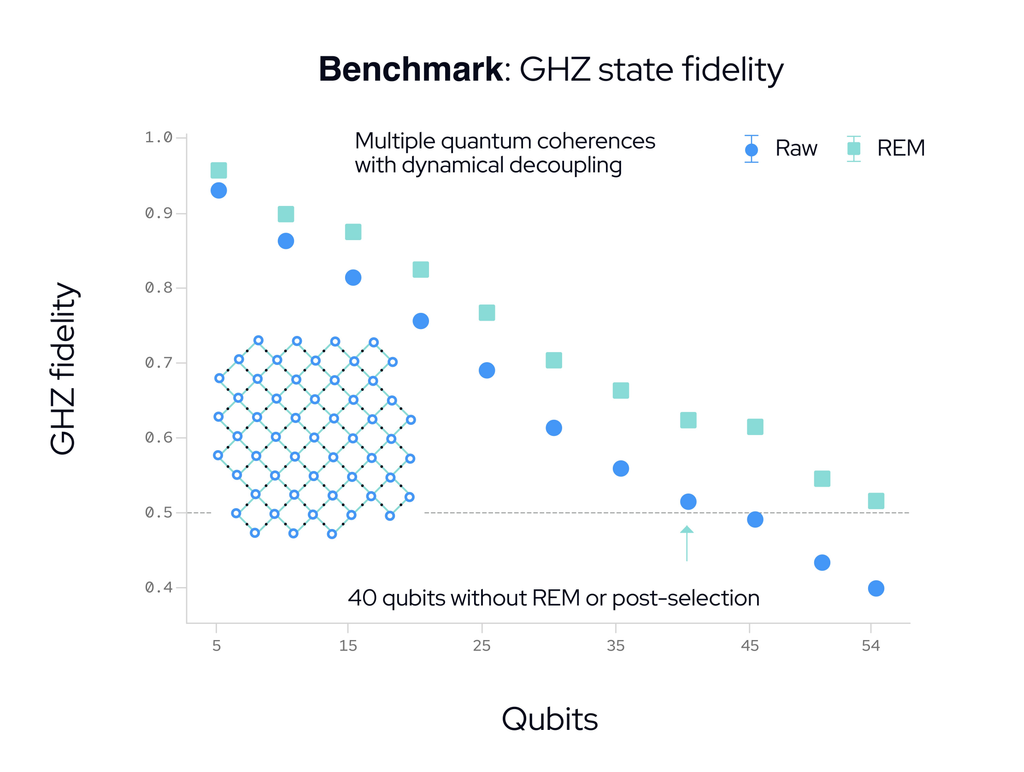
IQM Verifies Full-Chip Entanglement Across 54-Qubit Emerald Superconducting Processor
IQM Quantum Computers has successfully demonstrated full-chip entanglement across all 54 qubits of its IQM Emerald processor, a significant advancement in quantum computing. This achievement validates full-lattice coherence on commercial hardware, with measured state fidelities exceeding the genuine multipartite entanglement threshold. The company utilized an automated scheduling compiler and dynamical decoupling to achieve this milestone, highlighting both progress and the ongoing challenges in maintaining coherence in quantum systems.
-
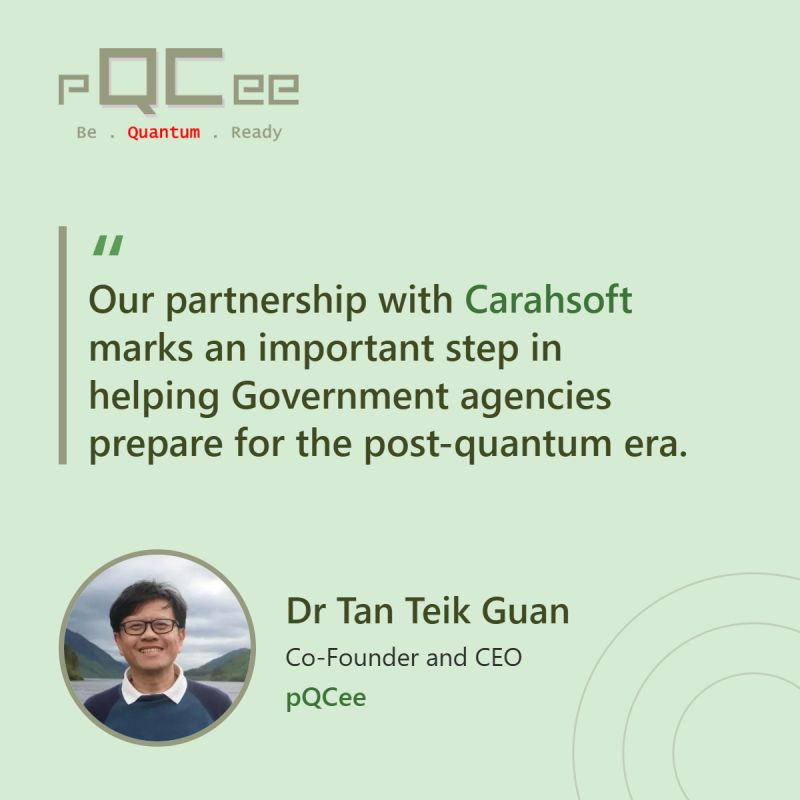
pQCee Enters U.S. Public Sector Through Carahsoft Master Aggregator Agreement
pQCee has partnered with Carahsoft Technology Corp. to provide its post-quantum cybersecurity software to the U.S. public sector. This agreement allows Carahsoft to distribute pQCee's encryption suites to various government entities through its existing networks. This collaboration addresses the need for secure, post-quantum cryptography solutions in response to Executive Order 14412, enabling government agencies to upgrade their cybersecurity without overhauling existing IT infrastructure.
-
IP Law Firm MBHB Launches Dedicated Quantum, Optics, and Semiconductors Practice Group in Chicago
MBHB, an intellectual property law firm, has launched a new Quantum, Optics, and Semiconductors Practice Group in Chicago. This group will counsel hardware developers, research universities, and government contractors, focusing on patenting challenges in quantum innovation. The practice will address issues like 35 U.S.C. § 101 eligibility and federal regulations related to public funding.
-
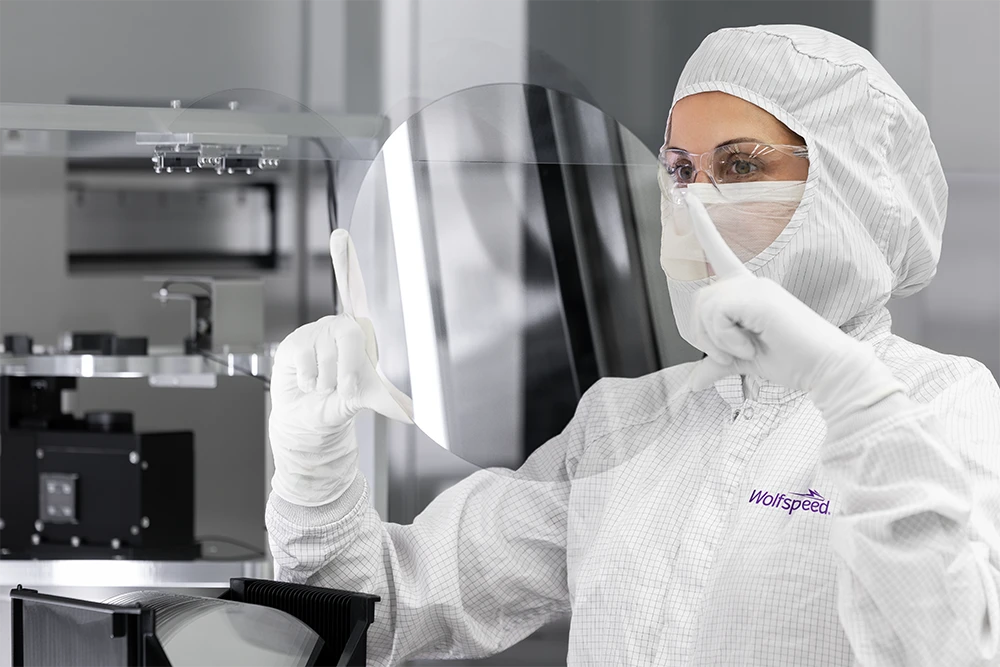
Wolfspeed Commercializes Transparent Silicon Carbide Substrates for Quantum Computing and Integrated Photonics
Wolfspeed has launched transparent silicon carbide (TSiC™) wafers for quantum computing and integrated photonics, available in 150mm and 200mm sizes, with 300mm in sampling. This technology offers a scalable platform for solid-state spin qubits and quantum photonic integration, addressing manufacturing bottlenecks faced by other materials like diamond. TSiC™'s optical and thermal properties enable monolithic integration of quantum devices, overcoming previous limitations in wafer-scale fabrication.
-
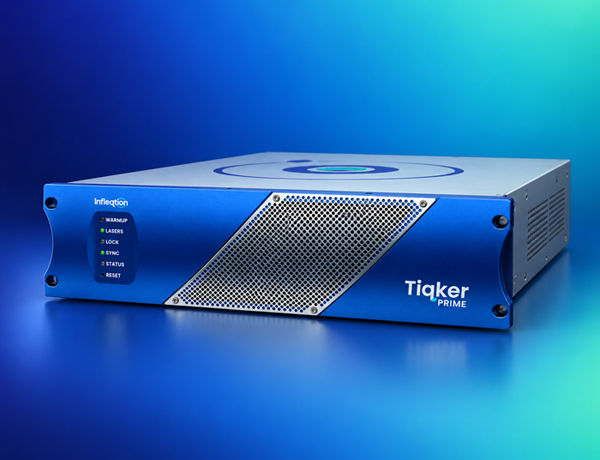
Infleqtion Operates Tiqker Optical Atomic Clock Aboard U.S. Navy Vessel During Pacific Military Exercises
Infleqtion successfully demonstrated its Tiqker optical atomic clock aboard a U.S. Navy vessel during the Maritime Big Play Pacific military exercise in October 2026. The device provided stable positioning, navigation, and timing capabilities for two weeks in a marine environment, proving its resilience against GPS-degraded or jammed conditions. This marks a significant step towards quantum-based PNT for naval operations, despite integration challenges for broader fleet adoption.
-
BTQ Technologies and QPerfect Deliver First Circuit-Level Implementation of Quantum One-Shot Signatures
BTQ Technologies and QPerfect have developed a circuit-level implementation of a quantum one-shot signature (OSS) scheme. This scheme uses fragile quantum states to ensure single-use security, eliminating the need for blockchains. Their approach streamlines previous theoretical frameworks by using a puncturable pseudorandom function and a global measurement routine for multi-bit signing.
-
BTQ Technologies Integrates QPerfect MIMIQ Quantum Emulator into qBraid Cloud Platform
BTQ Technologies has integrated its QPerfect MIMIQ quantum emulator into the qBraid Cloud Platform, offering developers access to large-scale quantum circuit emulation. This integration allows for the simulation of thousands of qubits for low-depth, weakly entangled circuits, utilizing tensor-network compression to overcome classical simulation limitations. It serves as a tool for algorithmic debugging and pre-hardware validation, enabling optimization of quantum instructions and error-correcting codes.
-
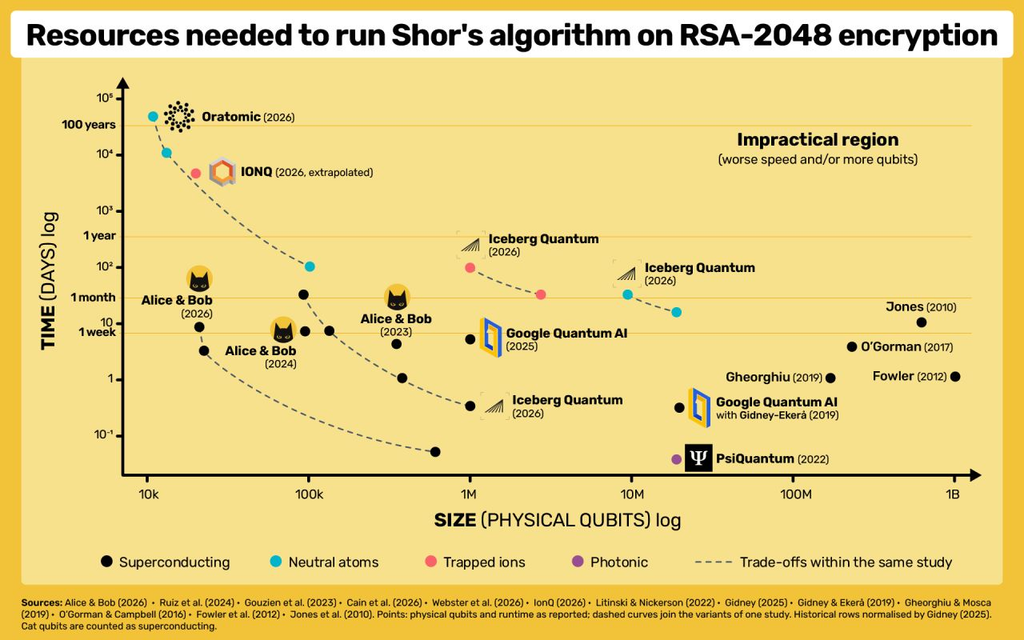
Alice & Bob Demonstrates End-to-End Shor’s Algorithm Compilation Requiring 23,000 Cat Qubits to Break RSA-2048
Alice & Bob, in collaboration with other researchers, have demonstrated that Shor's algorithm could factor an RSA-2048 integer using 22,593 physical cat qubits in 3.14 days. This reduces the physical qubit footprint by roughly a factor of 40 compared to previous estimates. The research highlights the accelerated convergence of algorithmic efficiency and bosonic error correction, reinforcing the need for critical infrastructure to migrate to post-quantum standards by 2035.
-
IDEMIA Secure Transactions Achieves Industry-First EMVCo Certification for Post-Quantum Payment Cards
IDEMIA Secure Transactions (IST) has achieved the first EMVCo certification for a payment card platform that incorporates post-quantum cryptography (PQC) and crypto-agility services. This platform allows for future-proofing against quantum threats while maintaining compatibility with current payment systems. A key challenge addressed is ensuring transaction speed with larger PQC keys and signatures, which will require POS terminals to adapt for broader commercial deployment.
-
AppViewX Launches Standalone Quantum Trust Hub to Automate Post-Quantum Cryptographic Posture Management and Remediation
AppViewX has launched its Quantum Trust Hub, a standalone platform designed to automate post-quantum cryptographic posture management and remediation. It helps enterprises and federal agencies meet PQC transition deadlines by 2030, offering agentless discovery, unified cryptographic inventory, and ITSM-driven remediation to mitigate "harvest now, decrypt later" risks. The platform addresses challenges in cryptographic migrations, including replacing hardcoded libraries and managing new post-quantum key sizes.
-
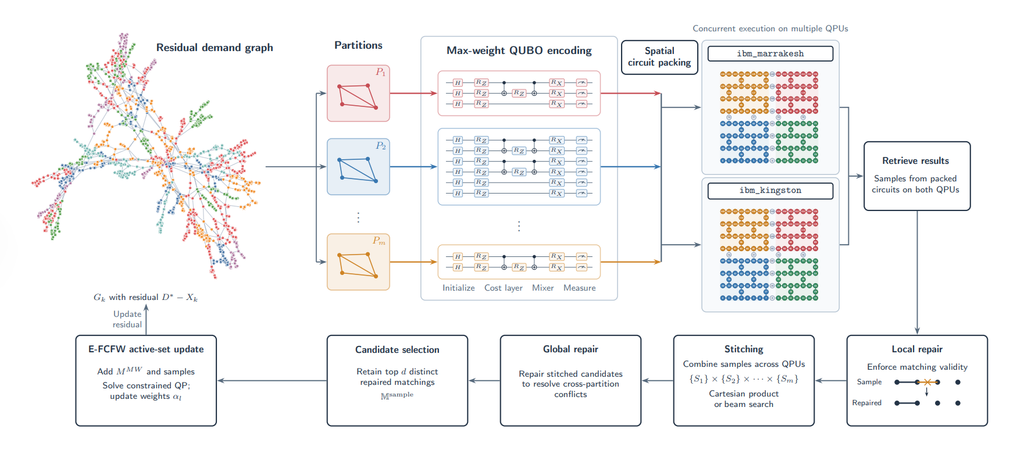
E.ON, Qoro Quantum, and NQCC Scale Constrained Optimization on IBM Heron QPUs via Distributed QAOA and Spatial Packing
E.ON, Qoro Quantum, and NQCC have successfully demonstrated a distributed hybrid optimization pipeline that reduced quantum execution time by approximately three times on IBM Quantum hardware. They achieved this by decomposing a 1,710-variable problem into 41 subgraphs, each bounded to 50 qubits, to map the PEGASE-1354 European transmission grid benchmark onto 156-qubit IBM Heron processors. This method, detailed in a preprint on arXiv, leverages shallow QAOA sampling, spectral partitioning, and greedy feasibility repair to address the Minimum Birkhoff Decomposition problem.
-
-
-
UK Space Agency and DSIT Publish Quantum Technology Roadmap for Space Targeting 2035–2040 Sovereign Capabilities
The UK Space Agency and DSIT have published a Quantum Technology Roadmap for Space, outlining strategic priorities for 2035–2040. The roadmap identifies four investment themes: assured timing, resilient sensing, sovereign communications, and long-term computing, aiming to transition prototypes into flight-qualified space systems. It also emphasizes the need to address engineering bottlenecks and proposes immediate actions to strengthen the UK's sovereign industrial capabilities in quantum space technology.
-
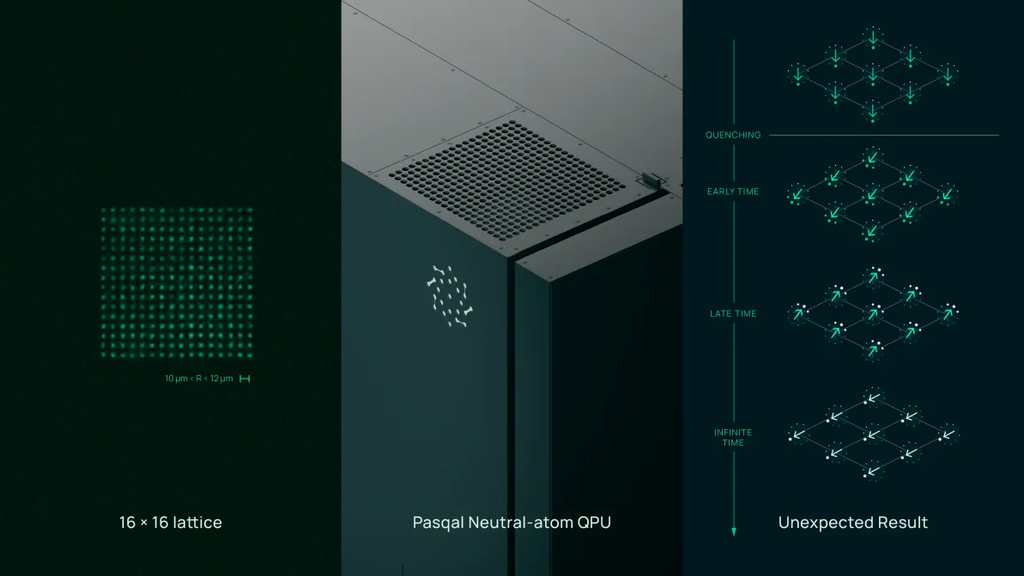
Pasqal 256-Qubit Neutral-Atom Processor Observes Unpredicted Slowdown in 2D Quantum Magnet Dynamics
Pasqal's 256-qubit neutral-atom processor observed an unexpected slowdown in a 2D quantum magnet's dynamics, diverging from classical simulations. This research, detailed in a preprint, explores the relaxation landscape of a 2D transverse-field Ising model, uncovering three distinct physical behaviors including a previously unpredicted relaxation slowdown at intermediate field strengths. The study highlights the quantum processor's ability to explore non-equilibrium condensed-matter regimes beyond the limits of classical tensor-network simulations.
-
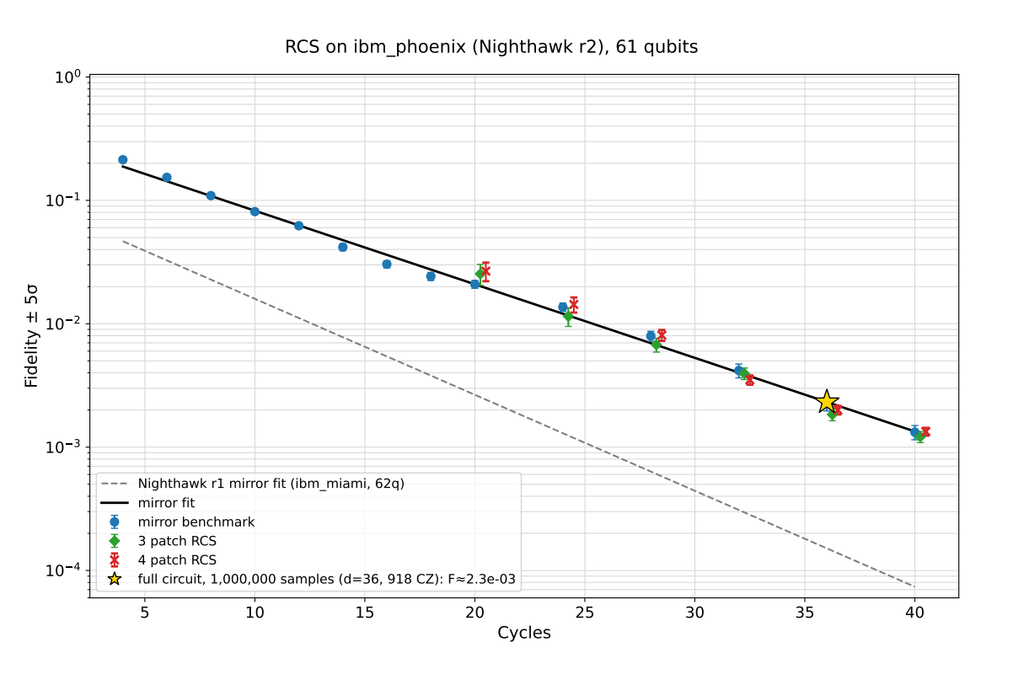
BlueQubit Benchmarks Quantum Computational Advantage in Random-Circuit Sampling on IBM Nighthawk r2 Hardware
BlueQubit, in collaboration with EPFL and the XPRIZE Foundation, has demonstrated quantum computational advantage using IBM Quantum's 120-qubit ibm_phoenix processor. Their random-circuit sampling experiment, involving 61 active qubits, achieved a fidelity that would take over a century for classical supercomputers to replicate. This study highlights significant architectural improvements in IBM processors and validates the classical hardness of their quantum benchmarks.
-
Gothenburg and Chalmers Researchers Develop Modular Graph Neural Decoder for Surface Code Memory and Lattice Surgery
Researchers from the University of Gothenburg and Chalmers University of Technology have developed a modular neural decoder for surface code quantum error correction (QEC). This decoder demonstrates superior performance compared to traditional methods and is capable of adapting across different hardware architectures, noise profiles, and multi-patch logical operations. Its efficient design, inspired by the renormalization group, allows for training on a single commercial GPU and offers portability advantages for fault-tolerant computing.
-
Yonsei University Researchers Develop Mamba State-Space Neural Decoder to Enable Real-Time Quantum Error Correction
Researchers at Yonsei University have developed a Mamba-based neural decoder for quantum error correction, significantly reducing computational complexity from O(d4) to O(d2) compared to Transformer-based models. This new decoder matches the accuracy of Transformer models like AlphaQubit but eliminates the quadratic self-attention bottlenecks, making real-time feedback on quantum hardware possible. The Mamba decoder shows superior performance in real-time conditions and has implications for advancing fault-tolerant quantum computing, though practical implementation requires overcoming edge-compute limitations.
-