
News
Company, funding, product and policy news from across the quantum industry, as it happens.
-
-
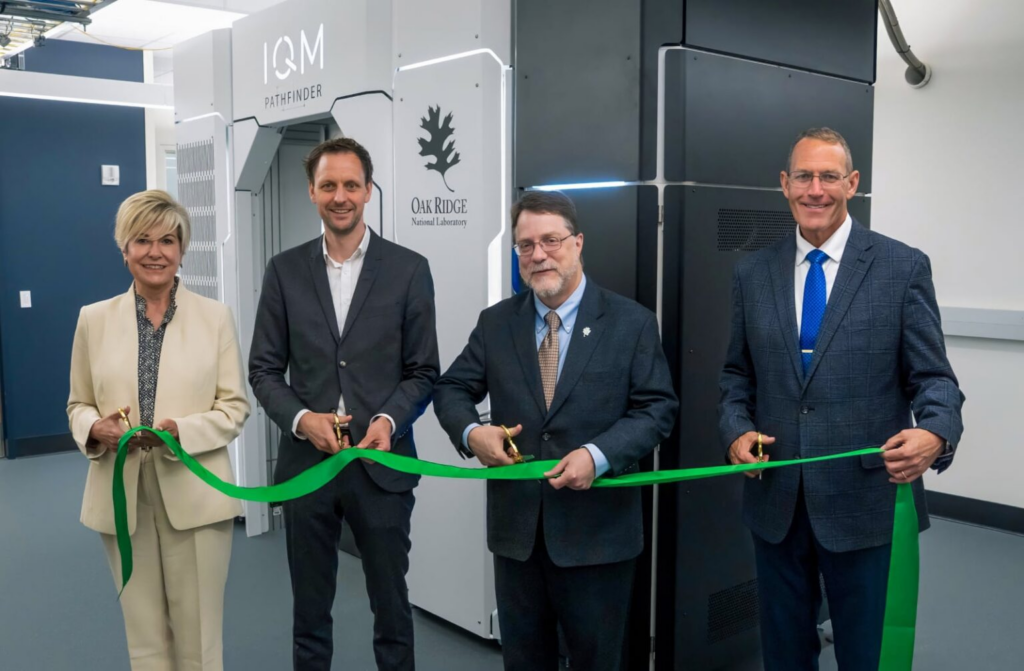
IQM Deploys Its First U.S. Quantum Computer at Oak Ridge National Laboratory
IQM Quantum Computers has deployed Pathfinder, a 20-qubit system, at Oak Ridge National Laboratory (ORNL), marking its first U.S. installation and ORNL’s first commercially procured quantum computer. This on-premises deployment allows ORNL to integrate the quantum machine directly with its Frontier supercomputer, fostering hybrid quantum-classical research in materials, chemistry, and AI. This expands IQM’s North American presence and its global lead in on-premises quantum computer sales, ahead of its $1.8 billion Nasdaq listing.
-
UK Government Launches £10 Million ($13.43 Million USD) National Quantum Standards Network
The UK Government has launched the National Quantum Standards Network (QSN) with a £10 million investment, led by the National Physical Laboratory (NPL), to establish unified technical standards for quantum hardware and software, boosting export potential and commercial adoption. Operating through three pillars—industry support, education, and international leadership—the initiative integrates key partners like BSI, NQCC, and NCSC, and aligns with the UK’s £2 billion National Quantum Strategy, which aims to generate £212 billion and 100,000 jobs by 2033.
-
EigenQ and TD SYNNEX Partner to Secure AMD EPYC Server Environments Against Post-Quantum Threats
EigenQ has partnered with TD SYNNEX to integrate post-quantum cryptographic security into AMD EPYC server environments, targeting high-assurance sectors like defense, critical infrastructure, and government. The collaboration combines EigenQ’s quantum-safe trust infrastructure with AMD’s hardware security to provide scalable, non-disruptive migration pathways against emerging quantum threats, with TD SYNNEX managing commercial distribution and partner enablement.
-
Atom Computing Reaches $300 Million Funding Milestone to Deploy Fault-Tolerant Neutral-Atom Hardware
Atom Computing has secured over $300 million in funding, including a $100 million Series C investment and a $100 million allocation from the U.S. Department of Commerce. This capital will accelerate the commercial manufacturing and deployment of their fault-tolerant neutral-atom quantum computing platforms, following their successful demonstration of quantum error correction. The company plans to deliver on-premises hardware installations, including a partnership with Microsoft, and continue refining their technology.
-
Zapata Quantum Secures OTCQB Venture Market Uplisting to Expand Liquidity Foundations
Zapata Quantum has uplisted to the OTCQB Venture Market under ticker ZPTA to boost liquidity and transparency, positioning itself as a rare pure-play quantum software firm with over 60 patents and recognition from DARPA and Nature Biotechnology. Led by CEO Sumit Kapur, the company develops hardware-agnostic software that integrates quantum subroutines into enterprise HPC pipelines, targeting commercial and defense applications while pursuing a future national exchange listing.
-
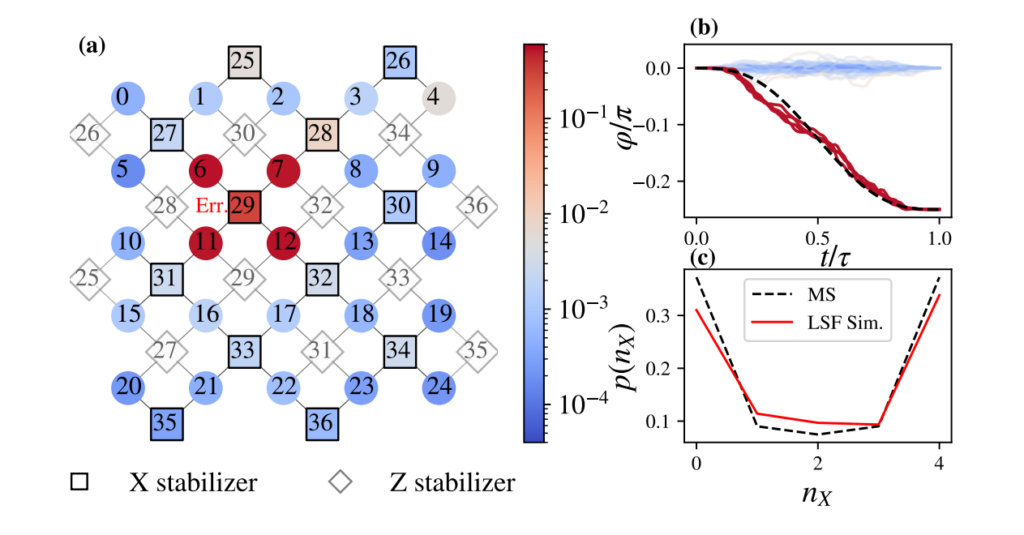
Quantum Art Verifies Fault-Tolerant Thresholds for Trapped-Ion Multi-Qubit Gates
Quantum Art has released numerical simulations verifying that its multi-qubit gate architecture achieves a fault-tolerance threshold at the 1% level for trapped-ion quantum processors, demonstrating that error propagation remains localized within gate connectivity and does not cause catastrophic spread. This validation supports the development of its upcoming 1,000-qubit Perspective platform and high-density Landscape series QPUs, enabling circuit depth compression and reduced hardware footprints through simultaneous entangling operations.
-
Emergence Quantum Secures Strategic Investment and Venture Partnership from Serendipity Capital
Emergence Quantum has secured a strategic investment and partnership from Serendipity Capital, integrating its team of 25 scientists and engineers into the investor’s deep-tech ecosystem to co-develop spin-out companies and hardware products in quantum computing, semiconductors, and cryogenics, while gaining long-term capital runway to expand commercial contracts with Tier-1 defense, sensing, and quantum computing providers.
-
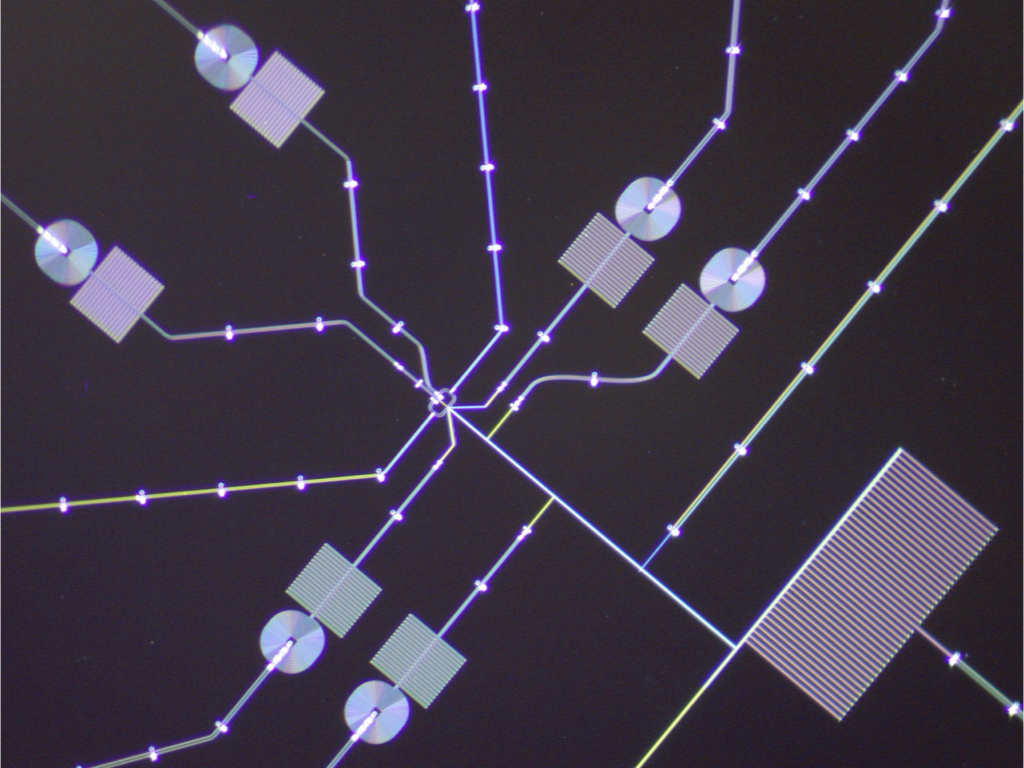
EeroQ Advances Its Electron on Helium (eHe) Qubit Technology
EeroQ has published a paper in Nature Physics demonstrating the first-ever physical realization of an electron-on-helium (eHe) qubit, achieving strong coupling between a microwave photon and an electron to enable qubit readout. The company plans to next demonstrate gate operations on small chips before scaling rapidly to over 10,000 qubits, leveraging CMOS compatibility and a strategy of perfecting qubit quality before quantity. This milestone advances a modality that promises long coherence times, fast gates, and small qubit size.
-
Classiq and Rolls-Royce Embed Quantum Linear Solvers into Iterative CFD Workflows
This partnership between Classiq and Rolls-Royce demonstrates a hybrid quantum-classical CFD framework where a Quantum Linear Solver replaces the core linear step of an iterative fluid dynamics loop, showing that industrial engineering pipelines can tolerate relaxed quantum precision in exchange for massive hardware resource reductions. By introducing an approximate Cheb-LCU algorithm with compressed coefficient smoothing that reduces single-qubit gate counts by over an order of magnitude, the work establishes a practical template for early fault-tolerant quantum utility in aerospace simulation well before perfect quantum solvers are realized.
-
Quandela Selected for Stage A of DARPA’s Quantum Benchmarking Initiative
Quandela has been selected for Stage A of DARPA’s Quantum Benchmarking Initiative (QBI) to assess whether its hybrid Spin-Optical Quantum Computing (SPOQC) architecture can achieve utility-scale operation by 2033. Over six months, the company will deliver a system concept report detailing the feasibility of its fault-tolerant hardware, which merges linear-optical photons with semiconductor spin qubits to reduce component counts and enable error correction via non-local optical links. The QBI program provides an objective multi-stage validation pipeline to verify hardware viability beyond lab-scale metrics.
-
Quantum Catalyzer Partners with Roadrunner Venture Studios to Incubate Quantum Early-Stage Ventures
Quantum Catalyzer has partnered with Roadrunner Venture Studios to accelerate the creation of quantum technology startups by combining Q-Cat’s deep-tech diligence and IP validation with Roadrunner’s venture studio infrastructure, bridging the gap between lab breakthroughs and scalable market entries. This collaboration, which focuses on quantum sensing and operates out of College Park, Maryland, aims to embed rigorous scientific evaluation into early-stage company formation to de-risk hard-tech innovations. The partnership establishes a dedicated proving ground for domestic quantum commercialization through operational mentorship, seed capital, and specialized validation.
-
Qunnect Launches ABQ-Net as the First Open-Access Entanglement Network in the United States
Qunnect has launched ABQ-Net in Albuquerque, New Mexico, as the first open-access entanglement-based quantum network testbed in the United States, featuring two active nodes on commercial telecom fiber that allow startups and companies to test quantum security, distributed processing, and sensing technologies. The network uses Qunnect’s Carina system for room-temperature entangled photon generation and phase stabilization, connecting their downtown facility with the Center for Integrated Nanotechnologies, while Aliro Quantum is already deploying its quantum security services on the infrastructure as part of New Mexico’s broader $300 million quantum economy initiative.
-
SEEQC Secures Role in CHIPS Act-Funded NORDTECH Quantum Scaling Project
SEEQC has joined the CHIPS Act-funded NORDTECH program as a subcontractor to help transition high-coherence superconducting qubit manufacturing from academic cleanrooms to a 300mm industrial silicon wafer fabrication line, using advanced refractory materials like tantalum and tantalum nitride. The company is responsible for building a high-throughput cryogenic qubit evaluation platform and developing one of the industry’s first standardized quantum Process Design Kits integrated into the Cadence EDA ecosystem to support hybrid, multi-tier quantum computing systems.
-
Phasecraft Appointed by ARPA-E to Advance Catalyst Simulation Frameworks for Hydrogen Electrolysis
Phasecraft Inc. has secured a $4.5 million ARPA-E contract to develop hardware-adaptive quantum simulation algorithms for discovering alternative catalysts in hydrogen electrolysis, aiming to reduce reliance on scarce platinum group metals. Partnering with Johnson Matthey, Harvard University, and QuEra Computing, the project leverages Phasecraft’s compressed gate-decomposition methods to achieve massive efficiency improvements over baseline quantum algorithms. This award is part of a $37 million federal QC3 program pushing for a 100× computational speedup over classical supercomputing to address critical energy infrastructure bottlenecks.
-
-
-
DigitalXForce Launches Enterprise TRiSCM Architecture Featuring Dedicated Quantum Risk Center
DigitalXForce has launched its Enterprise TRiSCM platform, a unified operating layer for multi-tenant compliance, automated governance, and systems resilience that moves beyond traditional periodic GRC frameworks. Key features include the Q-ROC™ dashboard for tracking cryptographic vulnerabilities and post-quantum readiness, as well as an AI TRiSCM module for governing LLMs and detecting unauthorized AI integrations. The platform offers continuous control assurance, automated compliance tracking, and real-time risk monitoring through a centralized board dashboard.
-
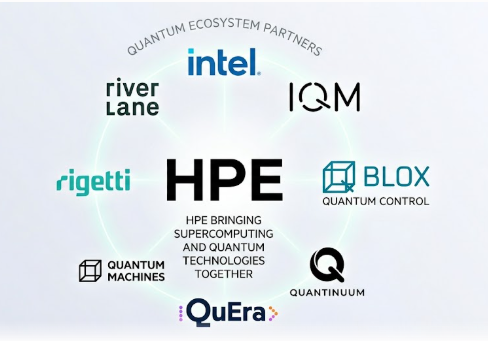
Hewlett Packard Enterprise (HPE) Signals Hybrid Quantum Push with Eight-Partner Infrastructure Initiative
Hewlett Packard Enterprise (HPE) has announced an expansion of its quantum computing strategy by securing partnerships with eight companies spanning quantum hardware modalities (Intel, IQM, Rigetti, Quantinuum, QuEra), control systems (Qblox, Quantum Machines), and error correction (Riverlane), aiming to integrate its HPE Cray HPC platform as a central systems integrator for hybrid classical-quantum computing. This vendor-agnostic approach allows HPE to evaluate architectural trade-offs without committing to a single modality, while providing enterprise validation for the quantum startups involved, though the challenge remains moving these collaborations into standardized, commercially available product offerings.
-
Atom Computing and Phasecraft Partner on Material Science Algorithms
Atom Computing, a neutral-atom quantum hardware company, has partnered with quantum software specialist Phasecraft to adapt its hardware-optimized algorithms for accelerating materials discovery in clean energy applications like batteries and solar technology. The collaboration will combine Atom’s scalable systems featuring over 1,200 physical qubits with Phasecraft’s tailored software to bridge the gap between current quantum systems and practical commercial utility in materials science.
-
AIX Global Innovations Discloses Software-Governed Fault-Tolerant Quantum Computing Campaign on Cloud-Accessible IBM Hardware
AIX Global Innovations reported an eight-week fault-tolerant quantum computing campaign on cloud-accessible IBM Heron processors using its Seed IQ software platform, demonstrating surface-code error correction, universal Clifford+T operations, and zero detected logical errors across 45,000 circuits. The company also reported chemically accurate simulations of H₂, LiH, H₂O, and BeH₂ molecular systems, including sub-wavenumber precision for BeH₂, while achieving consistent results across multiple IBM quantum processors through its software-governed “d=1 inversion” approach.
-
UK and Japan Ratify Frontier Technology Partnership to Align Quantum Computing Initiatives
The UK and Japan have ratified the non-binding Frontier Technology Partnership to align their quantum computing initiatives, integrating UK research with Japanese hardware manufacturing and committing to joint HPC integration, testbeds, and supply chain security. This follows their 2025 Quantum Memorandum of Cooperation and includes ORCA Computing’s landmark export of a quantum system to a Japanese corporation, marking a shift toward commercial deployment.
-
Quantum Motion Establishes Silicon CMOS Hardware Base within Discovery District Maryland
Quantum Motion has established an engineering facility in Maryland’s Discovery District as part of the Capital of Quantum (CoQ) complex, leveraging standard silicon CMOS fabrication to develop spin-qubit quantum processors and integrate with U.S. federal research and defense infrastructure. The site will support DARPA’s Quantum Benchmarking Initiative through rigorous hardware evaluation and benefit from a $1 billion public-private partnership aimed at advancing scalable, fault-tolerant quantum technologies.
-
QuEra Outlines 2028 Roadmap for 256-Logical-Qubit “Libra” System and Expanded AWS Cloud Partnership
QuEra Computing and AWS have expanded their partnership to launch the “Libra” fault-tolerant quantum system by 2028, targeting 256 logical qubits with a 10⁻⁶ logical error rate using reconfigurable neutral-atom arrays. The system will be natively integrated into Amazon Braket, enabling hybrid quantum-classical workflows and building on peer-reviewed research from Harvard and MIT.
-
-
-
IBM is Using AI to Help Identify New Quantum Error Correction Codes
IBM has developed OpenEvolve, an open-source, LLM-guided evolutionary AI framework that accelerates the discovery of quantum error correction (QEC) codes by navigating vast algebraic spaces. The system identified 465 new codes—including high logical qubit count, hardware-optimized, and balanced variants—demonstrating diverse trade-offs in physical qubits, logical qubits, and error tolerance, with promising implications for fault-tolerant quantum computing.
-
-
-
Who’s News: Strategic Leadership Appointments at Diraq, IQM Quantum Computers, EigenQ, and BosonQ Psi
Diraq, IQM Quantum Computers, EigenQ, and BQP have all announced significant leadership appointments. Diraq appointed Scott A. McGregor as Chairman, IQM added Barbara Venneman to its Board, EigenQ named Rika Nakazawa as Chief Growth Officer, and BQP appointed Craig Marcinkowski to its Board of Directors, all aimed at bolstering their strategic growth and market expansion.
-
QuiX Quantum Integrates with Baden-Württemberg Networks to Expand European Photonics Corridor
QuiX Quantum has joined QuantumBW and Photonics BW in Baden-Württemberg, Germany, to link the Netherlands’ integrated photonics supply chain with Germany’s high-tech manufacturing. This collaboration aims to accelerate the industrialization of scalable photonic quantum architectures, with QuiX Quantum also delivering a universal photonic quantum computer to the German Aerospace Center’s Quantum Computing Initiative (DLR QCI) in Ulm. The company’s system-level engineering focuses on mitigating vulnerabilities in light-based information processing through innovations like the Feed-Forward Control Unit (FFCU) and coherent photon distillation gates to enhance quantum computing performance.
-
WISeKey Deployments Expand Low-Earth Orbit Cybersecurity Constellation via SpaceX Rideshare
WISeKey has successfully launched its WISeSat 4.0 satellite via SpaceX, expanding its cybersecurity constellation in low-Earth orbit. This satellite integrates a QS7001 cryptographic chip and Root of Trust to enable post-quantum cryptography and support decentralized SEALCOIN.AI digital wallets for secure machine-to-machine transactions. This deployment further advances the Quantum Spatial Orbital Cloud (QSOC) initiative, aiming for a 100-satellite sovereign security network by 2033, with WISeSat providing infrastructure and SEALSQ managing cloud services.
-