
News
Company, funding, product and policy news from across the quantum industry, as it happens.
-
-
Oracle and Classiq Integrate Quantum AI Agents with OCI for 36-Qubit Portfolio Optimization HPC Simulation
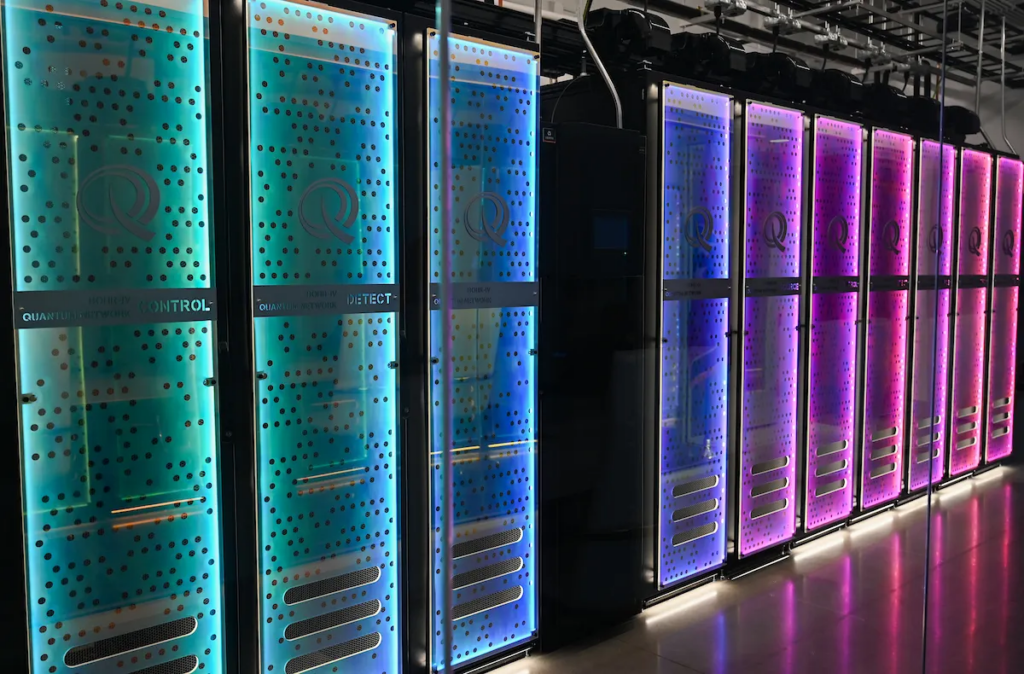
Oracle and Classiq have successfully integrated quantum AI agents with Oracle Cloud Infrastructure (OCI) for a 36-qubit portfolio optimization simulation. This collaboration demonstrates how AI can generate complex quantum code from abstract prompts, which is then compiled and executed on OCI’s high-performance computing resources. The system simulated a 12-asset portfolio optimization problem, achieving results comparable to classical benchmarks and proving the viability of AI-automated quantum software development.
-
-
-
D-Wave Systematically Rebuts Flatiron Claims, Reaffirming Beyond-Classical Simulation Milestones
D-Wave Quantum Inc. has refuted Flatiron Institute’s claims that classical workstations can replicate quantum annealing state calculations, defending its “beyond-classical” simulation milestones. D-Wave argues that the classical approach fails to scale for complex problems, particularly highlighting its inability to handle certain topologies, capture comprehensive data, and perform under strong coupling inefficiencies. They used their Advantage2 quantum processor to demonstrate where classical algorithms fail, especially with complex spin glasses and higher-dimensional problems.
-
Business Finland Allocates €2.79 Million ($3.25 Million USD) to Underwrite QMill and ESL Shipping Industrial Quantum Simulation Projects
Business Finland has granted €2.79 million to QMill and ESL Shipping for industrial quantum simulation projects. The funding supports ESL Shipping’s Smart Fleet Optimization software and QMill’s Supernova algorithm design engine. This initiative aims to integrate quantum-classical hybrid optimization into real-world industrial applications, particularly in maritime logistics, to enhance efficiency and establish Finland as a leader in quantum technology.
-
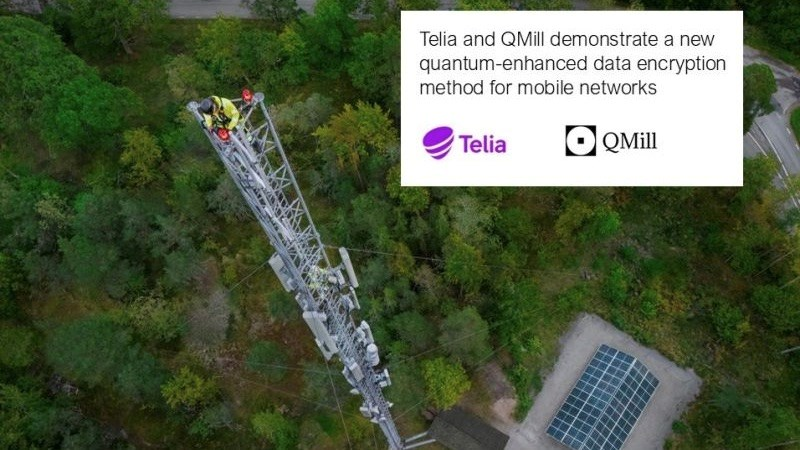
Telia Finland and QMill Demonstrate Quantum-Assisted Message Encryption Across Standard Mobile Networks
Telia Finland and QMill have successfully demonstrated quantum-assisted message encryption over standard mobile networks, differentiating it from QKD by operating on existing infrastructure. This software-based solution uses NISQ-era algorithms to create quantum-resilient encryption, either as a standalone application or integrated with existing classical standards. This collaboration aims to provide quantum-safe data protection for critical infrastructure and enterprise data across the Nordic and Baltic regions.
-
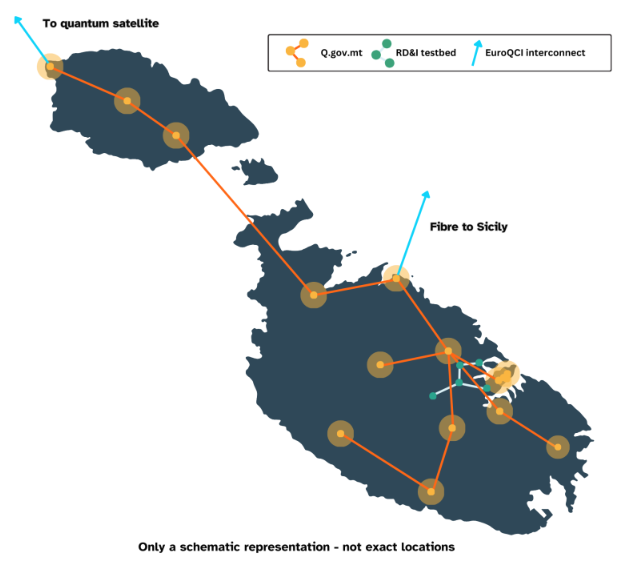
Luxquanta and Merqury Cybersecurity Publish White Paper on Malta’s PRISM EuroQCI Multi-Sector Quantum-Safe Network Deployment
Luxquanta Technologies S.L. and Merqury Cybersecurity have released a white paper detailing Malta’s PRISM EuroQCI, a multi-sector quantum-safe network deployment. This initiative, part of the broader European Quantum Communication Infrastructure, secures five critical sectors: national government, law enforcement, healthcare, research and education, and commercial data hubs. The paper showcases real-world data on how Continuous-Variable Quantum Key Distribution (CV-QKD) hardware and enterprise Key Management System (KMS) software integrate to protect data on active, multi-tenant commercial telecom networks.
-
QuantumCT, UConn, and Yale Launch Industry-Aligned Phase 2 Pilot Projects to Accelerate Applied Research
QuantumCT, a partnership between UConn and Yale, has launched four Phase 2 Pilot Projects to advance quantum mechanics research into commercial applications. These projects, backed by financial support and collaborations with industry leaders like Microsoft, Pfizer, and RTX, focus on quantum-secure communications, optimization for logistics, machine learning for drug safety, and constrained optimization algorithms. The initiative aims to attract federal funding and retain specialized technical talent within Connecticut by aligning academic research with industrial needs.
-
D-Wave Secures Year 2 Microelectronics Commons Funding for Scalable Superconducting Qubit Fabrication
D-Wave Quantum Inc. and its subsidiary Quantum Circuits, LLC have secured Year 2 funding of $5.4 million for the SQFab project, part of a broader $25.53 million NORDTECH initiative, to advance scalable superconducting qubit fabrication. This federal investment, under the U.S. CHIPS and Science Act, aims to transition laboratory-grade nanofabrication into industrial manufacturing processes for quantum processing units, fostering a public-private consortium to accelerate domestic semiconductor prototyping.
-
Terra Quantum and Axiom Intelligence Corp 1 Sign Definitive Business Combination Agreement at $3.5 Billion Valuation
Terra Quantum AG and Axiom Intelligence Acquisition Corp 1 have agreed to a business combination, valuing the combined entity at $3.5 billion. The merger, expected to close in the second half of 2026, will result in Terra Quantum trading on Nasdaq under “TQ,” with existing Terra Quantum shareholders retaining a 92% stake. This move aims to fund growth in R&D, platform scaling, sales, acquisitions, and geographic expansion, leveraging Terra Quantum’s full-stack quantum technology platform.
-
Terra Quantum and Merqury Deploy Live Post-Quantum Secure Optical Network Link in Malta
Terra Quantum has successfully deployed a quantum-secure optical network in Malta, using their Quantum Key Distribution (QKD) hardware on Melita’s existing fiber infrastructure. This project, co-funded by the EU, establishes a post-quantum secure data link between two data centers, demonstrating the viability of QKD over active telecom lines. The system integrates with Merqury’s Key Management System and represents a significant step towards a quantum-safe communication backbone across Europe.
-
U.S. Air Force Deploys Terra Quantum Software to Test Post-Quantum Cryptography in Contested Networks
Terra Quantum has provided the U.S. Air Force with a quantum-secure communications simulation platform, developed through the SBIR program, to test post-quantum cryptography in challenging network environments. This software allows military network architects to evaluate new cryptographic libraries like Kyber and SPHINCS+ under simulated combat conditions, ensuring secure communication even with degraded network performance. This deployment marks a significant step in moving post-quantum defense from theoretical concepts to practical, engineering-focused capability development for critical infrastructure protection.
-
Poznan University of Technology Deploys On-Premises IQM Quantum Computer to Core Academic Campus
Poznan University of Technology (PUT) has deployed IQM Quantum Computers’ Radiance R1 system, an on-premises quantum computer, marking Poland’s second operational IQM system. This move provides PUT with direct control over the hardware, enabling advanced research and integration with classical computing. The university will also launch new quantum technology curricula and outreach programs, positioning Poland as a key engineering hub in Central and Eastern Europe.
-
Quanscient Secures €10 Million ($11.6 Million USD) Series A to Expand Cloud-Native Multiphysics and Quantum Simulation Platform
Quanscient has secured €10 million ($11.6 million USD) in Series A funding to expand its cloud-native multiphysics and quantum simulation platform, aiming to accelerate hardware engineering by providing faster and more efficient simulation tools. This investment will enable global expansion and further development of its technology, which integrates various physics simulations into a scalable cloud framework, significantly reducing computation times and supporting advanced AI and quantum algorithm integration. The company plans to target the automotive, aerospace, and advanced energy sectors, helping clients minimize physical prototyping and de-risk complex R&D projects.
-
GlobalPlatform Launches Pavona Open Silicon Distribution Featuring Production-Grade Post-Quantum Cryptography
GlobalPlatform has launched Pavona, an open-source silicon distribution providing modular, certification-ready IP blocks and reference designs for secure hardware systems. This platform introduces a composable framework with a standardized hardware root of trust and integrated post-quantum cryptography accelerators, offering significant performance improvements for embedded systems. Pavona aims to establish a community-governed hardware security foundation, aligning with FIPS 140-3 and Common Criteria, to reduce integration barriers for multi-vendor SoC projects.
-
Aegis Critical Energy and Quantum eMotion Secure First U.S. Deployment for Quantum-Safe Energy Storage Platform
Aegis Critical Energy, in partnership with SEETEL New Energy and Quantum eMotion Corp., has secured its first U.S. order for seven PWR Flex 261Q quantum-secured energy storage units. This marks the first North American commercial deployment of an energy platform with built-in, hardware-based quantum cryptographic protections, utilizing Quantum eMotion’s Quantum Random Number Generator (QRNG) to secure communication and control data. This strategic deployment aims to protect decentralized power grids and industrial hardware from cyber threats, with the PWR Flex 261Q serving as a scalable solution for multi-tenant industrial parks, remote defense facilities, and critical enterprise sites.
-
Qubic Secures Commercial Milestone with Quantum Machines Agreement for Cryogenic Amplifiers
Qubic has signed a commercial agreement with Quantum Machines to integrate its Kinetic Inductance Traveling Wave Parametric Amplifier (KI-TWPA) into Quantum Machines’ cryogenic technology. This partnership aims to enhance quantum-classical control planes by providing near-quantum-limited microwave signal amplification while significantly reducing thermal output compared to traditional amplifiers. Qubic is also collaborating with the Israeli Quantum Computing Center (IQCC) to validate the KI-TWPA across various quantum architectures, addressing a major bottleneck in dilution refrigerator capacity and enabling the scaling of qubit densities.
-
-
-
Emmanuel Macron Announces an Additional €1 Billion ($1.16B USD) in Funding for France’s Quantum Plan
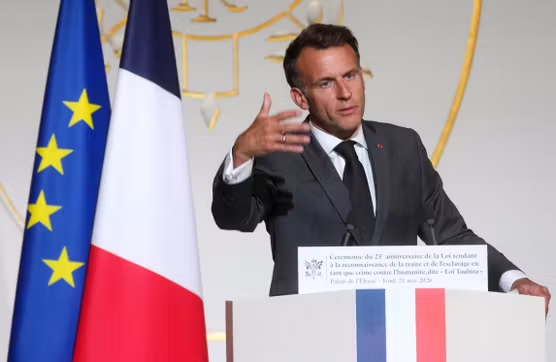
French President Emmanuel Macron announced an additional funding of €1 Billion ($1.16B USD) for the country’s Quantum Plan. The Quantum Plan was original funded at €1.8 billion for the period 2021-2025 and then supplemented in 2024 by €500 million from a program to support public procurement in the defense sector. This new announcement is in addition to those earlier fundings.
-
Xanadu Establishes a Synthetic At-the-Market Equity Facility to Raise up to $300 Million
Xanadu Quantum Technologies (Nasdaq/TSX: XNDU) has established a synthetic at-the-market equity facility allowing the company to raise via private placements up to $300 million over the next three years in Class B subordinate voting shares.
-
EPB and University of Tennessee at Chattanooga Launch $6.8 Million Quantum Workforce Initiative
EPB and UTC are partnering on a $6.8 million quantum workforce initiative to expand academic infrastructure, fund research, and build commercialization pathways, leveraging Chattanooga’s fiber-optic grid and the EPB Quantum Center. The initiative aims to capture economic value from quantum technology commercialization, potentially generating $1.1 billion in community benefits over ten years, by expanding faculty, scaling educational modules, and directing research towards industry use cases.
-
Flatiron Institute Tensor Network Algorithm Advances Classical Simulation, Challenging Boundary of Quantum Advantage
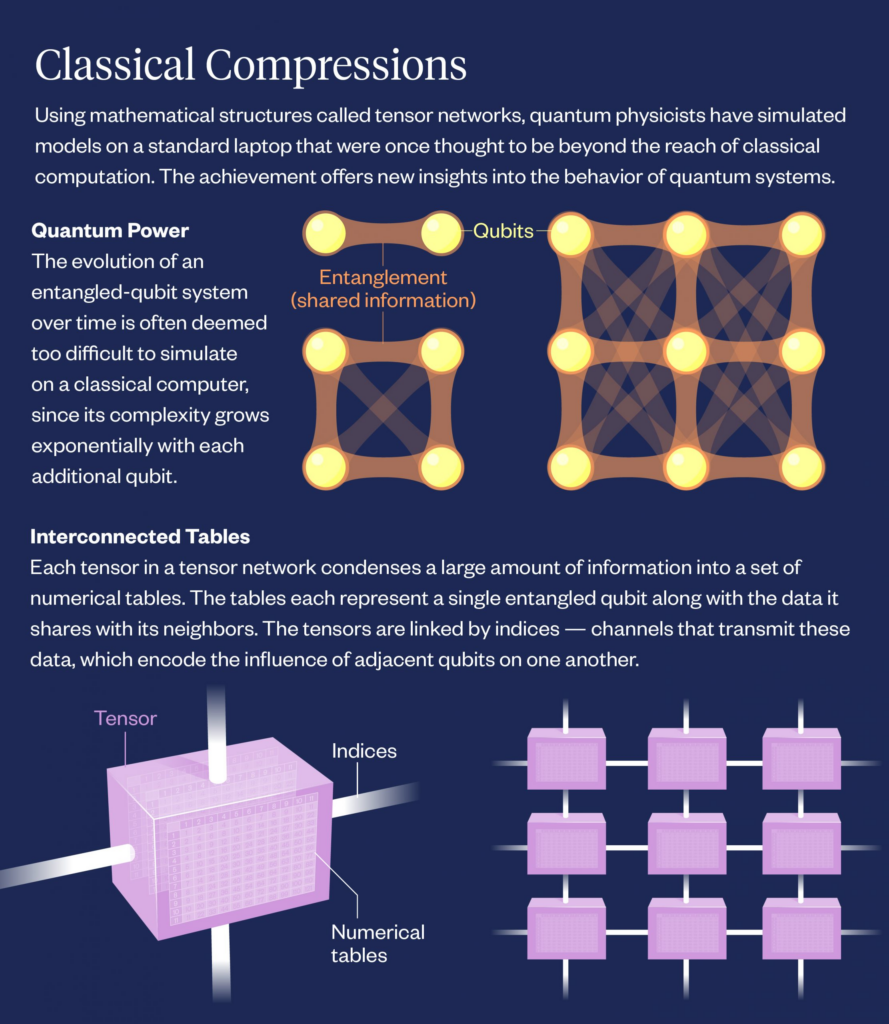
Researchers at the Flatiron Institute developed a classical algorithm that simulates complex quantum dynamics, disproving D-Wave’s 2025 claim of quantum supremacy. The algorithm uses a 3D tensor network architecture and belief propagation to efficiently compute quantum state progressions on standard computers, matching the accuracy of D-Wave’s quantum annealer. This framework provides a benchmark for evaluating the performance of near-term quantum processors and determining when quantum hardware is truly needed for simulation workloads.
-
Alice & Bob Secures NVentures Backing and Backs Expanded €1 Billion French Plan Quantique
Alice & Bob secured investment from NVentures, expanding their Series B funding round after France’s increased investment in Plan Quantique. This accelerates their hardware development using cat-qubit architecture and integration with NVIDIA’s GPU supercomputing via CUDA-Q, positioning them as a key player in Europe’s quantum infrastructure. They are also one of five hardware developers selected to perform under the PROQCIMA procurement framework.
-
Pasqal Benchmarks Error-Detected Logical Qubits Against Physical Counterparts Using Quantum Kernels
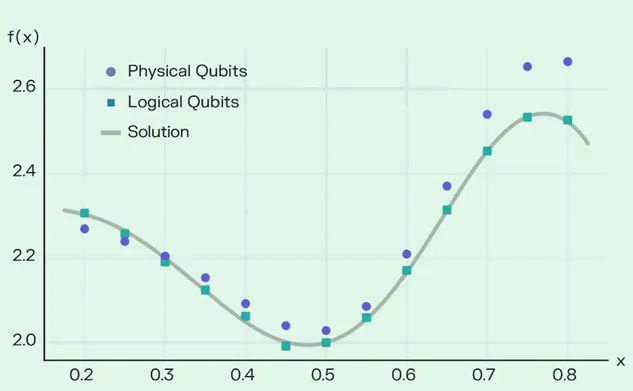
Pasqal’s research demonstrates a significant advancement in neutral-atom quantum computing, showcasing a 50% error reduction using a continuous [[4,2,2]] quantum error-detecting code to solve differential equations via quantum kernels. This application-level benchmark, conducted on Pasqal’s quantum processor, highlights the potential of encoded neutral-atom processors to function as specialized accelerators within hybrid workflows, yielding a tenfold accuracy improvement in certain cases.
-
-
-
SBQuantum Secures $3M CAD ($2.2M USD) in Canadian Defence Contracts for Quantum Magnetometer Deployment
SBQuantum secured $3 million CAD in Canadian defence contracts to deploy and validate its quantum diamond magnetometers in military environments, providing jam-resistant alternatives to GPS. The technology integrates nitrogen-vacancy diamond quantum sensors with magnetic intelligence software for high-sensitivity vector analysis, with implementations including field-deployable arrays and UAV hardware integration for tactical operations. The awards transition the hardware from research to active operations, aligning with Canada’s Defence Industrial Strategy.
-
Illinois Maps a Framework for Developing Quantum Talent in the State
A study by ISTC, IEDC, IQMP, and CQE positions Illinois as a national leader in quantum workforce development, projecting an $80 billion economic impact for the region by 2035. The research establishes a framework to measure quantum-relevant skills, revealing Illinois produced 33,441 related degrees and certificates in 2024, with accessible technical certificate programs forming the largest category. The state also boasts a strong software pipeline, graduating nearly 3,000 computer science master’s students.
-
GlobalFoundries Launches Specialized Business Unit to Expand Onshore Quantum Hardware Manufacturing
GlobalFoundries has launched Quantum Technology Solutions, a new business division focused on scaling commercial fabrication for the quantum computing industry, backed by potential $375 million in federal funding. The unit leverages GF’s FDX platform to manufacture Quantum Processor Units (QPUs) across various hardware modalities, partnering with companies like Diraq, Quantinuum, and Microsoft to establish a secure domestic semiconductor ecosystem.
-
Xanadu Announces Algorithmic QROM Optimization Cutting Toffoli Gate Overhead by Half
Xanadu has announced an algorithmic optimization for Quantum Read-Only Memory (QROM) that halves the overhead of Toffoli gates, a key bottleneck in fault-tolerant quantum computing. This advancement, detailed in a technical pre-print, reduces the resources needed to load classical data into quantum registers and is being integrated into Xanadu’s PennyLane software platform to enhance performance on its silicon-photonic hardware. The optimization benefits data-intensive applications like chemical simulations and finance modeling by allowing complex quantum programs to run on smaller quantum computers.
-