
News
Company, funding, product and policy news from across the quantum industry, as it happens.
-
-
QuiX Quantum Launches PACU Control Unit Standardizing Photonic Hardware Layer
QuiX Quantum has launched PACU, a rack-mountable control system standardizing the photonic hardware layer for quantum computing. PACU regulates large arrays of tunable optical components, improving reliability and integration within classical HPC systems, and transitions QuiX Quantum toward being a full-stack system vendor. The system utilizes Ethernet and USB protocols to function as a co-processor subroutine layer.
-
U.S. Department of Commerce Proposes $2 Billion CHIPS Investment Across Nine Quantum Hardware and Foundry Developers
The U.S. Department of Commerce is proposing a $2.013 billion investment across nine quantum hardware and foundry developers under the CHIPS and Science Act, aiming to bolster domestic semiconductor supply-chain resilience and national security. The funding will support advanced manufacturing and innovation across various quantum computing modalities, with GlobalFoundries and IBM receiving significant allocations to build multi-modality quantum foundries. The remaining capital is distributed among seven hardware developers to address specific engineering bottlenecks and scale quantum technologies.
-
Quantinuum and bp Expand Collaboration Targeting Quantum-Accelerated Seismic Imaging
Quantinuum and bp are expanding their collaboration to develop quantum-hybrid algorithms for subsurface seismic imaging, aiming to overcome computational bottlenecks in classical high-performance computing by leveraging the logarithmic scaling properties of quantum state spaces. The project seeks to deliver a functional quantum advantage for industrial resource management and optimize subsurface fossil fuel and carbon storage localization workflows.
-
Infleqtion Releases Neutral-Atom Core Architectural Milestones Across Hardware, Software, and Theory
Infleqtion has achieved key milestones in neutral-atom quantum computing, including open-source resource estimation software, record inter-species Rydberg gate fidelity, Förster resonance gate-design optimization, and a novel static magnetic-field sub-Doppler cooling and optical transport method, advancing towards scalable, fault-tolerant quantum operations. These advancements across hardware, software, and theory aim to accelerate quantum error correction and improve performance.
-
WISeKey and SEALSQ Introduce Quantum-Resilient Robotics Platform and Operational Architecture
WISeKey and SEALSQ have launched WISeRobot.ch, a quantum-resilient robotics platform integrating conversational AI with hardware-embedded post-quantum cryptography to protect autonomous systems. The platform uses SEALSQ’s post-quantum secure microcontrollers and integrates with the WISeSat satellite constellation for secure data transport and SEALCOIN for machine micro-transactions. This security framework targets regulated industries, ensuring trace-compliant decision-making and preventing unauthorized firmware injection.
-
-
-
Kipu Quantum Launches Hybrid Framework to Enable Offline Inference for Quantum Machine Learning
Kipu Quantum has launched a hybrid framework enabling offline inference for quantum machine learning by separating quantum and classical processing, using quantum processors for initial training and classical hardware for subsequent inference. This approach eliminates real-time QPU dependencies, reduces costs, and improves accuracy in enterprise analytics use cases, as validated by partners like NTT DATA and KPMG. The framework is integrated into Kipu Quantum’s Rimay product suite and offers a path to economic quantum advantage for data-intensive operations.
-
PacketLight and Quantum XChange Partner to Deliver Crypto-Agile Optical Transport Solutions
PacketLight Networks and Quantum XChange have partnered to deliver crypto-agile optical transport solutions, integrating advanced post-quantum cryptography (PQC) into PacketLight’s hardware portfolio. This combined solution allows deployment of standalone PQC, physics-based QKD, or a hybrid key-exchange architecture, targeting data sovereignty protection across various sectors. The integration supports standardized key-delivery interfaces, enabling a migration path toward full post-quantum readiness without service interruptions or costly hardware replacements.
-
Superpositions Launches Cloud-Based Quantum Software Ecosystem and Automated Use-Case Library
Superpositions has launched a cloud-based quantum software ecosystem featuring an open-access Quantum Solutions Library to streamline industrial quantum-hybrid software adoption. The platform offers a tiered software stack connecting programmers to managed backend processors, with tools for translating business constraints into quantum models and scheduling workloads across various QPUs. It includes a repository of 24 reference use cases across six industries, along with a trial program offering compute credits and verification reports.
-
Quantinuum and Synopsys Partner to Integrate Quantum Algorithms into Engineering Simulation Workflows
Quantinuum and Synopsys are collaborating to integrate quantum computing into engineering simulation workflows, aiming to overcome classical HPC limitations. Their partnership focuses on developing quantum-native solvers for complex simulations, targeting enhanced accuracy, reduced prototyping timelines, and seamless integration with existing industrial processes.
-
Quantum Bridge Technologies Closes $8 Million Series A Funding to Scale Distributed Cryptographic Architecture
Quantum Bridge Technologies (QBT) secured $8 million in Series A funding led by Primo Capital SGR, bringing total financing to $16 million. This investment will scale QBT’s quantum-safe network defense platforms using its patented Distributed Symmetric Key Establishment (DSKE) protocol across various sectors, integrating into existing infrastructure to protect against data-harvesting strategies.
-
Italtel and Quantum Bridge Technologies Form Strategic International Post-Quantum Security Partnership
Italtel and Quantum Bridge Technologies have formed a strategic partnership to deploy quantum-safe network architectures, integrating QBT’s DSKE technology into existing networks to secure sensitive communications against advanced threats. The collaboration focuses on providing secure, high-throughput data center interconnections and assisting enterprises in transitioning to post-quantum security models, targeting critical infrastructure and digital markets in Europe.
-
Toshiba Europe and Quantum Bridge Technologies Demonstrate Global Information-Theoretic Network Architecture
Toshiba and Quantum Bridge Technologies demonstrated an international, information-theoretic secure data transmission system connecting QKD networks in Cambridge, UK, and Toronto, Canada, using QBT’s Distributed Symmetric Key Establishment (DSKE) protocol to overcome distance limitations. The system integrates high-speed metropolitan QKD links, delivering on-demand 256-bit symmetric keys and establishing a baseline for globally scalable quantum-safe networking.
-
-
-
Quantum eMotion and JMEM TEK Execute Consortium Agreement for Hardware Root-of-Trust SoC Development
Quantum eMotion and JMEM TEK have partnered to develop a quantum-resilient Universal Security System-on-Chip (SoC) under the Canada–Taiwan Collaborative R&D Program. The project aims to deliver an initial SoC prototype, PCIe boards, and server appliances for Cryptography-as-a-Service (CaaS) and Entropy-as-a-Service (EaaS) deployments targeting high-assurance fields. The commercial revenues generated by the security hardware platform will be shared proportionally based on a valuation model to be finalized before market entry.
-
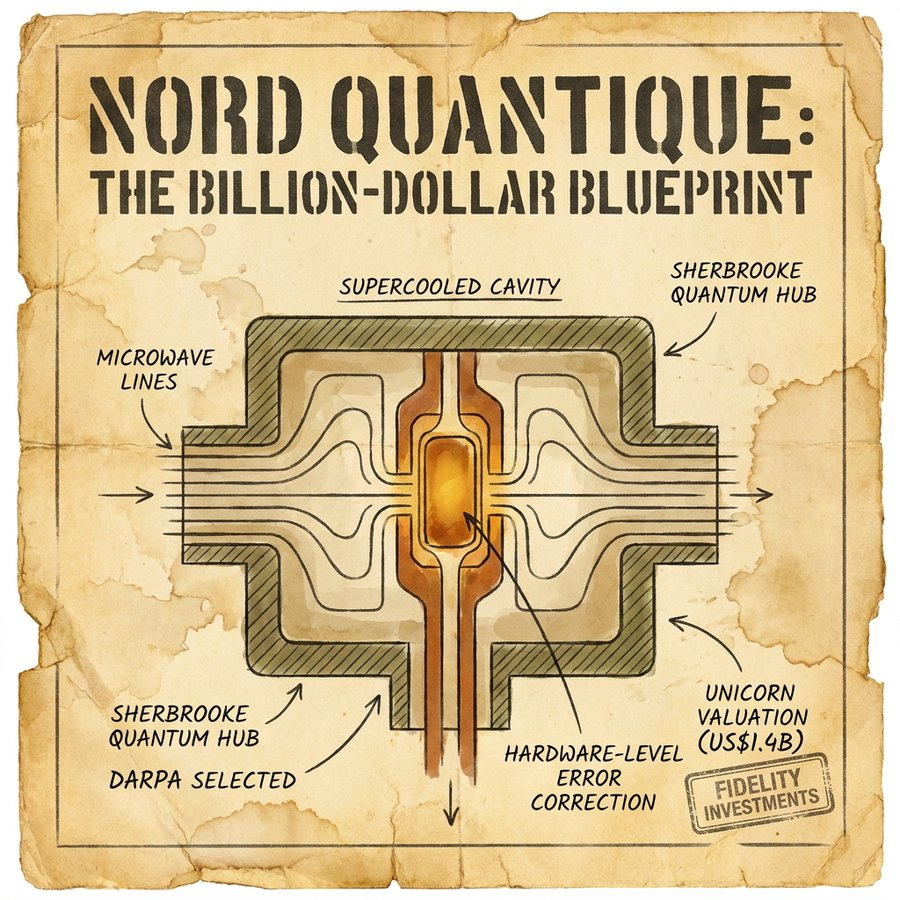
Nord Quantique Secures $30 Million Investment, Achieving $1.4 Billion Pre-Money Valuation
Nord Quantique secured a $30 million investment, reaching a $1.4 billion valuation, to advance its fault-tolerant quantum computing architecture by 2030, utilizing bosonic codes for quantum error correction. The funding, supplemented by government programs, will facilitate the transition from laboratory validation to large-scale industrialization, enabling integration into enterprise and defense workflows.
-
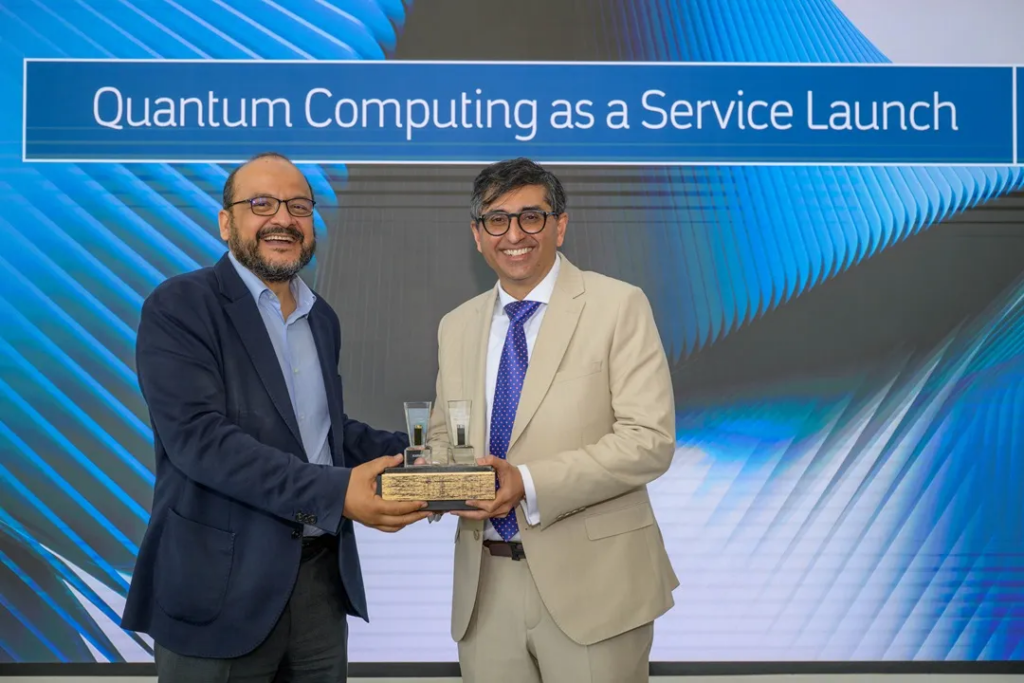
Aramco and Pasqal Launch Commercial Quantum Computing as a Service Platform in Saudi Arabia
Aramco and Pasqal have launched Saudi Arabia’s first commercial Quantum Computing as a Service (QCaaS) platform, featuring a 200-qubit Pasqal QPU, to provide cloud-based quantum computing for international clients and regional entities. Aramco is the foundational client, utilizing the platform for industrial applications like logistics optimization and CO₂ storage, aligning with Saudi Vision 2030.
-
-
-
NIST Advances Nine Post-Quantum Digital Signature Candidates to Third Evaluation Round
NIST has advanced nine post-quantum digital signature candidates to the third round of evaluation, aiming to diversify its PQC portfolio beyond lattice-based designs. These candidates span lattice-based, isogeny-based, MPCitH, and multivariate cryptography modalities, with the evaluation focusing on implementation security, formal proof verification, and resistance to physical attacks, culminating in a conference in 2027 to guide standardization selections.
-
-
-
Xanadu Announces Q1 2026 Financial Results: Historic Nasdaq Debut and $285M Government Funding Negotiations
Xanadu announced strong Q1 2026 financial results, marked by its Nasdaq/TSX debut and a 304.3% revenue increase to $2.83 million. The company is in advanced talks for $285M in government funding and achieved a breakthrough in quantum computational fluid dynamics simulations with AMD. Despite increased operating expenses and a net loss of $20.6 million, Xanadu’s cash reserves significantly expanded due to its public transition.
-
NSF Launches $1.5 Billion Independent X-Labs Initiative Targeting Quantum and Sensing Technologies
The NSF X-Labs initiative, backed by $1.5 billion over ten years, funds interdisciplinary teams to develop early-stage technologies into commercial platforms, focusing initially on scientific instrumentation for sensing/imaging and quantum systems. This program uses milestone-based funding via Other Transactions Agreement (OTA) to bypass standard academic metrics and de-risk technologies for private investment.
-
-
-
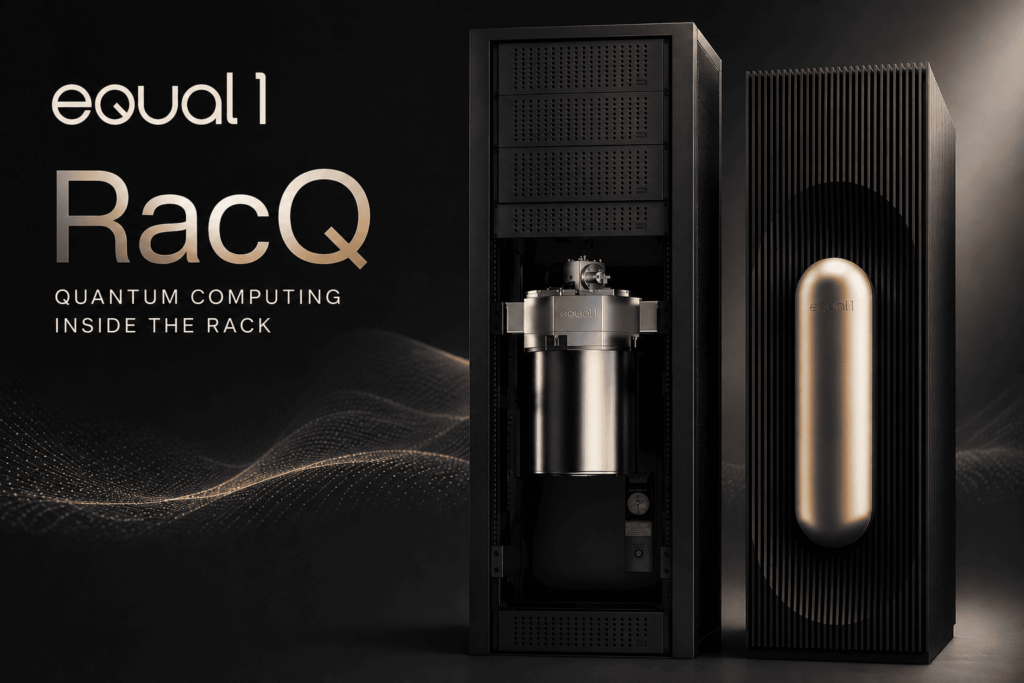
Equal1 Unveils Rack-Mounted Silicon-Spin Quantum Computer
Equal1 has launched RacQ, a rack-mounted silicon-spin quantum computer powered by the UnityQ SoC, designed for seamless integration into standard data centers and operation alongside classical hardware. The RacQ supports Hybrid Quantum-Classical Computing (HQCC) for optimization and simulation workloads, demonstrated in collaboration with Dell Technologies, and operates within conventional data center infrastructure with a self-contained cooling system and standard power requirements. The complete system weighs 400 kg.
-
Google Launches $10 Million REPLIQA Initiative to Integrate Quantum AI and Life Sciences
Google has launched REPLIQA, a $10 million research program uniting quantum AI and life sciences to simulate biological processes at a molecular level, targeting challenges like protein folding and drug metabolism. By collaborating with leading universities, REPLIQA aims to develop quantum-enhanced tools and sensing hardware for medical breakthroughs, achieving utility-scale quantum advantage in life sciences by the early 2030s.
-
IonQ Establishes Advanced Quantum R&D Laboratory in Boulder
IonQ has opened a 22,000-square-foot quantum R&D lab in Boulder, Colorado, focusing on semiconductor ion trap chip design and testing for next-gen quantum systems. This facility will centralize strategic business units and foster collaboration with local partners to advance quantum computing, networking, and sensing capabilities, with the first quantum computer expected by late 2026.
-
U.S. Department of Energy Issues RFI for 2028 Fault-Tolerant Quantum Computer
The U.S. Department of Energy (DOE) seeks information from companies capable of deploying a fault-tolerant quantum computing system with 150-250 logical qubits by 2028, aiming to integrate advanced quantum capabilities into national labs for solving complex scientific problems. The DOE is exploring Non-Recurring Engineering (NRE) funding and various partnership structures to accelerate the delivery of quantum solutions optimized for scientific computing.
-
-
-
Purdue University Launches Comprehensive Quantum Degrees Program
Purdue University has launched a multi-tiered Quantum Degrees Program to address the growing demand for a skilled quantum technology workforce, offering undergraduate certificates and minors, graduate degrees, and professional development MicroMasters. Leveraging its quantum research leadership and partnerships, Purdue aims to transition quantum technologies to utility-scale systems, supporting the U.S. quantum economy.
-
IQM and Real Asset Acquisition Corp. Reach F-4 Filing Milestone
IQM Quantum Computers and Real Asset Acquisition Corp. have publicly filed a Form F-4 with the SEC for their business combination, valuing IQM at $1.8 billion and aiming for a Nasdaq listing under “IQMX.” IQM reported strong 2025 revenue of $36 million and over $100 million in bookings, driven by significant global sales and deliveries, and expects up to $465 million in cash post-merger to accelerate its quantum computing roadmap.
-
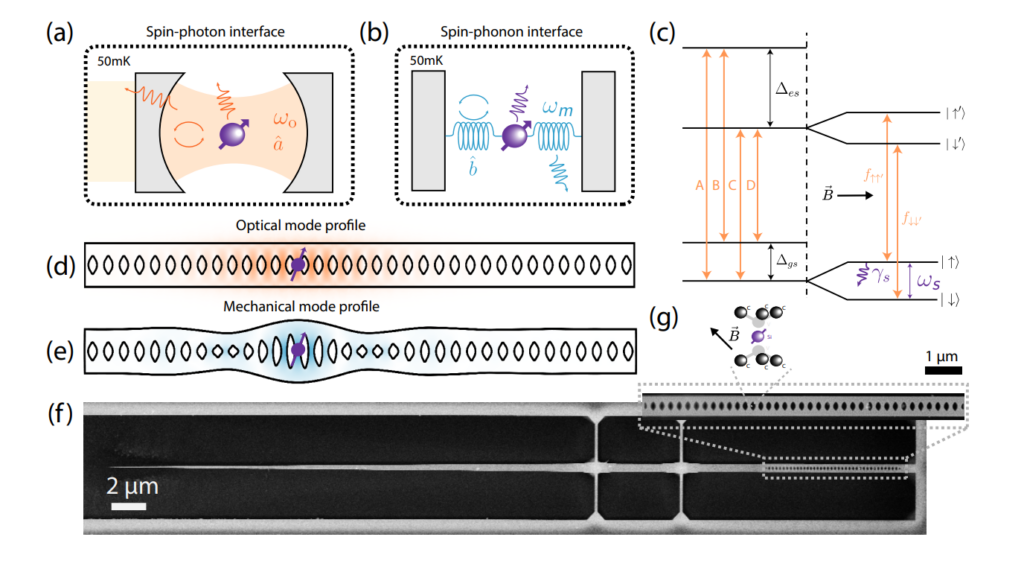
Observation of the Acoustic Purcell Effect in Diamond Nanostructures
Researchers have observed the acoustic Purcell effect in a single silicon vacancy (SiV) center in diamond by engineering a microwave-frequency nanomechanical resonator, enhancing the spin relaxation rate by a factor of ten. They used the SiV center as an atomic-scale probe to map the broadband phonon spectrum of the nanostructure, paving the way for hybrid quantum interconnects. The experiment was performed using a diamond nanophotonic waveguide featuring an array of air holes.
-