
News
Company, funding, product and policy news from across the quantum industry, as it happens.
-
-
Origin Quantum Unveils Origin Wukong-180 Fourth-Generation Quantum Computer
Origin Quantum has launched the Origin Wukong-180, a fourth-generation superconducting quantum computer with 180 qubits, integrated into its cloud platform for external computation. The system features advancements in hardware, chip fabrication, and software, enabling it to fine-tune large AI models and support multidisciplinary research. It has been used in fields like medicine, engineering, and physics, with a research program offering free computing time.
-
-
-
Infleqtion Introduces Quantum Spectrum for Atom-Based RF Sensing
Infleqtion has launched Quantum Spectrum, a neutral-atom technology for radio frequency (RF) detection, offering broader spectrum awareness and resilience against interference compared to traditional antenna-based receivers. The company is collaborating on defense contracts in the U.S., U.K., and Australia to transition this technology to field-deployable hardware, targeting applications in national security, aviation, telecommunications, and autonomous systems. Infleqtion’s expansion into RF sensing aligns with its broader quantum sensing portfolio, aiming to capitalize on the projected $31 billion quantum sensing market by 2040.
-
NVision Secures $55M Series B to Pivot from Quantum Sensing to Computing
NVision secured $55M in Series B funding, led by Abbott, to expand from quantum sensing to quantum computing with its new Photonic Integrated Quantum Circuits (PIQC) platform. The PIQC platform will utilize organic molecule-based qubits and integrate with photonic chips, to accelerate drug candidate design while their POLARIS platform continues to deploy for real-time metabolic imaging in clinical settings.
-
NVision and Aarhus University Secure €5.4M ($6.3M USD) Grant for Quantum-Enhanced MRI Research
NVision and Aarhus University received a €5.4M grant to develop the MIRAQLE project, which uses quantum-enhanced MRI to improve early diagnosis and treatment assessment of liver cancer by visualizing tumor metabolism in real-time. The project leverages NVision’s POLARIS technology to boost MRI signal sensitivity, enabling the detection of cellular-level metabolic activity without radiation. The MIRAQLE project aims to improve patient outcomes through faster therapy decisions and more precise risk profiling.
-
-
-
IQM Launches HPC Integration Service to Accelerate Hybrid Quantum-HPC Adoption
IQM Quantum Computers has launched its HPC Integration Service, a turnkey solution that integrates its superconducting quantum computers into HPC environments as Slurm nodes, resolving integration bottlenecks through its open-source QDMI. Already in production at LRZ, this service enables users to run hybrid quantum-classical workloads seamlessly, and it follows IQM’s planned public listing in February 2026 to become the first publicly listed European quantum company on a major U.S. exchange.
-
Casimir Launches with $12M Seed Round to Commercialize Quantum Energy Chips
Casimir, Inc. has secured a $12M seed round to commercialize its MicroSparc chip, which harvests energy from quantum vacuum fields to provide persistent electrical power for low-power electronics, targeting markets like IoT, automotive, and wearables with commercial availability planned for 2028. Founded by former NASA researcher Dr. Harold “Sonny” White, Casimir’s technology offers a sustainable, battery-free solution for autonomous systems, potentially expanding into higher-power applications in the future.
-
Oxford Instruments and NYU Nanofab Partner to Advance Atomic-Scale Quantum Fabrication
Oxford Instruments and NYU Nanofab have partnered to install the first PlasmaPro ASP atomic layer deposition system in the US dedicated to superconducting quantum applications, funded by the U.S. Microelectronics Commons. This collaboration focuses on developing thin-film nitride superconductors, offering advantages like thermal robustness and environmental resilience, to support the U.S. quantum ecosystem and foster workforce development.
-
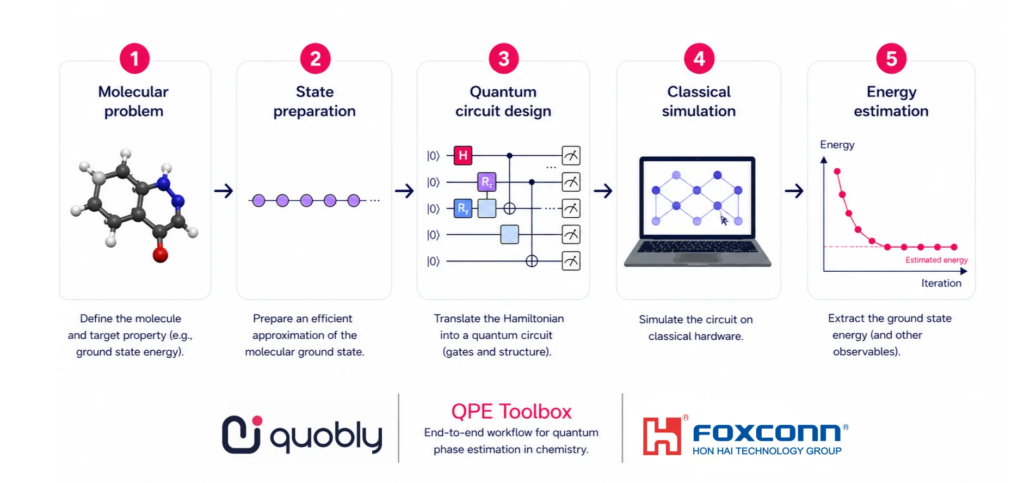
Quobly and Hon Hai Research Institute Release Open-Source QPE Toolbox
Quobly and Hon Hai Research Institute have released an open-source Python toolbox (qpe-toolbox) for Quantum Phase Estimation (QPE) algorithm development, designed to bridge the gap between theoretical cost models and practical resource requirements for fault-tolerant quantum computing. The toolkit allows researchers to simulate the full QPE pipeline, prepare initial states, encode molecular Hamiltonians, and compare QPE with Robust Phase Estimation, facilitating algorithm-hardware co-design. The qpe-toolbox is available on GitHub and interfaces with quantum chemistry tools like PySCF and OpenFermion.
-
Photonic Inc. Reaches $2B Valuation with $200M Final Close
Photonic Inc., a Vancouver-based quantum computing developer, has completed a $200 million USD funding round, bringing its valuation to $2 billion USD. The investment, led by Planet First Partners, will support Photonic’s distributed quantum computing architecture, which utilizes fiber-optic networks for scalability and fault tolerance, and solidifies its role in Canada’s strategic technology ecosystem.
-
AEGIS, Quantum eMotion, and SEETEL Launch Quantum-Secured Energy Platform
SEETEL, Aegis, and Quantum eMotion have expanded their partnership to create a “Quantum-Safe BESS” platform, integrating quantum-level encryption into Battery Energy Storage Systems for critical applications like defense and AI data centers. The collaboration combines SEETEL’s manufacturing, Aegis’s energy management systems, and Quantum eMotion’s QRNG technology to secure data and communications against quantum threats. The alliance is now focused on fulfilling initial U.S. orders and pursuing NATO-aligned infrastructure opportunities.
-
Quantum Computing Inc. Reports Q1 2026 Financial Results: Revenue Surge and Strategic M&A Expansion
Quantum Computing Inc. (QCi) reported a significant revenue increase in Q1 2026, driven by strategic acquisitions like Luminar Semiconductor, resulting in $3.69 million in revenue. Despite a net loss of $4.05 million, QCi maintains a strong $1.4 billion cash position and is advancing its manufacturing capabilities with Fab 1 development and Quantum Corridor integration. The company’s strategic M&A activity and focus on photonics production aim to bolster its “Full-Stack” capabilities and secure quantum solutions.
-
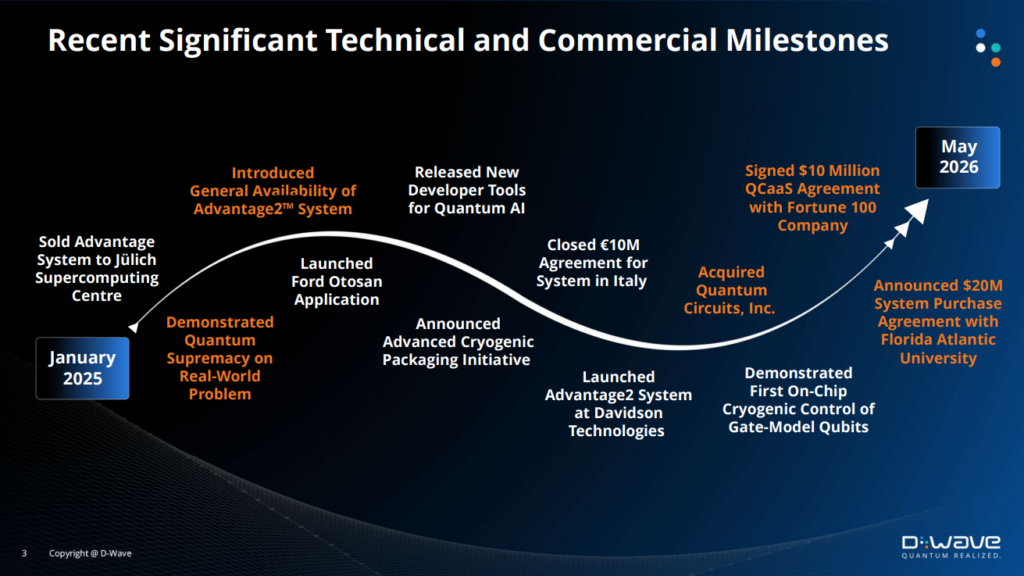
D-Wave Reports Q1 2026 Results: Record Bookings and Strategic Expansion into Gate-Model Systems
D-Wave reported mixed Q1 2026 results, with record bookings of $33.4 million offset by a revenue decline to $2.9 million due to the previous year’s one-time system sale. Strategic acquisition of Quantum Circuits expands D-Wave into gate-model systems, with a roadmap targeting 100 logical qubits by 2032, while cash reserves remain strong at $588.4 million.
-
-
-
Quantinuum Has Submitted a Preliminary S-1 Filing to the U.S. SEC for a Proposed Initial Public Offering (IPO) of their Common Stock
Quantinuum has publicly released its preliminary S-1 filing for an IPO, revealing a net revenue of $30.9 million and a net loss of $192.6 million for 2025, along with significant details about its financial structure, including an “Up-C” reorganization and a Tax Receivable Agreement. Honeywell will retain significant influence post-IPO, and the company’s product roadmap includes a processor with over 1,000,000 physical qubits expected in 2030+.
-
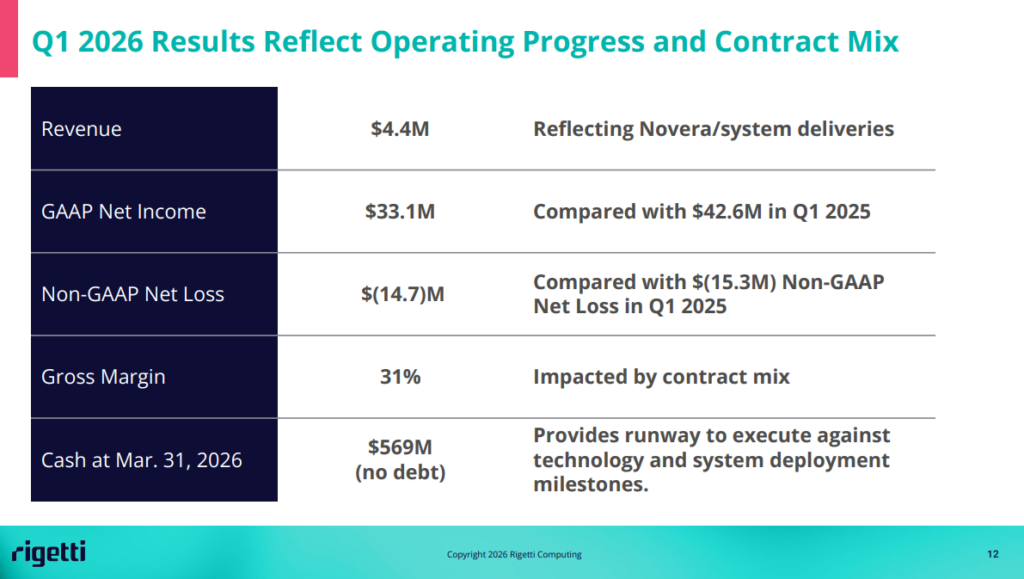
Rigetti Computing Reports Q1 2026 Financial Results: 108-Qubit System Availability and $100M UK Investment
Rigetti Computing reported strong Q1 2026 results, with record revenue of $4.4 million driven by on-premises system shipments and the general availability of its 108-qubit system. The company is also investing up to $100 million in the UK to deploy a 1,000+ qubit system, expanding its global presence. Rigetti’s cash and investments remain robust at $569.0 million, providing flexibility for long-term objectives.
-
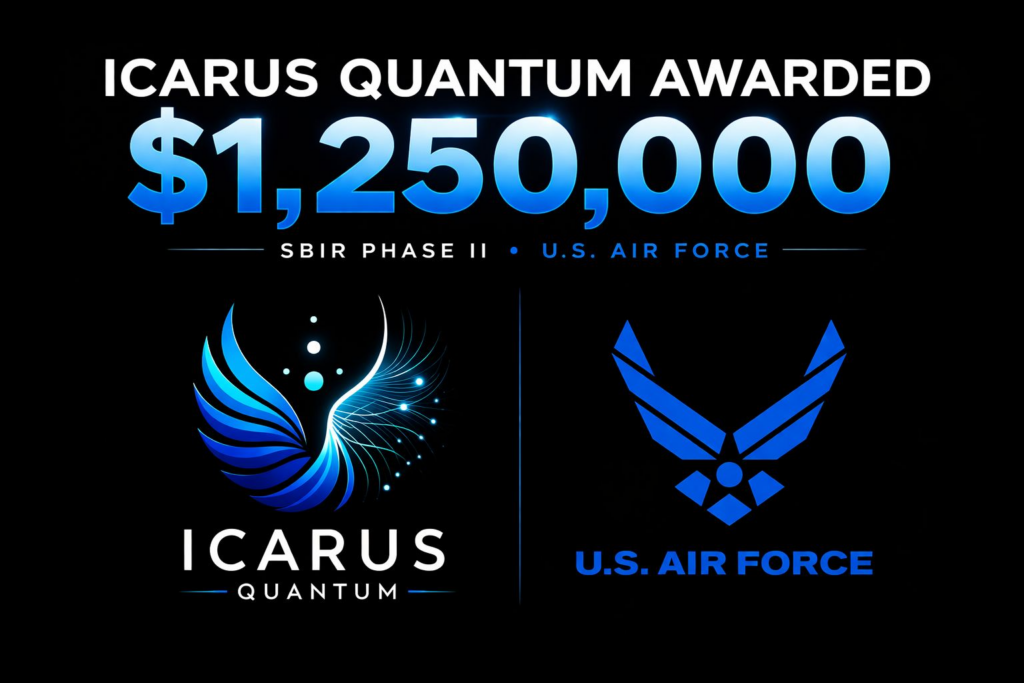
Icarus Quantum Awarded Air Force SBIR Contract to Develop High-Efficiency Quantum Interconnects
Icarus Quantum, in partnership with NIST, has been awarded an Air Force SBIR contract to develop high-efficiency entangled photon sources for quantum interconnects, aiming to enable modular quantum computing and secure long-range communications. Their deterministic quantum dot platform is engineered to surpass current efficiency benchmarks, delivering a state-of-the-art entangled-photon source to the Air Force Research Laboratory (AFRL) and paving the way for networked quantum systems. The company aims to deliver a commercial-grade entangled photon generator by 2028.
-
IonQ Launches Automated InSAR Capability for Millimeter-Scale Earth Monitoring
IonQ has commercially launched an automated InSAR capability for high-precision ground deformation monitoring with a three-day repeat cycle, enabled by its space missions and unique orbital architecture. Validated by a study in Mexico City, the service offers high-density data collection for critical infrastructure, urban development, and environmental monitoring, providing persistent intelligence across various sectors. This expansion complements IonQ’s quantum computing focus.
-
The King’s Foundation and FormationQ Launch “Harmonious Urban Growth” Programme
The King’s Foundation and FormationQ have launched a three-year “Harmonious Urban Growth” program to support sustainable urban expansion in the Commonwealth, integrating quantum computing with traditional planning to optimize infrastructure and environmental preservation. The initiative uses IonQ’s quantum systems and Space Syntax’s digital mapping to inform participatory planning, with physical marking and digital recording ensuring adherence to sustainable frameworks in rapidly urbanizing regions.
-
New York University and IBM Launch Postdoctoral Program for Quantum Algorithm Research
NYU and IBM have launched a joint postdoctoral program to advance quantum computing applications across various scientific fields, focusing on algorithm development and optimization for hybrid quantum-classical workloads. The program, based at NYU Quantum Institute and IBM’s Watson Research Center, aims to bridge academic theory with quantum hardware deployment and build a quantum-centric workforce. This initiative leverages NYU’s Quantum Institute and IBM’s quantum expertise to accelerate quantum technology commercialization.
-
Algorithmiq Relocates Global Headquarters to Milan Following €18M ($21.2M USD) Funding Round
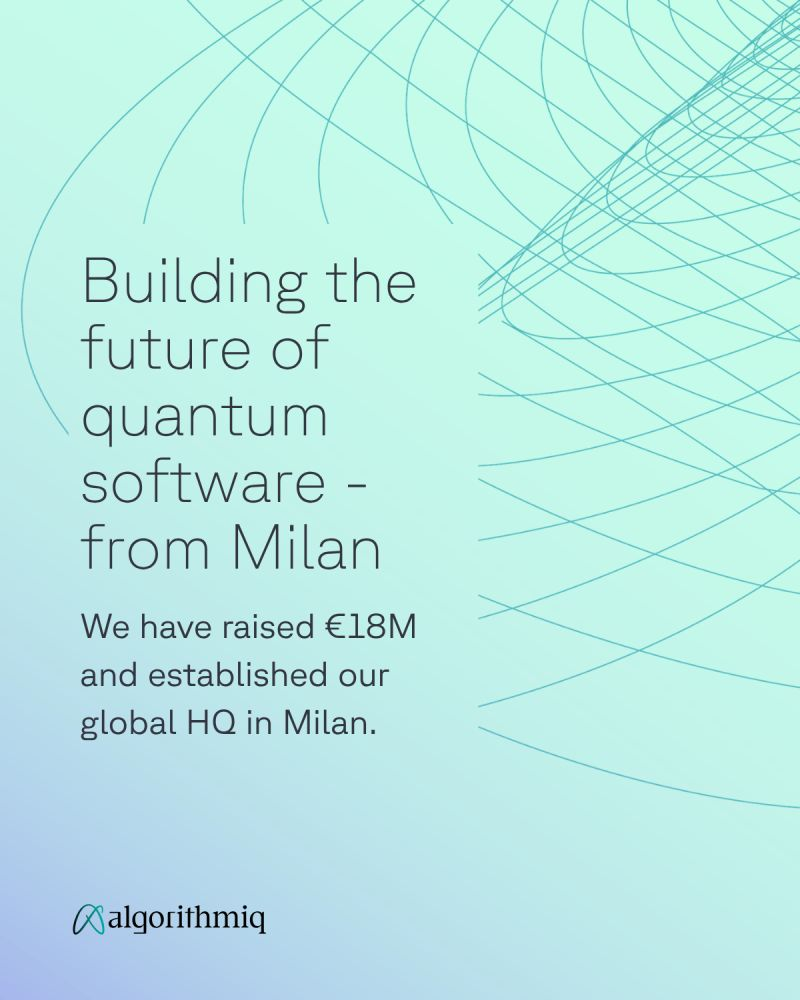
Algorithmiq, a quantum software company, has relocated its global headquarters from Finland to Milan following an €18 million funding round, the largest-ever venture capital investment in an Italian quantum startup. This move aligns with Italy’s National Quantum Strategy and aims to leverage European talent to focus on the software layer of quantum computing, with recent milestones including winning the Wellcome Leap Q4Bio Challenge and achieving quantum advantage in simulating quantum materials.
-
-
-
CAS Cold Atom Technology Unveils Hanyuan-2 Dual-Core Neutral Atom System
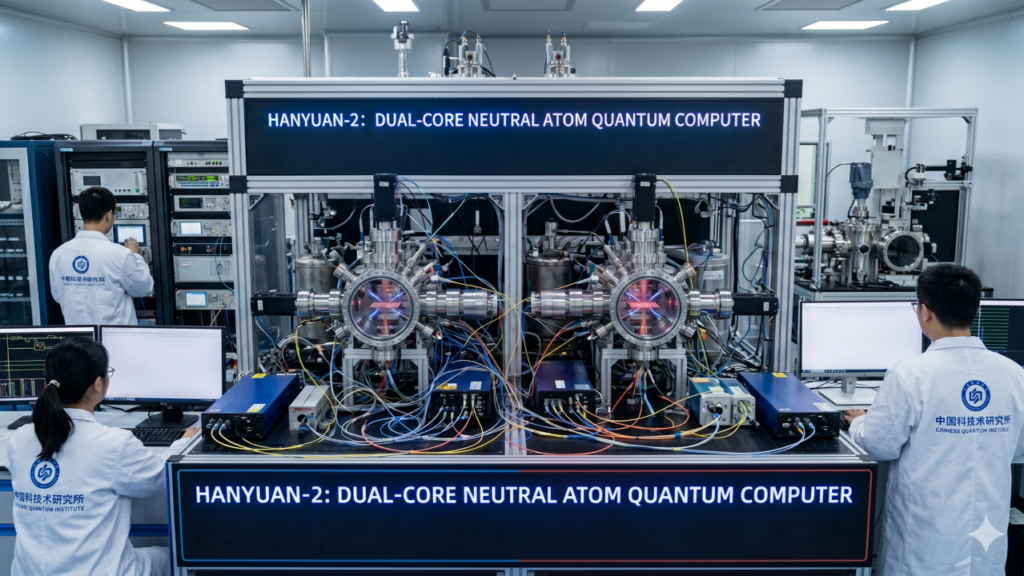
CAS Cold Atom Technology has launched Hanyuan-2, the world’s first dual-core neutral atom quantum computer with 200 qubits, utilizing a parallelized design for enhanced scalability and error correction. This system, with its low power consumption and compact design, aims to lower barriers for industrial quantum applications, marking a significant step towards more stable and scalable quantum computing.
-
Bloq Quantum Launches No-Code Platform to Accelerate Algorithm Development
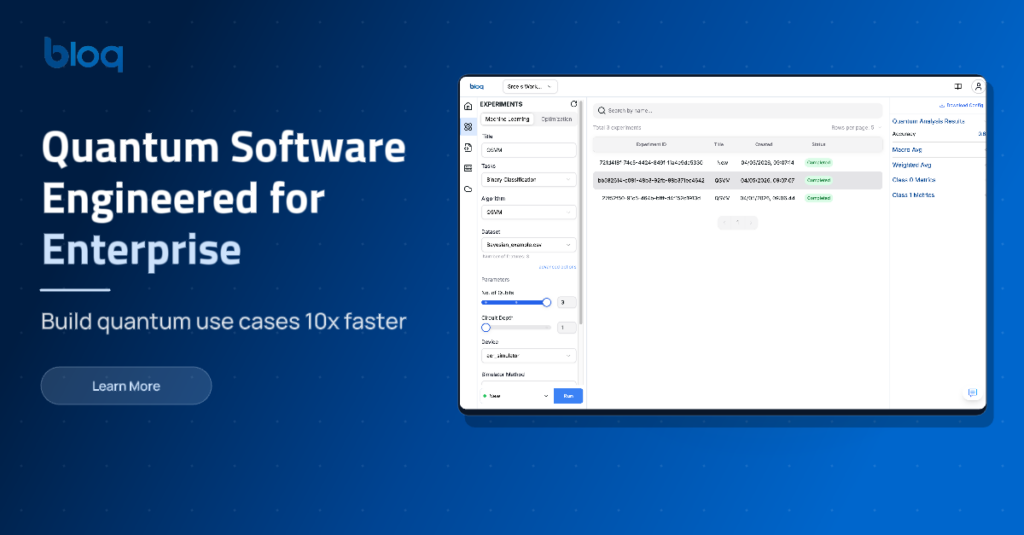
Bloq Quantum has launched a no-code platform to streamline quantum algorithm development, offering a visual interface and unified workspace that connects various SDKs and hardware backends. The platform aims to lower the barrier to entry for industrial quantum R&D by facilitating data-driven business use cases and the development of Quantum Machine Learning models. Currently prioritizing access for universities and corporate research teams, Bloq Quantum plans to integrate agentic coding features and offer full public access in the coming months.
-
FrostByte Secures €1.3M ($1.5M USD) to Scale Cryo-CMOS Control Electronics for Quantum Computing
FrostByte, a quantum startup from TU Delft, secured €1.3M to scale its cryo-CMOS control electronics for quantum computing, addressing cabling and heat challenges in scaling quantum processors. The funding, backed by Graduate Ventures and others, will expand the team and transition from research to manufacturable hardware for industrial-scale quantum computers.
-
-
-
South Korea Expands PQC Pilot to Telecommunications, Finance, and Defense
South Korea is expanding its Post-Quantum Cryptography (PQC) pilot to include telecommunications, finance, transportation, defense, and space, following an initial rollout in medical, energy, and administrative sectors. The initiative aims to counter the “Harvest Now, Decrypt Later” threat by partnering with industry leaders to integrate PQC and launching R&D projects to achieve full-cycle PQC self-reliance by 2030. The goal is to establish a standardized national transition model across eight critical sectors, enhancing national security against AI-driven quantum computing advancements.
-
SiC Systems and ORCA Computing Partner to Integrate Quantum-Enhanced Agentic AI
SiC Systems and ORCA Computing are partnering to integrate quantum computing into AI-driven workflows for chemical and biomanufacturing plant design, aiming to accelerate design processes and optimize manufacturing facilities. By combining ORCA’s quantum processors with SiC Systems’ AI platform, the collaboration seeks to improve decision-making and reduce engineering time in EPC projects, potentially saving over 20,000 hours per project. This initiative builds on previous award-winning research and targets the $1 trillion plant construction industry.
-
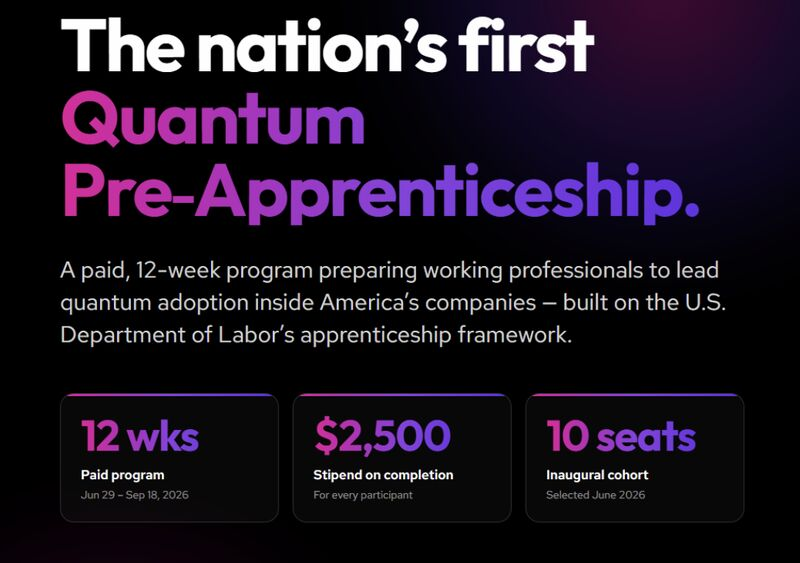
Chattanooga Establishes Nation’s First Quantum Pre-Apprenticeship Program
The Chattanooga Quantum Collaborative and BuildWithin have launched the nation’s first quantum pre-apprenticeship program, a 12-week initiative targeting mid-career professionals to integrate quantum readiness into the commercial workforce with a focus on practical applications. The program, supported by a National Science Foundation grant, aims to equip participants with the skills to identify and lead quantum adoption strategies within their organizations, solidifying Chattanooga’s position as a regional hub for quantum infrastructure.
-