
News
Company, funding, product and policy news from across the quantum industry, as it happens.
-
-
IBM and Dallara Partner to Scale AI and Quantum Design for Motorsports
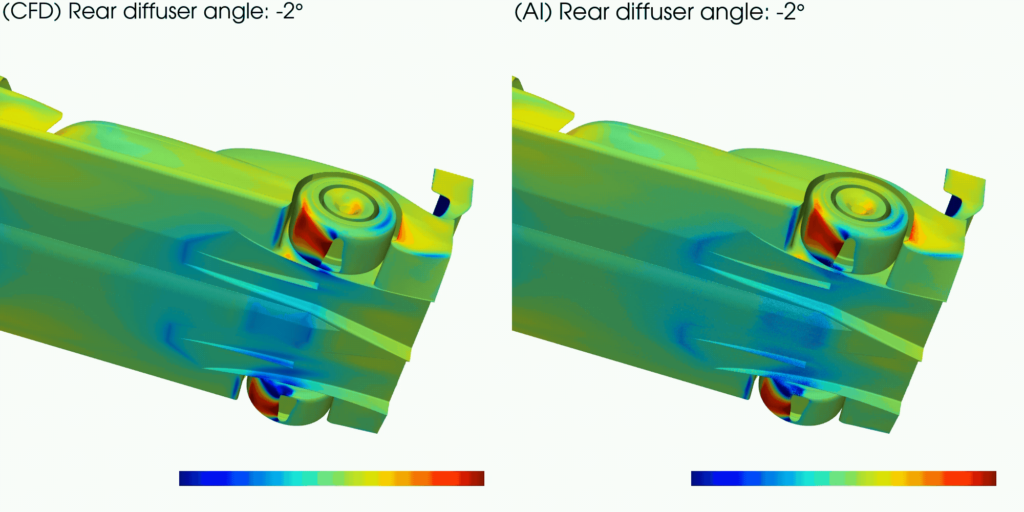
IBM and Dallara are collaborating to integrate AI and quantum computing into vehicle design, using IBM’s GIST model to accelerate optimization and reduce reliance on traditional CFD, achieving significant time savings in identifying optimal designs. This partnership also explores quantum-classical approaches for enhanced simulation fidelity, potentially leading to fuel-efficiency gains in broader automotive and aerospace sectors.
-
QuantumDiamonds Deploys First Asian Quantum Sensing System QD m.1 at Taiwan’s iST
QuantumDiamonds has deployed its QDm.1 quantum sensing system at iST in Taiwan, marking its first commercial presence in Asia, to support high-volume yield optimization for advanced semiconductor technology nodes. The QDm.1 uses Quantum Diamond Microscopy for non-destructive, high-resolution 3D imaging of current pathways, addressing failure analysis challenges in complex semiconductor architectures.
-
CQE Releases Unified Regional Strategy to Scale Midwest Quantum Workforce
The Chicago Quantum Exchange (CQE) released a unified strategy to scale the Midwest quantum workforce, aiming to meet the projected demand of 191,000 jobs by 2035 by focusing on accessibility, vocational training, and regional partnerships. The plan emphasizes expanding K-12 quantum learning, formalizing transfer pathways between colleges, and establishing a collaborative employer network to align curriculum with industry demands, ultimately creating a FAIR talent pool for the nation.
-
Fermilab and Northern Illinois University Expand Quantum Workforce Pipeline with New Academic Initiatives
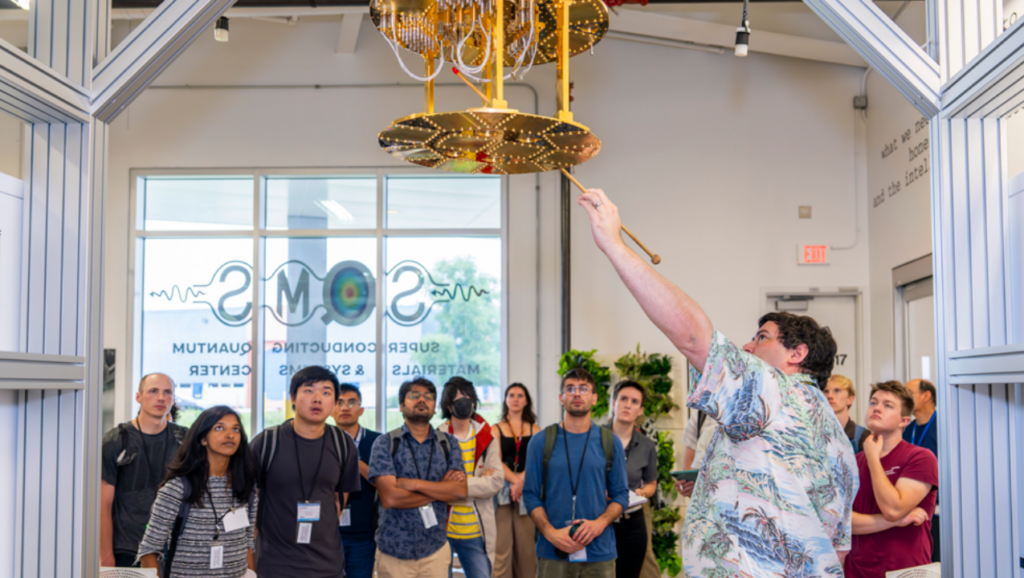
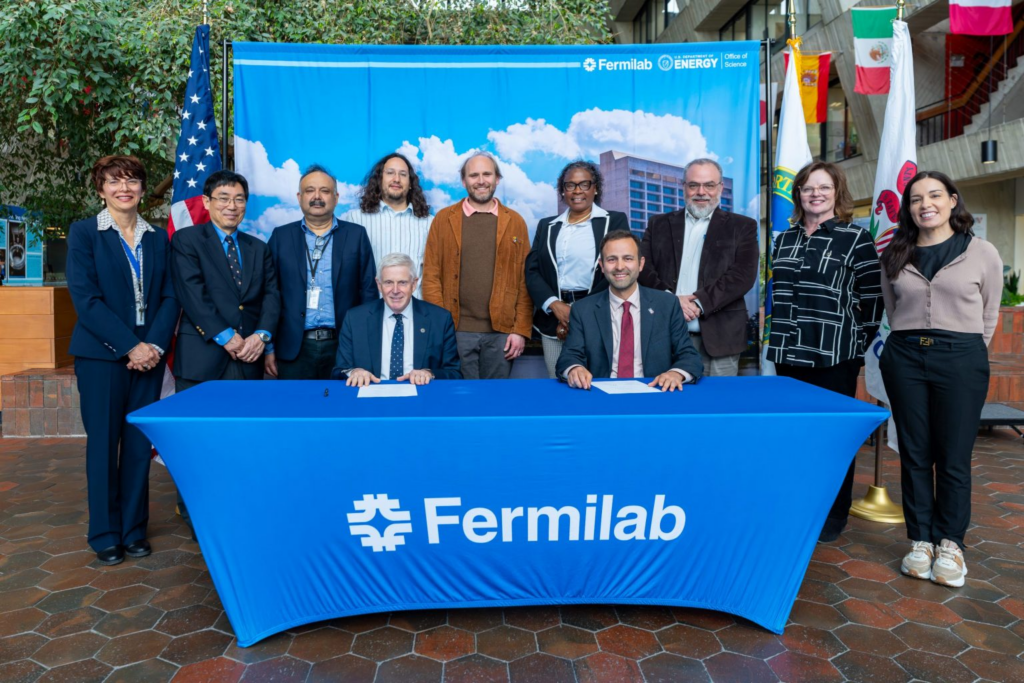
Fermilab and Northern Illinois University (NIU) are collaborating to expand the quantum workforce pipeline through a new Master of Science program in quantum science and technology at NIU, set to begin in 2026, and Fermilab’s Saturday Morning Quantum (SMQ) program, which recently graduated 37 high school students. These initiatives aim to cultivate a domestic talent pool to support quantum information science and the goals of the Superconducting Quantum Materials and Systems (SQMS) Center.
-
Infleqtion Awarded $1M Navy Contract for Quantum-Inspired RF Signal Processing
Infleqtion secured a $1 million Navy contract to further develop its QuIRC machine learning platform, which optimizes RF signal processing in challenging environments using Contextual Machine Learning (CML). The platform reduces data storage needs and will gain self-learning capabilities for rapid decision-making in electronic warfare and communication.
-
CQT and Qubit Pharmaceuticals Partner to Advance Quantum Drug Discovery
CQT and Qubit Pharmaceuticals are collaborating to develop quantum algorithms for drug discovery, aiming to overcome computational bottlenecks by combining expertise in quantum chemistry and quantum computing. Their work includes the first experimental realization of a quantum Markov Chain Monte Carlo algorithm on Quantinuum’s trapped-ion systems, demonstrating the feasibility of quantum-enhanced molecular simulations on NISQ devices.
-
VTT and CSIRO Explore Collaboration via ‘Quantum Leap’ Project
VTT and CSIRO have begun a strategic partnership under VTT’s Quantum Leap project to advance quantum computing, focusing on software, error correction, and energy efficiency. The collaboration aims to connect Finnish and Australian quantum ecosystems, leveraging VTT’s quantum computer and CSIRO’s expertise to accelerate industrial adoption of quantum technology.
-
ARPA-E Expands Quantum Computing Portfolio with Multi-Million Dollar Awards to LLNL and Infleqtion
Lawrence Livermore National Laboratory is leading a $4.1 million ARPA-E project to develop quantum and machine learning-accelerated software for discovering next-generation magnetic materials, aiming to create ultra-strong, lightweight magnets for various applications. The project focuses on a hybrid algorithm integrating LLNL’s simulation codes with quantum frameworks to overcome computational bottlenecks and achieve scalable advantages over classical systems, with prototype testing expected in early 2027.
-
Paragraf and Archer Materials Partner on Graphene-Based Quantum Hardware
Paragraf and Archer Materials are collaborating to develop graphene-based quantum computing hardware, combining Paragraf’s graphene fabrication with Archer’s quantum architecture expertise. The partnership focuses on researching graphene architectures for quantum measurement and control, aiming to create practical device prototypes for quantum sensors and detection modules.
-
Argonne Researchers Validate Low-Noise Properties of Electron-on-Neon Qubits
Argonne researchers validated the low-noise properties of electron-on-neon qubits, demonstrating noise levels significantly lower than traditional qubits and rivaling high-performing superconducting qubits, paving the way for simpler manufacturing and scalability. The team is now focused on optimizing neon surface consistency to further improve coherence times for large-scale quantum computing.
-
Oxford Researchers Demonstrate First-Ever ‘Quadsqueezing’ in Quantum Interaction
Oxford researchers have achieved quadsqueezing, a fourth-order quantum interaction, by using a hybrid oscillator-spin system and applying two non-commuting Spin-Dependent Forces, opening new doors for quantum simulation, sensing, and computing. This breakthrough enables faster and more versatile engineering of complex quantum interactions, validated by reconstructing Wigner functions that revealed distinctive squeezing fingerprints.
-
-
-
House Committee Passes Their Version of the U.S. National Quantum Initiative Reauthorization Act
The House Committee passed H.R.8462, the National Quantum Initiative Reauthorization Act, while the Senate Committee passed S.3597; both bills now head to their respective chambers for a vote, but differences exist regarding sunset dates, nanotechnology, prize challenges, agency-specific mandates, and workforce development, necessitating reconciliation before final approval.
-
-
-
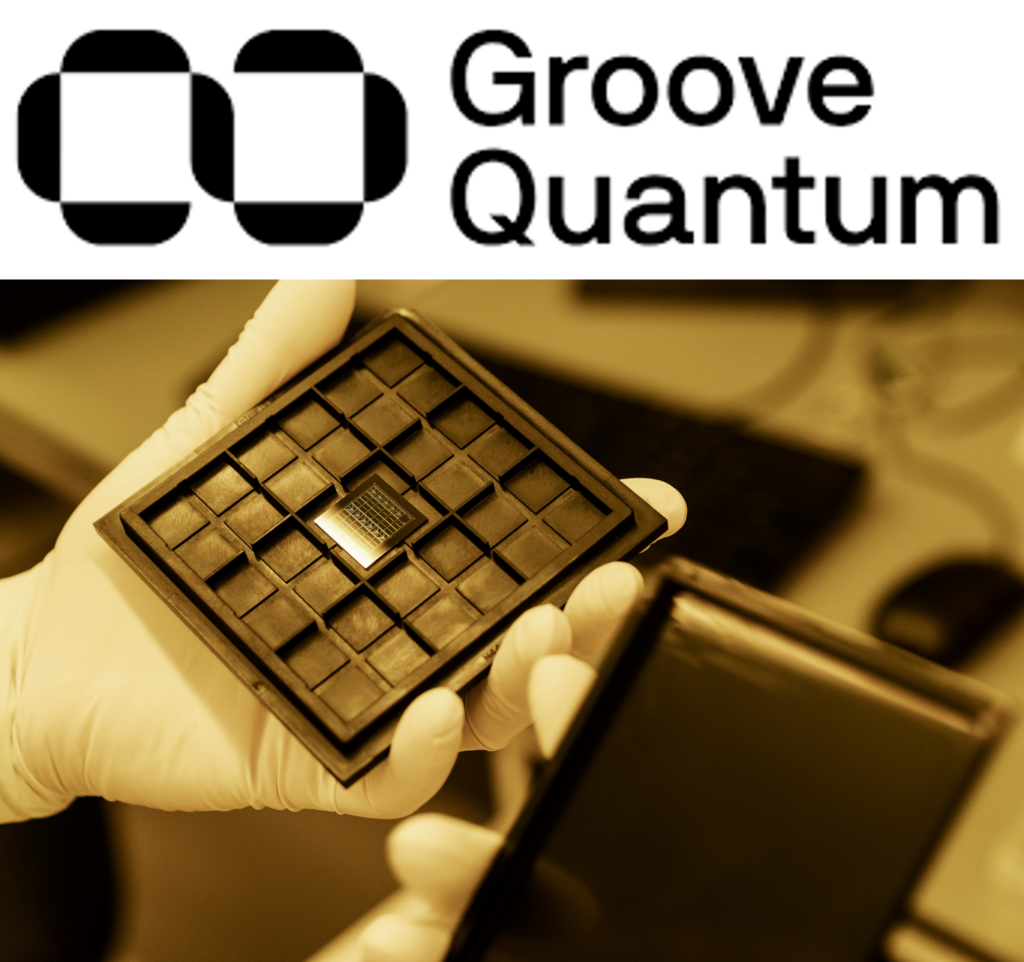
Groove Quantum Secures €16 Million ($18.7M USD) to Scale Germanium Spin-Qubits; Debuts 18-Qubit Processor
Groove Quantum has secured €16 million to develop germanium-based quantum processors, unveiling an 18-qubit processor and planning to scale to a 100-qubit unit cell. Their technology combines quantum-optimized materials with CMOS-compatible manufacturing for rapid scaling towards commercial applications.
-
-
-
Who’s News: Strategic Leadership Appointments at PsiQuantum, Q-CAB, Q.ANT, enQase, IQMP, and IonQ
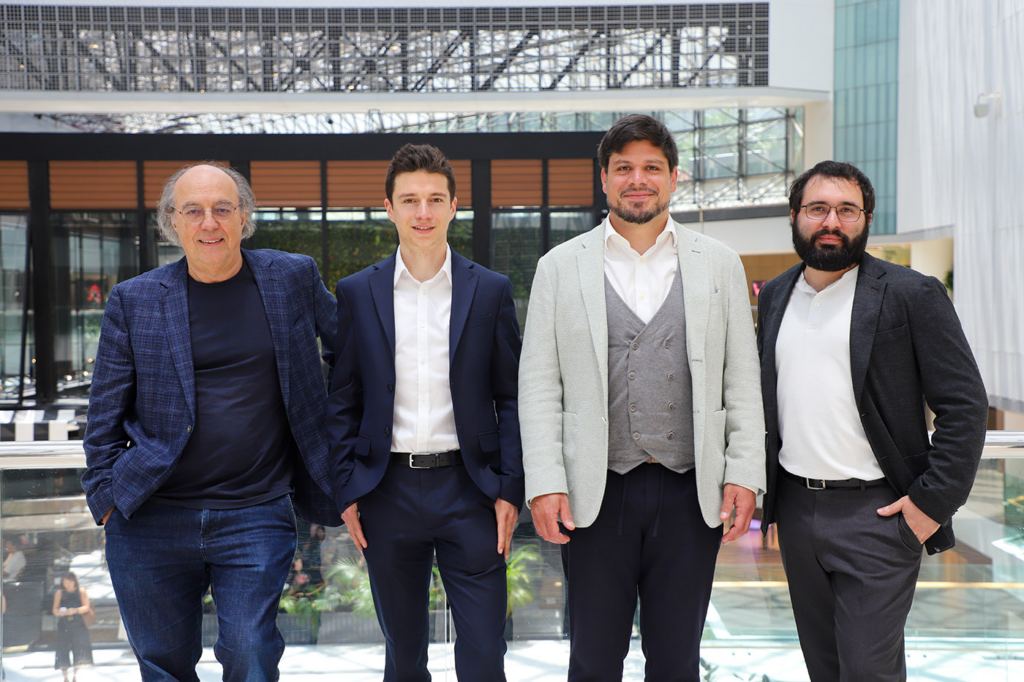
Recent leadership appointments in the quantum computing industry include Lip-Bu Tan joining PsiQuantum’s board, Bruno Spruth becoming Q.ANT’s CTO, and Jeff Henshaw as IonQ’s SVP of Quantum Computing Products. Additionally, the European Commission launched the Quantum Computing Advisory Board (Q-CAB), enQase welcomed Mahi Dontamsetti to its Advisory Board, and Oscar Bedolla was appointed Chief Strategy Officer of Illinois Quantum and Microelectronics Park (IQMP).
-
IBM Expands Quantum and AI Footprint with Chicago Hub and MIT Research Lab
IBM is expanding its AI and quantum computing initiatives with a new delivery center in Chicago, creating 750 jobs and a workforce development program, and a revamped research lab at MIT focused on quantum-centric supercomputing for advancements in various scientific fields. These moves aim to bridge the gap between quantum research and practical enterprise applications, positioning Illinois as a leader in the quantum economy. The MIT-IBM Computing Research Lab will focus on quantum algorithms and hybrid computing systems, targeting breakthroughs in materials science, chemistry, and biology.
-
Mandeville Ventures to Acquire Quantropi in Qualifying Transaction
Mandeville Ventures will acquire Quantropi, a cybersecurity firm specializing in quantum-secure data communications, through a merger that will result in the combined entity being named Quantropi Corp. The deal is contingent on Quantropi completing a private placement of at least US$2 million and is subject to customary closing conditions, including approvals from the TSX Venture Exchange and shareholders.
-
-
-
Monarch Quantum and Oratomic Partner to Deliver Fault-Tolerant Neutral Atom Systems
Monarch Quantum and Oratomic are partnering to develop fault-tolerant neutral atom quantum computers, integrating Monarch’s photonics with Oratomic’s architecture. Their goal is to deliver systems with tens of thousands of physical qubits encoding thousands of logical qubits by 2030, using high-rate quantum error correction optimized for neutral atom arrays.
-
Haiqu and HSBC Demonstrate Scalable Quantum Data Encoding
Haiqu and HSBC demonstrated a method using Matrix Product States to encode classical data into quantum states with shallow quantum circuits, scaling linearly with the number of qubits and validated on IBM Quantum hardware up to 156 qubits. This breakthrough targets applications in quantitative finance, specifically modeling heavy-tailed Lévy distributions for improved risk assessment and derivative pricing.
-
IBM to Expand Poughkeepsie Campus for Next-Generation “Starling” Quantum Systems
IBM is expanding its Poughkeepsie campus with a 511,000-square-foot facility to manufacture and assemble its next-generation Starling quantum systems, creating 200 jobs. The Quantum Starling, slated for 2029, aims to be a large-scale, fault-tolerant system utilizing quantum error-correcting codes for complex simulations.
-
-
-
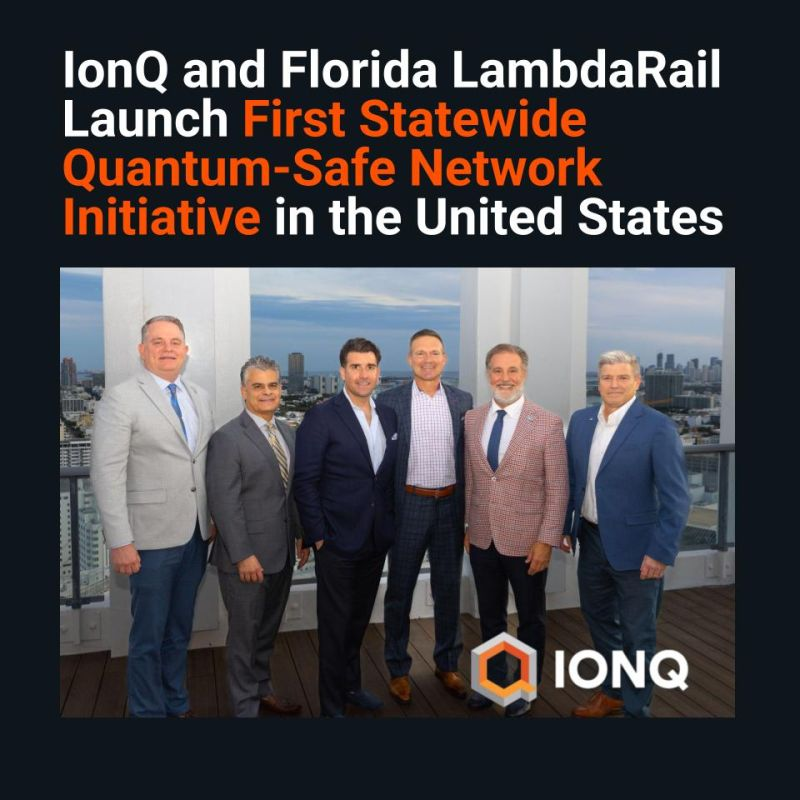
IonQ and Florida LambdaRail Launch Statewide Quantum-Safe Network
IonQ and Florida LambdaRail are partnering to deploy a quantum-safe communication network across Florida, starting with a 100-mile corridor between Palm Beach and Miami-Dade County. This initiative uses IonQ’s Quantum Key Distribution (QKD) technology to provide a “harvest now, decrypt later” defense against quantum attacks on encrypted data, aiming to create a resilient ecosystem for various sectors.
-
QuantX Labs Deploys Quantum Optical Clock to Orbit Amid $425B Defense Commitment
QuantX Labs has successfully deployed its TEMPO quantum optical clock subsystem into orbit, offering superior timing performance for resilient communications and navigation, aligning with the Australian Government’s $425 billion defense strategy focusing on undersea warfare and satellite communications. This achievement positions South Australia as a key hub for sovereign quantum timing and sensing capabilities, showcased at the Quantum Australia Conference 2026.
-
Quantum Art Extends Series A to $140M to Scale Trapped-Ion Architecture
Quantum Art has extended its Series A funding to $140 million, led by Bedford Ridge Capital, to advance its 1,000-qubit multi-core system and QaaS platform for industrial-scale quantum computing. The investment will also support the expansion of the company’s global business development team and its 2D architecture roadmap.
-
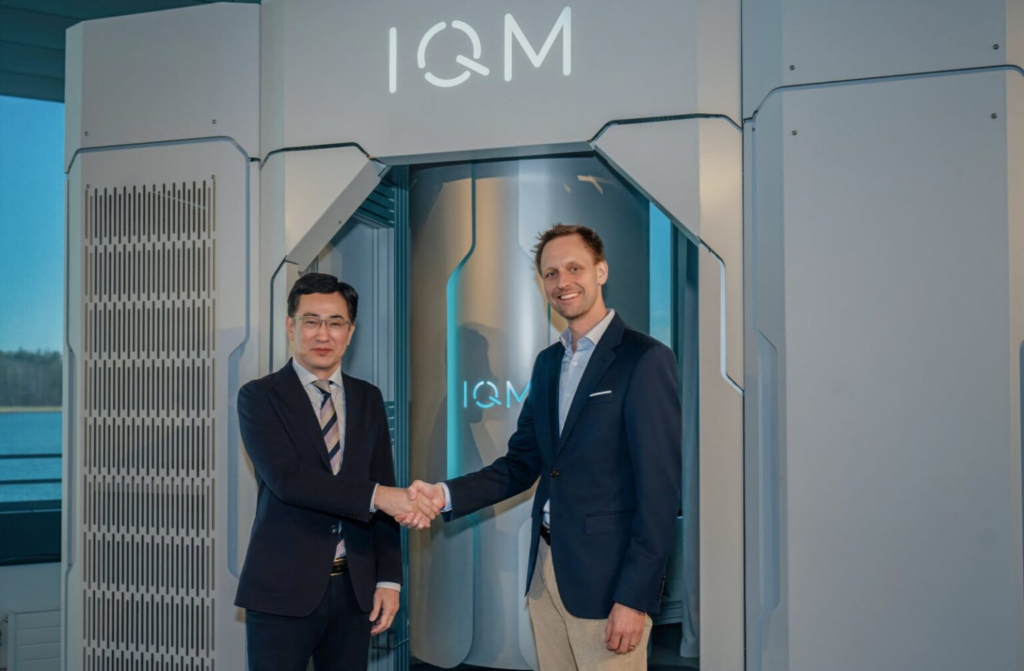
IQM to Deploy Japan’s First Enterprise-Purchased Quantum Computer
IQM Quantum Computers will deploy a 20-qubit quantum computer to TOYO Corporation in Japan by 2026, marking the first enterprise-purchased quantum computer in the country. This deployment will support Japan’s quantum strategy by enabling research, industry-specific use case development, and workforce training, contributing to the nation’s goal of advancing practical quantum applications.
-
-
-
Pennsylvania Launch Ecosystem-Wide “Keystone AI + Quantum Factory”
Pennsylvania has launched the Keystone AI + Quantum Factory, a statewide innovation network uniting its top research universities to translate AI and quantum research into industrial applications. The initiative focuses on world-class research, workforce development, and shared infrastructure to provide advanced computing resources and foster job creation across sectors like energy, manufacturing, and life sciences. By aligning talent and infrastructure, Pennsylvania aims to become a global hub for AI and quantum innovation, bolstering its economy and national competitiveness.
-
Quantinuum Has Submitted a Confidential S-1 Filing to the U.S. SEC for a Proposed Initial Public Offering (IPO) of their Common Stock
Quantinuum, a quantum hardware company majority-owned by Honeywell, confidentially filed an S-1 with the SEC on February 17, 2026, for a proposed IPO of its common stock, potentially valuing the company higher due to the traditional IPO route’s rigorous review process. Unlike many other quantum companies that have gone public via SPACs or reverse mergers, Quantinuum is pursuing a traditional IPO.
-