
News
Company, funding, product and policy news from across the quantum industry, as it happens.
-
-
QuiX Quantum Commercializes Alquor 2.0 Programmable Photonic Processor Platform
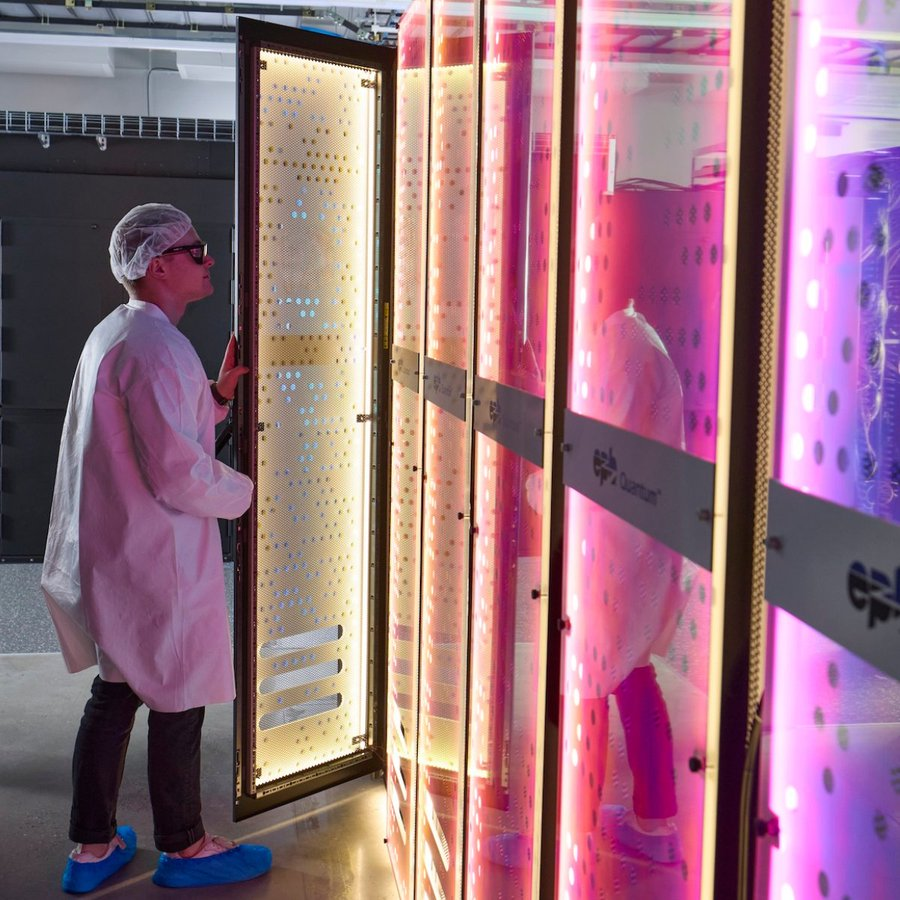
QuiX Quantum has launched Alquor 2.0, a commercial, rack-mountable quantum photonic processor platform built on silicon nitride. Available in 8-, 20-, and 32-mode configurations, it aims to transition quantum optics research from manual setups to a stable, integrated system with a Python API and advanced control features. Pricing ranges from €240,000 to €790,000, with a 20% academic discount for 8-mode orders until September 30, 2026.
-
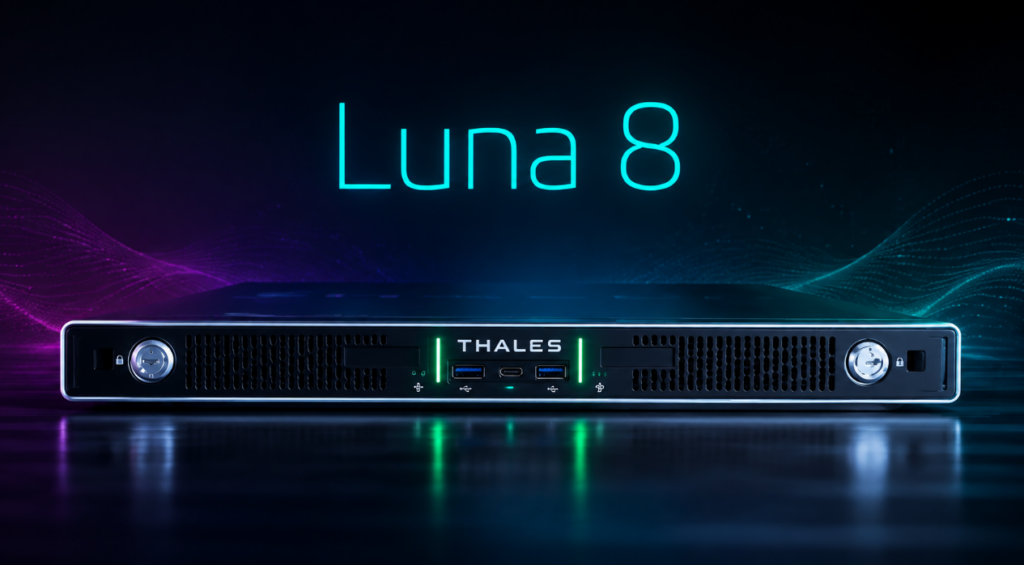
Thales Introduces Luna 8 Hardware Security Module for Post-Quantum Encryption
Thales has introduced Luna 8, a new hardware security module designed to protect cryptographic infrastructure from quantum decryption threats and support high-throughput AI workloads. It features a custom Thales cryptographic processor, cryptographic agility for post-quantum algorithm migrations, and high performance. Luna 8 addresses concerns from the 2026 Thales Data Threat Report, where 61% of respondents feared “Harvest Now, Decrypt Later” attacks.
-
Quantum Corridor, Ciena, and Toshiba Validate 1.6 Tb/s Quantum-Safe Encryption on Live Fiber Network
Quantum Corridor, Ciena, and Toshiba successfully trialed 1.6 Tb/s quantum-safe optical encryption on a live fiber network between Chicago and Hammond, Indiana. This field deployment utilized Ciena’s Waveserver platform with WaveLogic 6 Extreme optics, securing data with both post-quantum cryptography (PQC) and Quantum Key Distribution (QKD) simultaneously. The trial demonstrated hybrid defense-in-depth, coexistence over single fiber pairs, and crypto-agility through software upgrades, setting a new standard for quantum-resistant data transmission.
-
-
-
D-Wave and Nasdaq Verafin Partner to Develop Quantum Applications for Financial Crime Detection
D-Wave Quantum Inc. and Nasdaq Verafin have partnered to explore using quantum-hybrid computing for financial crime detection. This collaboration will utilize D-Wave’s quantum annealing systems and hybrid machine learning to improve predictive modeling for anti-money laundering, fraud, and scam prevention. The initial proof-of-concept will assess how quantum-hybrid algorithms analyze complex financial data to uncover hidden patterns and anomalous fraud signals that traditional methods might miss.
-
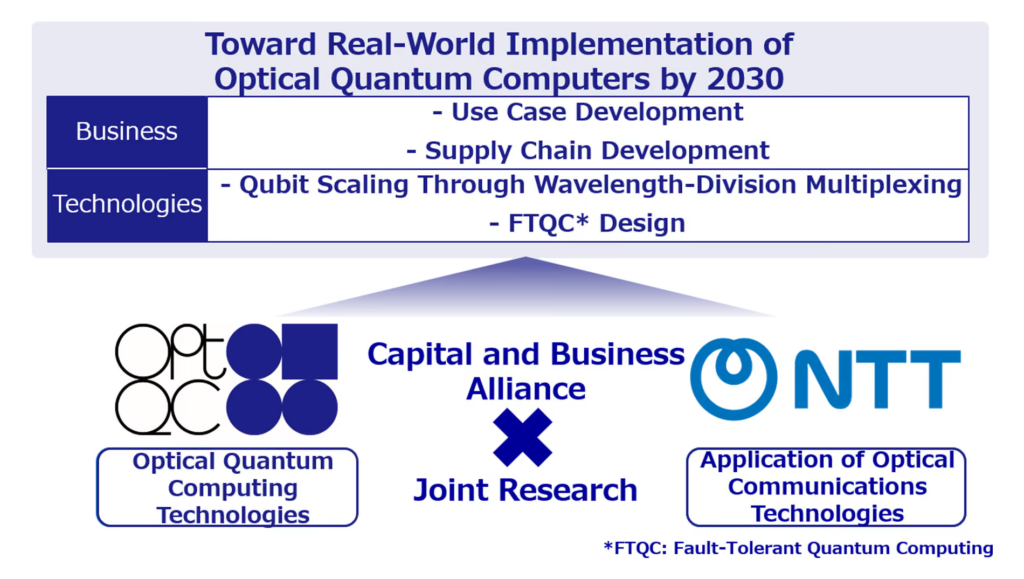
OptQC and NTT Sign Capital Alliance to Build 1-Million-Qubit Optical Quantum Computer
OptQC and NTT have formed a capital and business alliance to develop a 1-million-qubit optical quantum computer, aiming for fault tolerance by FY2030. This collaboration builds on an earlier research partnership and involves NTT’s strategic investment in OptQC, focusing on hardware architecture, supply chain development, and real-world applications. The roadmap includes deploying a 10,000-qubit prototype by FY2028 and a commercial 1-million-qubit system by FY2030, leveraging OptQC’s photonic quantum computing and NTT’s optical technologies.
-
PsiQuantum Commits $250,000 to South Chicago Quantum Workforce Development
PsiQuantum has announced a $250,000 investment to develop a quantum workforce in South Chicago, funding K-12, higher education, and community STEM programs. This initiative supports institutions like Chicago State University and Olive-Harvey College, enhances STEM curricula in high schools, and expands extracurricular learning opportunities through organizations like Project SYNCERE. This effort aims to create a local talent pipeline for the emerging quantum industry, connecting the community directly to new industrial opportunities.
-
JIJ Raises $5.2 Million, Expands Qamomile Software Platform, and Joins Quantinuum Partner Program
JIJ Inc. has successfully raised $5.2 million in an equity financing round led by Global Brain to expand its operations and advance its JijZept AI modeling platform. Concurrently, JIJ released Qamomile v0.14.0, an updated open-source Python framework with new features for quantum programming and multi-SDK transpilation. Additionally, JIJ has joined the Quantinuum Startup Partner Program, gaining access to Quantinuum’s hardware and software to benchmark its algorithms and address complex enterprise optimization challenges.
-
IonQ and EPB Partner to Establish Tennessee Quantum Communications Research Center
IonQ and EPB are partnering to establish the Tennessee Quantum Communications Research Center in Chattanooga, with a $15 million investment from IonQ. This center will integrate commercial quantum memory units into a live fiber optic network to advance long-distance quantum communication and computing. The project aims to generate significant regional economic impact and builds on existing collaborations between IonQ and EPB.
-
Fujitsu, Monash University, and CSIRO Form Australia–Japan Quantum Research Partnership
Fujitsu, Monash University, and CSIRO have partnered to advance quantum computing in Australia and Japan. Signed on August 4, 2026, the MoU focuses on developing practical quantum applications in optimization, machine learning, and advanced simulation for various sectors, building a skilled workforce through specialized programs, and expanding Australia’s quantum infrastructure. The collaboration will also explore establishing a quantum research and education facility at Monash University.
-
-
-
Caltech and Oratomic Introduce “Mitten” qLDPC Codes for High-Throughput Quantum Computing
Caltech and Oratomic have introduced “mitten codes,” a new family of non-abelian quantum low-density parity-check (qLDPC) error-correcting codes, addressing the challenge of creating fault-tolerant quantum processors with high encoding rates and low overheads. These codes achieve a constant 20% encoding rate with a low check weight, utilizing non-abelian group structures to overcome distance limitations of abelian codes. Mitten codes demonstrate high-throughput instruction sets, efficient decoding, and compatibility with various quantum hardware platforms, outperforming existing solutions in qubit count and logical error rates.
-
QNu Labs and SRMIST Establish Quantum Communications Lab to Train Educator Cohort
QNu Labs and SRM Institute of Science and Technology (SRMIST) have partnered to create a Quantum Communications Lab, aiming to train educators in quantum communications and develop a skilled workforce. This initiative, supported by India’s National Quantum Mission, provides hands-on experience with industry-grade quantum hardware. The goal is to integrate quantum education into academic programs, preparing students for careers in quantum engineering and security.
-
Rigetti, HPE, and Pittsburgh Supercomputing Center Partner to Build “TangleLab” Hybrid Testbed
Rigetti Computing, HPE, and Pittsburgh Supercomputing Center are collaborating to build TangleLab, a hybrid quantum-classical supercomputing testbed, funded by a $5 million NSF grant. This facility will integrate a 9-qubit Novera quantum computing system with classical HPC and GPU infrastructure to benchmark low-latency hybrid quantum-classical workflows. Construction starts September 1, 2026, with full operations expected in 2027, offering access through a competitive proposal process and educational programs.
-
UC Berkeley and QuantrolOx Sign Five-Year Partnership to Industrialize Quantum Processing
UC Berkeley and QuantrolOx have partnered for five years to industrialize quantum computing. This collaboration combines Berkeley’s quantum hardware with QuantrolOx’s AI-driven software to automate quantum operations, focusing on workflow automation, integrated control, AI calibration, workforce development, and community convenings. The goal is to standardize data pipelines and automate runtime environments for scaling superconducting quantum computers.
-
Anchorage Digital Outlines Post-Quantum Migration Strategy for Institutional Assets
Anchorage Digital, a federally chartered crypto bank, has revealed its post-quantum compute (PQC) preparedness strategy to protect digital assets from quantum decryption threats. The company has implemented a multi-layered security infrastructure, including hash-based Bitcoin address conventions, quantum-resistant TLS, and an agile HSM architecture. Additionally, Anchorage Digital has published cryptographic research, introducing the Post-Quantum Turnstile for secure key transitions and open-sourcing sqisign-rs, a Rust implementation of the SQIsign signature scheme.
-
-
-
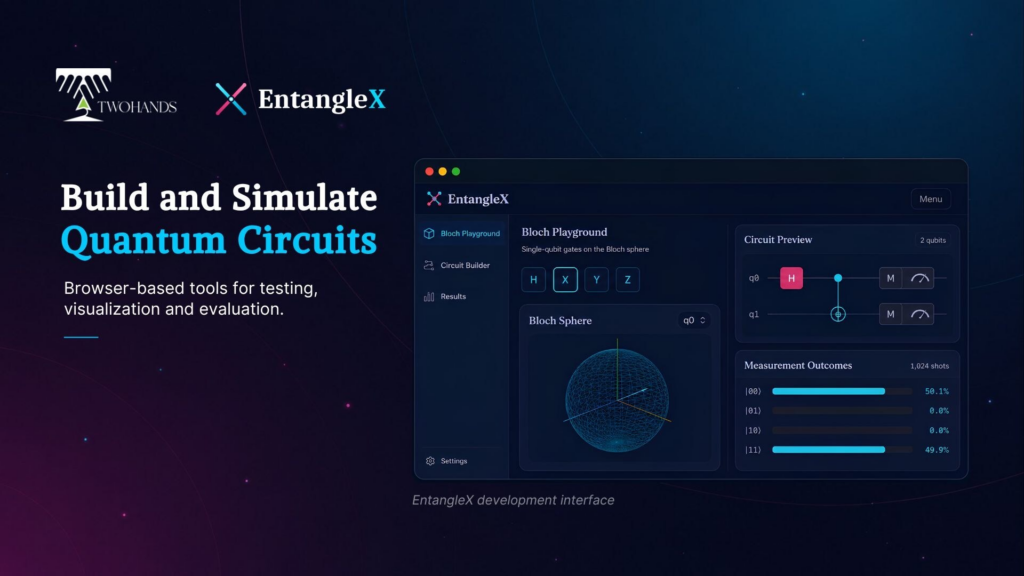
Two Hands Corporation Begins External Beta Testing for EntangleX Quantum Simulator
Two Hands Corporation (soon to be Quantum X Inc.) has started external beta testing for its EntangleX quantum circuit simulation software. This browser-based, GPU-accelerated platform allows users to model and analyze quantum circuits using classical infrastructure. The beta phase will focus on usability, workflow, results presentation, and simulation stability, with further enhancements expected in 2026.
-
IQM and Deutsche Bahn Execute Hybrid Quantum Algorithm for Railway Scheduling
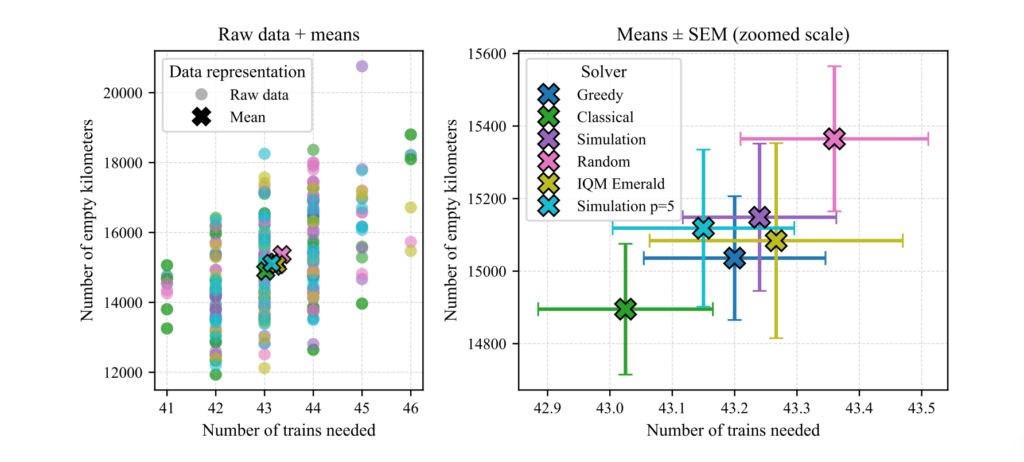
IQM Quantum Computers and Deutsche Bahn successfully executed a hybrid quantum-classical algorithm on real railway data, demonstrating a solution for optimizing rolling stock assignments. Their method utilized IQM’s Emerald quantum processor and a divide-and-conquer framework to process a complex dataset of 190 trips, resulting in feasible and high-quality schedules while anticipating improved performance with future quantum hardware advancements.
-
EY Expands In-House Capabilities with On-Site Quantum Computer Hub in Canada
EY has launched an on-site quantum computer hub in Canada, part of a $3 billion global investment in AI and next-frontier computing. This initiative enhances EY’s capabilities in data-sensitive workloads like fraud detection and risk management, particularly for clients with stringent data sovereignty needs. The Canadian hub allows EY to develop and refine quantum algorithms and integrate them into its ey.ai platform for advanced problem-solving and commercial application.
-
Vexlum Establishes UK Operations and Appoints Dr. Stefan Truppe as Managing Director
Vexlum, a high-power semiconductor laser developer, has expanded its operations by establishing an R&D laboratory in London and appointing Dr. Stefan Truppe as Managing Director of Vexlum UK. This move aims to meet the increasing demand for their VXL laser system, which is crucial for quantum computing and ultracold matter research. The UK facility will provide localized engineering support and product development, while core manufacturing remains in Finland.
-
NSF Awards UC San Diego $18 Million MRSEC Grant for Quantum Materials Development in $108 Million National Materials Initiative
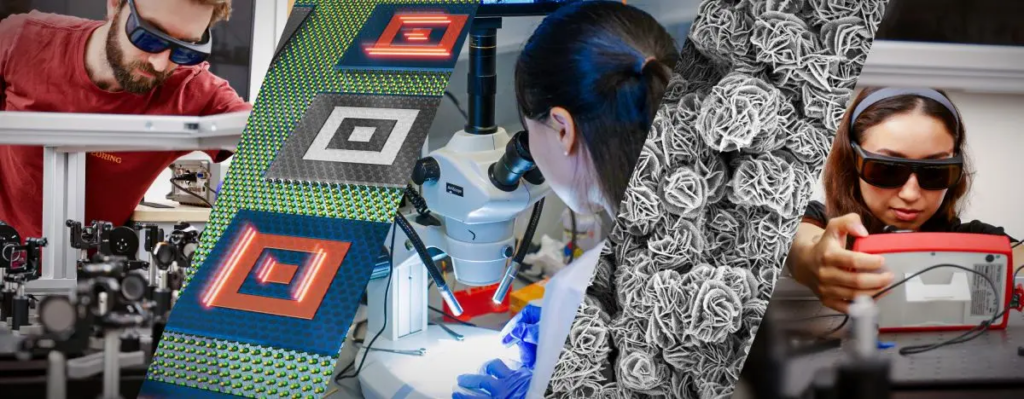
The U.S. National Science Foundation (NSF) has awarded UC San Diego an $18 million grant, as part of a larger $108 million national initiative, to establish a Materials Research Science and Engineering Center (MRSEC). This center will focus on developing advanced quantum materials, specifically quantum metamaterials and chemically tailored 2D superlattices, for applications in all-optical processing and low-power quantum electronics. The grant, spanning 2026-2032, represents a renewal of a previous award, shifting the research focus to fundamental quantum technology hardware.
-
Cleveland Clinic and IBM Develop Quantum Machine Learning Model for Cancer Neoantigen Prediction
Researchers from Cleveland Clinic and IBM have developed Q-CHIPP, a quantum machine learning framework utilizing quantum convolutional neural networks (QCNNs) to predict immunogenic neoantigens for personalized cancer vaccines. This approach addresses data scarcity and overfitting by combining two QCNN models for peptide-MHC binding and TCR recognition, achieving improved accuracy and identifying novel immunogenic peptides missed by classical models. The framework demonstrated clinical relevance by stratifying lung cancer patients based on predicted neoantigen burden, showing a statistically significant separation in overall survival.
-
-
-
IonQ Completes Acquisition of SkyWater Technology, Establishing Vertically Integrated Quantum Platform
IonQ has completed its acquisition of SkyWater Technology, making it a vertically integrated quantum platform company. This acquisition, finalized on July 31, 2026, allows IonQ to control the entire quantum computing supply chain, from design to system deployment. SkyWater will continue to operate as a subsidiary, maintaining its existing customer base while contributing to IonQ’s quantum roadmap and securing onshore supply for its quantum products.
-
-
-
U.S. Naval Research Laboratory Outlines Strategic Quantum Research Priorities
The U.S. Naval Research Laboratory (NRL) established the Quantum Science Institute (QSI) in June 2025 to align its quantum research with national directives. The QSI focuses on four key areas: Sensing, Positioning, Navigation, and Timing (PNT); Quantum Computing & Algorithms; Quantum Networking Infrastructure; and Foundational Materials & Photonics. This initiative aims to translate basic scientific discoveries into defense hardware and build a skilled quantum workforce.
-
Pusan National University and UNIST Demonstrate Hybrid Quantum Interconnect Benchmark
Researchers from Pusan National University and UNIST have successfully demonstrated direct two-photon interference between distinct quantum light sources: a warm cesium atomic vapor and a semiconductor quantum dot. This breakthrough, published in Light: Science & Applications, marks a significant step towards hybrid quantum networking by establishing photon indistinguishability across different quantum hardware platforms without external modifications. This architecture offers a path for scalable quantum repeaters and distributed quantum computing networks.
-
IBM and Ecosystem Partners Demonstrate “Trusted Quantum Advantage” Beyond Classical Supercomputers
IBM and its partners, including the University of Chicago, Qedma, and Algorithmiq, have demonstrated “Trusted Quantum Advantage” by successfully running complex quantum algorithms on IBM’s cloud-accessible quantum hardware. These demonstrations, detailed in three separate studies, showcased quantum computations beyond the capabilities of classical supercomputers, introducing novel verification frameworks to ensure the trustworthiness of quantum outputs when classical verification is impossible. The collaborations highlight a shift towards verifiable, utility-scale quantum execution, offering a blueprint for validating quantum advantage in real-world applications.
-
-
-
HRL Laboratories Demonstrates Self-Running Silicon QPU in Nature Benchmark
HRL Laboratories has published a Nature study detailing an 18-qubit silicon spin quantum processing unit (QPU) that operates autonomously at 4 Kelvin using a custom cryogenic CMOS control chip. This integrated architecture, fabricated on standard silicon-germanium wafers, significantly reduces error rates and demonstrates fault-tolerant functionality. This breakthrough provides a manufacturing blueprint for full-scale quantum processors and positions HRL’s technology to complement IBM’s quantum hardware roadmap following IBM’s acquisition of HRL Laboratories.
-