
News
Company, funding, product and policy news from across the quantum industry, as it happens.
-
-
Keyfactor Revamps Global Partner Program to Accelerate Enterprise Post-Quantum Cryptography Modernization
Keyfactor has expanded its Global Partner Program to help enterprises transition to Post-Quantum Cryptography (PQC) and manage AI-generated machine identities. The program provides partners with tools like the NFR PQC Lab Innovation Program and a role-based certification framework. This expansion enables partners to offer high-value managed security services and will roll out globally in phases during the second half of 2026.
-
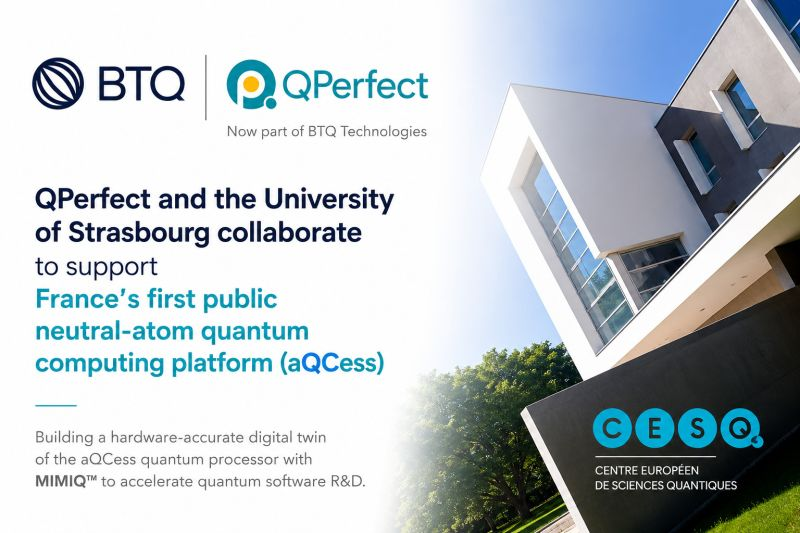
BTQ Technologies Subsidiary QPerfect Partners with University of Strasbourg to Support France’s First Public Neutral-Atom Quantum Computing Platform
QPerfect, a subsidiary of BTQ Technologies, has partnered with the University of Strasbourg to support aQCess, France’s first public neutral-atom quantum computing platform. QPerfect will create a hardware-accurate quantum digital twin of the aQCess processor using its MIMIQ™ platform, enabling researchers to run and validate algorithms against a realistic system model. This collaboration, funded by the French National Strategy for Quantum Technologies, aims to make quantum computing more accessible for various industries and research fields.
-
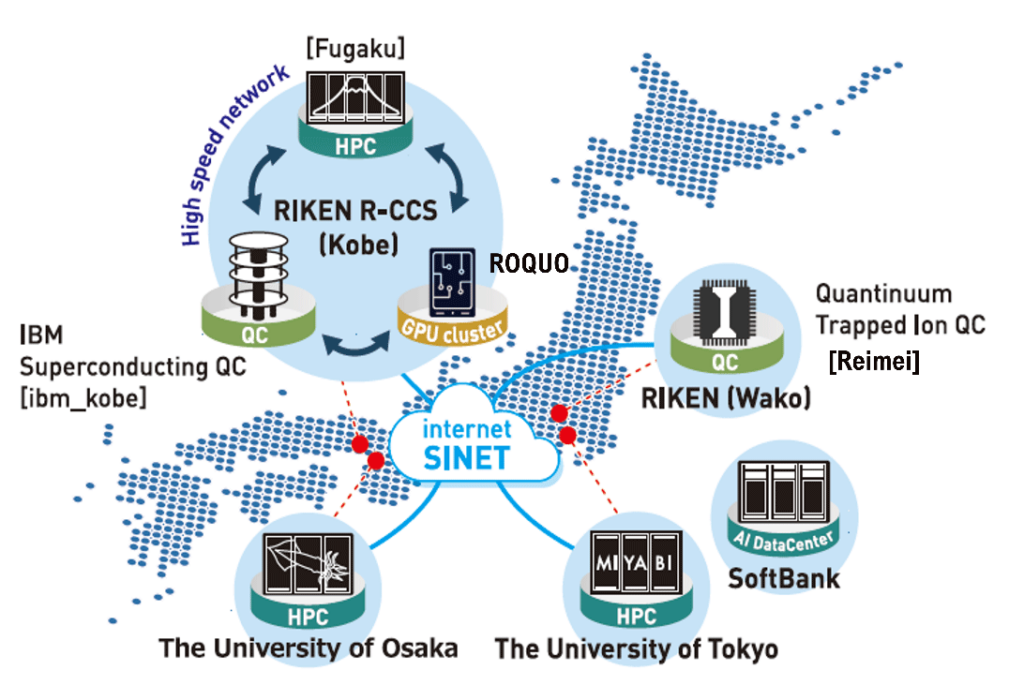
RIKEN Activates ROQUO Supercomputer Integrating Quantinuum’s Reimei System and NVIDIA Blackwell Cluster
Japan’s RIKEN has launched ROQUO, a hybrid quantum-HPC supercomputer integrating Quantinuum’s Reimei system and NVIDIA Blackwell GPUs. This U.S.-Japan Genesis Mission partnership creates an operational framework combining GPU-accelerated classical computing, AI, and physical quantum processing units, focusing on evolutionary AI circuit synthesis, low-latency interconnect integration, and quantum error correction. The system is also accelerating industrial quantum chemistry workloads for applications in semiconductor manufacturing and materials design.
-
IBM Commits $50M in QPU Compute Access to Support U.S. DOE Genesis Mission
IBM is committing $50 million in quantum computing access over five years to support the U.S. Department of Energy’s Genesis Mission, providing researchers with access to its QPU fleet, including the 156-qubit IBM Quantum Heron and 120-qubit IBM Quantum Nighthawk processors. Concurrently, IBM will lead a Phase I Genesis Mission project focused on using agentic AI to discover quantum algorithms for real-world scientific problems, particularly by inverting the traditional workflow to match existing algorithms with suitable applications. This initiative aims to integrate quantum computing with classical HPC and AI infrastructure across DOE national laboratories.
-
Infleqtion Secures Three U.S. Department of Energy Genesis Mission Awards
Infleqtion has secured three U.S. Department of Energy Genesis Mission awards for projects integrating AI and quantum machine learning with neutral-atom quantum processing units and atomic sensors. These projects, in collaboration with national laboratories and universities, aim to address complex energy and physics problems like nuclear circuit design, atomic sensing, and fusion plasma dynamics, utilizing AI-driven quantum workflows that surpass classical supercomputing limitations. This initiative follows Infleqtion’s recent Letter of Intent with the U.S. Department of Commerce for funding to expand domestic neutral-atom manufacturing.
-
PsiQuantum Secures $125 Million Expanded Agreement with DARPA under QBI Program
PsiQuantum has secured a significant $125 million expanded agreement with DARPA under the Quantum Benchmarking Initiative (QBI) to fund verification and validation tasks for their utility-scale hardware architecture and manufacturing processes. This agreement builds on a previous award and broadens DARPA’s evaluation of PsiQuantum’s technology, including advanced material manufacturing, photonic assembly, cryogenic validation, and algorithmic resource benchmarking. This funding, combined with other investments, will help PsiQuantum scale up domestic manufacturing and validate its goal of deploying a commercially useful quantum computer before 2033.
-
Hitachi Partners with Intel and AIST on $NEDO Project to Scale Silicon Quantum Processors
Hitachi, in collaboration with Intel and AIST, has been selected by NEDO to lead a project focused on scaling silicon quantum processors. This initiative aims to transition silicon spin-qubit quantum computers from academic demonstrations to mass-manufacturable industrial infrastructure by leveraging Intel’s 18A process technology, developing advanced cryogenic packaging, and integrating 3D high-density technologies. The project will also establish an open cloud-computing platform and fabrication ecosystem for silicon quantum hardware, with a goal of delivering a 100-qubit prototype by FY2028 and a 1,000-qubit platform by FY2030.
-
-
-
Quantinuum and SoftBank Publish Framework Linking Quantum Hardware to Enterprise Use Cases
Quantinuum and SoftBank have published a white paper outlining a roadmap for integrating quantum computing into enterprise use cases, linking Quantinuum’s hardware development to industrial quantum chemistry and graph analytics workloads. The framework details a timeline for problem classes to transition from classical simulation to execution on quantum processing units, with key milestones including Helios (current), Sol (2027), Apollo (2029), and Lumos (2030s) for large-scale fault-tolerant quantum computing. The research also highlights the experimental execution of error-corrected quantum circuits on current hardware and emphasizes early operational readiness for enterprises.
-
SAXON Q Launches 100+ Qubit Diamond-Based Room-Temperature Quantum Computers
SAXON Q has commercially launched the SXQ128 (128 qubits) and SXQ512 (512 qubits), diamond-based room-temperature quantum computers that overcome traditional limitations through a proprietary sulfur co-implantation process, achieving high-yield qubit creation and single-gate fidelity. These systems, already deployed at research institutions, are available for order with deliveries starting in late summer 2026 for the SXQ128 and Q2 2027 for the SXQ512, targeting applications in QCNNs, variational quantum algorithms, materials research, and quantum chemistry simulations.
-
Photon Queue Raises $4M Oversubscribed Seed Round to Commercialize Room-Temperature Quantum Memory
Photon Queue, a quantum hardware spin-out from the University of Illinois Urbana-Champaign, has secured $4 million in seed funding to commercialize its room-temperature quantum memory systems. These systems aim to resolve optical synchronization issues in scaling quantum architectures by storing photons using a free-space, linear-optics approach, eliminating the need for cryogenic cooling or ultra-high vacuum. The funding will accelerate product manufacturing and support deployments at institutions like Sandia National Laboratories and the University of Maryland, while expanding its engineering in Illinois and manufacturing in New Mexico.
-
Maybell Quantum Deploys Dilution Refrigerators at Roadrunner Quantum Lab
Maybell Quantum is expanding into New Mexico, deploying four dilution refrigerators at the Roadrunner Quantum Lab (RQL) as part of the state’s quantum initiative. This expansion, slated for completion by September 2026, will provide essential cryogenic infrastructure for superconducting and spin-qubit quantum processors, enabling up to five startup teams to access shared resources and lowering capital barriers for early-stage quantum hardware companies. This builds a full-stack testing environment alongside existing anchors like Qunnect and QuEra Computing, with Maybell also hiring local staff to manage operations and support the growing quantum ecosystem in Albuquerque.
-
QuantX Labs Achieves In-Orbit Commissioning of World’s First Space-Based Optical Frequency Comb
QuantX Labs has successfully commissioned the world’s first space-based optical frequency comb in Low Earth Orbit, a crucial step towards developing more precise space-based atomic clocks. Launched on March 30, 2026, this technology converts ultra-high optical frequencies into usable radio-frequency signals without losing timing precision, with the ultimate goal of enhancing navigation and communication systems. This achievement de-risks the deployment of the full TEMPO space optical atomic clock, anticipated for 2027.
-
New Mexico Awards $1.2M to Expand State Quantum Cluster Across Six Tech Startups
New Mexico’s Technology & Innovation Office has awarded $1.2 million in grants to six quantum technology startups, aiming to expand the state’s quantum cluster. Each company received $200,000, with the condition of maintaining active operations in New Mexico for at least two years. This initiative supports both established in-state firms and encourages out-of-state companies to establish regional facilities, strengthening New Mexico’s quantum ecosystem.
-
-
-
Joint Study by AWS, NVIDIA, LBNL, and NASA Establishes Framework for Quantum-HPC Integration
A joint study by AWS, NVIDIA, LBNL, and NASA introduces a quantitative performance model to guide the integration of quantum processing units (QPUs) with classical high-performance computing (HPC) supercomputers. The research differentiates between real-time control and application-level connectivity, establishing a communication-to-computation ratio (Rcc) to determine whether co-location or remote cloud access is more suitable for various quantum workloads, from near-term applications to future fault-tolerant systems. This framework helps optimize infrastructure investment as quantum technology advances.
-
Bloch Quantum Tech Hub Secures $55M in Federal and Matching Grants to Build U.S. Quantum Supply Chain
The Bloch Quantum Tech Hub, managed by the Chicago Quantum Exchange, has secured $55 million in federal and matching grants to bolster the U.S. quantum supply chain. This multi-state consortium, encompassing Illinois, Indiana, and Wisconsin, aims to shift the domestic quantum sector from lab-scale prototypes to industrial-scale manufacturing, reducing reliance on foreign hardware components. The funding will be distributed across four operational tracks: manufacturing transition services, industrial supply chain integration, security & capital mobilization, and infrastructure buildout, including “The FaQtory” at the Illinois Quantum and Microelectronics Park.
-
BTQ Technologies and TIDAL PWR Partner to Develop Trusted Quantum Data Center Reference Architectures
BTQ Technologies and TIDAL PWR are partnering to create a standardized framework for integrating quantum processing units and post-quantum security into AI and High-Performance Computing data centers. This collaboration aims to provide data center operators with clear guidelines for procuring, securing, and deploying quantum hardware alongside classical computing stacks, addressing critical operational bottlenecks and ensuring secure, scalable integration. Their work will cover procurement, crypto-agility, and facility integration roadmaps, leveraging TIDAL PWR’s power infrastructure expertise and BTQ’s quantum security and systems architecture.
-
Israel Innovation Authority Launches NIS 100M ($33M USD) Call to Build National Quantum R&D Infrastructure
The Israel Innovation Authority has launched a NIS 100 million initiative to create a national quantum computing R&D infrastructure. This will provide a centralized hub for evaluating and adopting advanced quantum technologies, requiring the integration of at least three distinct quantum processing technologies. The program aims to offer full-stack services across hardware and software, support workforce development, and has strict operational timelines, including functional R&D services within 12 months and full infrastructure establishment within 18 months, ultimately aiming to accelerate quantum application commercialization in Israel.
-
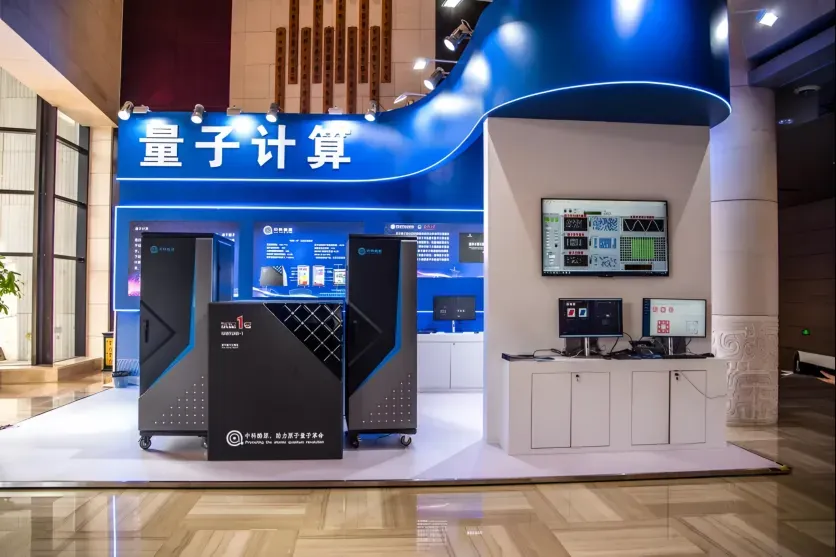
Zhongqi Wuliang Unveils Server-Rack Neutral-Atom Quantum Computer at WAIC 2026
At WAIC 2026, Zhongqi Wuliang unveiled Qinghe No. 1, a neutral-atom quantum computer designed to fit into a standard server rack, eliminating the need for bulky cryogenic refrigeration. This innovation, spun out of the Chinese Academy of Sciences, marks a significant advancement in quantum computing, making it more accessible for data centers. It’s part of a rapid development in China’s neutral-atom quantum technology, though independent performance verification for Qinghe No. 1 is still pending.
-
-
-
Who’s News: Strategic Appointments at Pasqal, PsiQuantum, and Haiqu
Pasqal, PsiQuantum, and Haiqu have all made significant strategic appointments. Mark Armstrong is Pasqal’s new Chief Commercial Officer for EMEA and APAC. PsiQuantum has appointed Victor Peng as CEO, Robert Soderbery as Executive Vice President, and Sriram Sitaraman as CIO. Lastly, Denise Ruffner has joined Haiqu as Vice President, Business Development and Commercial Operations Worldwide.
-
Aqarios Enters Public Markets via SPAC, Becoming Germany’s First Listed Quantum Pure-Play
Aqarios GmbH, a Munich-based quantum optimization software provider, has gone public on the Düsseldorf Stock Exchange via a SPAC, becoming Germany’s first listed quantum pure-play. The company, a 2021 spin-off from LMU Munich, develops application-oriented software, like its Luna platform, to solve complex optimization problems for industries such as logistics and finance, utilizing both classical and quantum computing. With a focus on R&D and expanding into a SaaS model, Aqarios aims to enhance its visibility and capital access, while also leading initiatives like the Quantum Computing User Network (QuCUN).
-
Singapore’s pQCee Raises $3.9M Seed Round to Accelerate Global Crypto-Agility Deployment
Singaporean quantum-safe cybersecurity startup pQCee secured $3.9 million in a seed funding round, co-led by SGInnovate and Lotus One Investment, bringing its total capital to $6.7 million. This investment will fuel global expansion and address the “Harvest Now, Decrypt Later” threat by providing modular integration tools like SafeQuard and QKDLite for crypto-agility and seamless upgrades in heavily regulated industries. The company is strategically partnering with major players like Thales and Feitian to embed quantum-safe protections into existing enterprise IT ecosystems.
-
Tennessee Launces Comprehensive K–12 Quantum Education and Career Initiative
Tennessee has launched TN QuantumWorks, a comprehensive K–12 quantum education and career initiative spearheaded by the Chattanooga Quantum Collaborative. Developed by Thinking Media, this program, initially piloting in Hamilton County Schools, aims to build digital literacy for the quantum economy through a multiphase framework from elementary to high school, culminating in opportunities to run quantum programs on commercial hardware at the EPB Quantum Center. The initiative also connects with higher education pathways at the University of Tennessee at Chattanooga, fostering a skilled regional workforce for high-demand tech careers.
-
Quantinuum and Academic Partners Demonstrate First Universal Topological Gate Set via Non-Abelian Anyons
Quantinuum and academic partners have demonstrated the first universal topological gate set using non-Abelian anyons on Quantinuum’s H2 quantum processor. This breakthrough, published in Nature, utilizes a 54-qubit entangled state based on the S3 non-Abelian symmetry group, combining anyonic braiding with fusion to create a fault-tolerant set of computational operations. This method allows for universal quantum computing without relying on resource-intensive magic state distillation, effectively bypassing a major bottleneck in fault-tolerant computing by encoding logical information within the collective fusion space of emergent, non-Abelian anyons.
-
Digital Catapult and NQCC Launch Third QTAP Cohort, Introducing Banking and Healthcare Streams
Digital Catapult and NQCC have launched the third QTAP cohort, an initiative providing 11 organizations with access to quantum computing for developing industrial prototypes. This cohort, running until February 2027, expands into financial services and healthcare, with participants like NatWest focusing on fraud detection and Health Innovation North West Coast on rare disease diagnostics. Other participants are applying quantum machine learning and optimization to various sectors, including transport, supply chain, industrial design, and advanced materials.
-
Quantum Source and Israel’s DDR&D Demonstrate Calibration-Free, Single-Atom Entangled Photon Source
Quantum Source, in collaboration with Israel’s DDR&D, has demonstrated a calibration-free, single-atom entangled photon source using a single rubidium atom within a microscopic optical cavity. This technology generates deterministic, polarization-entangled photon pairs that maintain fidelity over 1 km of standard optical fiber, even under continuously changing conditions, by emitting photons in the rotationally invariant singlet Bell state, thus eliminating the need for active polarization stabilization. This breakthrough simplifies the deployment of metropolitan QKD, quantum repeaters, and distributed QPUs by overcoming the limitations of probabilistic photon generation and environmental polarization drift.
-